
The Natsarim: Christianity vs. the Millennial Kingdom

Bible Deep Dives | New | Noel Joshua Hadley | Stolen History

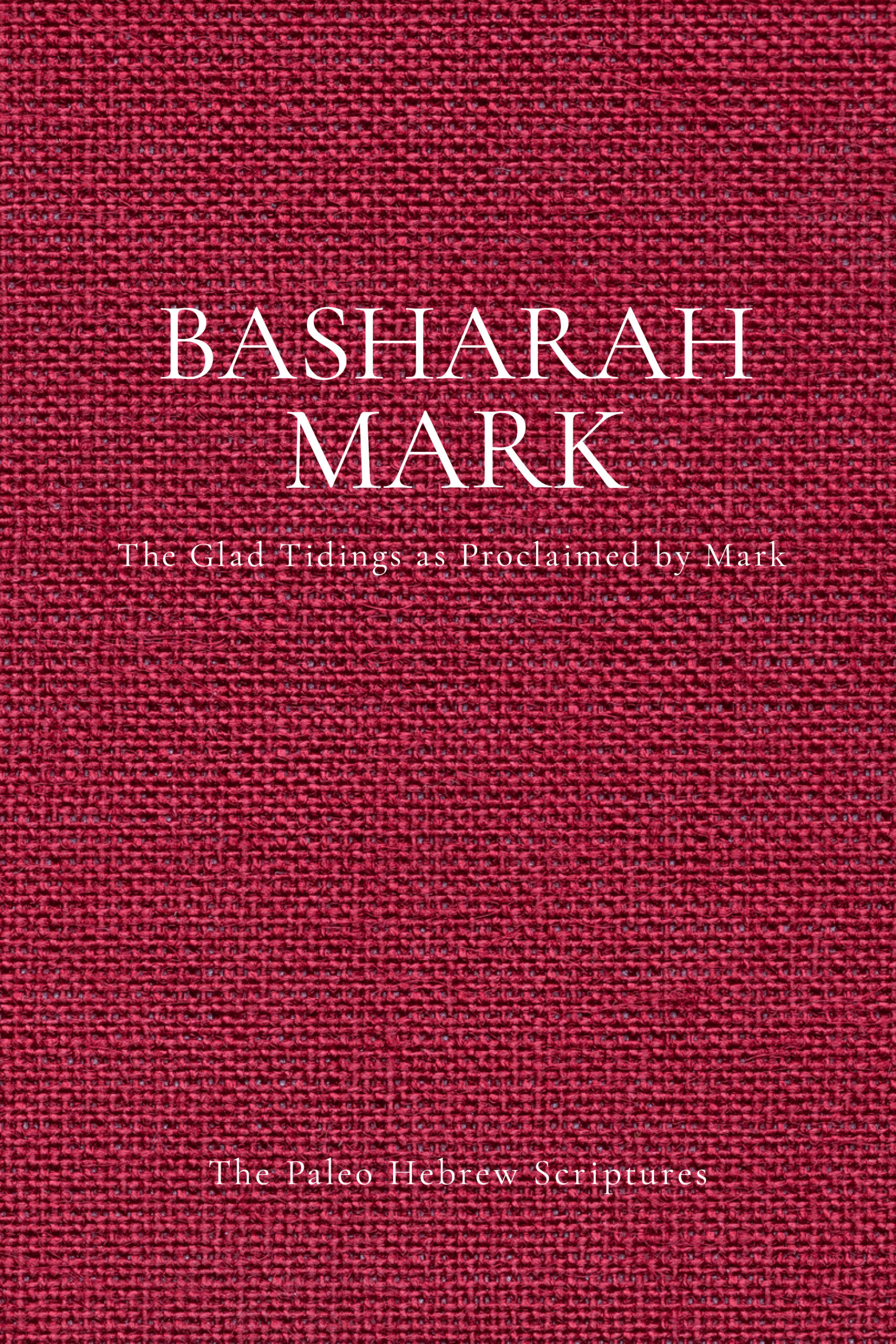
We are thrilled to announce that pre-orders for BASHARAH Mark: Paleo Hebrew Mark are officially live! After so much anticipation, we can’t wait to finally get this project into your hands—copies are expected to begin shipping in December, just in time for the end of the year. Reserve yours today to be among the very first to experience this restoration.

As we dive into our next preview, we are opening straight to the very first chapter—and right out of the gate, something remarkable jumps off the page that standard English translations completely flatten.


1 This is the proclamation of the glad tidings of YASHA’UĂ Ha’Mashayach,[1] Son of ALA’UHA.

2 Just as in this manner

He was written of

By Yasha’ă’yah,[2] the prophet, declaring,

“Behold! I am sending forth My mala’ak

Before your face, to clear off the Way

Which walks before Your face.

3 One voice—She will cry out

In the wilderness,

Which She will declare,

“He has prepared the Way of the ADA’UN!

He will make [the Way] straight,

Upright,

That you might fashion the Way of the ADA’UN!” [3]

Basharah Mark 1:1-3


Rather than a generic, genderless “voice” crying out in the wilderness, the Hebrew text preserves a distinct, powerful feminine voice heralding the arrival of Ha’Mashayach. This grammatical detail ties the opening of the Gospel directly back to the voice of Lady Wisdom in Proverbs—the same voice that cried out at the gates in Proverbs 8 and guarded the straight paths in Proverbs 2.

In Hebrew thought, Wisdom (Chokhmah) is understood as the divine blueprint or Spirit through which ALAHAYAM orders creation, as declared in Proverbs 8:22–31. Preserving the feminine voice in Mark 1:3 bridges the Tanakh and the Apostolic Writings by placing that ancient, creative call right at the threshold of the Good News.

That feminine voice in the wilderness also points forward to the following scene—the feminine Holy Spirit descending during the baptism of YASHA’UA. Together, the calling voice in the wilderness and the Spirit at the waters link creation’s wisdom, prophetic preparation, and the anointing of Ha’Mashiach into a single thread.

Pick up your very own copy of BASHARAH MARK in the TUC Store.

Bet you didn’t think I’d tie the Netseriym in with the Millennial Kingdom. You thought you had me last time when I read from a Medieval reference and scratched my head while doing it, unsure about where it should actually be placed on the Timeline. Come on, we all know His-Story has been toyed with. I’m not in the least concerned about sticking the landing with every single Medieval reference. Just know this is the part where I show you that the Millennial Kingdom as a physical manifestation upon the earth was a Netseriym notion. It has already been established that Yochanon was Netseriym, and Philip, founder of the Orthodox church, along with his three daughters, were Netseriym. You’ll want to keep them in mind because they will be referenced again. Pa’al the Patsy was Netseriym. The Ekklesia of Antioch and Yerushalayim remained a stronghold of Netseriym for centuries. Polycrates was Netseriym and apparently in deep doo-doo for being one. In his letter, as well as in Irenaeus’ intervention, Polycarp was outed as Netseriym, among a host of others, far too many to list. Polycarp, of course, was a disciple of Yochanon, by which we come to learn of another disciple of Yochanon, Papias, Bishop of Hierapolis. Rather than leave you hanging, we might as well have it out. Yup, he too was Netseriym.

If you would like to read this article, then you can nab the full report in the PDF.

TUC Monthly Widow Ministry Fund: Patreon Support

YouTube channel: The Unexpected Cosmology.

One Time and Additional Support: GoFundMe

Go here for all Article Updates | The Unexpected Cosmology

Go here for a list of my papers: Archives | The Unexpected Cosmology