
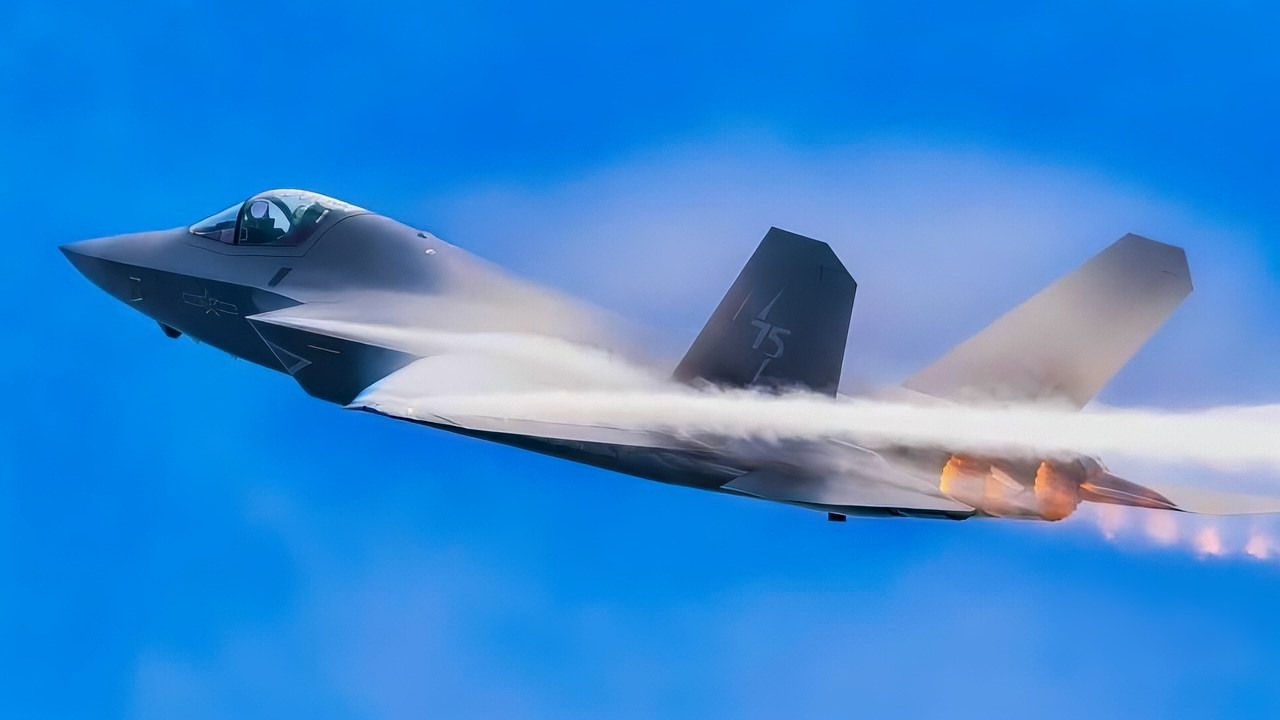
America Missed It: China’s J-35 Is Headed to Every Carrier in China’s Fleet – Most analysts believed that China’s fifth-generation carrier-based warplane, the Shenyang J-35, would primarily operate from the Chinese aircraft carrier Fujian because the Type 003 Fujian has electromagnetic aircraft launch system (EMALS) catapults. At the same time, Fujian’s predecessors, Liaoning and Shandong, kept flying the older fourth-generation J-15s.
That assumption is increasingly looking wrong.
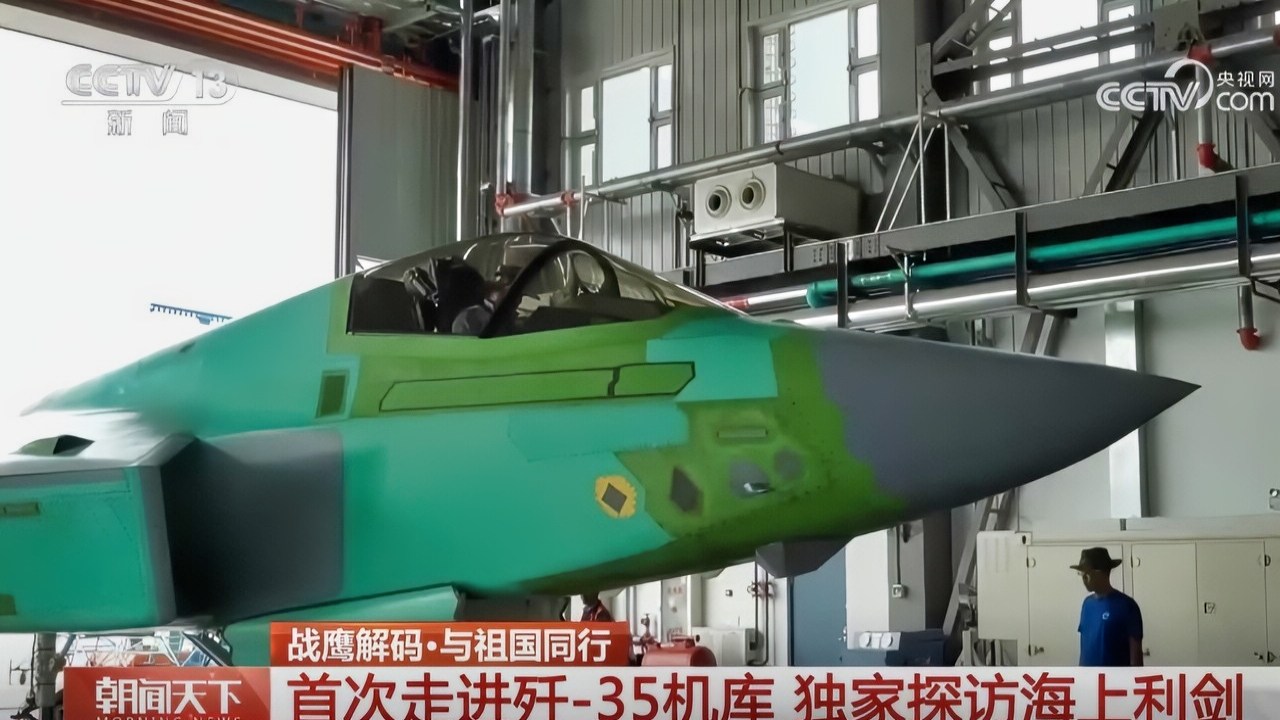
J-35 Factory in China. Image Credit: CCTV Screenshot.
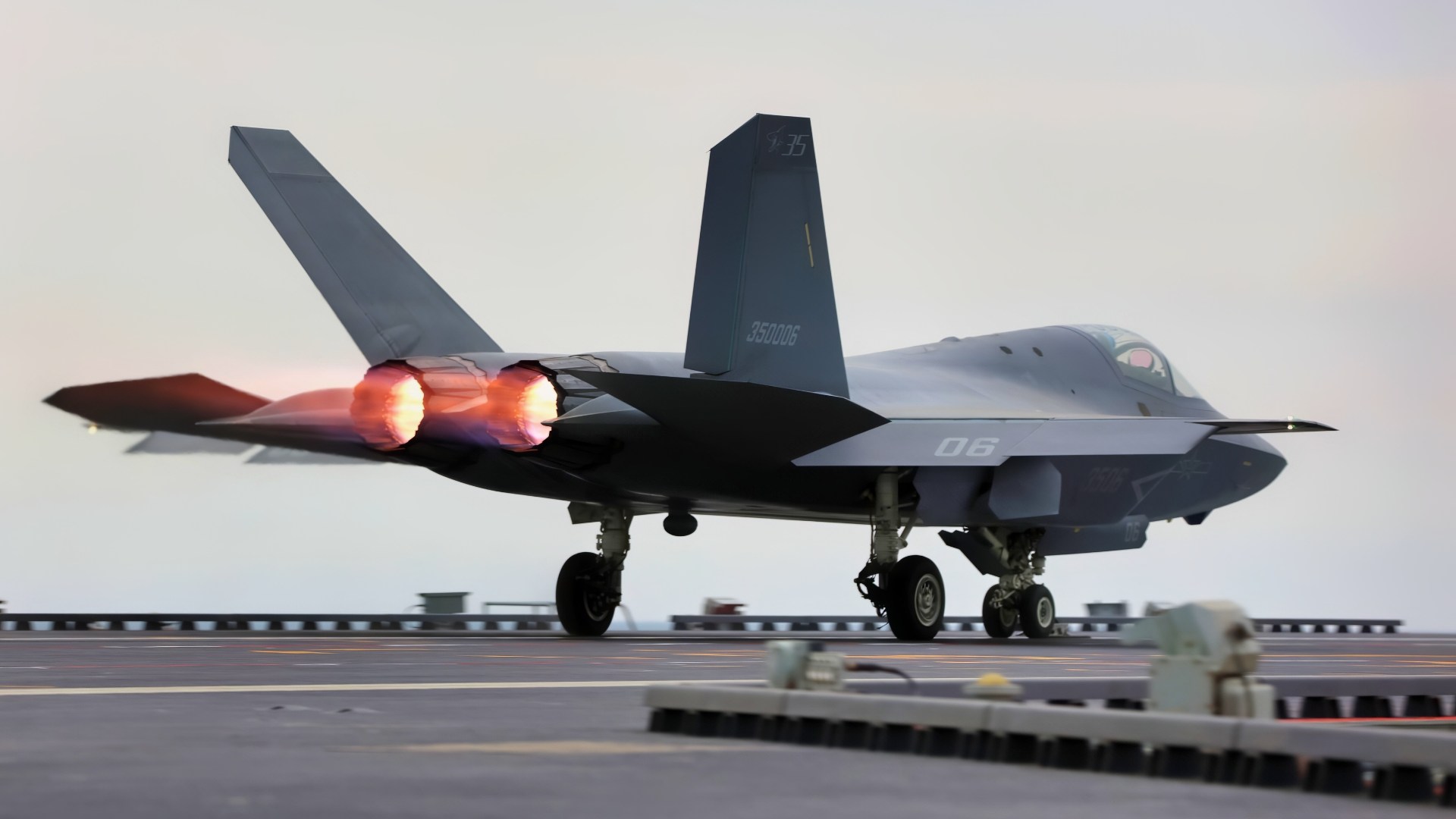
China J-35 Fighter on Aircraft Carrier. Image Credit: Chinese Navy.
The Original Assumption
Most analysts believed the Shenyang J-35 would primarily operate off the Fujian because of EMALS, as fifth-generation warplanes benefit from catapult launches due to higher takeoff weights, more fuel, more weapons, and better performance margins.
China’s older carriers, like the Liaoning and Shandong, employ ski-jump ramps rather than catapults. Hence, the belief among many Western observers that only the newer Fujian would exploit the J-35.
Beijing Appears to Have Solved the STOBAR Problem
Yet, Chinese state media reports indicate that the J-35 has been adapted for ski-jump operations, potentially allowing its deployment aboard the two older Chinese carriers.
If true, this is a much bigger development than many Western observers understand. For years, Western analysts have dismissed the near-term challenge posed by China’s J-35 fifth-generation carrier-based aircraft because they assumed the J-35 would operate only from the Type 003 and, eventually, the Type 004 carriers.
Now, however, it appears the Chinese may have cracked the code to make the J-35 a fifth-generation warplane fleet-wide. For comparison, the United States Navy’s F-35C is not yet a fleet-wide warplane. American carriers are still mostly reliant upon fourth-generation warplanes.
That fact is most depressing because America’s newest $13 billion aircraft carrier, the USS Gerald R. Ford, cannot even field the F-35 due to the heat generated from the F-35’s planes melting the Ford’s deck. It, too, must use older warplanes for its air wing.
Why American Planners Should Be Concerned
A significant advantage that the United States Navy enjoyed over the PLAN was its carrier air wings. For years, China’s carriers (what few there were) operated variants of the J-15, a capable aircraft, though derived from Soviet-era Flanker designs.
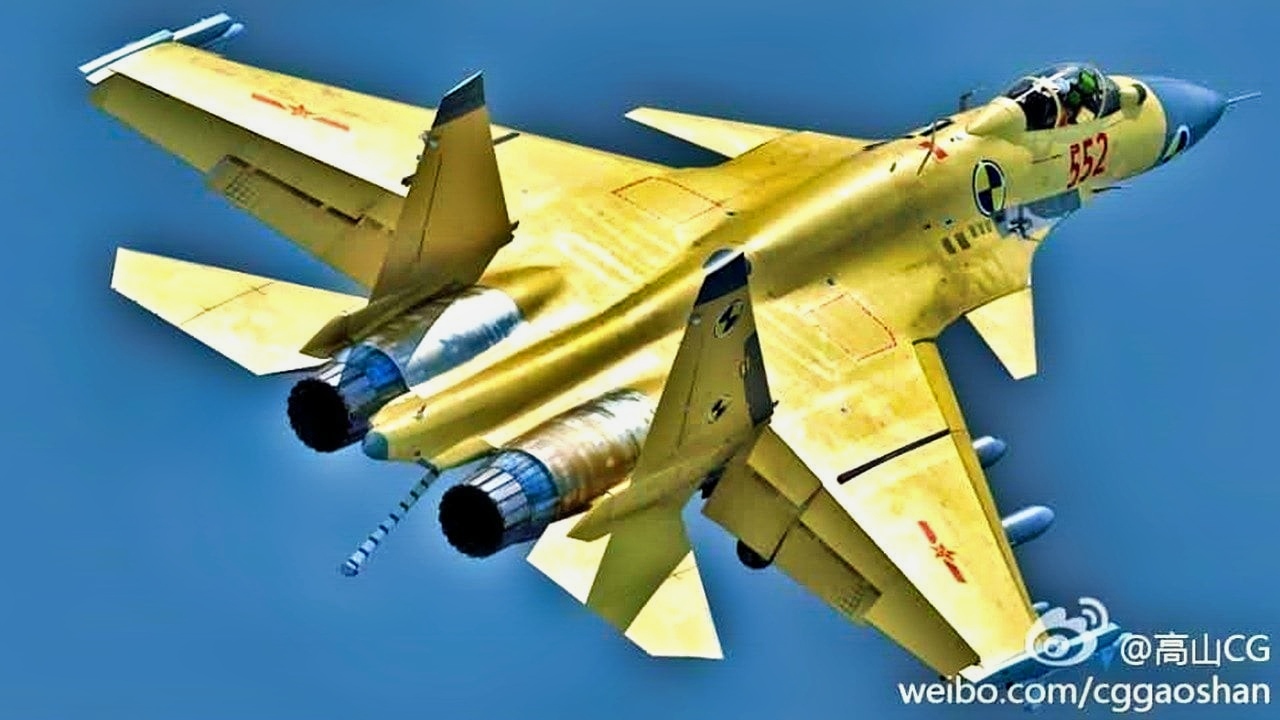
J-15 Fighter. Image Credit: Screenshot from Weibo.
Just imagine, however, the Liaoning, Shandong, and Fujian carrying fifth-generation J-35s along with powerful KJ-600 AEW aircraft, and eventually all this being amplified by the Type 004 (likely nuclear-powered) aircraft carrier joining this fleet.
Suddenly, every Chinese carrier becomes more survivable and lethal–especially if a war erupts for control over the First Island Chain (the territories stretching from the Kamchatka Peninsula down through Japan and Taiwan into the Philippines) where a vast and potentially impenetrable Chinese anti-access/area-denial (A2/AD) exists, providing cover for Chinese forces all while preventing US forces from entering that zone.
The J-35 May Be More Important Than the J-20
Many analysts insist that the Chengdu J-20 “Mighty Dragon” fifth-generation warplane remains the more important plane than the navalized J-35. That’s because the J-20, like the American F-22 Raptor, is a truly elite fighter. But the J-35 is scalable.
Sure, the J-20 is probably more advanced and downright better than the J-35 (very similar to the F-22 and F-35 divide). However, exquisite platforms don’t win industrial-scale great-power wars. Operational workhorses do. And the J-35 is set up to become China’s operational workhorse.
The Carrier Ecosystem Is Emerging
Over the last few years, the world has witnessed J-35 naval integration, successful Chinese catapult launches from the Fujian, KJ-600 carrier AEW testing, J-15T modernization, fleet-wide carrier upgrades, and the construction of the Type 004 (nuclear-powered?) carrier underway.
Individually, all these moves by the PLAN are noteworthy.
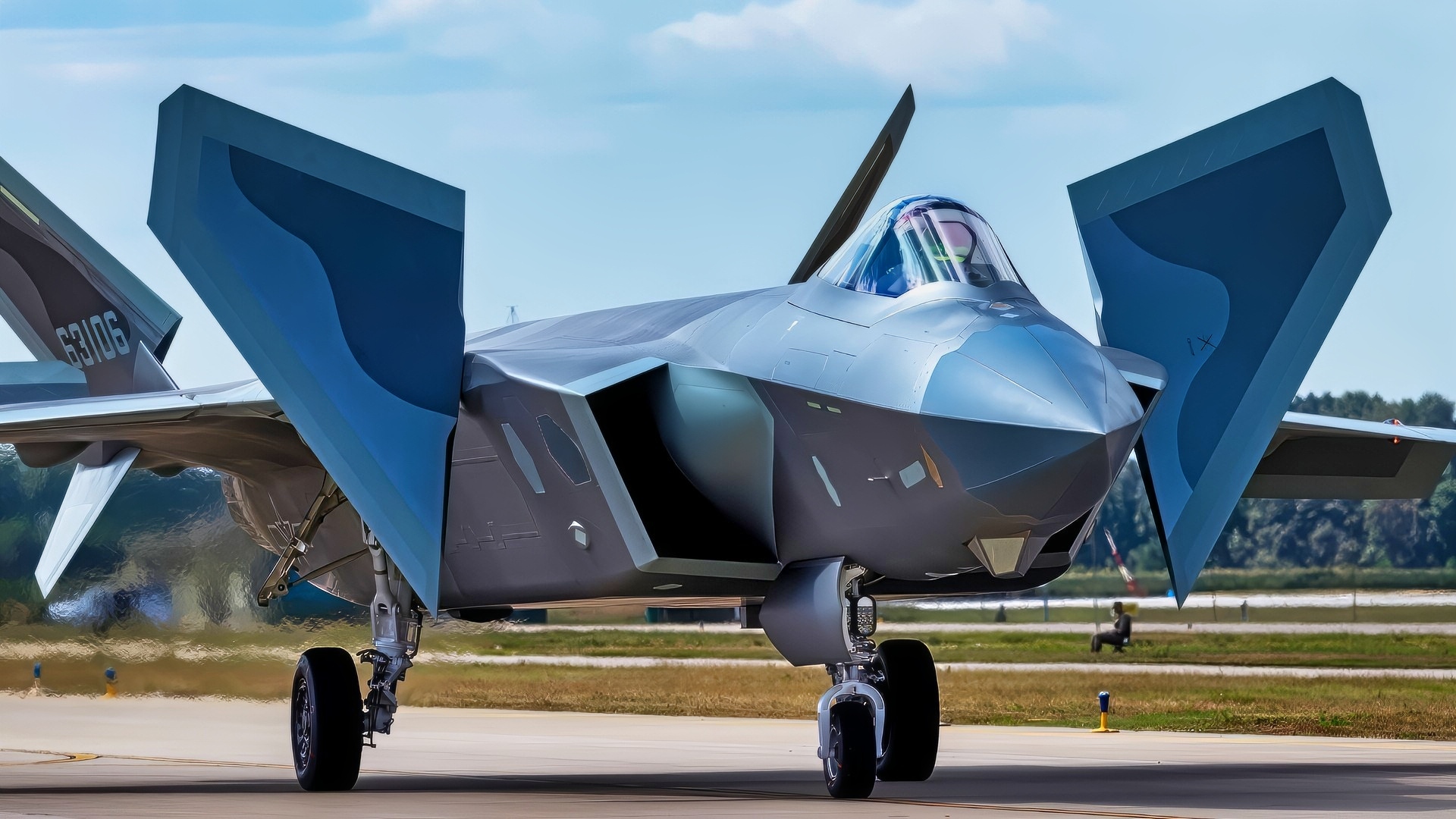
J-20 Fighter 2025 Photo. Image Credit: Chinese Military.
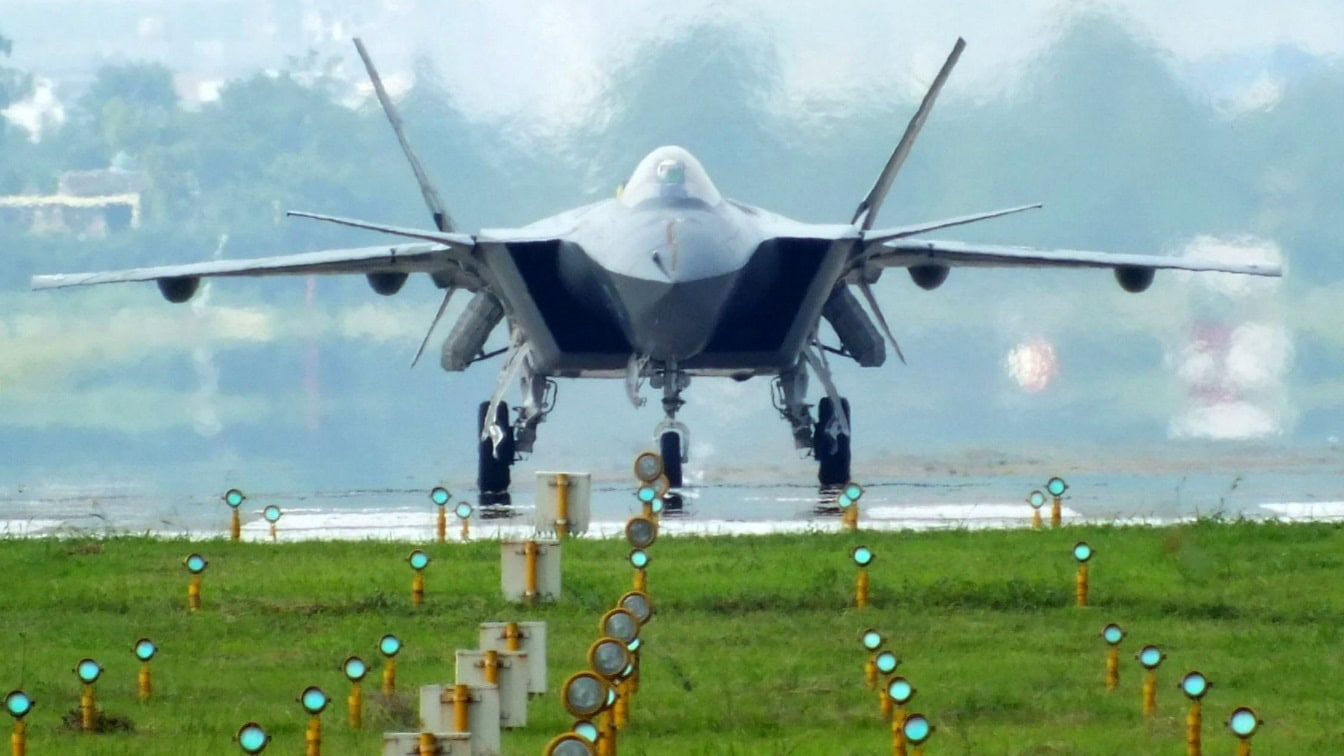
J-20 Fighter. Image Credit: Weibo.
Taken together, however, they represent the emergence of a complete Chinese carrier aviation architecture that, when amplified by China’s A2/AD systems in the First Island Chain, becomes a clear and present danger to China’s at-risk neighbors.
What This Means for Taiwan
For Taiwan planning purposes, the implications are profound.
Historically, many Taiwan scenarios assumed only a limited contribution from Chinese carrier air wings because they were relatively immature. That assumption becomes less convincing if Beijing can deploy stealth fighters from all available carriers and rapidly mass-produce advanced fifth-generation warplanes to sustain this growing ecosystem.
Instead of a single advanced carrier participating in a campaign, China could field multiple carrier strike groups, each equipped with stealth aircraft. Talk about a dramatic expansion of naval operational flexibility.
The Takeaway
Has China found a way to give every carrier in its growing fleet a fifth-generation air wing?
It certainly seems so.
If Beijing has truly adapted the J-35 for both EMALS operations on the Type 003 and Type 004 aircraft carriers, as well as for its older ski-jump carriers, then China has achieved something many analysts did not think possible. The PLAN has a near-term pathway toward fleet-wide stealth naval aviation.
Combined with the J-20 force, the emerging J-35 fleet, the KJ-600 airborne early-warning aircraft, and the probable arrival of the Type 004 supercarrier soon, the PLAN is no longer merely experimenting with carrier aviation.
The PLAN is building a carrier force.
For the first time, therefore, that carrier force is centered on fifth-generation aircraft rather than upgraded, Soviet-type Cold War-era designs.
Talk about an upgrade in record time.
About the Author: Brandon J. Weichert
Brandon J. Weichert is Senior National Security Editor. He also manages The Weichert Brief on Substack. Weichert also hosts “National Security Talk” on Rumble. He is the author of four bestselling national security books, the most recent of which is A Disaster of Our Own Making: How the West Lost Ukraine (Encounter Books). Follow him via Twitter/X @WeTheBrandon.