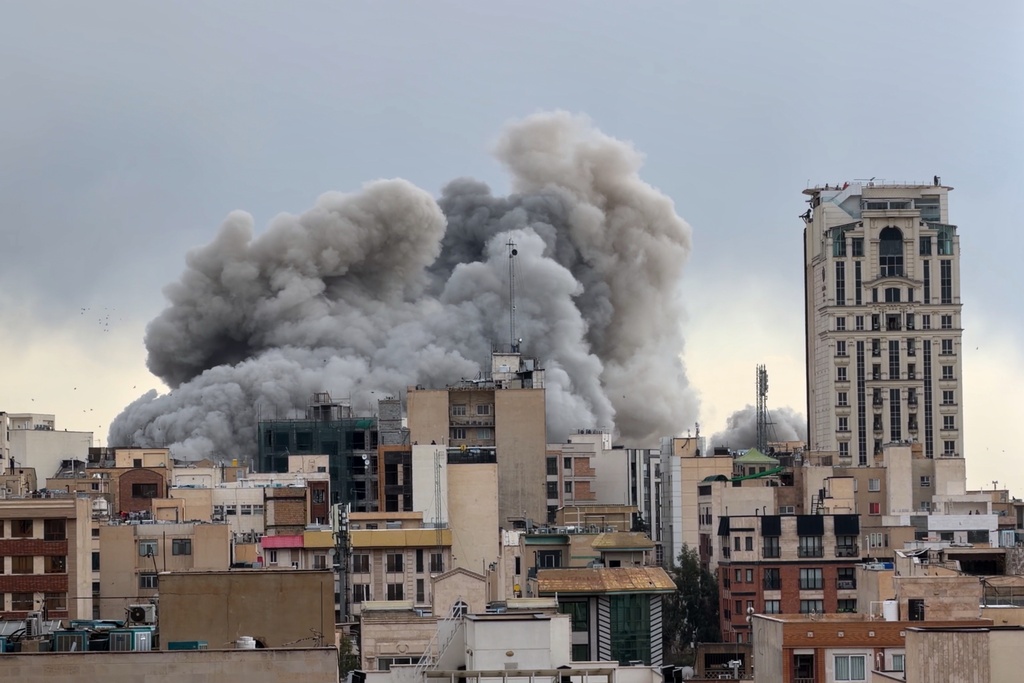
The strikes reflect the deteriorating position of Arab Gulf allies five months into the conflict.
By Bianca Jones, JFeed
Bahrain and Kuwait conducted secret airstrikes against Iranian military targets earlier this month in what the Wall Street Journal reported as their first known direct military retaliation against Tehran, marking a significant escalation by Arab Gulf states tired of absorbing Iranian strikes without response.
The strikes targeted drone and missile storage facilities and other military sites inside Iran, according to the WSJ’s exclusive reporting based on people familiar with the operation.
The United Arab Emirates provided intelligence on target selection and defensive air cover for the operation, continuing a pattern of direct involvement that has seen the UAE conduct dozens of airstrikes against Iran during the ongoing regional conflict.
The retaliation came after weeks of sustained Iranian missile and drone attacks on both Bahrain and Kuwait, which host major U.S. military installations.
According to WSJ reporting, the two Gulf states, equipped with American and European fighter jets but possessing relatively small air forces, concluded they could no longer absorb Iranian punishment without responding.
Kuwait’s ambassador to the United States, Al-Zain Al-Sabah, denied the report after the WSJ article was published, stating that Kuwait did not participate in any military operations against Iran and did not allow its territory to be used for offensive operations.
Bahrain’s government spokesperson did not respond to requests for comment from the WSJ.
The UAE Foreign Ministry said in a statement that it supports reducing regional tensions and condemned the attacks on Kuwait and Bahrain, stating it “stands in full solidarity with these states and reaffirms its support for all measures aimed at safeguarding their security and stability.”
The strikes reflect the deteriorating position of Arab Gulf allies five months into the conflict.
Trade disruptions from the closed Strait of Hormuz, damaged tourism and investment, and new threats from Houthis in the Red Sea have strained their economies and security models.
Some analysts quoted in the WSJ suggested that prolonged conflict represents a worst-case scenario for Gulf state stability, with some officials privately considering more direct confrontation with Tehran.
Saudi Arabia, which participated in earlier UAE-led strikes, is currently evaluating its position. Oman and Qatar have shown little appetite for confrontation.
The post Bahrain and Kuwait secretly struck Iranian military sites in rare direct retaliation appeared first on World Israel News.