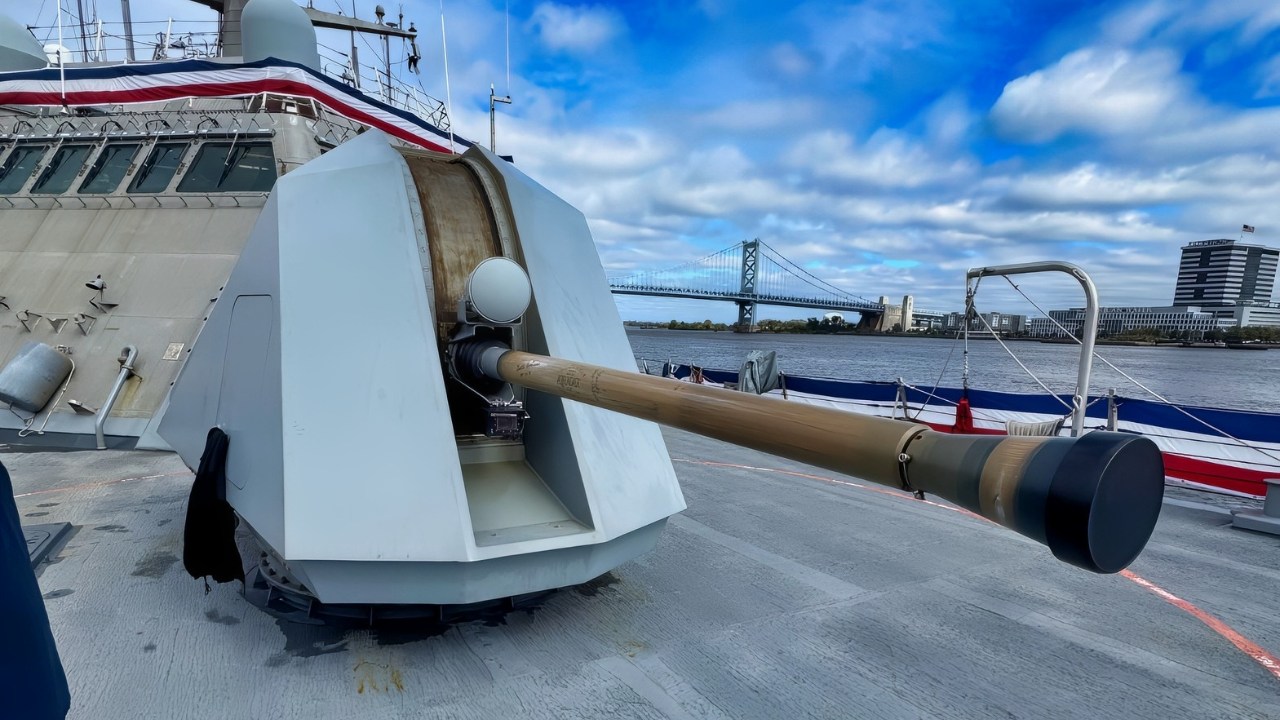
Over Memorial Day weekend this year, as most Americans were paying exorbitant prices on beef and other meats for significantly pared-down barbecues, the United States military blasted Iranian naval facilities. Per the White House, the US military attacked Iran in self-defense and in no way violated the carefully agreed-upon ceasefire between the Islamic Republic of Iran and the United States.
Nor, according to the White House, did these attacks represent the abandonment of what many had hoped would be a successful end to the war that the United States initiated on February 28.
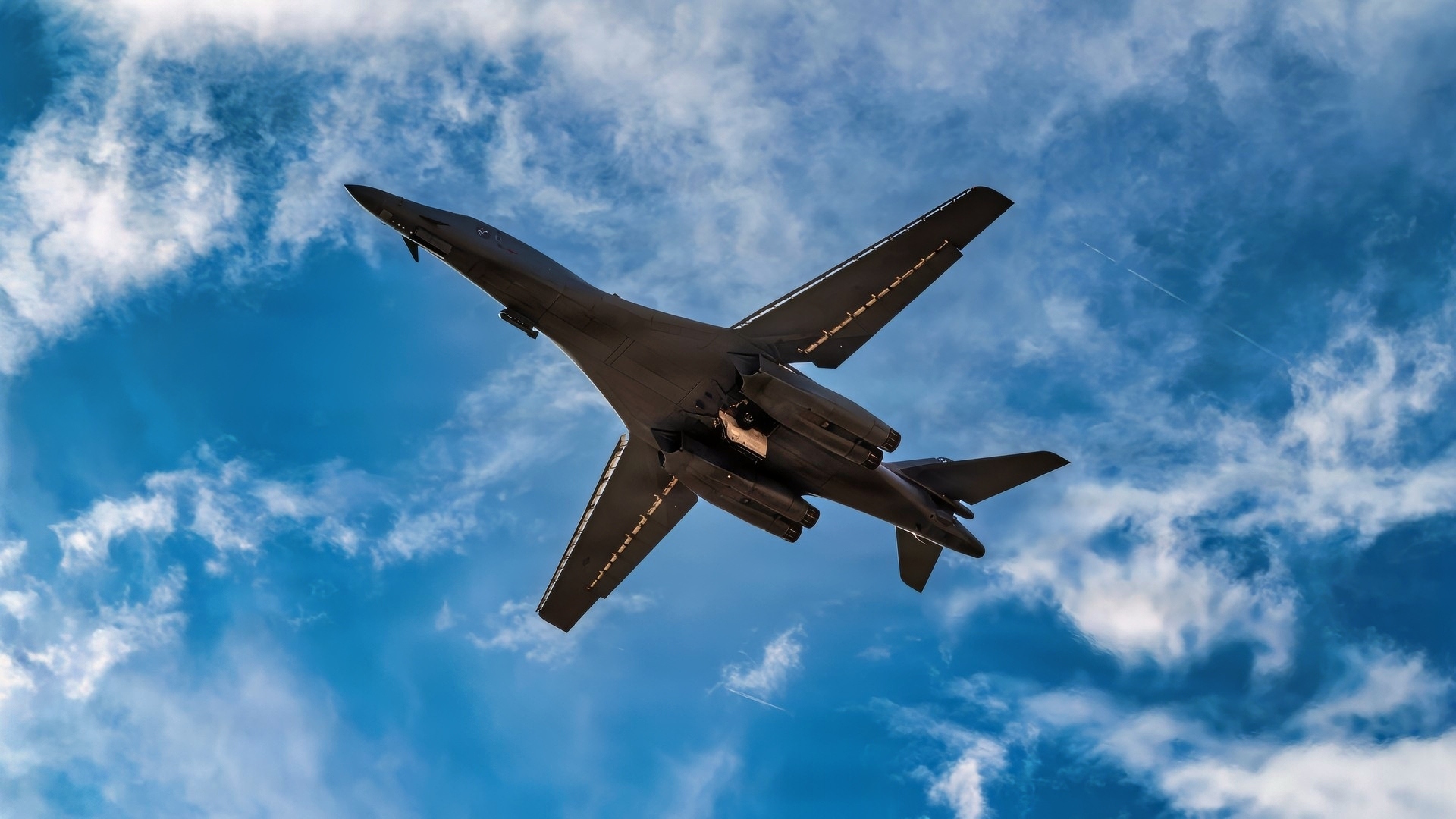
A U.S. Air Force B-1B Lancer assigned to the 28th Bomb Wing takes off in support of a U.S. Air Force Weapons School Integration at Nellis Air Force Base, Nevada, Nov. 18, 2025. The Weapons School trains students to be tactical experts in their combat specialty while also mastering battlespace dominance and integration of joint assets. (U.S. Air Force photo by Airman 1st Class Heather Amador)
Iranian officials described the American attack on them during the ceasefire as a “grave violation,” and newspapers the world over refer to the current lull in hostilities as a “fragile ceasefire.”
If the ceasefire breaks, as it looks to be on the verge of doing, then the Middle East is again in the throes of a major regional conflict that risks spreading into a world war.
The Strait of Hormuz Remains the Center of the Crisis
Events in the Middle East have drastically disrupted the world’s economy. Even with the ceasefire in place, the disruptions to the world’s energy, fertilizer, and other key commodity flows through the Strait of Hormuz are still occurring. That’s because neither the Iranian blockade nor the American counter-blockade of the critical oil transit chokepoint has let up.
Tehran insists it wants trade to resume through the waterway, but every nation and company that sends ships through the Strait of Hormuz must now pay a “navigational service fee” to pass. Tehran argues this is akin to the fees that shipping firms pay to move their goods through the Turkish Strait.
Washington, meanwhile, is adamantly opposed to this. As do the Gulf Arab states, all of which depend on the Strait of Hormuz for their economy.
Yet, the United States military has struggled to effectively use force against Iran to reopen the Strait and restore pre-war operations there. The Navy has struggled to reopen the strait due to Iran’s vast, complex web of coastal defenses and offensive capabilities arrayed along its expansive coastline bordering the Strait of Hormuz. Everything from drone swarms to anti-ship ballistic missiles (ASBMs) now threatens the safe passage of ships through the Strait of Hormuz.
And Iran has made clear it will only remove that threat if the world pays Tehran for using the Strait of Hormuz, which Iran claims is their territory.
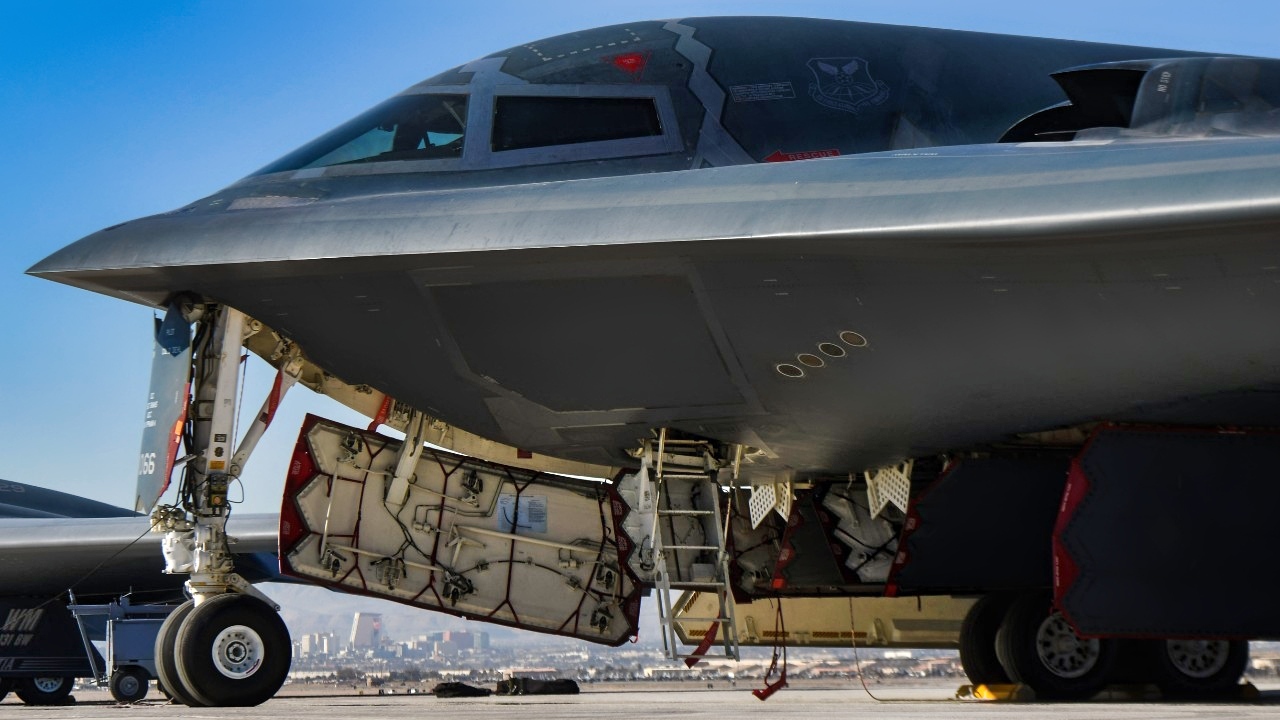
Three Whiteman Air Force Base 393rd Expeditionary Bomb Squadron B-2 Spirit stealth bombers sit on the runway during Red Flag-Nellis 22-1 on Jan. 26, 2022, at Nellis Air Force Base, Nevada. Red Flag-Nellis 22-1 provides realistic combat training that saves lives by increasing combat effectiveness. (U.S. Air Force photo by Senior Airman Michael A. Richmond)
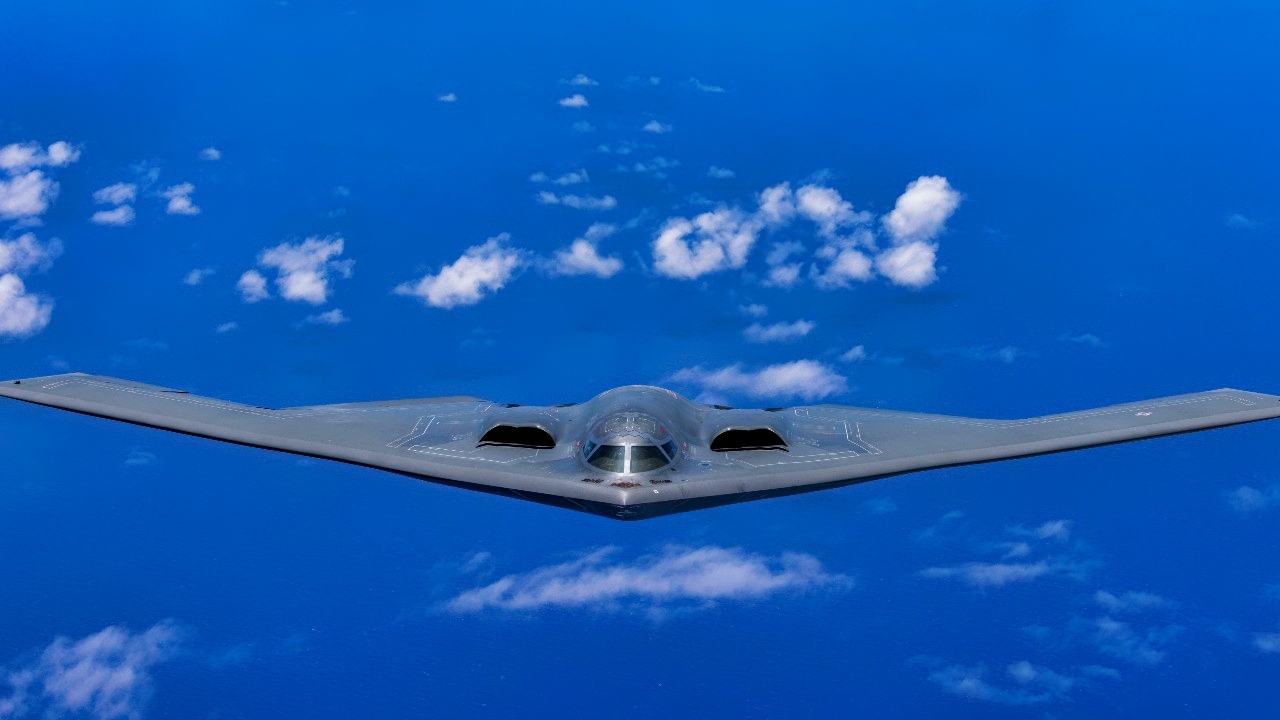
A U.S. Air Force B-2 Spirit bomber flies over the North Pacific Ocean, June 13, 2024. The speed, flexibility, and readiness of the Air Force’s strategic bombers plays a critical role in deterring potential adversaries and signaling unwavering support to allies and partners. Counter-maritime missions provide valuable training opportunities to improve interoperability and demonstrate that Air Force forces are capable of operating anywhere, anytime, to meet any challenge decisively. (U.S. Marine Corps photo by Sgt. Jose Angeles)
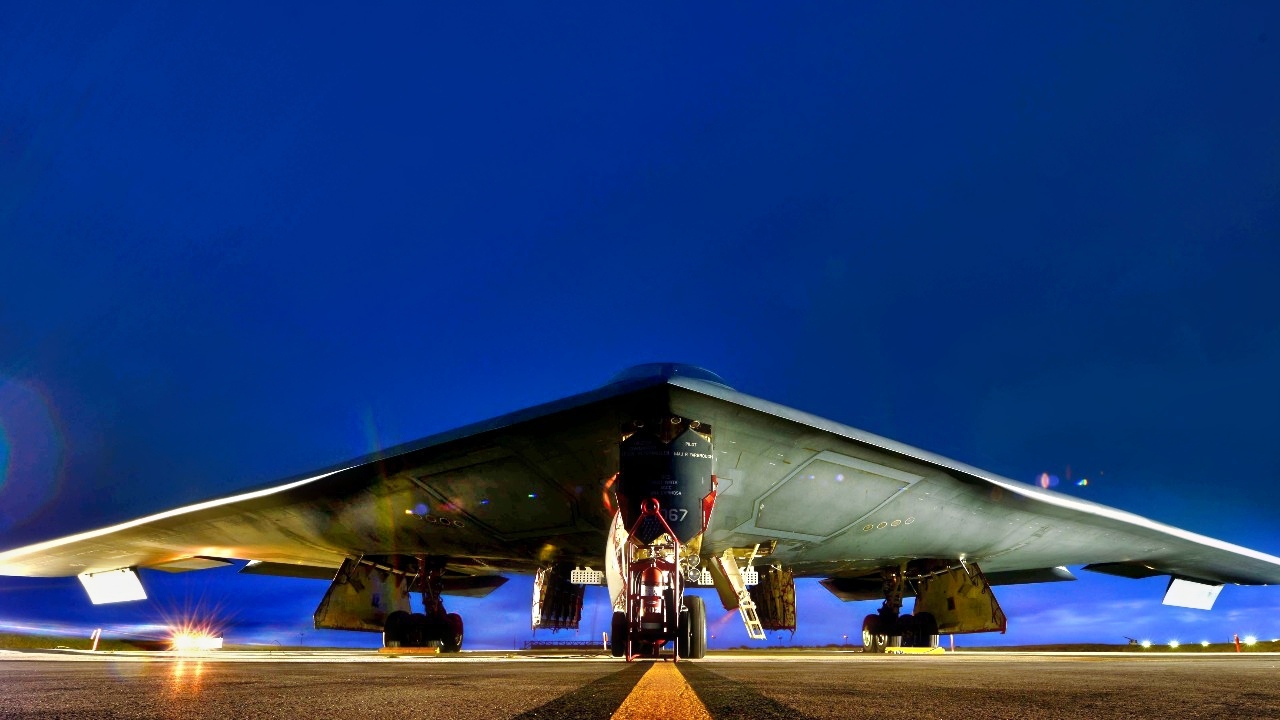
A U.S. Air Force B-2 Spirit aircrafts deployed from Whiteman Air Force Base, Mo., sits on the parkway after landing from a local training flight at Andersen Air Force Base, Guam, Jan. 17, 2017. Close to 200 Airmen and three B-2s deployed from Whiteman Air Force Base, Mo., and Barksdale Air Force Base, La., in support of U.S. Strategic Command Bomber Assurance and Deterrence missions. USSTRATCOM units regularly conduct training with and in support of the Geographic Combatant Commands. USSTRATCOM, through its global strike assets, helps maintain global stability and security while enabling units to become familiar with operations in different regions. (U.S. Air Force photo by Tech. Sgt. Andy M. Kin)
America’s Strategic Failure at Sea
While the Trump administration publicly frets over Iran’s alleged nuclear weapons capabilities, the reality is that the administration is much more pressed on the prospect that it can never reopen the Strait of Hormuz under pre-war conditions. Much of the rest of the world has expressed deep dissatisfaction with the war’s impact on global trade thus far. Nations far removed from the Middle East, like Singapore, worry that any precedent set by the Iranians in terms of exacting fees from ships to use the Strait of Hormuz could recur in waterways nearer to Singapore, like the critical Strait of Malacca.
Secretary of State Marco Rubio has already made clear his opposition to any deal that allows for Iran to codify their de facto control over the Strait of Hormuz into actual, legally recognized command of the Strait.
But the reality is that the United States Navy has repeatedly demonstrated an inability to use force to reopen the Strait. In fact, US Navy Adm. Daryl L. Caudie told the Senate Subcommittee on Defense for the Committee on Appropriations on May 21 of this year that “There are many things we can continue doing to enhance the blockade, but to actually start doing something where I’m providing escort services through a contested strait will, in my military opinion, exceed the capacity of the Navy to do that effectively.”
So, in other words, the Navy cannot use force to reopen the Strait. Before the war began, Sen. Tom Cotton (R-AL) whiffed whimsically that any war with Iran would resemble the 1987 Tanker War more than the 2003 Iraq War disaster.
Well, after months of fighting and a blockaded Strait of Hormuz, we now know that the Iran War of today (at least from the US Navy’s perspective) is nothing like the 1987 Tanker War, when the US Navy operated with near-impunity in the Strait of Hormuz after the Islamic Republic attempted to blockade shipping back then.
Is Trump Using Diplomacy as a Tactical Pause?
Anyway, the Americans had to wait for a tenuous ceasefire and another round of fruitless negotiations with Tehran to conduct strikes on Iranian naval assets that Tehran could deploy to harry any civilian (or US military) ships passing through the Strait of Hormuz.
The Iranians, who have been arguing that much of the alleged details US President Donald Trump and his key advisers shared about the proposed peace deal were wrong, are now saying that the deal is slipping away.
But what if the president never intended for the deal to last?
We have seen multiple occasions throughout this war (and, most infamously, in the run-up to the war) when the Trump administration employed negotiations with Tehran as a ruse to lull the Islamic Republic into a false sense of security. The American president initiated this war with the obvious goal of implementing regime change in Iran. He believed it would be a short, sharp war defined by a series of decapitation strikes on the Iranian leadership that would, in turn, allow for the repressed people of Iran to overthrow their government.
That did not occur. And Trump has been stuck in this conflict with no viable exit ever since. With the economic damage in the form of shortages, price spikes, and overall disruptions to the US economy now unavoidable, the president has no choice but to achieve his original goal of destroying the Iranian regime.
For those hoping for a peaceful end, that is the least likely outcome here. The more likely scenario is that Trump has simply bought himself time with diplomacy as a ruse. He can’t let the Iranians continue their chokehold on the Strait of Hormuz chokepoint, and Trump can’t risk the perception that he’s essentially surrendering to the Islamic Republic.
The lull in hostilities not only allows Trump to take some cheap shots at the Iranians but also gives the region time to get through the Hajj Pilgrimage to Mecca.
The Hajj Factor and the Next Phase of the War
That’s another poorly understood component of the alleged peace talk story. Right now, the biggest event in the Islamic faith is underway, as pilgrims from all over the Muslim world flock to the Kingdom of Saudi Arabia to visit the holiest site in Islam: Mecca.
In a little more than a week, though, that holy event will be over. Most of the pilgrims will return to their homes. And Trump will have avoided warring with a Muslim nation, like Iran, during the holiest period in the Islamic faith.
At that point, the prospects of violence erupting again between the US, Israel, and Iran increase. More importantly, the Israelis have made clear that they will not adhere to any deal that President Trump may enact with Iran’s leadership if Tel Aviv believes that the deal infringes on their national security.
There have already been limited violations of the ceasefire between Israel and Iran’s proxy in Lebanon, Hezbollah. The government of Israeli Prime Minister Benjamin Netanyahu attempted to stop the linkage of the US-Iran talks with Israel’s current war in Southern Lebanon, ostensibly against Hezbollah. Israel has solidified that opposition by continuing their attacks in Southern Lebanon. Iran says it cannot make a deal with America until Washington restrains its proxy in Israel from attacking Lebanon.
A War With No Stable Equilibrium
Here again is the reality that the world faces in the war. There is no stasis among the three sides fighting. Therefore, whatever temporary ceasefires may occur, they are mere pauses in a longer war based upon maximalist aims. For America and Israel, the regime in Iran must go. They have wedded themselves to that objective.
For Iran, the Islamic Republic must survive. Not only must the regime survive, but it must dictate new conditions on the ground. That’s why Tehran is committed to controlling the Strait of Hormuz.
If Trump is serious about a peace deal (and this author remains skeptical), then he will have no choice but to acquiesce to Iran’s demands that Washington and the world recognize their control over the Strait of Hormuz. No one, not even Russia and China, is comfortable with recognizing Iranian control over the Strait of Hormuz, fearing the implications it will have elsewhere in the world.
Yet, the US military has struggled to get a kill shot against the regime in Iran. The US and Israel have had difficulty in even reopening the Strait of Hormuz. Nevertheless, if peace terms are too painful for the US and Israel, they will resort to war against Iran. Another round of fighting will have dangerous and unpredictable consequences, not just for the warring parties, but for the world that completely depends upon the Strait of Hormuz.
The Global Economic Stakes
Should the lockdown of the waterway continue in perpetuity, a global depression might be at hand.
These are the stakes going forward. But the recent spate of US airstrikes against Iran, even though a ceasefire was in place and negotiations toward peace were ongoing, indicates that peace is not a likely outcome.
About the Author: Brandon J. Weichert
Brandon J. Weichert is Senior National Security Editor. Recently, Weichert became the editor of the “NatSec Guy” section at Emerald. TV. He was previously the senior national security editor at The National Interest. Weichert hosts The National Security Hour on iHeartRadio, where he discusses national security policy every Wednesday at 8 p.m. Eastern. He hosts a companion show on Rumble entitled “National Security Talk.” Weichert consults regularly with various government institutions and private organizations on geopolitical issues. His writings have appeared in numerous publications, among them Popular Mechanics, National Review, MSN, and The American Spectator. And his books include Winning Space: How America Remains a Superpower, Biohacked: China’s Race to Control Life, and The Shadow War: Iran’s Quest for Supremacy. Weichert’s newest book, A Disaster of Our Own Making: How the West Lost Ukraine, is available for purchase at any bookstore. Follow him via Twitter/X @WeTheBrandon.