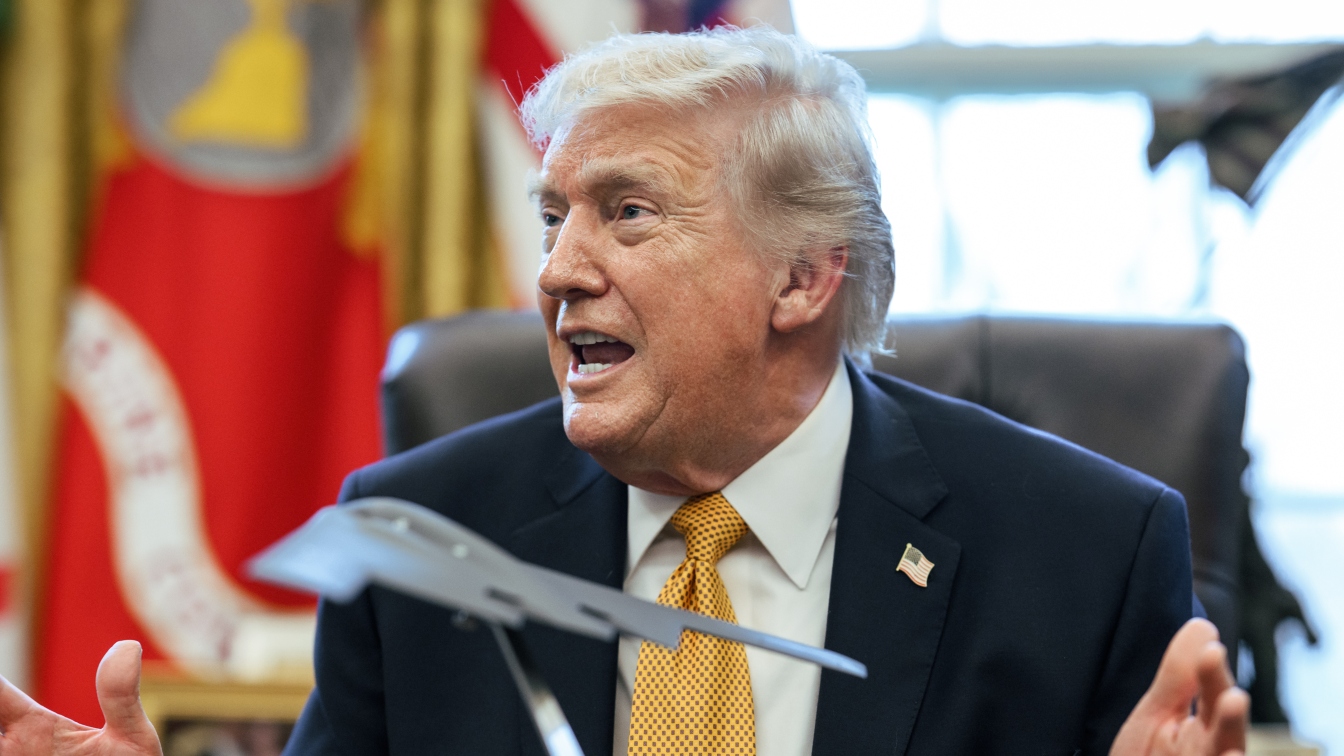
U.S. President Donald Trump sought to assure global partners on Wednesday that there would be no tolls charged in the Strait of Hormuz.
The president’s comments appeared to suggest that American negotiators had secured a concession from Iran on a permanent basis, meaning that passage will be free for commercial vessels during the 60-day negotiating period and afterward, too.
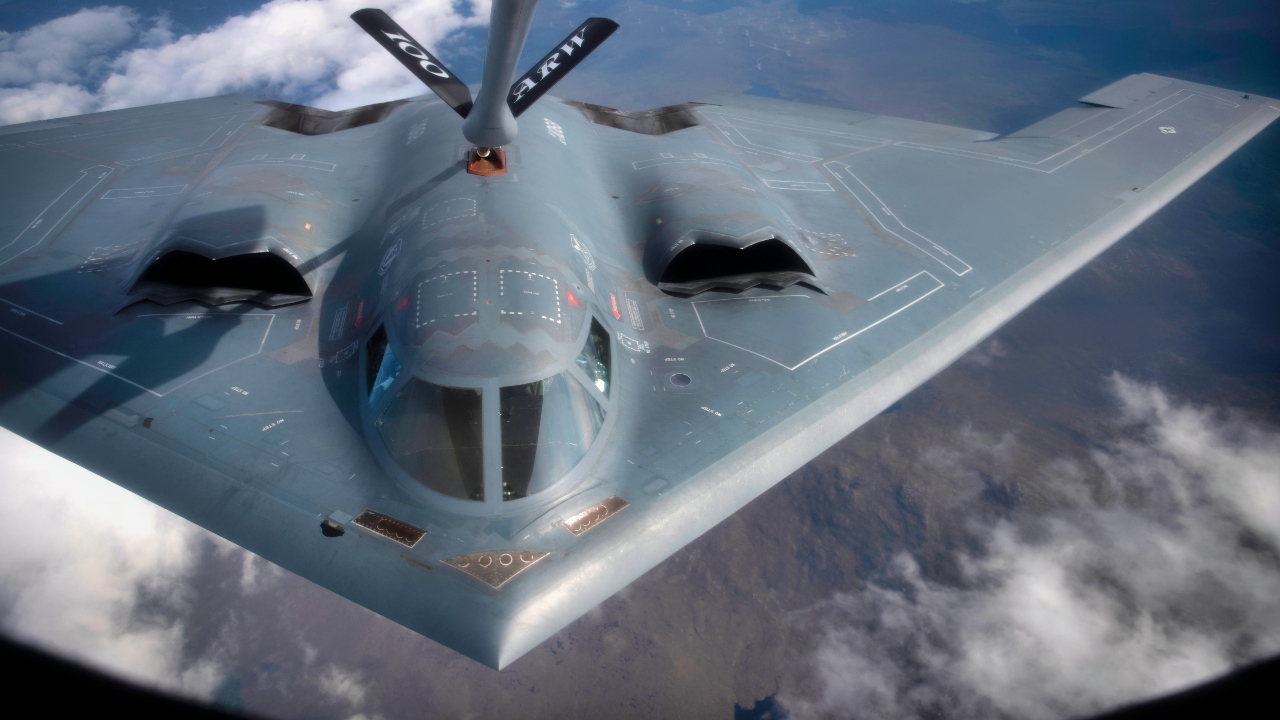
A U.S. Air Force B-2 Spirit assigned to the 509th Bomb Wing, Whiteman Air Force Base, Missouri, is refueled by a KC-135 Stratotanker assigned to the 351st Aerial Refueling Squadron, RAF Mildenhall, during the Bomber Task Force training exercise over England, Aug. 29, 2019. Training with partners, allied nations and other U.S. Air Force units contributes to global readiness and enables the strengthening of enduring and strategic relationships throughout the theater. (U.S. Air Force photo by Tech. Sgt. Emerson Nuñez)
Writing on Truth Social, the president denied media reports and claims that Iran was preparing to charge vessels for passage.
What Trump Said
“Iran has informed the U.S. that, despite troublemaking Fake News reporting to the contrary, there are ‘NO TOLLS, NO INSURANCE COSTS, & NO OTHER CHARGES OF ANY KIND BEING SOUGHT OR RECEIVED BY IRAN ON SHIPS TRAVELING THE STRAIT OF HORMUZ.’”
The president then indicated that, if Iranian negotiators are not telling him the truth, he would bring negotiations to an end.
“If this is false information, negotiations would end immediately!” Trump said.
In the same post, the president also sought to dispel rumors that the United States had committed money to Iran.
“Additionally, no money has been given to Iran, or released from the U.S. to them, by the U.S.
We will be releasing some of their money, which is totally controlled by us, to our Farmers and Ranchers for the purchase of Corn, Wheat, Soybeans, and more.
Food is desperately needed in Iran, and we will be purchasing it for them exclusively from the United States,” the president said.
What Rubio Said
U.S. Secretary of State Marco Rubio also doubled down on the American position on tolls, telling the media at the beginning of a tour in the United Arab Emirates this week that the Strait of Hormuz is an “international waterway” that no nation can control.
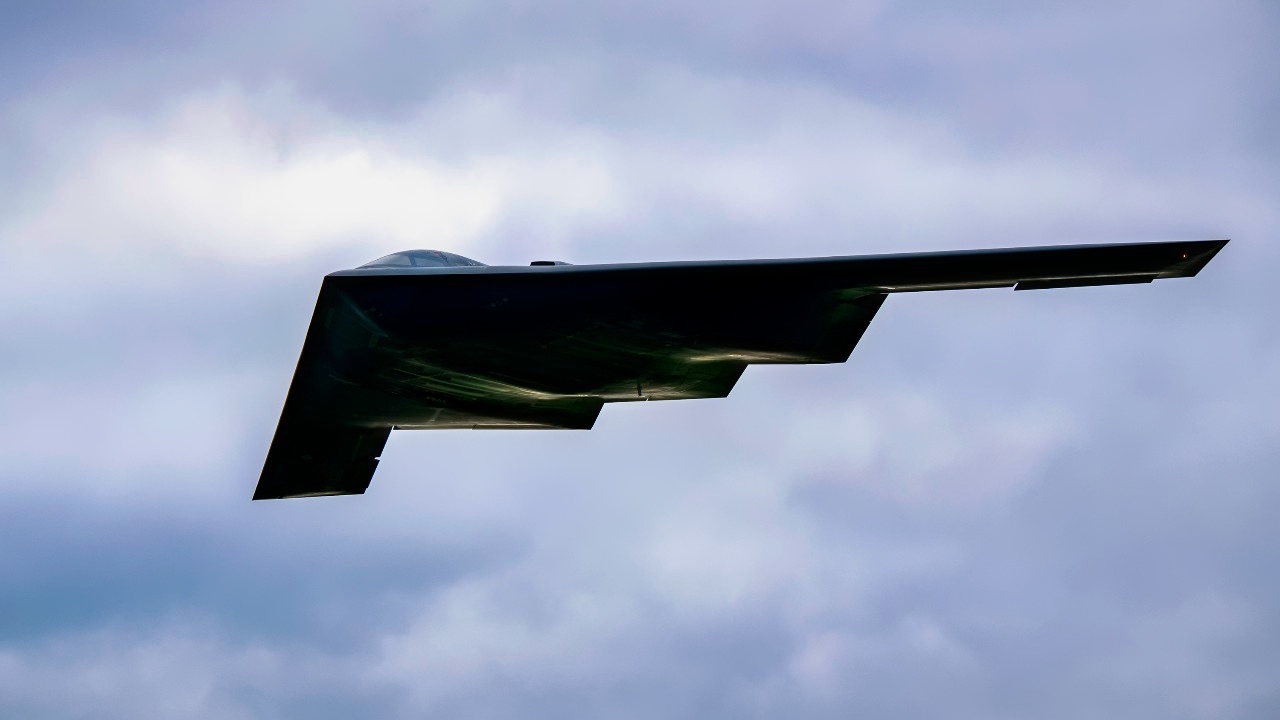
A B-2 Spirit assigned to the 509th Bomb Wing flies overhead at RAF Fairford, England, Aug. 25, 2021. The B-2 flyover was part of a Bomber Task Force mission in which aircraft conduct theater and flight training across Europe and Africa. The BTF missions, which have been occurring since 2018, provide theater familiarization for aircrew members and opportunities for U.S. integration with NATO allies and regional partners. The bomber missions enhance readiness and provide the training necessary to respond to any potential crisis or challenge across the globe. (U.S. Air Force photo by Senior Airman Eugene Oliver)
“It’s an international waterway. No country is allowed to charge tolls or fees on an international waterway,” Rubio said, adding that “all the countries” in the region around Hormuz would agree with him.
What Trump Was Responding To
Soon after the signing of the memorandum of understanding (MOU) between Tehran and Washington, reports suggested that Iran was preparing to introduce a series of maritime “service fees” in the Strait of Hormuz once the 60-day negotiating period ended.
In claiming victory against the United States, Tehran said that the Strait was still under Iranian control.
On June 15, the Iranian Fars news agency quoted an unnamed source who said that Tehran had successfully included a last-minute clause to the MOU shortly before its announcement.
“In the final moments of the negotiations, the text of the memorandum of understanding was amended to clearly and explicitly emphasize the issue of the Iranian-Omani sovereignty over the Strait of Hormuz,” Fars reported.
“The use of the term ‘maritime services’ means that the United States has accepted that fees will be paid to Iran,” the report continued.
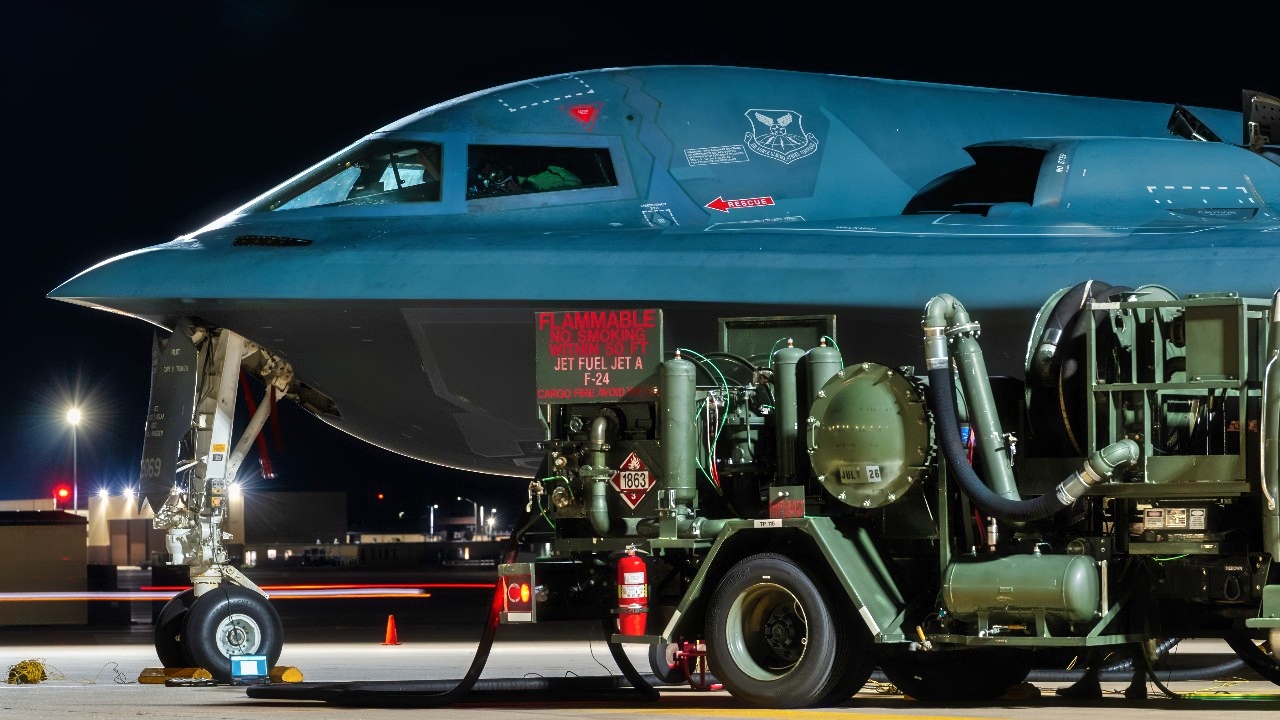
An R-12 hydrant service vehicle refuels a B-2 Spirit during hot-pit refueling operations at Whiteman Air Force Base, Missouri, May 28, 2025. Hot-pit refueling is the practice of refueling an aircraft immediately after landing while keeping the engines running. (U.S. Air Force photo by Staff Sgt. Joshua Hastings)
The claims are undoubtedly the source of the public confusion – but while the U.S. denies that any fees might be charged, reports this week indicated that Iran and Oman are in the process of studying charging service costs for Hormuz.
In a joint statement issued on Tuesday, Iran and Oman reaffirmed their “sovereign rights over their territorial waters,” but committed to “toll-free safe passage.”
It’s good news for the United States, but Iran continues to insist it will impose maritime transit fees, with Iranian chief negotiator Mohammad Bagher Ghalibaf saying the fees will take effect after the 60-day negotiating period.
Is This A Clever Negotiating Ploy?
While Trump plays down talk of tolls, Iranian negotiators are still talking about “service fees.” This is an important distinction.
Before the war, passage through the Strait of Hormuz was relatively simple. Ships transiting the waterway did not pay any dedicated transit tolls to Iran or Oman.
There were no other passage charges. Vessel operators incurred costs, which were normal for international shipping, including insurance premiums, port fees, and more.
Commercial expenses, however, are not comparable to tolls.
But if Iranian negotiators are to be believed, that system will not remain. Ghalibaf has already said that management of the Strait of Hormuz will “never return to the pre-war situation.” The comments were made during his return flight from Switzerland.
What is still unclear, though, is whether these plans will survive the 60-day negotiating period. One possibility is that President Donald Trump will ultimately succeed in persuading Iran and Oman to abandon the concept of maritime service fees, if that is, in fact, their current line of thinking.
It is also possible that the maritime service fee survives in another form, and President Trump avoids the politically sensitive label “toll.”
Or, in true Trump negotiating style, it’s entirely possible that Iran secures other concessions that provide financial relief in place of tolls.
Those charges would not appear as per-transit payments, but would provide Iran with a new revenue stream or benefit that, in the long term, surpasses the revenue or benefit of charging a per-passage toll.
About the Author: Jack Buckby
Jack Buckby is a British researcher and analyst specializing in defense and national security, based in New York. His work focuses on military capability, procurement, and strategic competition, producing and editing analysis for policy and defense audiences. He brings extensive editorial experience, with a career output spanning over 1,000 articles at 19FortyFive and National Security Journal, and has previously authored books and papers on extremism and deradicalization.