

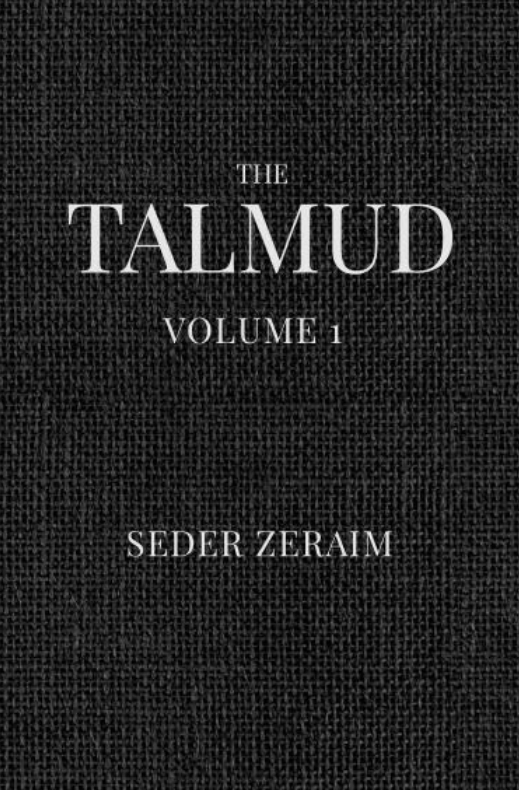
AT the very least, The Talmud offers incredible historical insight into the Rabbinical understanding of the Torah. Though its wealth of knowledge is not for everyone. How about you. Do you dig it? I’m a bit of an archeologist myself. I’m also hungry for some brisket and kugel at the moment. Maybe a little bagels and lox on the side. I’d even settle for some Matzo Ball Soup. In other news, the Torah Portions cycle is about to renew in the autumn and I’m aiming to up my game with the breadth of research offered to the TUC Community. Therefore, the complete Talmud, all 6 volumes, are offered for those of you who are interested in Rabbinical insight and prefer reading from actual paper rather than a computer screen. Each volume includes both the Hebrew and the English translation.
You can pick up your copies in the TUC Store.
The Talmud is not a single book, but a massive compilation of Jewish oral law and commentary. It is divided into six major orders (Shisha Sedarim), which are further divided into 63 tractates (masekhet). The entire collection consists of the foundational Mishnah (the oral law) and the Gemara (subsequent rabbinic analysis).
The six orders, along with their primary themes and included tractates, are organized as follows:
1. Zeraim (Seeds)
Deals with agricultural laws, tithes, and blessings.
-
Tractates: Berachot, Peah, Demai, Kilayim, Sheviit, Terumot, Ma’aserot, Ma’aser Sheni, Challah, Orlah, Bikkurim.
2. Moed (Festival)
Details the laws of the Sabbath, Jewish holidays, and fast days.
-
Tractates: Shabbath, Eruvin, Pesachim, Shekalim, Yoma, Succah, Beitzah, Rosh Hashana, Taanit, Megillah, Moed Katan, Chagigah.
3. Nashim (Women)
Covers marriage, divorce, contracts, and family laws.
-
Tractates: Yevamot, Ketubot, Nedarim, Nazir, Sotah, Gittin, Kiddushin.
4. Nezikin (Damages)
Focuses on civil and criminal law, torts, damages, and ethics.
-
Tractates: Bava Kamma, Bava Metzia, Bava Batra, Sanhedrin, Makkot, Shevuot, Eduyyot, Avodah Zarah, Avot (Pirkei Avot), Horayot.
5. Kodashim (Holy Things)
Contains laws related to the Temple sacrifices, dietary laws (Kashrut), and the priesthood.
-
Tractates: Zevachim, Menachot, Chullin, Bekhorot, Arakhin, Temurah, Keritot, Me’ilah, Tamid, Middot, Kinnim.
6. Taharot (Purities)
Discusses the laws of ritual purity and impurity.
-
Tractates: Keilim, Oholot, Negaim, Parah, Taharot, Mikvaot, Niddah, Makhshirin, Zavim, Tevul Yom, Yadayim, Uktzin.