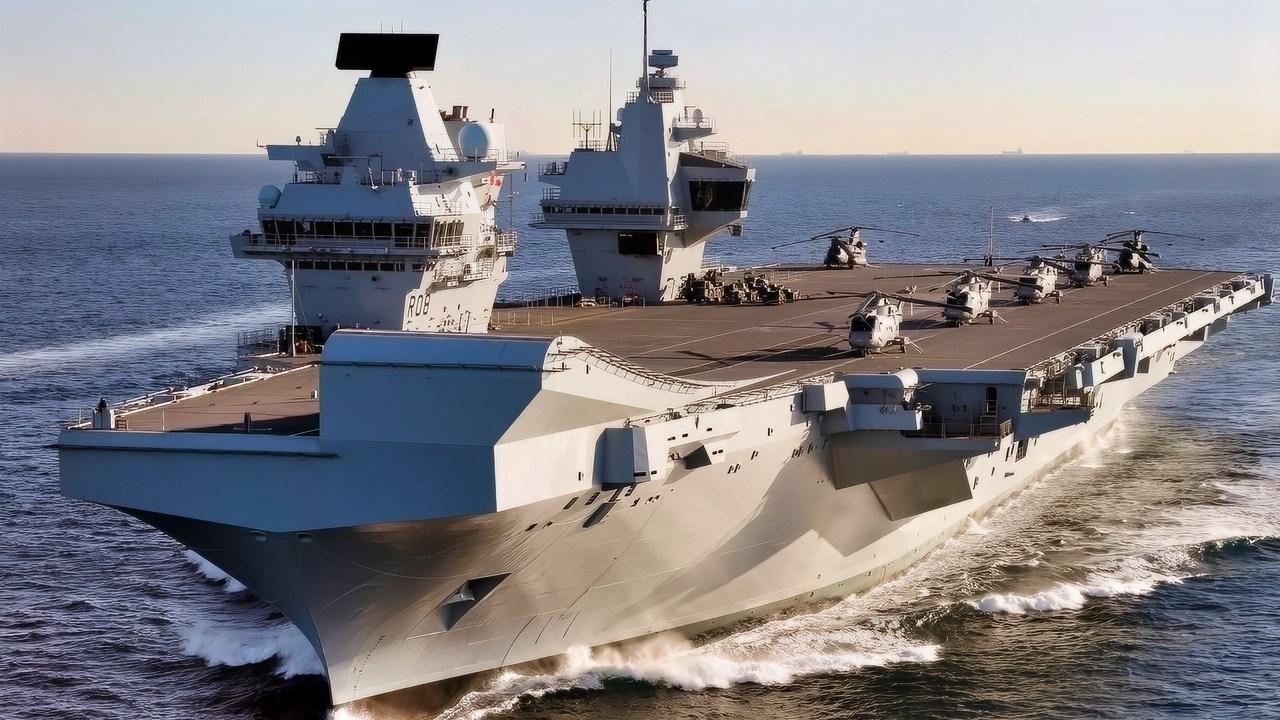
The Royal Navy’s two Queen Elizabeth-class aircraft carriers were built to restore Britain’s global carrier strike capability after the retirement of HMS Ark Royal and the Harrier force in 2011. But despite the scale of the project, the United Kingdom may never regularly deploy the kind of large fixed-wing air wings traditionally associated with modern aircraft carriers. Recent operations aboard HMS Prince of Wales have demonstrated that Britain can still field a credible fifth-generation carrier strike group centered on the American F-35B Lightning II, but they have also highlighted the practical limits to sustaining large deployments of stealth fighters at sea. Rising F-35 costs and engineer shortages, along with a limited number of available escort ships and the increasing role of drones, mean the Royal Navy is moving toward a much smaller, more distributed carrier aviation model.
How Britain Rebuilt Carrier Strike On A Smaller Scale
The Queen Elizabeth-class program was launched after Britain lost its carrier strike capability as part of sweeping defense cuts in the early 2010s, during a controversial period of austerity under the coalition government.
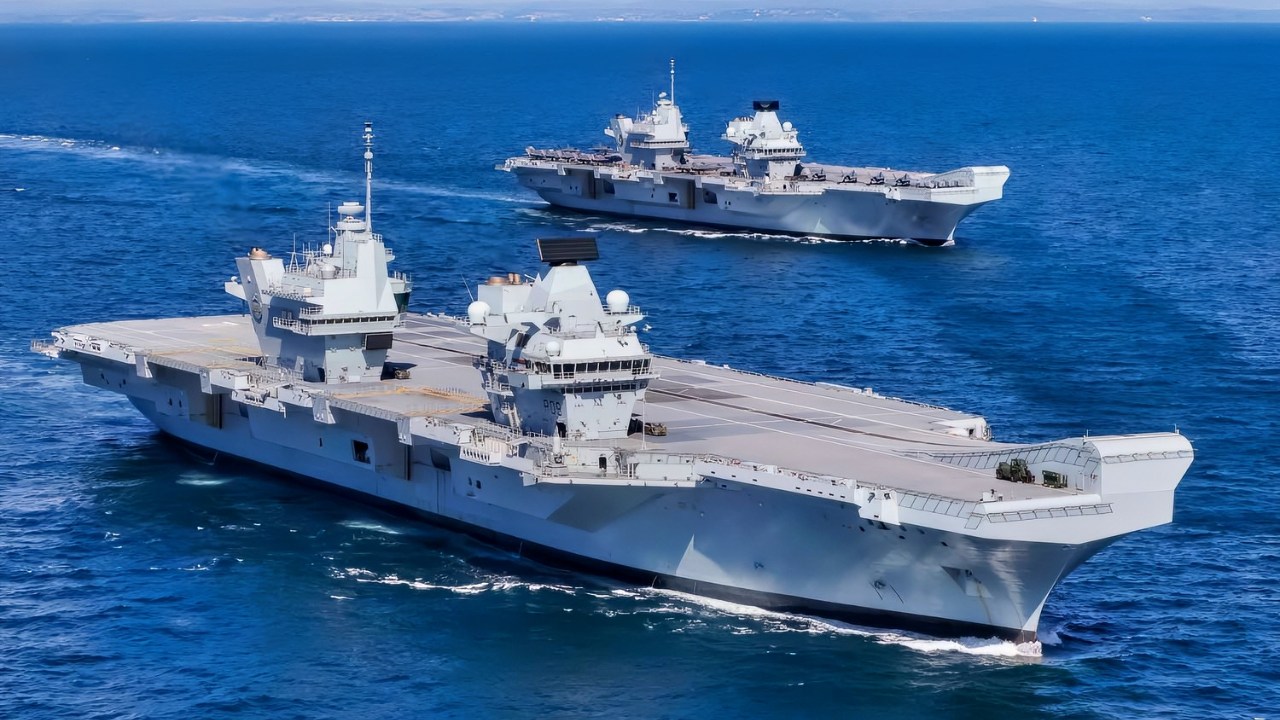
HMS Prince of Wales and HMS Queen Elizabeth pictured at sea for the first time. Image Credit: Royal Navy.
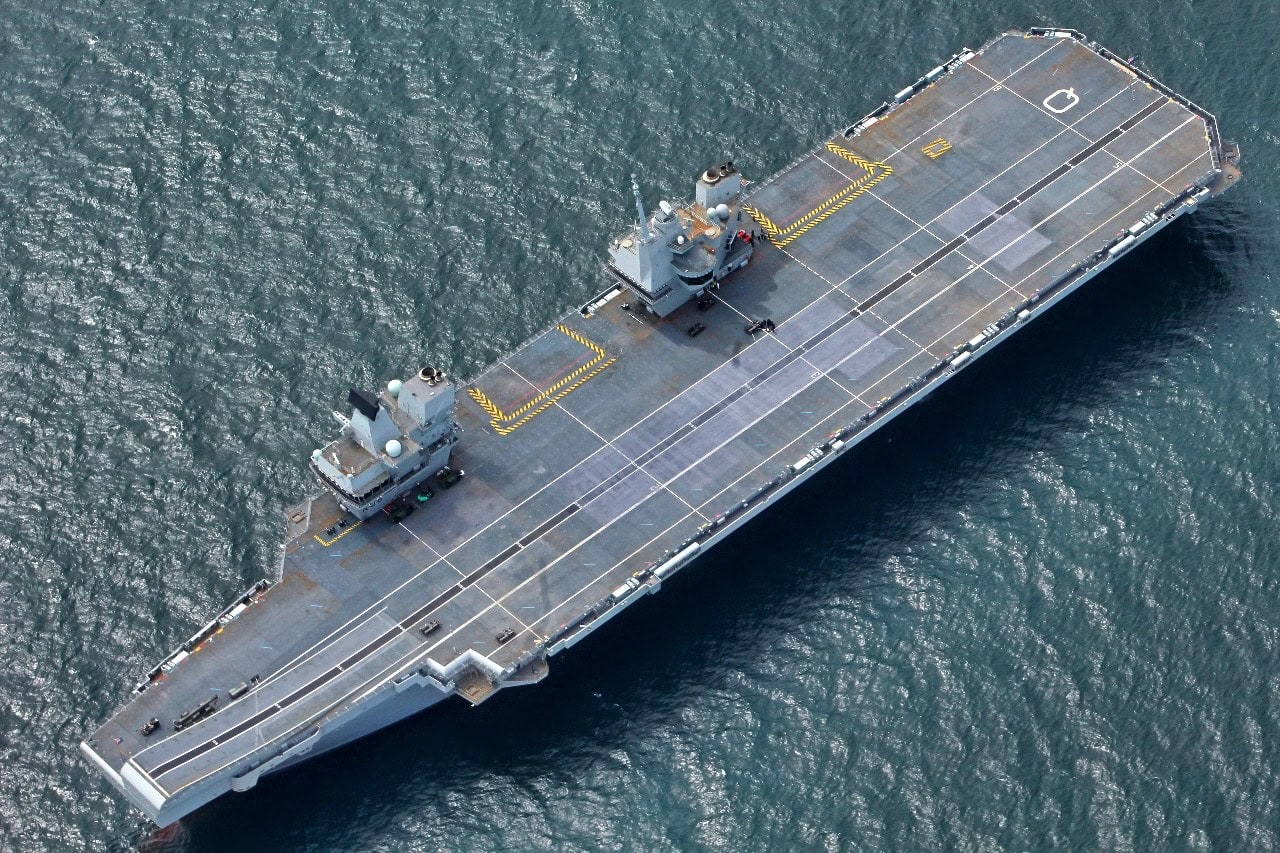
Queen Elizabeth-Class. Image Credit: Creative Commons.
HMS Ark Royal was retired in 2011 alongside its Harrier GR9 fleet, leaving the United Kingdom without carrier-based fixed-wing aviation during the NATO intervention that followed later that year. HMS Queen Elizabeth was commissioned in 2017, followed by HMS Prince of Wales in 2019, which restored a capability Britain had effectively lost for nearly a decade.
The two carriers displace around 65,000 tons and were specifically designed for the short-takeoff-and-vertical-landing F-35B variant rather than conventional catapult-launched aircraft.
Unlike U.S. Navy supercarriers, the British ships use ski-jumps and cannot operate aircraft such as the E-2D Hawkeye airborne early-warning platform or carrier-based electronic attack aircraft. Their air wings are therefore smaller and more specialized from the outset.
Originally, the British government committed to purchasing 138 F-35 aircraft over the life of the program.
However, the Ministry of Defense currently has only 48 F-35Bs on contract, with the National Audit Office reporting in 2025 that just 38 had been delivered at the time of publication and that no approved timetable existed for acquiring the remaining aircraft.
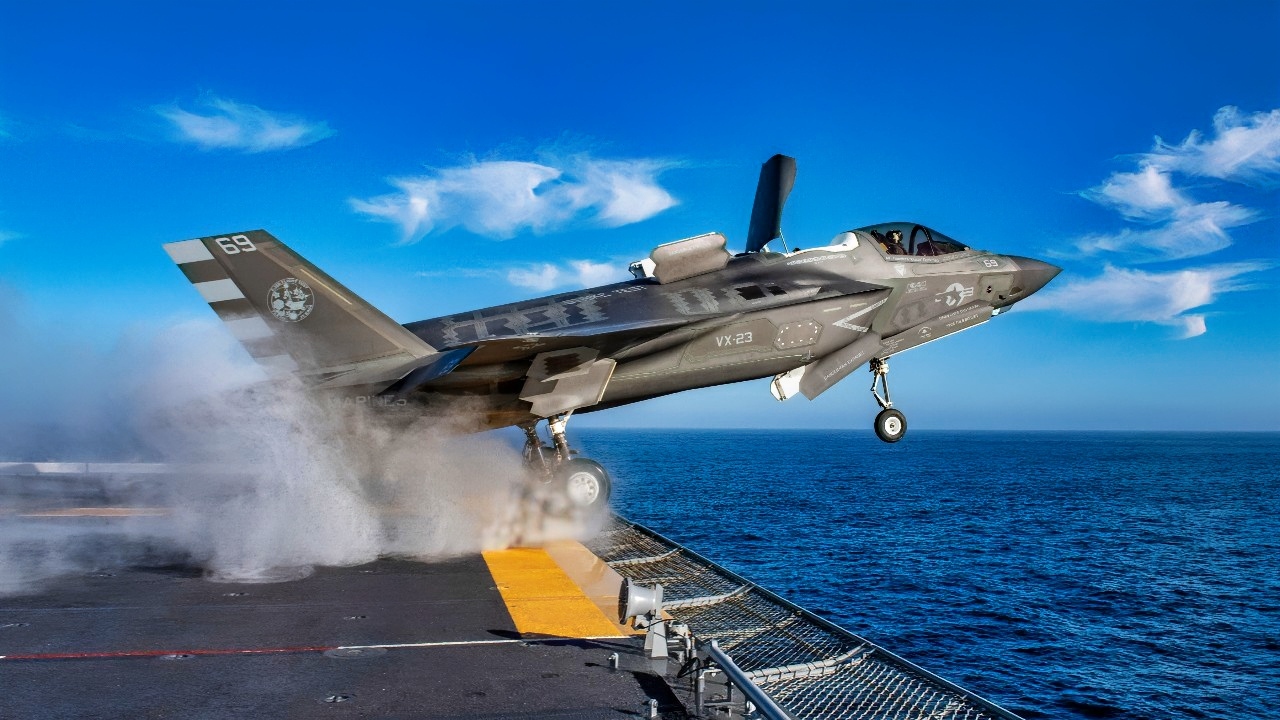
A joint team consisting of F-35 Patuxent River Integrated Test Force flight test members, U.S. Sailors and Marines, and the crew of the Japan Maritime Self-Defense Force Izumo-class multi-functional destroyer JS Kaga (DDH-184) are executing developmental sea trials in the eastern Pacific Ocean to gather the necessary data to certify F-35B Lightning II short takeoff and vertical landing aircraft operations. While aboard the MSDF’s largest ship, the Pax ITF flight test team has been gathering compatibility data for analysis in order to make recommendations for future F-35B operational envelopes, further enhancing the Japanese navy’s capabilities. The results of the testing will contribute to improved interoperability between Japan and the United States, strengthening the deterrence and response capabilities of the Japan-U.S. alliance and contributing to peace and stability in the Indo-Pacific region. Japan is an F-35 Joint Program Office foreign military sales customer planning to purchase 42 F-35Bs. The F-35 Joint Program Office continues to develop, produce, and sustain the F-35 Air System to fulfill its mandate to deliver a capable, available, and affordable air system with fifth-generation capabilities.
And even the Royal Navy’s largest-ever F-35 deployment has demonstrated the scale difference compared to U.S. carrier aviation. HMS Prince of Wales embarked 24 British F-35Bs during Operation Highmast in late 2025, the largest number ever carried aboard a British warship, but still far below the 60-plus aircraft that are routinely deployed aboard American supercarriers.
It’s Not Just About F-35s
The Royal Navy’s biggest challenge is not simply acquiring additional F-35s but sustaining an entire carrier strike ecosystem around them.
The F-35B is the most expensive and maintenance-intensive variant of the Joint Strike Fighter family because of its lift fan and vertical landing systems. In July 2025, the National Audit Office warned that the Ministry of Defense faced serious capability gaps across the F-35 program, including shortages of spare parts, engineers, support infrastructure, and trained personnel. That is, of course, a particularly significant problem for a force that is already much smaller than its U.S. counterpart.
The report estimated that the total UK F-35 program could ultimately cost roughly £71 billion, once infrastructure, training, personnel, and sustainment expenses are fully included. That was dramatically higher than earlier government estimates.
Operational readiness has also become a major issue for the United Kingdom, with reports indicating that Britain’s F-35 fleet was achieving only roughly one-third of its target mission-capable rate, and that engineer and spare parts shortages were reducing pilot flying hours.
Notably, during the Royal Navy’s eight-month-long Operation Highmast deployment in 2025, HMS Prince of Wales operated with an embarked force of roughly 18 British F-35B Lightning II stealth fighters for most of the mission, sailing through the Mediterranean and the Indo-Pacific alongside allied warships.
The deployment culminated in NATO’s Falcon Strike exercise in November, when the carrier temporarily increased its air wing to 24 F-35Bs – the largest number of British stealth fighters ever assembled aboard a Queen Elizabeth-class carrier – to formally achieve the UK carrier strike group’s Full Operational Capability milestone.
For reports, the additional six aircraft were flown from RAF Marham to the eastern Mediterranean to meet the 24-jet requirement for certification.
It was later revealed that the Royal Air Force and Royal Navy had to temporarily reassign instructors and aircraft from No. 207 Squadron, the F-35 Operational Conversion Unit at RAF Marham, to make the surge possible- a decision that interrupted parts of the normal pilot training pipeline in the process.
The result is that Britain’s aircraft carriers are being used as a different kind of naval aviation platform than originally envisioned for the Queen Elizabeth-class program.
The Royal Navy has proven it can field a credible fifth-generation carrier strike group and sustain global deployments far from Europe, but practical realities mean it cannot always do so due to limitations in fleet size, maintenance, cost, and manpower.
About the Author: Jack Buckby
Jack Buckby is a British researcher and analyst specializing in defense and national security, based in New York. His work focuses on military capability, procurement, and strategic competition, producing and editing analysis for policy and defense audiences. He brings extensive editorial experience, with a career output spanning over 1,000 articles at 19FortyFive and National Security Journal, and has previously authored books and papers on extremism and deradicalization.