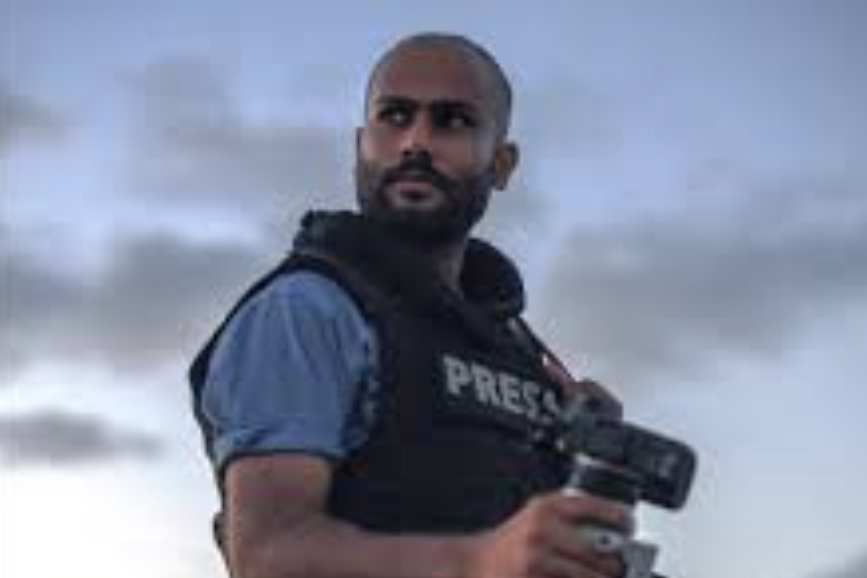
Palestinian photographer whose photos fueled debunked Gaza famine narrative awarded Pulitzer Prize

Uncategorized

Saher Alghorra

Israel has rejected accusations that it is using hunger as a weapon, saying any shortages are a result of the war and Hamas actions.

By Vered Weiss, World Israel News

The Pulitzer Prize was awarded to Palestinian photographer Saher Alghorra for his images of Gaza, including photographs tied to disputed claims about starvation during the war, drawing renewed attention to competing narratives over conditions in the territory.

The prize committee said it was honoring Alghorra “for his haunting, sensitive series showing the devastation and starvation in Gaza resulting from the war with Israel.”

Alghorra worked for The New York Times, and one of his most widely circulated images was a photograph from the summer of 2025 showing a child in Gaza who appeared severely underweight. The image spread widely and became associated with claims of famine.

Israeli officials challenged that narrative. The Israeli military said civilians were not being deliberately starved during the campaign and maintained that food supplies were reaching the population.

The New York Times later updated its reporting on the child, stating that he had a medical condition that affected muscle development.

The publication also removed a quote attributed to his mother that said he had been healthy before the war began on Oct. 7, 2023. The newspaper did not withdraw its broader reporting on conditions in Gaza.

Separate reporting by The Media Line and other outlets has also disputed claims of widespread famine. These reports describe aid entering Gaza but say it is often intercepted or looted by Hamas operatives and local gangs instead of reaching civilians.

According to that account, Hamas exerts control over distribution systems and may contribute to shortages. Israeli officials, including COGAT, have said there is no policy of starvation and have pointed to the entry of aid trucks carrying food and supplies.

Israel has rejected accusations that it is using hunger as a weapon, saying any shortages are a result of the war and Hamas actions.

Some reports also question data cited by international organizations or Gazan officials and point to images of markets and daily activity as evidence that conditions are more complex than claims of widespread famine suggest.

The post Palestinian photographer whose photos fueled debunked Gaza famine narrative awarded Pulitzer Prize appeared first on World Israel News.

IN the summer of 2019, I was seated in the wine cellar of a walled Medieval town high above the Dordogne Valley of France, not far from Sarlat-la-Canéda, making phone calls, writing reports. I have given this story in other places and it appears as though you’re about to hear it again. Rob Skiba is a name you that you might be familiar with. Though he had made a name for himself as a Nephilim researcher, more recently Rob had taken a dive into the deep end of the pool via flat earth research. The recorded interviews I conducted between he and Rick Hummer, a fellow flat earth investigator and close friend of his, was published while still occupying that very wine cellar. Read all about it. Chicago Is Not a Mirage.

Word quickly spread. Within a few short weeks, dozens of flat earth researchers began accepting my invite for a private interview, if not a series of interviews. From a 17th-century tower built by King Louis XIV, and with a stunning view of the Alps, I sat down with Robbie Davidson, founder of the Flat Earth International Conferences, conducting multiple sessions. While staying in Dumfries, Scotland, David Weiss agreed to take part in the interviews, as did Bob Knodel of Globebusters. There were others. But when I asked the interviewees to discuss the moments that shaped their lives, among the many PSYOPs, false flag attacks, and hoaxes that were discussed, only these men committed commentary to the false 9/11 narrative.

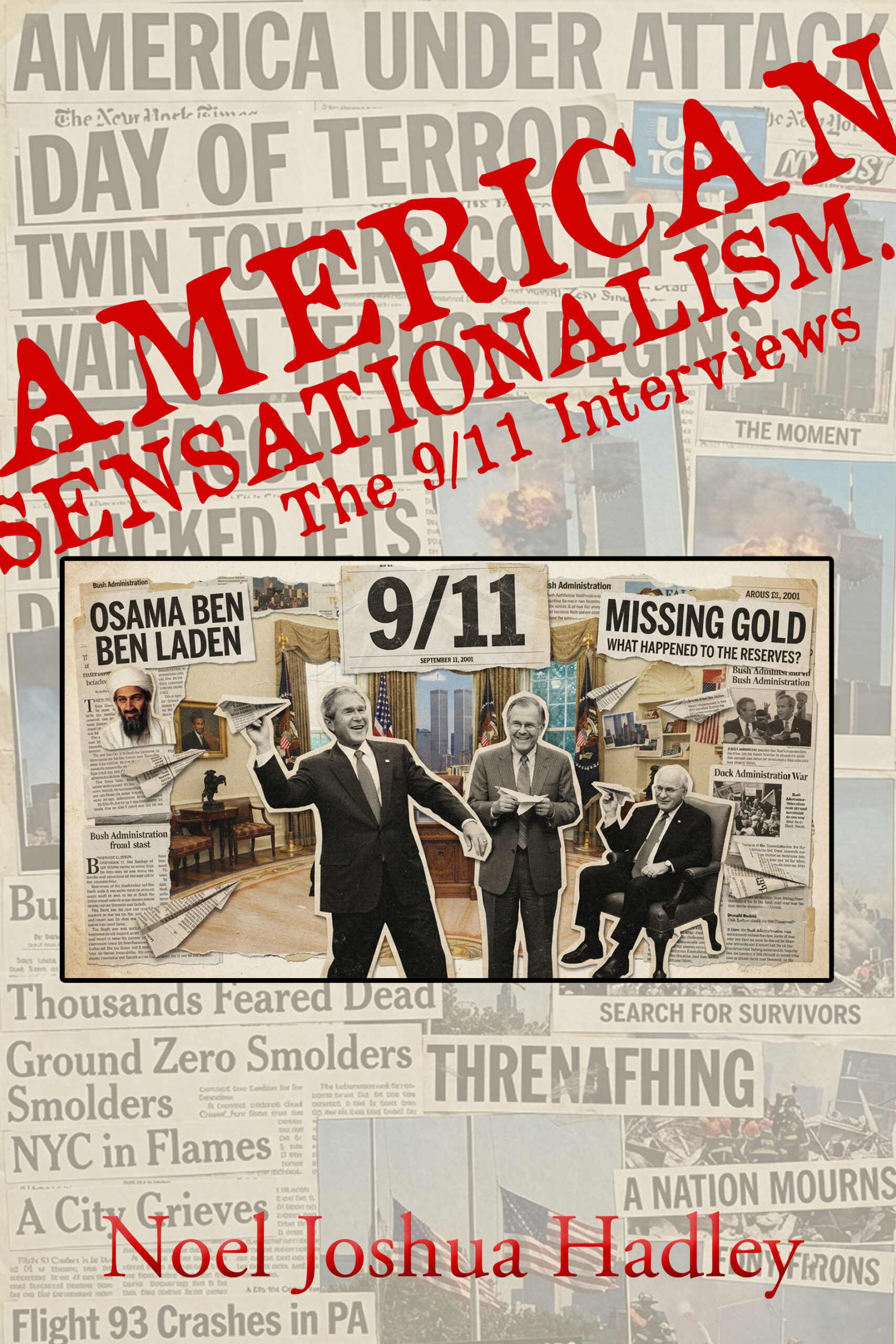
The resulting recordings ballooned into The Unexpected Cosmology, a book which became a website and was even intended as an anthology. And of course, the following discourse was originally a chapter. It was Walt Disney who stated, “Disneyland will never be completed. It will continue to grow as long as there is imagination left in the world.” Those sentiments remain applicable here as well. American Sensationalism: The 9/11 Interviews was always intended to be expanded upon with the inclusion of new researchers. So I’m sorry to say the project became stagnant during the Covid-19 psychodrama. I took a break to tackle other projects. We lost Rob Skiba. Rob offered hours of private conversation regarding his life but we never got around to the big one. 9/11. It was in the cards. Sadly, Bob Knodel died soon afterwards. Voices are being squeezed from an entire generation. Gnosis passes with them.

In the aftermath, the FE community became fractured. People began going their separate ways. Robbie Davidson, among a noted few others who were interviewed for the project, got up and left the movement altogether. It is not my intent to erase his or the contributions of others if only brief. They came, they went, their testimonies remain.

The original vision may have hit roadblocks but it is not forgotten. I expanded this paper a few years later to include testimony from author Pauly Hart, a dear friend of mine. I had wanted to continue that trend every year thereafter but you know how it goes. For the 25th anniversary of the attack I have redirected my efforts to its first large scale expansion, including Andrew Hoy and Darrin Geisinger into the mix. Perhaps others will lend their experiences to the recorder in time.

The following is their report.

Watch the Interviews