

America should follow its own vital national interests, not the priorities of others who stand to gain from a weakened Iran that will surely have its allies help it regroup.
By Majid Rafizadeh, Gatestone Institute
Many countries in the region, including Pakistan, seem to be urging and pushing the United States to stop its firm stance on Iran’s regime. They appear to prefer watered-down agreements and accepting Iran’s terms.
These countries clearly are acting in their own interests, not America’s.
The Iranian regime, while having its proxies target their oil fields, has not, however, been nearly as much of a threat to them as it has been, for nearly half a century, to Israel and the United States.
Iran’s regime began, in November of 1979, by kidnapping more than 50 American diplomats in the US embassy in Tehran and holding them hostage for 444 days.
Since then the regime has targeted Americans relentlessly: killing US soldiers; carrying out terrorist attacks such as 9/11/2001, and the 1983 Beirut Marine barracks, killing 241 American servicemembers; and supporting proxies that have attacked U.S. forces across the region.
The regime has attempted to assassinate U.S. political leaders, including plots against President Donald Trump and assassination threats against his daughter, Ivanka.
Iran has never chanted “Death to Pakistan” or equivalent slogans against its neighbors with the same fervor it has reserved for “Death to America” and “Death to Israel.”
The regime’s founder, the late Ayatollah Ruhollah Khomeini, explicitly said:
“We shall export our revolution to the whole world. Until the cry ‘There is no god but Allah’ resounds over the whole world, there will be struggle.”
It was and remains a vision of ideological conquest aimed at transforming societies, culminating with the destruction of the US, the “Great Satan,” and its ally Israel, the “Little Satan.”
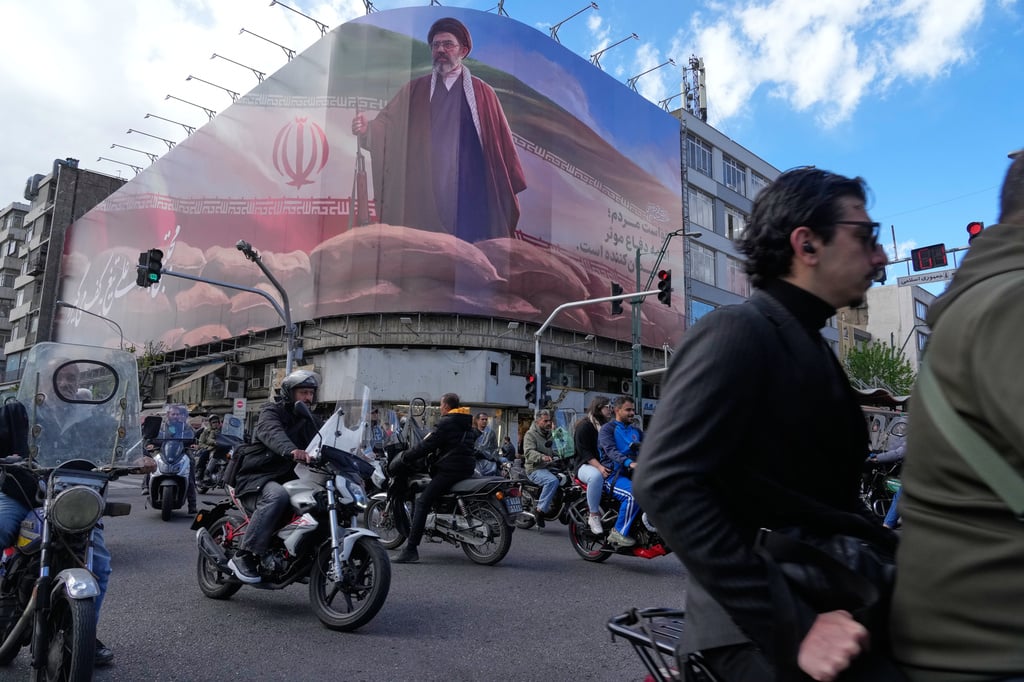
Iran’s regime, through state media, schools, and the Islamic Revolutionary Guard Corps (IRGC), has indoctrinated generations of its supporters to hate America and Israel.
The regime’s entire identity and foreign policy are built on anti-Americanism and anti-Semitism.
They do not, however, get to dictate US policy. The Iranian regime has repeatedly declared that the United States and Israel are its primary enemies.
America should follow its own vital national interests, not the priorities of others who stand to gain from a weakened Iran that will surely have its allies help it regroup.
No country pressing for a softer stance toward Iran really cares about US interests – nor should it. Each one of them is looking only after itself — for economic gains, regional influence, or domestic political stability.
They have virtually no concern about the direct threat Iran poses to the United States.
The only true friend whose cooperation and unconditional help align reliably with the US on Iran and global security is Israel.
In fairness, unlimited gratitude also needs to go to the United Arab Emirates, which received the second-highest number of missile and drone strikes from Iran but has remained throughout a loyal, unflinching US ally, despite Iran’s brutal bombing campaign.
Any counsel from Israel to the US is grounded in shared fate, not in a competing agenda.
What is most important now is for the US to abandon its illusion that the current Iranian regime — whatever lower layer is left of it — will ever alter its stance toward the United States or the West and become a “normal” partner.
Iran’s regime — no matter how hard any Western leader tries to sell it that way — has not changed. It will continue to brutalize its neighbors and its citizens as hard as it can.
Anti-Americanism is not merely a policy choice; it is the regime’s DNA, its core identity.
Khomeini’s Iran and the system he built produced IRGC commanders, indoctrinated youth, and a foreign policy centered on opposition to America and Israel.
This is why, even after significant military setbacks, economic freefall, and damage in the 2026 conflict, the regime persists with the same ideology.
Deals may bring temporary smiles or pauses, but the underlying hostility remains. The regime will not relinquish its revolutionary goals.
History shows it lies, buys time, and continues. You cannot separate the regime from its foreign policy; the regime is the policy.
Once this illusion is set aside, it is clear that meaningful change requires changing the regime itself. America should support the Iranian people’s aspirations for freedom. Many reject theocracy.
Softened stances or premature deals only legitimize and strengthen the current system.
The US should pursue only its own interests on Iran, not anyone else’s. Iran is not chanting “Death” to them or targeting their leaders as it has America and Israel.
Iran’s regime will remain a threat as long as it exists in its current form. The regime cannot and will not change its identity.
The only reliable partner sharing this burden is Israel.
Sustainable peace will come only from empowering the Iranian people against a system built on hatred, brutality and confrontation.
Illusions of reform through softer positions or deals have failed for decades. US interests demand dealing with the root problem: Iran’s regime.
The post Iran’s regime won’t change; no matter what appeared first on World Israel News.