The fight to delay the Supreme Court’s Louisiana redistricting ruling is over before it started.
On May 6, the Supreme Court denied a motion by the Press Robinson plaintiffs to recall the judgment in Louisiana v. Callais, the blockbuster case that struck down Louisiana’s race-based congressional map. The denial came without recorded dissent. It arrived one day after the motion was filed, and two days after the Court took the unusual step of issuing its judgment immediately rather than waiting the standard 32 days.
The sequence moved fast. The Court ruled on April 29. By May 4, the judgment had already been transmitted to the lower court. By May 6, the attempt to claw it back was dead.
Court reporter Josh Gerstein posted the order shortly after it appeared:
JUST IN: #SCOTUS, without recorded dissent, denies civil rights group’s motion to recall judgment in Callais, Louisiana redistricting VRA case. Doc: https://t.co/p7GEU4Ebl7
— Josh Gerstein (@joshgerstein) May 6, 2026
The Supreme Court docket lays out how quickly the procedural path moved:
After the Court affirmed the lower court and remanded Louisiana v. Callais on April 29, the Callais appellees filed an application the same day asking the Court to issue its judgment forthwith. Supreme Court Rule 45.3 normally gives the losing side time before the certified judgment goes to the lower court, a window designed to allow rehearing petitions. The rule also permits the Court or a Justice to shorten that period.
On May 4, the application was referred to the full Court and granted. The docket records that Louisiana did not oppose immediate issuance. The Robinson appellants opposed it, but the docket also notes they had not expressed any intent to ask the Court to reconsider the merits. The judgment issued that same day, May 4. Press Robinson, et al. filed a motion to recall the judgment on May 5. On May 6, the Court denied that motion.
Louisiana Attorney General Liz Murrill celebrated the immediate-effect order before the recall motion was even decided.
🚨In case you missed it: Yesterday, the Supreme Court allowed its decision in Callais v. Louisiana—which struck down Louisiana’s unconstitutional congressional map—to take effect immediately.
This case is a major win for Louisiana. We are moving forward immediately to ensure the… pic.twitter.com/jRgmnoMoEX
— Attorney General Liz Murrill (@AGLizMurrill) May 5, 2026
The underlying merits decision, which WLTReport covered when it came down on April 29, was decisive. The Supreme Court opinion explains the ruling this week’s procedural fight was trying to slow down:
The case began after Louisiana created SB8, a congressional map containing an additional majority-minority district after earlier litigation under Section 2 of the Voting Rights Act. A three-judge court held SB8 violated the Equal Protection Clause, and the Supreme Court affirmed.
The Court’s holding was that the Voting Rights Act, properly applied on these facts, did not require Louisiana to create that additional district. Because the VRA did not require the race-based redistricting choice, the State lacked the compelling interest needed to justify using race to create SB8. The Court treated the map as an unconstitutional racial gerrymander, affirmed the lower court, and remanded the case for further proceedings.
The opinion also narrowed how Section 2 claims interact with race-based mapmaking going forward. The Court said compliance with Section 2 can be a compelling interest only when the statute, correctly applied, actually requires the districting choice. On these facts, the Court concluded the challengers had not shown that Louisiana needed the additional majority-minority district, so the race-conscious map could not survive strict scrutiny.
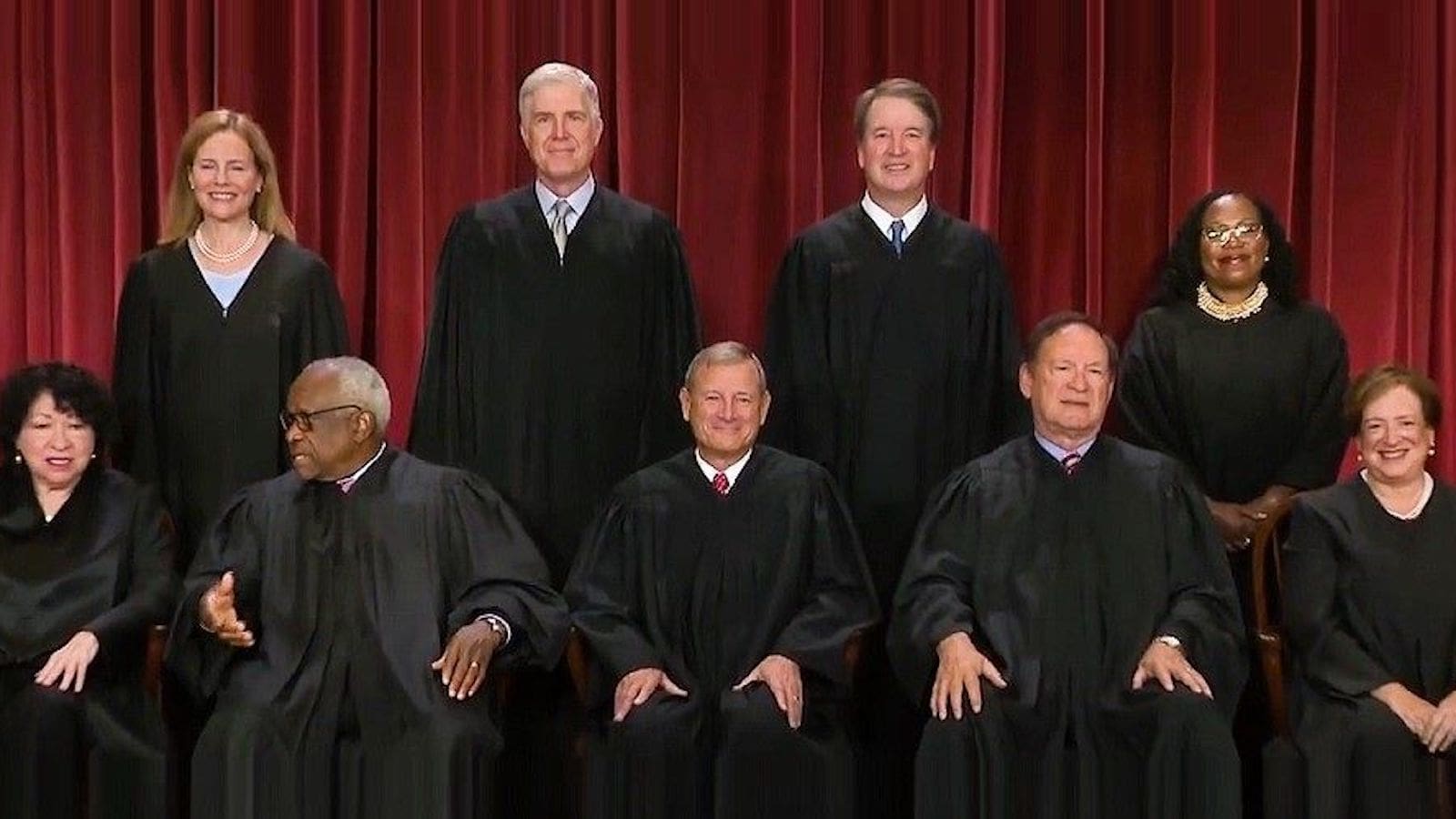
Justice Samuel Alito wrote the opinion for the Court, joined by Chief Justice John Roberts, Justice Clarence Thomas, Justice Neil Gorsuch, Justice Brett Kavanaugh, and Justice Amy Coney Barrett. Justice Elena Kagan dissented, joined by Justice Sonia Sotomayor and Justice Ketanji Brown Jackson.
The practical consequences now move to Louisiana.
Axios New Orleans described what comes next for the state map fight:
Louisiana lawmakers are expected to move quickly on a replacement congressional map after the Supreme Court ruling. The map struck down in Callais had created a second majority-Black congressional district, and that district helped shape the current partisan balance of the state’s U.S. House delegation.
If the Republican-led legislature draws a remedial map that removes or significantly changes that district, the GOP could have a stronger chance at picking up another Louisiana House seat in 2026. The timing is central to the political stakes. The Court’s immediate judgment gives lawmakers more runway before the next election cycle hardens, including candidate recruitment, campaign planning, filing deadlines, and voter outreach.
A replacement map would still move through the remedial process and could face fresh legal challenges, so this is not the final word on every possible Louisiana map dispute. But the Supreme Court has now removed the immediate procedural delay the Robinson plaintiffs sought. That makes the next stage a practical fight over what the legislature draws, how quickly the lower court handles it, and whether the new lines are in place for the 2026 House races.
That speed gives Louisiana Republicans something they would not have had under the ordinary waiting period: time. In a redistricting fight, time can decide whether a new map is a real option for the next election or just a legal theory that arrives too late to matter.
The opposition side sees it differently. LDF President Janai Nelson, whose organization represented the Robinson plaintiffs, criticized the Court’s procedural speed.
BREAKING: SCOTUS just denied our motion to recall the judgment in Louisiana v. Callais, which the Court transmitted prematurely and in contravention of the procedural rules that typically affords litigants 25 days to request a rehearing of a case that was wrongly decided. 1/5 pic.twitter.com/G8FFdGKwXS
— Janai Nelson (@JNelsonLDF) May 6, 2026
Nelson argued that the Court short-circuited the normal rehearing window. The docket, however, shows the Robinson plaintiffs had not indicated they intended to seek reconsideration on the merits. The Court evidently saw no reason to wait for a filing the plaintiffs had not said they planned to bring.
None of this means every piece of Louisiana redistricting litigation is permanently finished. The case now returns to the lower court for remedial proceedings, and the legislature will draw a new map that could itself face legal challenges. But the immediate attempt to freeze or delay the Supreme Court’s ruling has been swatted down with remarkable speed. The 6-3 merits opinion stands. The judgment has issued. And Louisiana Republicans now have room to reshape the congressional map ahead of 2026.
For a party fighting to hold and expand its House majority, that is about as clean an opening as you could ask for.