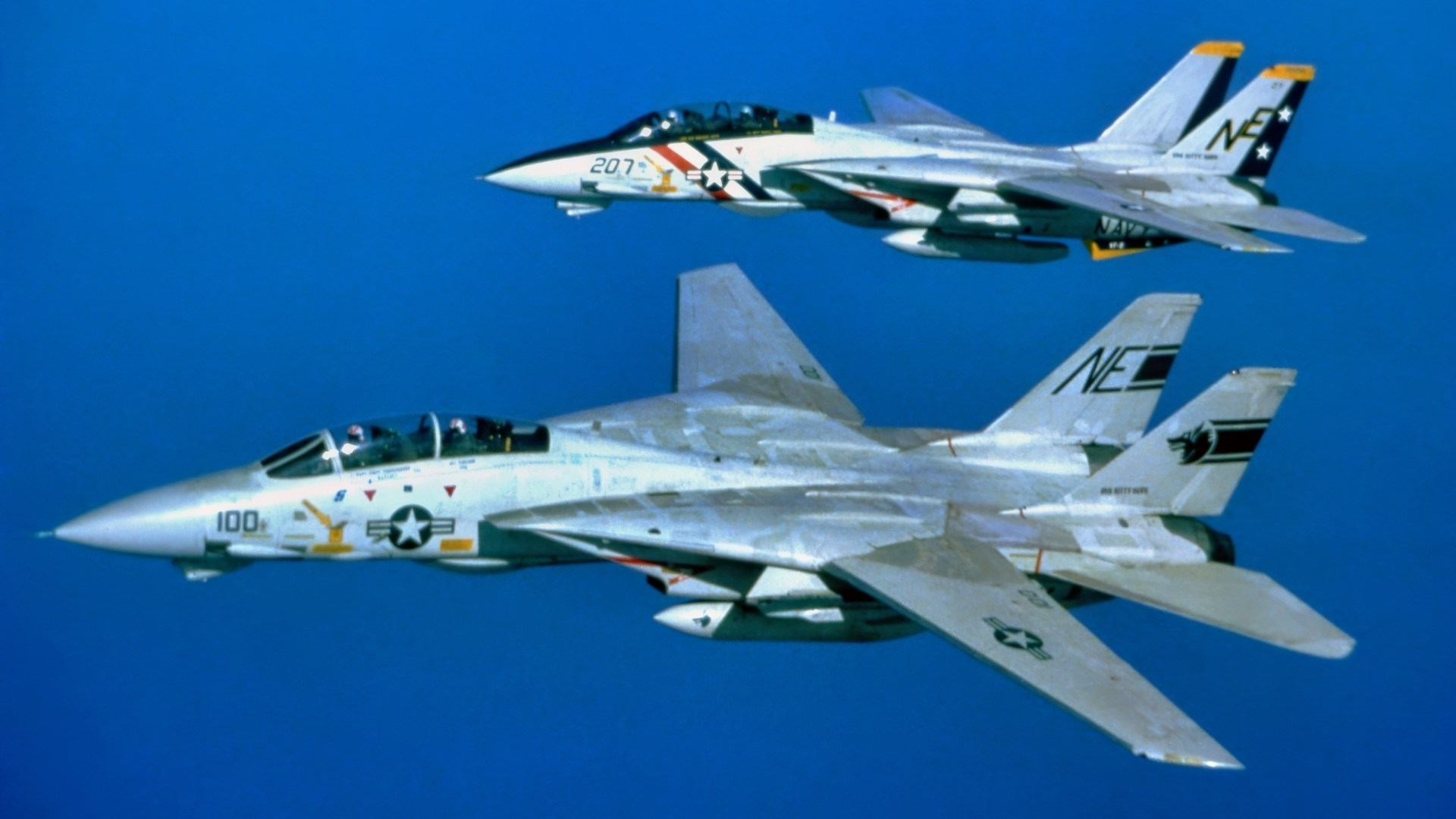
The Grumman F-14 Tomcat earned its dramatic combat reputation flying for Iran, not America. The United States sold 78 F-14s to Iran during the pre-revolution Shah era. Iranian F-14 pilots reportedly shot down 130+ Iraqi aircraft during the 1980-1988 Iran-Iraq War — substantially exceeding the U.S. Navy F-14 fleet’s modest five air-to-air kills. The F/A-18 Hornet that replaced the Tomcat costs $17,000 per flight hour vs. the F-14’s $35,000-$40,000.
The F-14 Tomcat and F/A-18 Hornet: The Drama
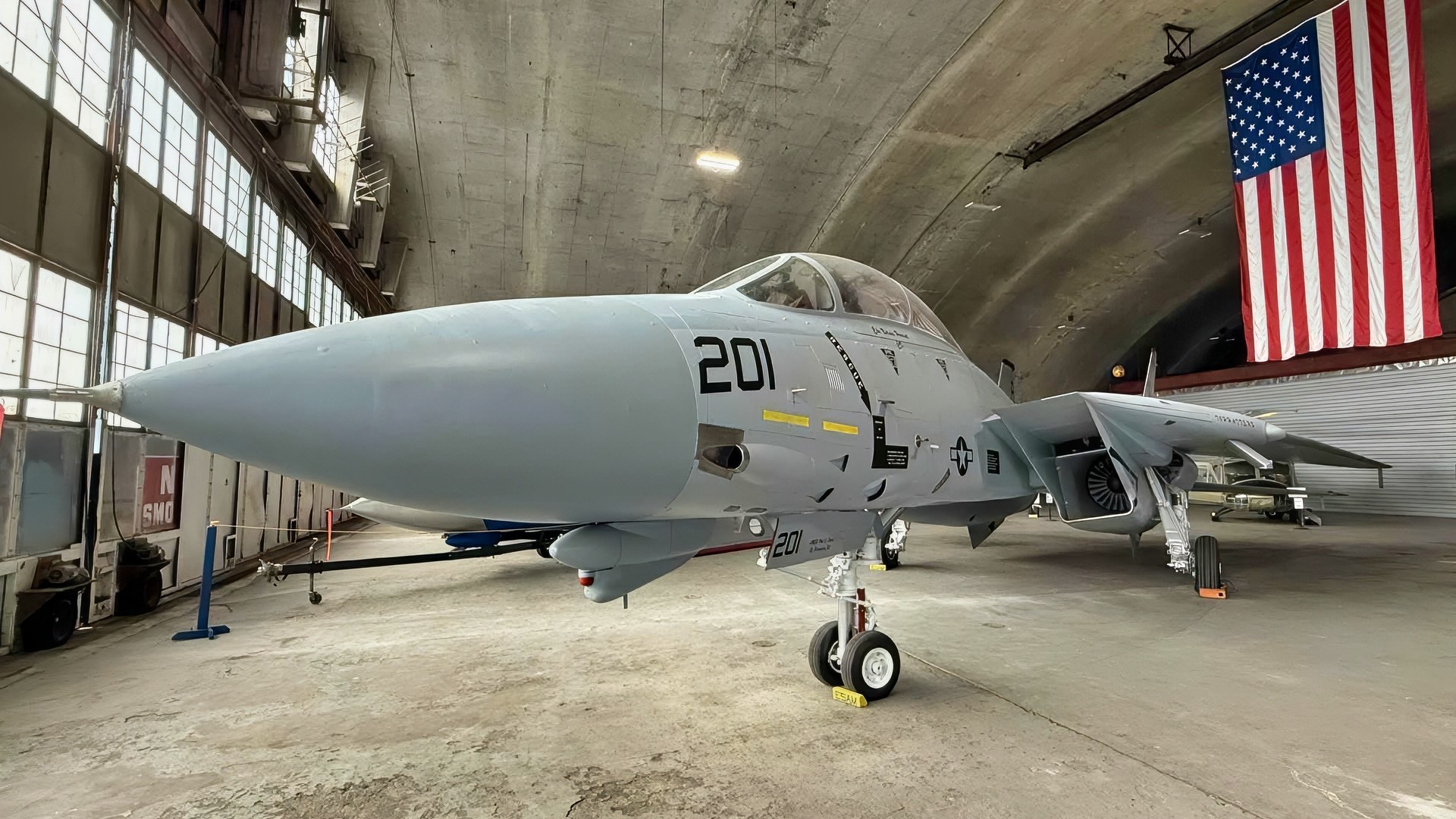
F-14 Tomcat in Hanger National Security Journal Photo.
The F/A-18 Hornet replaced the iconic F-14 Tomcat in naval aviation despite the Tomcat’s reputation as a stellar interceptor.
Naval aviators loved the F-14 Tomcat for its unmatched long-range fleet defense capabilities, its high-speed, high-altitude interceptor performance with powerful AIM-54 Phoenix missiles, and its versatile variable-sweep wings that provided both agility for dogfights and speed for high-speed flight.
Its powerful radar, capable of tracking multiple targets simultaneously, and its two-man crew, which allowed for enhanced situational awareness, made it a dominant air superiority fighter.
The variable-sweep wing design, combined with advanced fire-control systems and the AIM-54 Phoenix missile, made the F-14 capable of engaging multiple targets at long distances while still performing close-in combat and engaging in dogfights.
The F-14’s Combat Record Was Forged By Iran
But the Tomcat’s outstanding combat record wasn’t earned by US pilots, who only shot down five enemy fighters.
No, the Tomcat made its bones fighting for our enemy Iran, to whom we sold 78 F-14s during the Shah era. And during the Iran-Iraq war, that’s when the Tomcats showed how good they were by besting Iraq’s Soviet-made fighters.
But in a curious twist of fate, the F/A-18s suffered against the Tomcats during one-on-one aerial dogfights when they first began appearing in the Navy. Why was that? Wasn’t the Hornet supposed to be a superior aircraft?
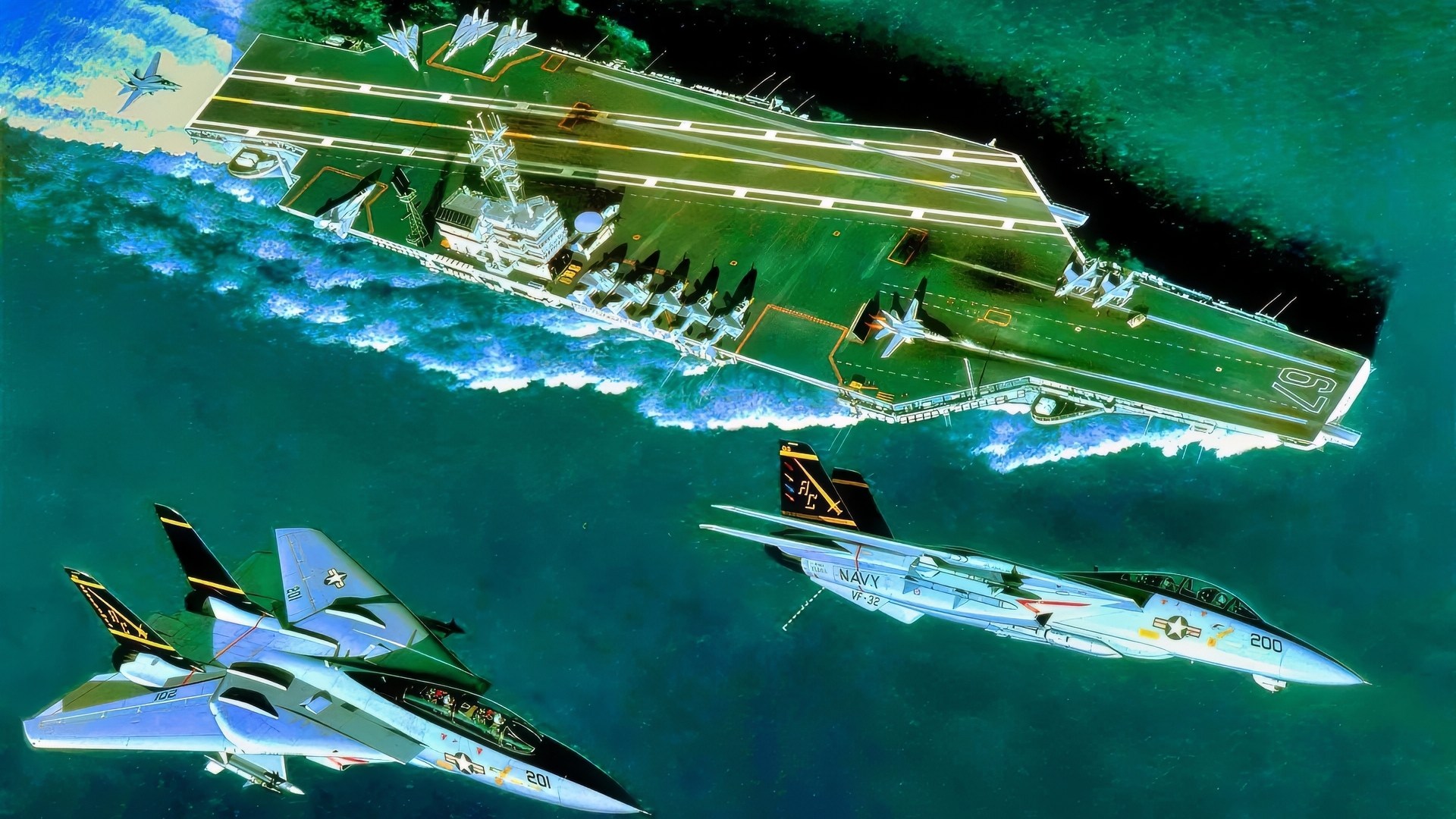
F-14 Tomcat. Image Credit: Creative Commons.
But first, why did the Navy switch from the F-14 to the F-18?
What Factors Caused The Navy To Retire The Tomcat?
The F-14 Tomcat was retired due to high maintenance costs, the obsolescence of its primary interceptor role after the Cold War, the emergence of the more versatile and cheaper F/A-18 Super Hornet, the difficulty and expense of obtaining replacement parts, and the fact that its advanced features, like the variable-sweep wings, were complex and prone to issues.
Operating costs were estimated at $35,000 to $40,000 per flight hour. For comparison, the F/A-18 Super Hornet was estimated to cost about $17,000 per flight hour.
The F/A-18E/F Super Hornet offered greater versatility at a lower cost and with better logistical support, making it a more economical choice for the Navy’s future needs.
The Super Hornet wasn’t as fast, but it was more reliable, easier to maintain, and better suited for aircraft carrier operations. For the Navy, it made more sense to switch over than to keep investing in an older design.
What Were The Factors in Why Tomcats Dominated Dogfights?
In a piece by The National Interest’s Sebastien Rollin, he wrote, “The Hornet airframe was not quite as optimized for air-to-air combat, but still delivered excellent performance, was based on fly-by-wire technology, and cost less money and time to fly and maintain.”
But their performance against the F-14s left them lacking.
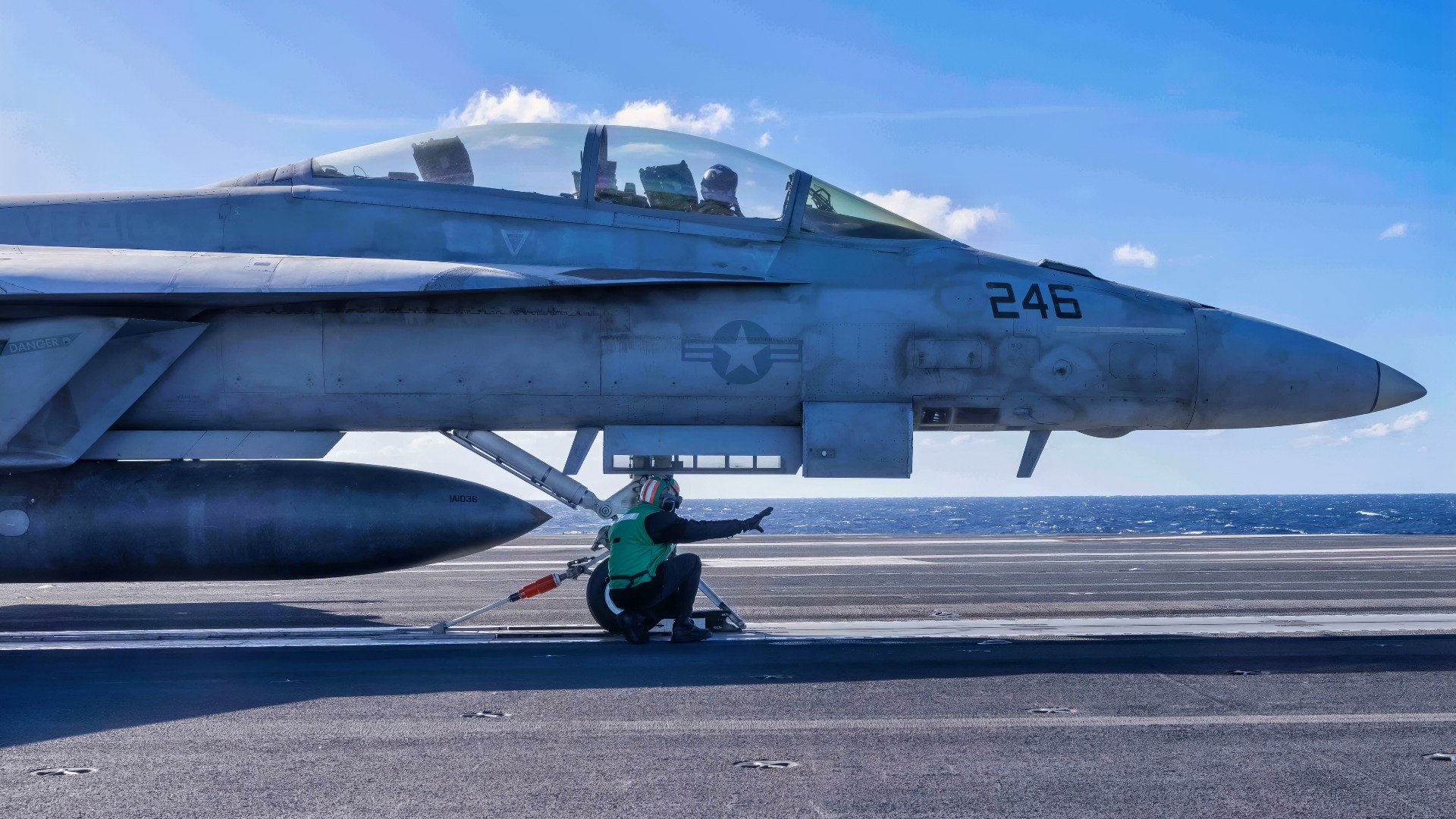
ATLANTIC OCEAN (Nov. 6, 2025) Aviation Boatswain’s Mate (Equipment) 3rd Class Diondre Jean signals the launch of an F/A-18F Super Hornet attached to the “Gladiators” of Strike Fighter Squadron (VFA) 106 on the flight deck aboard the Nimitz-class aircraft carrier USS George H.W. Bush (CVN 77). George H.W. Bush is underway conducting carrier qualifications and routine operations in the Atlantic Ocean. (U.S. Navy photo by Mass Communication Specialist Seaman Apprentice Juan SerratosGuzman)
One Hornet pilot, named Dan “Dix” Dixon, explained in a book that it was a matter of perception at first.
“We were a good bomb dropper,” said Dixon, who later commanded TOPGUN. Dixon said, “And that’s the way the air wing treated us—we were just a ‘cooler-looking A-7.’
“They didn’t really give us much credit for being a fighter, because the Tomcats were there and they were the true fighters. That was the mentality, at least at that time, and it took us a while to convince folks we were fighters.”
The Early Hornet Pilots Weren’t From A Fighter Background
Dario Leone, on AviationGeekClub.com, points out that the early Hornet pilots were transitioning from A-7 attack aircraft and therefore weren’t as well-trained as fighter pilots, having very little air-to-air combat experience.
And at first, they struggled to combine the roles of a fighter and an attack aircraft.
Dario quoted Top Gun instructor John Clagget, who said that the Hornet was the superior aircraft and should win every engagement against the Tomcat.
However, Clagget added that, “That’s how deemphasized some Hornet squadrons were to the ‘fighter’ skill set.”
The point was driven home when Dario pointed out that Marine Corps pilots had no such issues because their pilots transitioned from F-4 Phantoms and were well-trained as both fighters and attack pilots. Their dual role was ingrained in them as part of their training, and their performance against the Tomcats in aerial dogfights was much better.
F/A-18E Super Hornet Specs
The Super Hornet was built to be easy to maintain, and it has certainly lived up to that. Maintenance of technology-heavy combat fighters is time-consuming. But maintaining carrier jets is even more work. Super Hornets require half the maintenance time of an F-14 or an A-6.
The General Electric F404 engines are also easy to maintain. They are connected to the aircraft at just ten points and can be removed by a four-man team in just 20 minutes. Because of this, the Super Hornet had an excellent readiness record of over 80 percent.
-Length: 60.3 ft
-Height: 16 ft
-Wingspan: 44.9 ft
-Maximum take-off weight: 66,000 lbs
-Airspeed: Mach 1.8+
-Ceiling: 50,000+ ft
-Propulsion: Two F414-GE-400 turbofan engines
-Guns: 1× 20 mm M61A2 Vulcan
-Missiles: AIM-7 Sparrow, AIM-9 Sidewinder, AIM-120 AMRAAM, AGM-65E/F Maverick, AGM-84H/K SLAM-ER, AGM-88 HARM, AGM-158 JASSM, AGM-154 Joint Standoff Weapon (JSOW)
-Bombs: JDAM bombs, Paveway series of laser-guided bombs, Mk 80 series unguided bombs
Versatility is the key to the Super Hornet. The platform excels in multirole missions, including air-to-air combat, precision ground strikes, and aerial refueling.
Compared to newer, more complex stealth aircraft, the F/A-18 is relatively inexpensive to operate, maintain, and upgrade. Ongoing programs ensure the airframes remain structurally sound for extended service, with the Super Hornet expected to remain in service into the 2040s.
“People from all walks of life and areas of Naval Aviation feel some tangible connection to this aircraft,” Capt. Michael Burks, who has served as the F/A-18 and EA-18G Program Office program manager since 2023, said.
“Whether they’ve worked on the production line, whether they were engineers that did design work, whether they wore the uniform or are wearing it right now. The history of this aircraft—which is still being written—represents and honors the enduring impact of those who started and those who are sustaining what is probably one of the greatest runs in Naval Aviation for any platform out there.”
The Ford-class Aircraft Carriers of the Navy are America’s power projection icons. And with flight decks crammed with F/A-18E Super Hornets and F-35C Lightning II stealth fighters are more packed with firepower than many nations have.
The Super Hornet has evolved through the years to remain an outstanding aircraft. It may not have the iconic image of the F-14, but it has been a stellar performer for the Navy.
About the Author: Steve Balestrieri
Steve Balestrieri is a National Security Columnist. He served as a US Army Special Forces NCO and Warrant Officer. In addition to writing on defense, he covers the NFL for PatsFans.com and is a member of the Pro Football Writers of America (PFWA). His work was regularly featured in many military publications.