
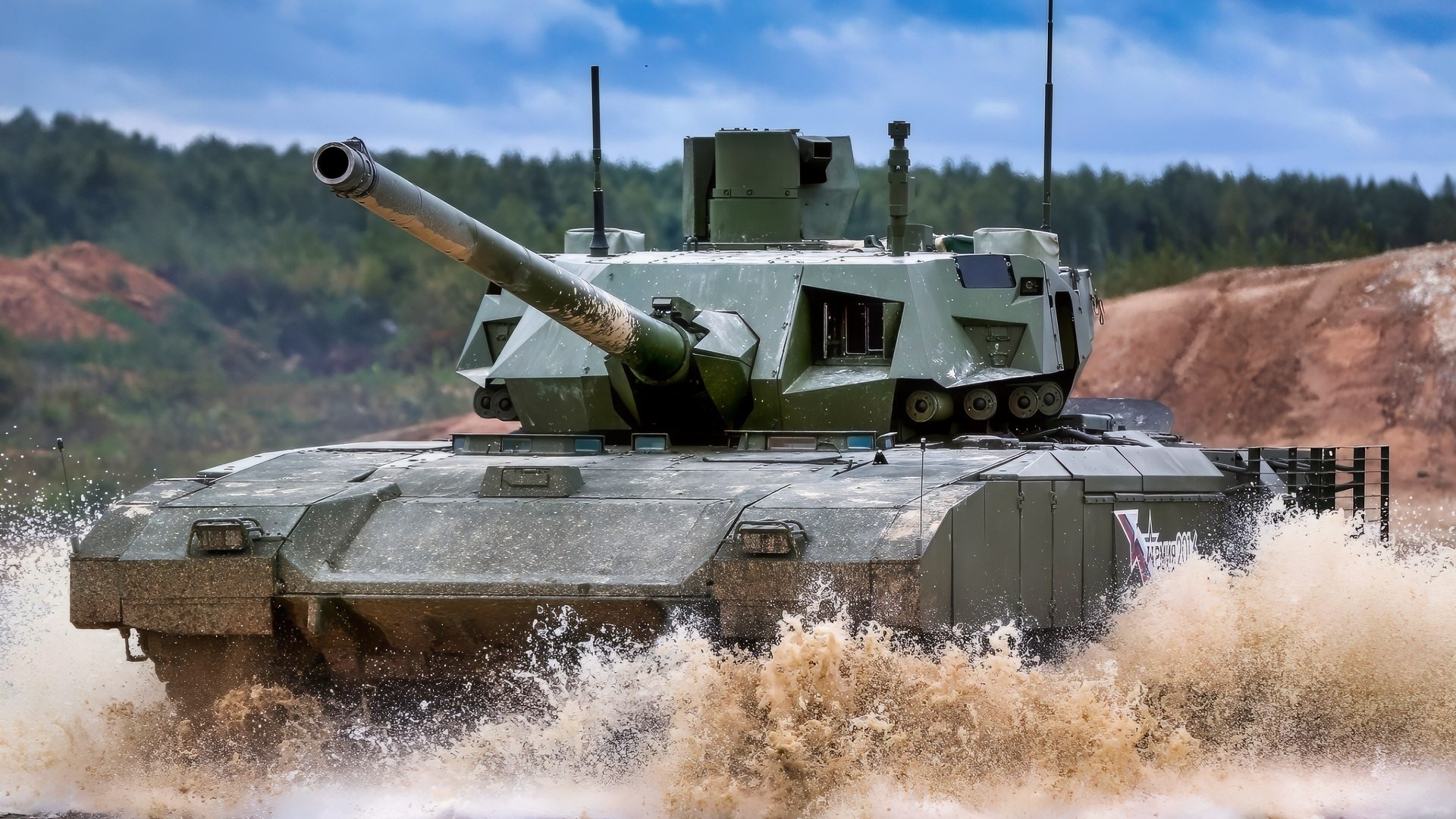
The T-14 Armata was supposed to be the newest addition to the Russian Armed Forces, replacing the older Soviet-era T-72 and T-90. Originally unveiled in 2014, the tank is, on paper, the most advanced tank in the Russian Army and a strong contender for one of the most advanced tanks in the world. More than a decade later, however, the project seems to have been put on indefinite hold. Once the centerpiece of parades, the tank is now barely mentioned in Russian news media, which instead focuses on the T-90M. Despite some reports, the tank has never seen combat and has never set foot on Ukrainian territory. Its future prospects look grim, as Russia seems to be seeking cheaper alternatives to fill its tank forces.
T-14 in Ukraine?
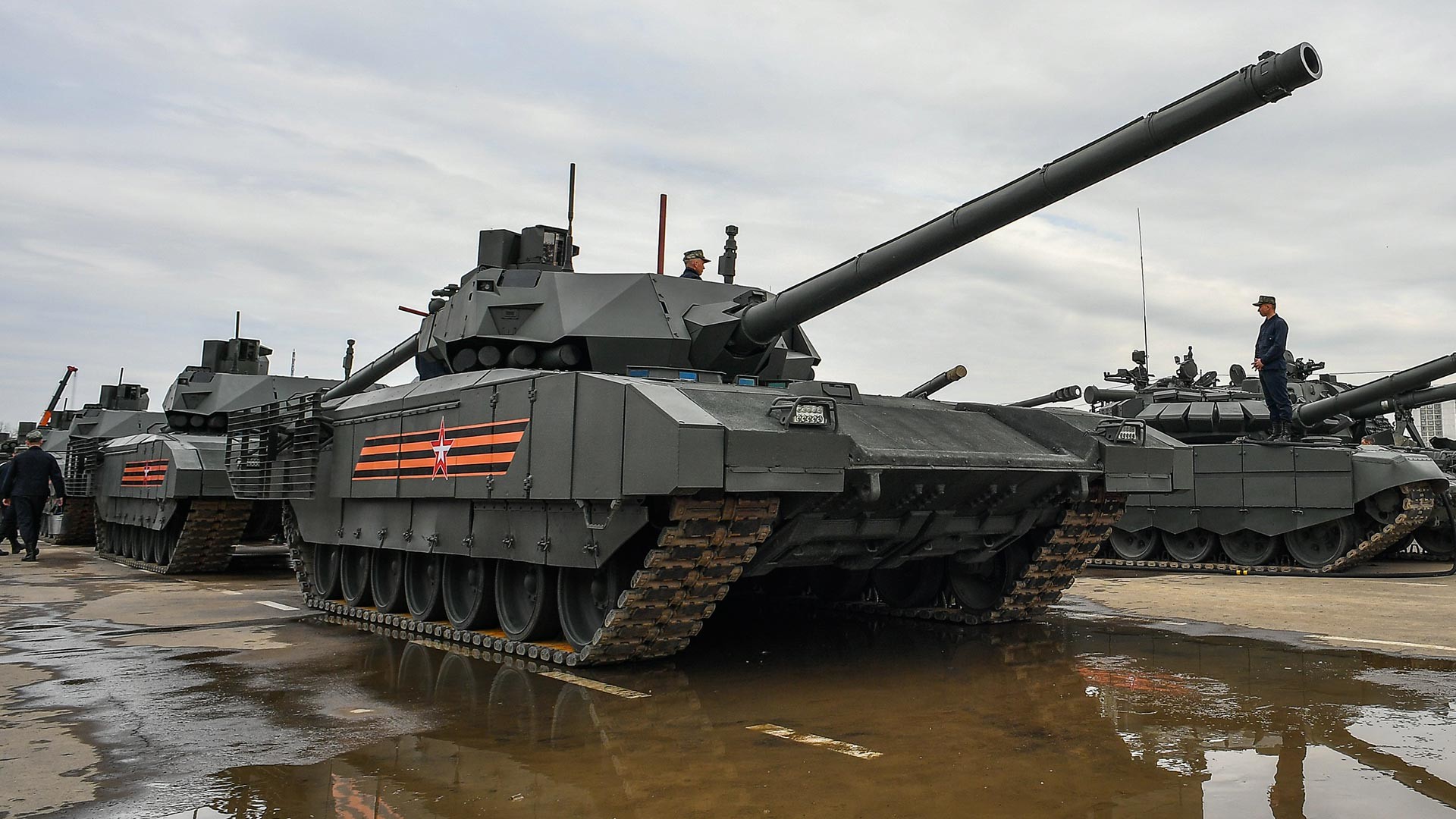
T-14 Armata. Image Credit: Russian State Media.
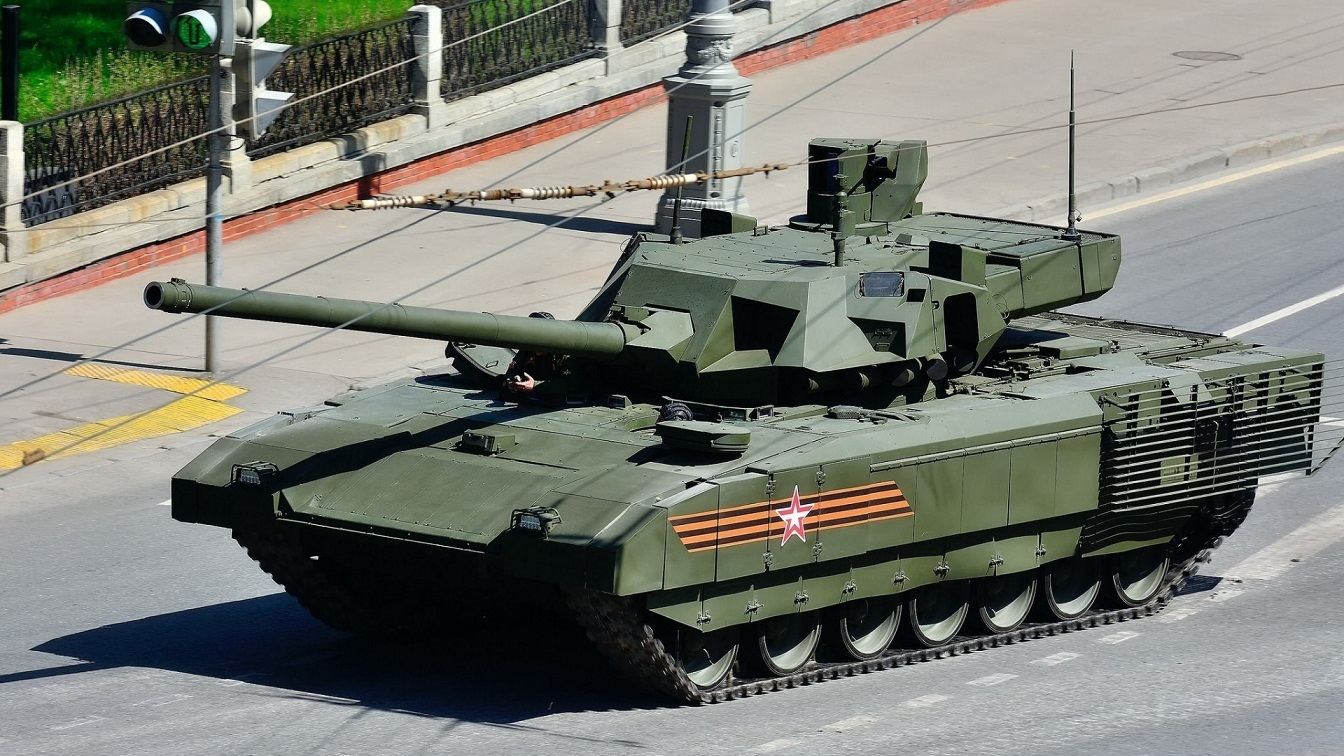
T-14 Armata Tank. Image Credit: Creative Commons.
Late in 2022, reports began to circulate that the T-14 had been deployed to Ukraine for training. These reports were seemingly corroborated by footage of the tank performing training on the occupied territory of Ukraine.
Russian news sources, citing “an informed source,” reported that the tank had been used in combat, primarily for indirect fire. Other sources in 2023 suggested that the tank had been withdrawn from combat to assess its performance and, allegedly, to prevent any units from being lost to enemy fire. These reports spread like wildfire throughout Western news sources, which reported that the tank had performed poorly and had subsequently been withdrawn to save face.
At the heart of all the rumors about the T-14’s expedition to Ukraine was Vladimir Solovyov, a news anchor for Russia-1. Solovyov is somewhat of an interesting figure. He is known, even in Russian circles, for making outlandish claims and is hardly a reliable source.
Many Western news outlets were unaware of this, which is somewhat understandable, and treated Solovyov’s claims as official state propaganda when they were not.
Analysis of the “combat footage” of the T-14 in Ukraine was also revealed to be taken from training sites near Kazan, not near the front lines or in occupied Ukraine, as many mistakenly thought. Consequently, rumors of the T-14 in Ukraine spread out of control.
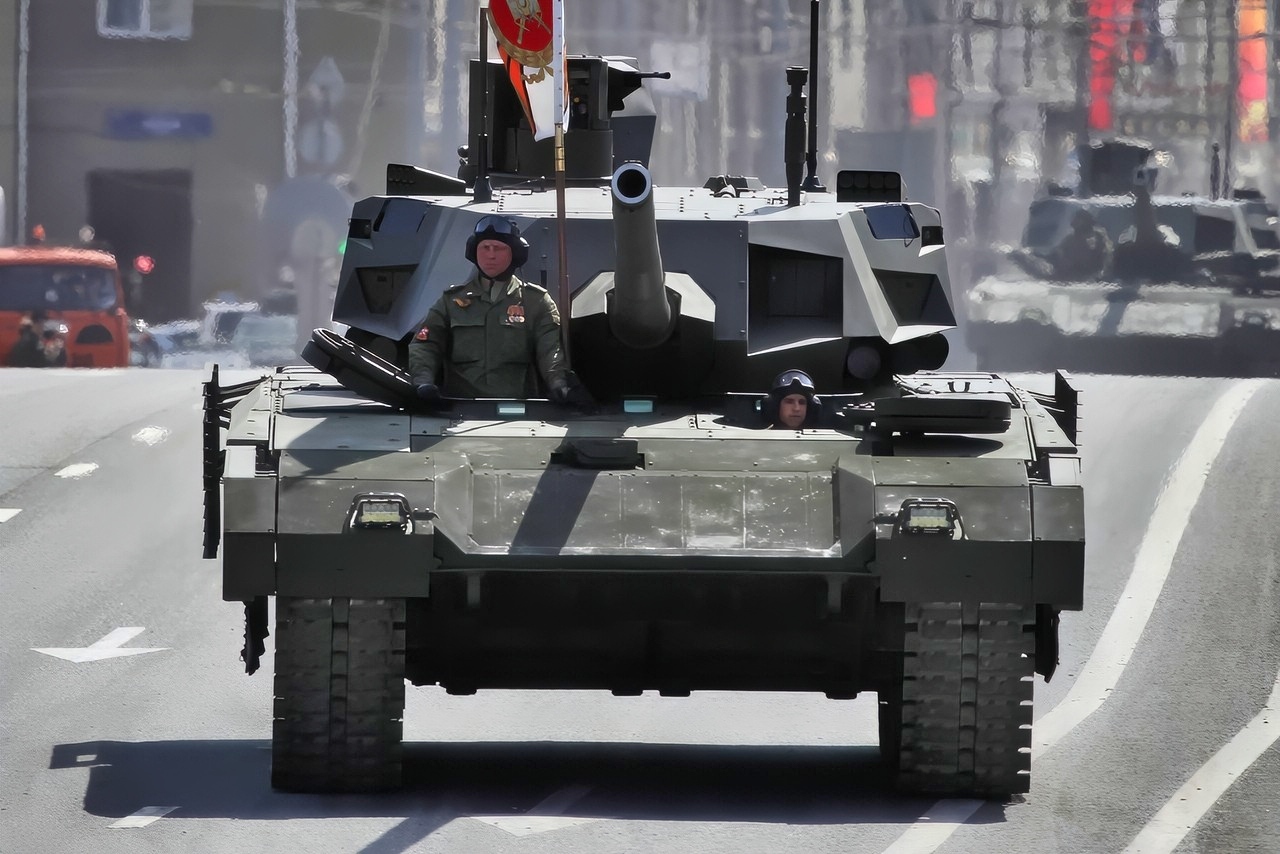
T-14 Armata Tank from Russia. Image Credit: Creative Commons.
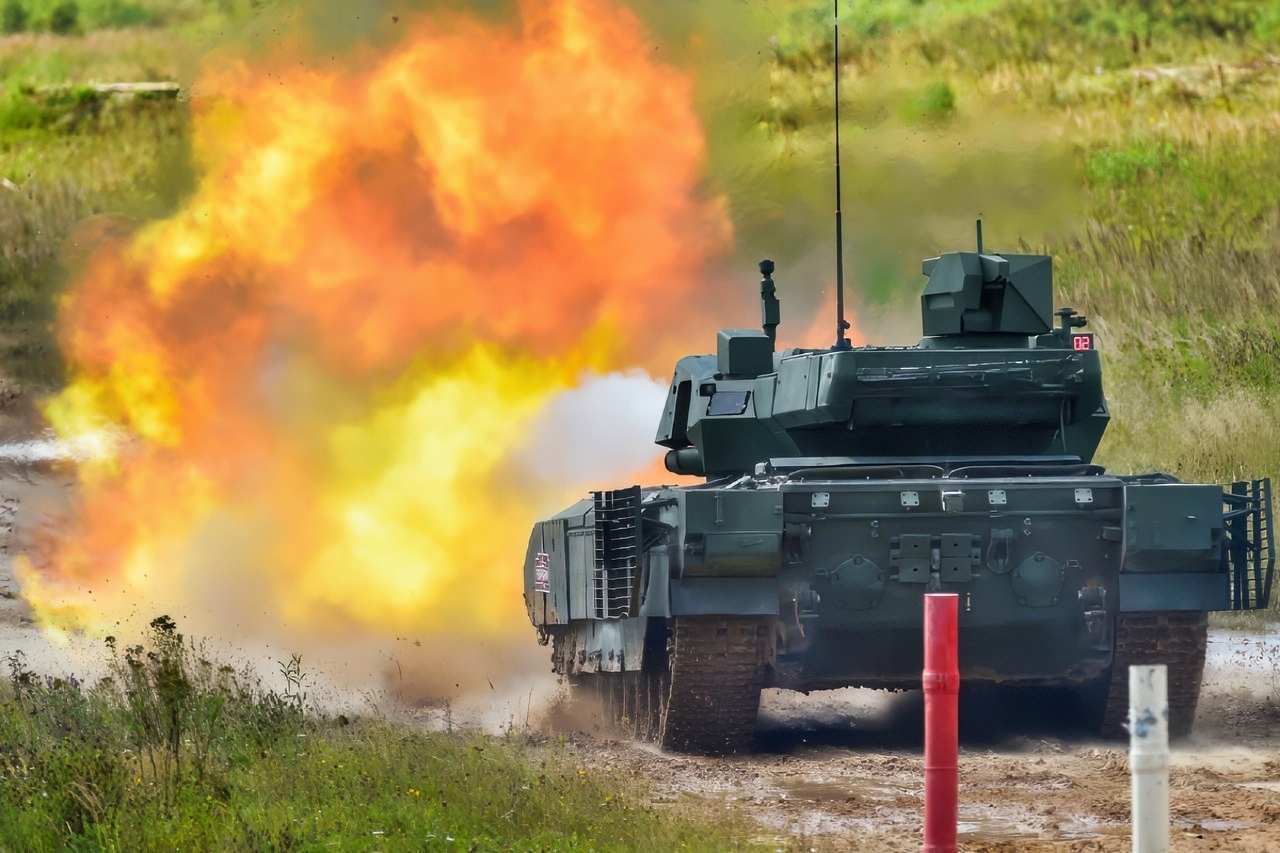
T-14 Armata Tank Russian Army. Image Credit: Creative Commons.
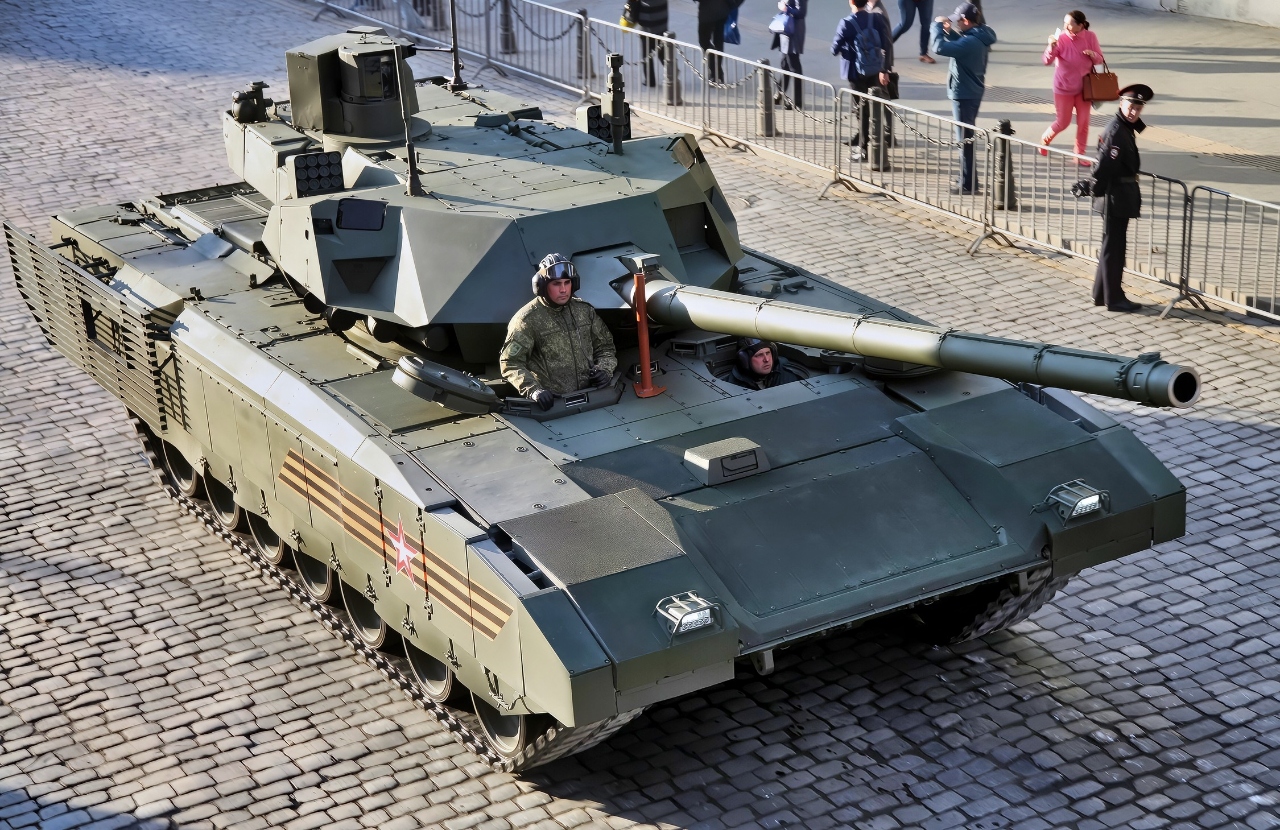
T-14 Armata Tank Russia. Image Credit: Creative Commons.
Too Expensive to Risk
As is usually the case, reality is nowhere near as interesting as the fiction that many people imagine in their heads. The T-14 had never been used in combat. In fact, the tank was never sent to any regions of Ukraine, occupied or otherwise.
This was confirmed by Sergey Chemezov, the CEO of Rostec, a state corporation for the development of advanced technologies in Russia. “The Armata, in general, is a little expensive,” Chemezov said. “In terms of functionality, it is, of course, much superior to existing tanks, but it is too valuable, so the army is unlikely to use it now. It’s easier for them to buy the same T-90s.” We will talk more about this later, but it was clear that the T-14 had never been sent to Ukraine.
Following Chemezov’s comments, coverage of the T-14 in Russian media went dead silent. The military no longer boasted of the tank’s impressive specs, state media outlets no longer published puff pieces on it, and the tank no longer appeared at the victory parades.
Aside from the occasional appearance in military expos and live-fire exercises, the T-14 seems to have dropped off the face of the earth. Officially, the Russian Army still has an outstanding order for 100 Armata family vehicles, including the T-15 IFV and the T-16 armored recovery vehicle, all of which are in low-rate initial production.
Since the outbreak of the war in Ukraine, there has been no mention of deliveries of T-14 tanks, nor has there been any discussion of the tank’s future after the conclusion of the war.
The Armata’s Grim Future Prospects
The lack of media coverage in Russian news, combined with Chemezov’s comments in 2024, has led Western experts to one conclusion: the T-14 is dead. Since the outbreak of the war in Ukraine, Russia has shifted its priorities away from the expensive and unproven T-14 to the cheaper and overall more reliable T-90M, which can be produced in much higher numbers in a shorter time period. This move makes strategic sense.
When fighting a full-scale war, it is hardly ideal to set up and begin production on a new clean-sheet design when funds and factory space are limited; this was one of Germany’s many mistakes during WWII. It should be noted that Chemezov never stated that the T-14 was on pause or that production on the tank would ramp up after the war.
It might be a bit too early to definitively declare the T-14 a dead project. The largest indicator is whether the Russian MoD decides to cancel its order for T-14 tanks. Once this happens, it can be safely assumed that the Armata is indeed a failed project with no prospects inside or outside of Russia.
Until then, it can be assumed that the project has been put on hold indefinitely while resources are directed to the Russian Army’s more immediate needs.
That said, the tank’s future prospects do not look good. The Army has made no statement about it, and Russian news sources are now focusing on the T-90M as the basis for future tanks. Once the pride of modern Russia, the T-14 has now been indefinitely sidelined with no signs of returning to the forefront.
About the Author: Isaac Seitz
Isaac Seitz, a Defense Columnist, graduated from Patrick Henry College’s Strategic Intelligence and National Security program. He has also studied Russian at Middlebury Language Schools and has worked as an intelligence Analyst in the private sector.