
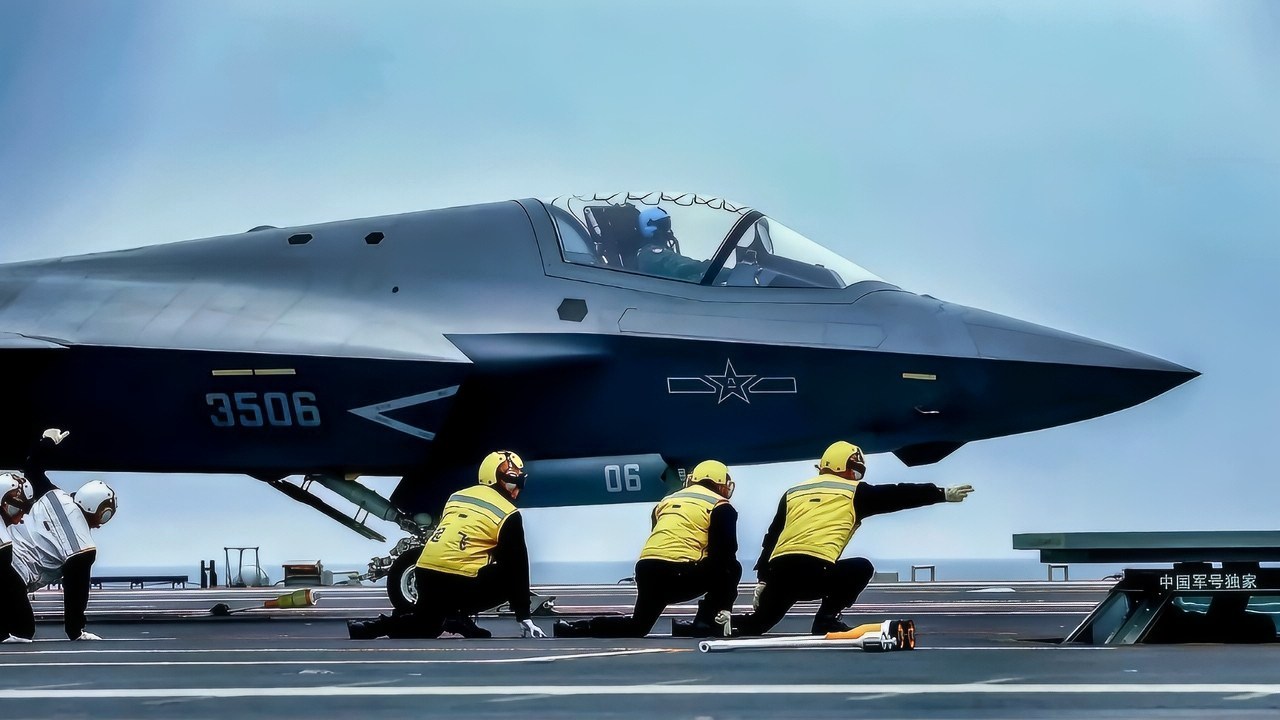
According to Chinese state broadcaster CCTV, the People’s Liberation Army Navy’s J-35 stealth fighter has officially been adapted to ski-jump carrier launches, meaning the country’s three aircraft carriers will now be capable of fielding fifth-generation air wings for the first time. Both the older Liaoning and Shandong aircraft carriers may now, therefore, operate the same stealth aircraft expected to serve aboard the newer Type 003 carrier Fujian.
The news could have significant implications for the balance of global naval power – and particularly in the Indo-Pacific, with older Chinese carriers adopting some of the capabilities that were only expected on the new Type 003 Fujian and future carriers. Beijing could eventually distribute J-35 fighters across multiple carrier strike groups simultaneously, without waiting for new carriers to be built, thereby substantially expanding its stealth-enabled operations sooner.
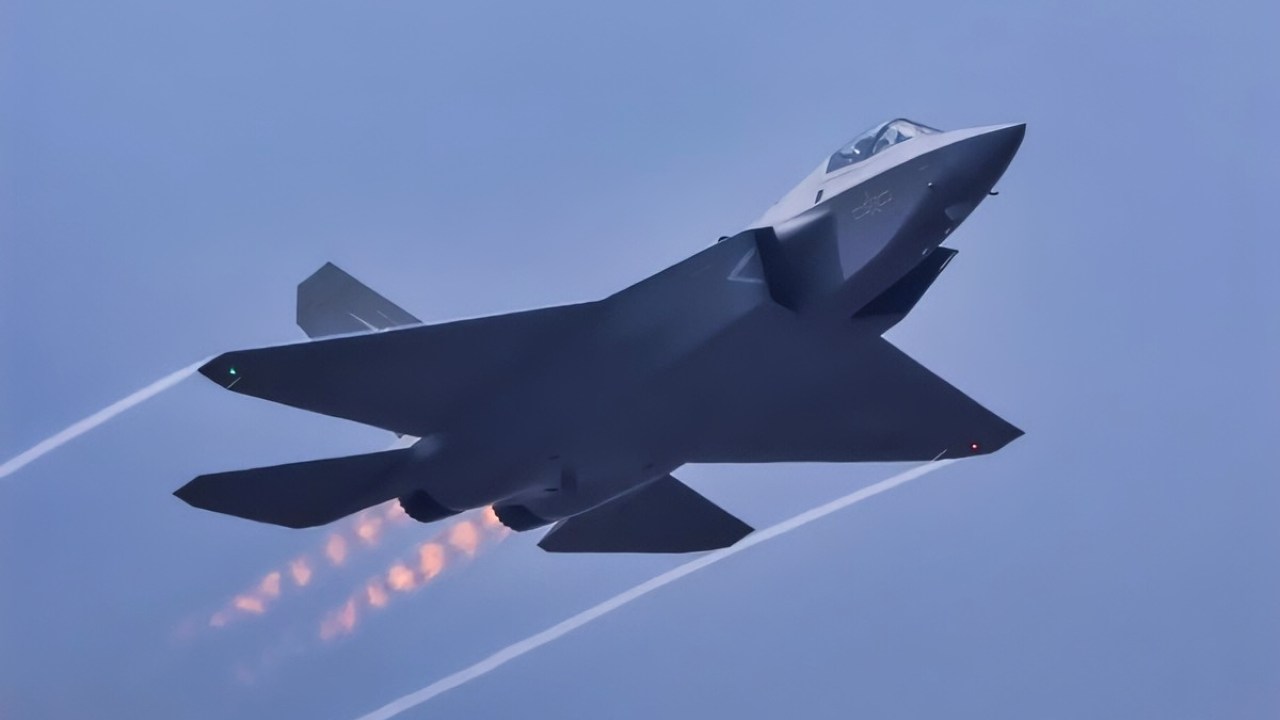
J-35 Fighter Chinese State Media Photo.
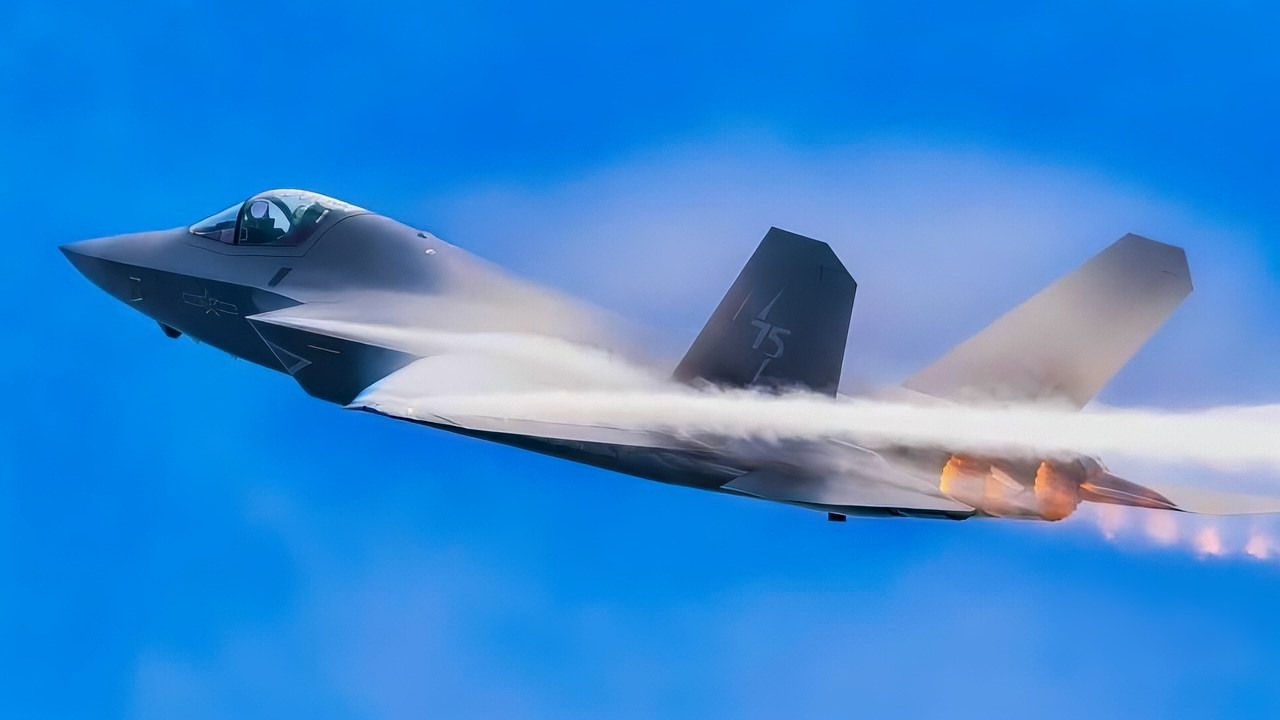
J-35A Fighter in the Clouds. Image Credit: Chinese Weibo.
CCTV Confirms Major J-35 Breakthrough
Both China’s existing carriers, Liaoning and Shandong, use a Short Take-Off But Arrested Recovery (STOBAR) configuration. That means, unlike American supercarriers, which launch aircraft using catapults, the vessels rely entirely on an upward-curving ski-jump at the end of their flight decks. That design allows aircraft to take off, but it is still a limitation. Aircraft launched from ski-jump carriers face limitations in the form of fuel load restrictions. They must also carry fewer weapons compared to those launched by catapult-equipped ships as a result of weight restrictions.
China’s carrier fighter aircraft, the J-15, is designed to operate from these carriers, but it has long been cited as an example of these trade-offs due to its weapons limitations.
For years, many analysts assumed that the newer J-35 stealth fighter would be used only on the Fujian, China’s newest carrier and the first to be equipped with electromagnetic catapults.
However, the latest report from CCTV confirms that the J-35 has been engineered and adapted for ski-jump launches, suggesting that Beijing has now found a way to integrate stealth aviation across its entire carrier fleet. It means that China can field this capability far sooner and more broadly, and indeed that its first two carriers could remain relevant for longer.
If the J-35 enters widespread service aboard all three Chinese carriers, China would become only the second country after the United States to operate multiple carriers equipped with fifth-generation fighter aircraft.
Liaoning and Shandong Matter For Longer
China’s first aircraft carrier is the Liaoning, which first entered service in 2012 after being built on the frame of the unfinished Soviet vessel Varyag. Beijing purchased the vessel from Ukraine in 1998, and while the plan was to build a training platform, the ship was eventually deployed as a full-fledged aircraft carrier and has made several deployments to the Western Pacific.
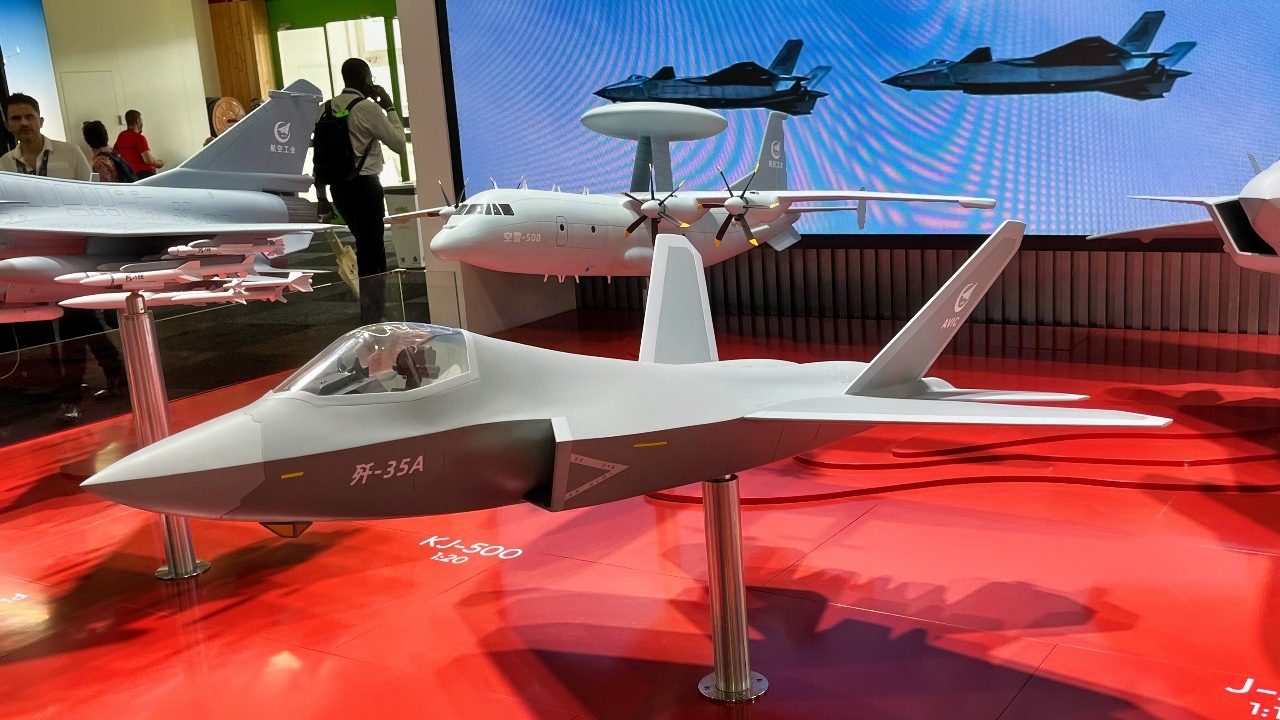
J-35A Fighter at Le Bourget Air Show. Image Credit: Author/National Security Journal.
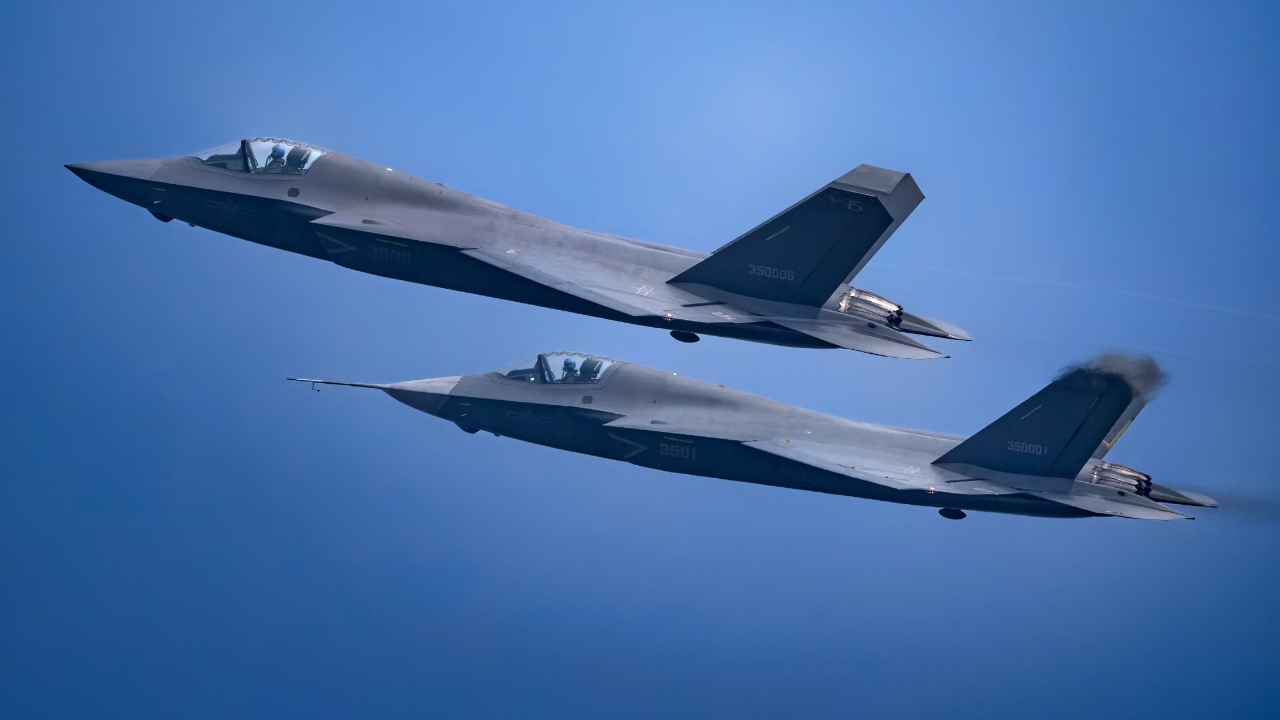
J-35 Fighter. Image Credit: X/Screenshot.
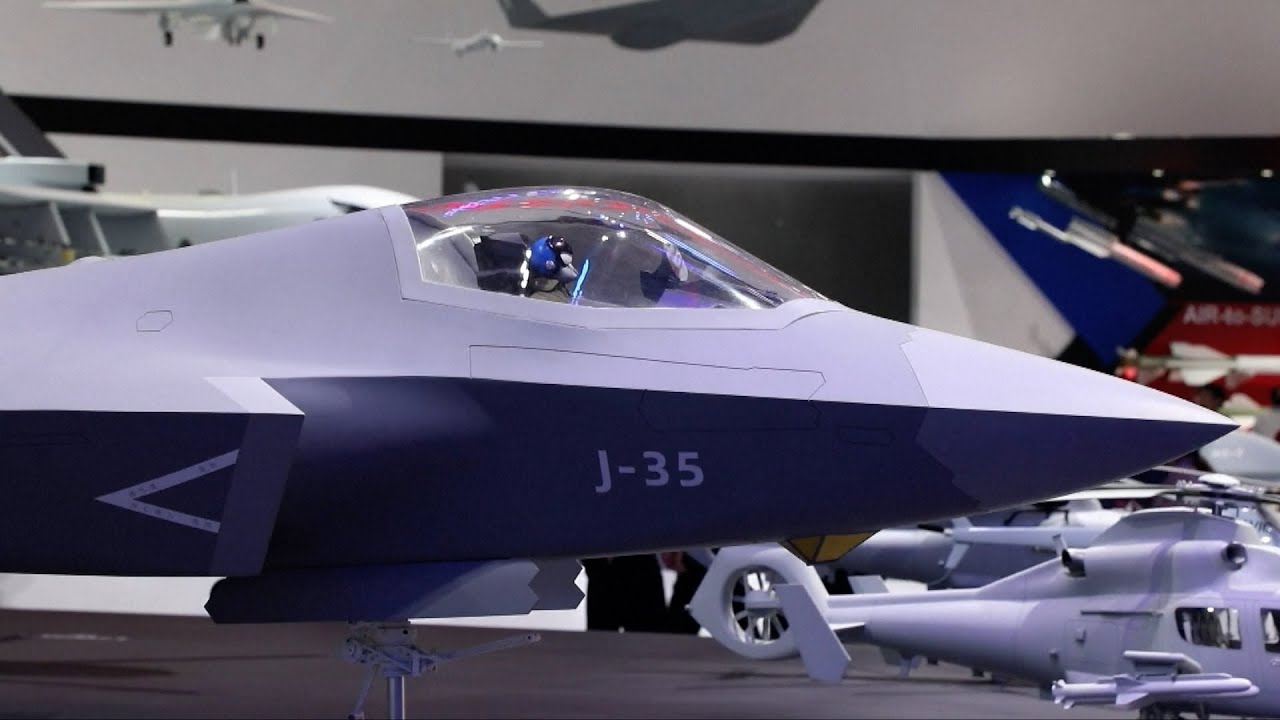
J-35 Fighter Screenshot. Image Credit: YouTube Screenshot.
The Shandong, meanwhile, was the first-ever domestically-built Chinese aircraft carrier. Commissioned in 2019, it retained the same STOBAR configuration as the Liaoning but featured a larger flight deck capable of accommodating more aircraft. Both vessels, however, have generally been regarded as less capable than modern, catapult-equipped carriers. Technically, that is still true – but with J-35 stealth fighters operating from these ships, the equation is changed somewhat.
Instead of simply operating as secondary platforms alongside Fujian, the carriers will likely remain relevant components of China’s carrier force for many years to come. That would also give the People’s Liberation Army Navy more flexibility to maintain multiple carrier groups at sea simultaneously.
It remains to be seen, however, just how limited the J-35’s weapons capacity may be when deployed on STOBAR aircraft carriers. A lot depends on what exactly CCTV means by the J-35 being “perfectly adapted” to the ski-jump system.
Fujian Was Meant to be the Stealth Carrier
China made a great leap forward in terms of naval capabilities when it began work on the Type 003 Fujian carrier. Launched in 2022 and officially commissioned in 2025, Fujian is a major technological leap for the Chinese navy. It is an 80,000-ton vessel that uses electromagnetic catapult systems to launch aircraft with heavier payloads and greater fuel capacity.
It is designed not only for the J-35 stealth fighter but also for the KJ-600 airborne early warning aircraft, which is expected to operate much like the U.S. Navy’s E-2D Hawkeye. And because of those advantages, Fujian was seen as the first true competitor to American carrier designs.
It still is, but it is no longer China’s only stealth-capable carrier, and China apparently no longer needs to rely exclusively on the Fujian to field stealth carrier aviation until the Type 004 carrier comes online sometime around 2032.
What This Means for the U.S.
The United States Navy still maintains a substantial edge over China, with 11 carriers in service. That said, China is rapidly catching up to and outpacing the United States in new construction.
The J-35’s adaptation to ski-jump carriers, however, is significant because it demonstrates that Beijing is finding ways to extract more capability from the ships it already has.
About the Author: Jack Buckby
Jack Buckby is a British researcher and analyst specializing in defense and national security, based in New York. His work focuses on military capability, procurement, and strategic competition, producing and editing analysis for policy and defense audiences. He brings extensive editorial experience, with a career output spanning over 1,000 articles at 19FortyFive and National Security Journal, and has previously authored books and papers on extremism and deradicalization.