HEAVEN IS a junk yard where satellites are cartoons.

There’s something like 13,000 satellites in the Earth’s orbit. This according to Google Earth. Popular Science adds, Earth’s orbit is crowded with tons of debris “whirling around at dangerously high speeds, as the film Gravity so memorably dramatized. In fact, there are an estimated 500,000 or so smaller orbital debris and about 21,000 larger bits spinning around Earth right now.” Look out International Space Station, you’re being attacked by clouds of debris!

Oh wait, that never happened once, like ever.
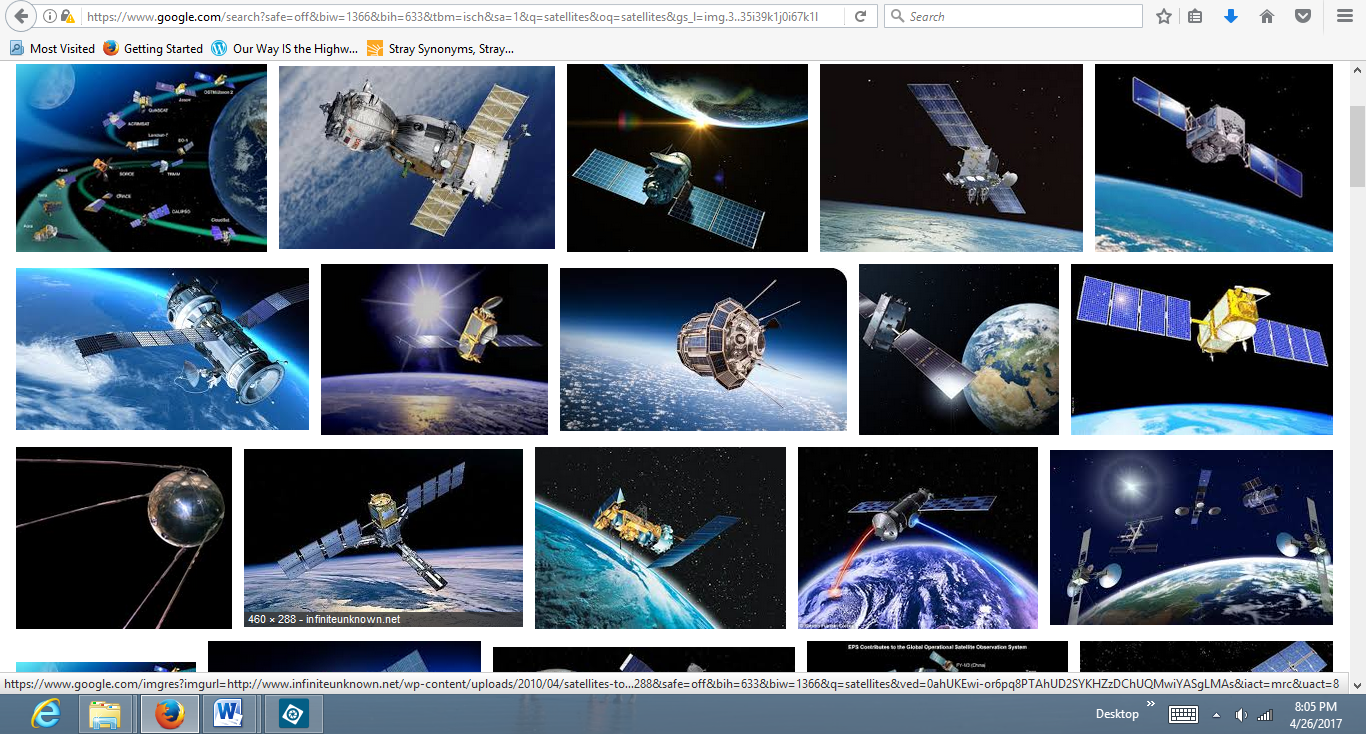
 

satellite cartoon google search


What you’re looking at are pictures imaginative renderings of satellites in space. For the first 35 years of my life, I never even thought to question the legitimacy of the globe, so it likewise never once occurred to me to further contemplate why there are zero pictures of those shiny little guys we call satellites in the space above our heads. A simple search on Google while writing this very paper produced many pictures of cartoons, much like the many imaginative artist renditions of the spinning globe we supposedly sit upon. Again, as of this writing, the ISS has never once caught one on it’s live feed, ever. Let’s put it this way, we have more photographic sightings of Sasquatch. Just let that sink in. If there truly are 13,000 traceable satellites on Google Earth, not even considering the half-million individual items of space junk, then why have they never been photographed?

Let me simply quote Mar Aubin, Head Software Engineer at Google Earth.

“For Google Earth we use our Google military grade drones at about 30,000 feet.”

Furthermore, in case you’re wondering where I’m going with this, Dr. James Mack, US Department of Defense, has this to add:

“If satellites existed, you wouldn’t need an airplane for pictures.”

You know how we’re always hearing in the news about spy planes getting shot down? That’s because there’s no spy satellites to shoot down.
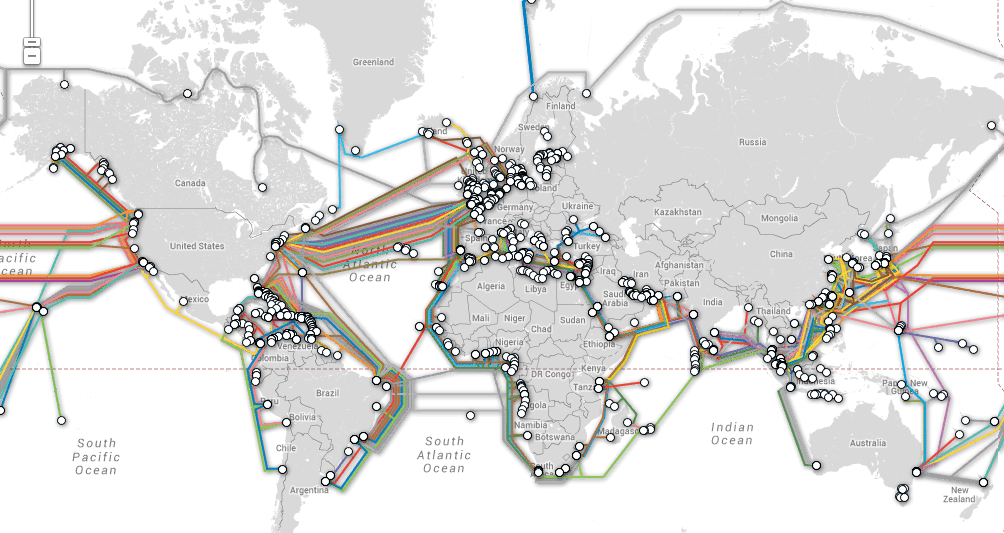
 

underwater cables.png


We’ve been programmed to believe we’re using satellites for all communication and TV, but this simply isn’t the case. It is well admitted that almost all communication is transferred via underwater cables. As of the last decade, overseas “satellite” links accounted for only 1 percent of international traffic while the remainder was admittedly carried by undersea cables. One way or another, we’re being lied to. Ground based towers simply didn’t exist when I was a child, and now they’re everywhere. To this day the reliability of submarine cables remains high.


Alright, so let’s say there really are 13,000 satellites roaming the Earth’s orbit, as Google Earth claims. Then let’s do a science experiment. Dust off that telescope if you have one, set a timer, and gaze up at the moon for no more than 12 minutes, and not a minute over. Not even taking the half-million scraps of space junk into consideration, within that short span of 12 minutes you should be able to count 500 satellites drifting between Earth and the moon. Yet why do I get the feeling that you’ll count up to 0 every single time?

Because in the real world, cartoons don’t exist.

Noel
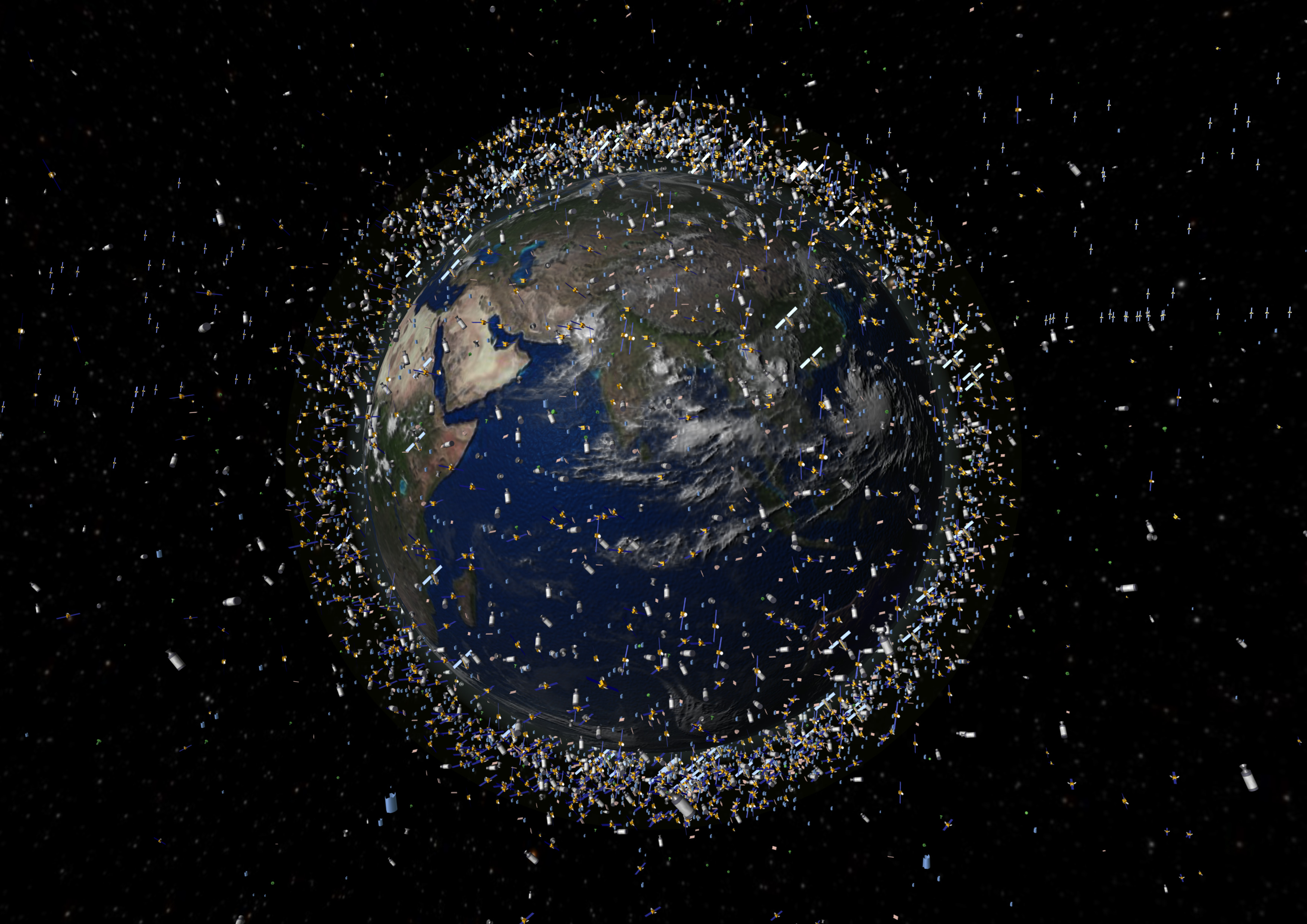
 

every-single-satellite-2.jpg

IN the summer of 2019, I was seated in the wine cellar of a walled Medieval town high above the Dordogne Valley of France, not far from Sarlat-la-Canéda, making phone calls, writing reports. I have given this story in other places and it appears as though you’re about to hear it again. Rob Skiba is a name you that you might be familiar with. Though he had made a name for himself as a Nephilim researcher, more recently Rob had taken a dive into the deep end of the pool via flat earth research. The recorded interviews I conducted between he and Rick Hummer, a fellow flat earth investigator and close friend of his, was published while still occupying that very wine cellar. Read all about it. Chicago Is Not a Mirage.

Word quickly spread. Within a few short weeks, dozens of flat earth researchers began accepting my invite for a private interview, if not a series of interviews. From a 17th-century tower built by King Louis XIV, and with a stunning view of the Alps, I sat down with Robbie Davidson, founder of the Flat Earth International Conferences, conducting multiple sessions. While staying in Dumfries, Scotland, David Weiss agreed to take part in the interviews, as did Bob Knodel of Globebusters. There were others. But when I asked the interviewees to discuss the moments that shaped their lives, among the many PSYOPs, false flag attacks, and hoaxes that were discussed, only these men committed commentary to the false 9/11 narrative.

The resulting recordings ballooned into The Unexpected Cosmology, a book which became a website and was even intended as an anthology. And of course, the following discourse was originally a chapter. It was Walt Disney who stated, “Disneyland will never be completed. It will continue to grow as long as there is imagination left in the world.” Those sentiments remain applicable here as well. American Sensationalism: The 9/11 Interviews was always intended to be expanded upon with the inclusion of new researchers. So I’m sorry to say the project became stagnant during the Covid-19 psychodrama. I took a break to tackle other projects. We lost Rob Skiba. Rob offered hours of private conversation regarding his life but we never got around to the big one. 9/11. It was in the cards. Sadly, Bob Knodel died soon afterwards. Voices are being squeezed from an entire generation. Gnosis passes with them.

In the aftermath, the FE community became fractured. People began going their separate ways. Robbie Davidson, among a noted few others who were interviewed for the project, got up and left the movement altogether. It is not my intent to erase his or the contributions of others if only brief. They came, they went, their testimonies remain.

The original vision may have hit roadblocks but it is not forgotten. I expanded this paper a few years later to include testimony from author Pauly Hart, a dear friend of mine. I had wanted to continue that trend every year thereafter but you know how it goes. For the 25th anniversary of the attack I have redirected my efforts to its first large scale expansion, including Andrew Hoy and Darrin Geisinger into the mix. Perhaps others will lend their experiences to the recorder in time.

The following is their report.

Watch the Interviews