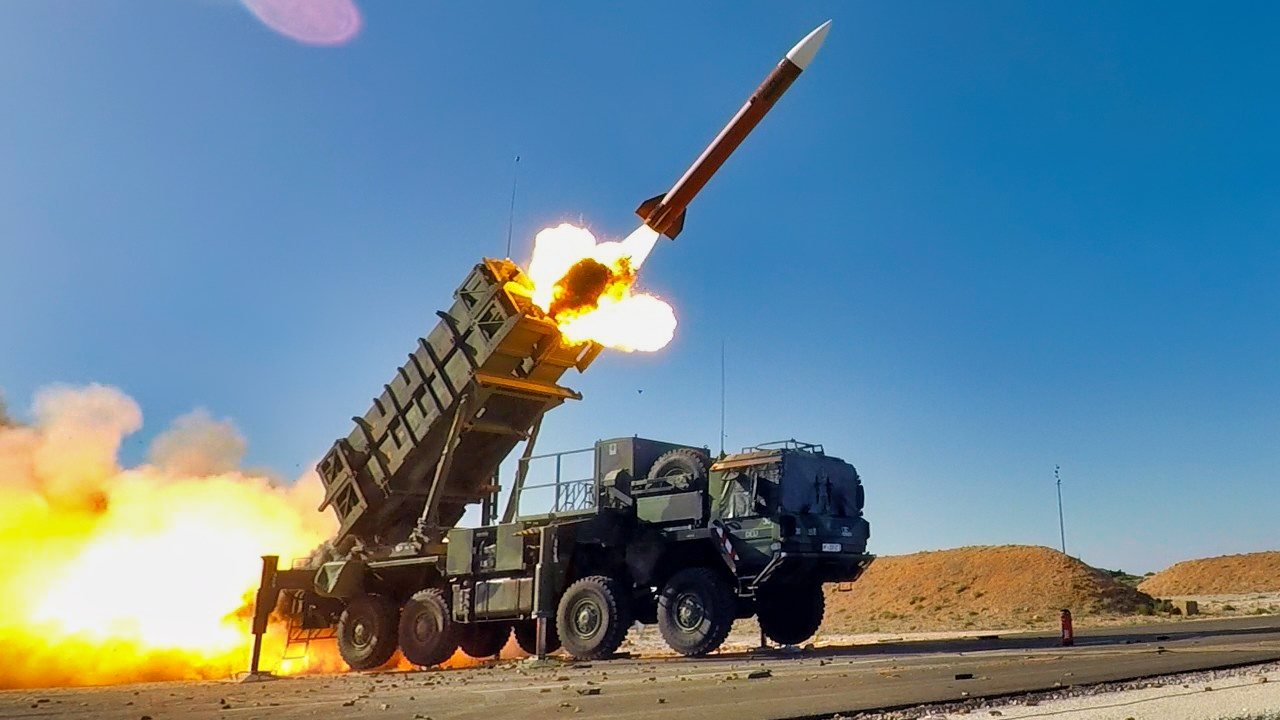
America Stopped Iranian Missiles, Replacing Interceptors Could Take Years – On April 13, 2024, Iran launched hundreds of drones and missiles toward Israel in response to a suspected Israeli strike on an Iranian consulate compound in Damascus, Syria. U.S. forces responded by helping shoot down the incoming weapons, including ballistic missiles intercepted by U.S. Navy destroyers in the Mediterranean.
It was just one example of American defenses protecting its ally from a major Iranian attack, and in the years since, incidents like this have occurred, but they have not evolved into a full war until more recently. But today, a prolonged war with Iran means that U.S. forces have spent longer periods of time intercepting large-scale missile and drone attacks.
But with every interception, the U.S. loses a valuable interceptor, and it’s becoming increasingly clear that the United States must take dramatic action to replenish its stockpile quickly.
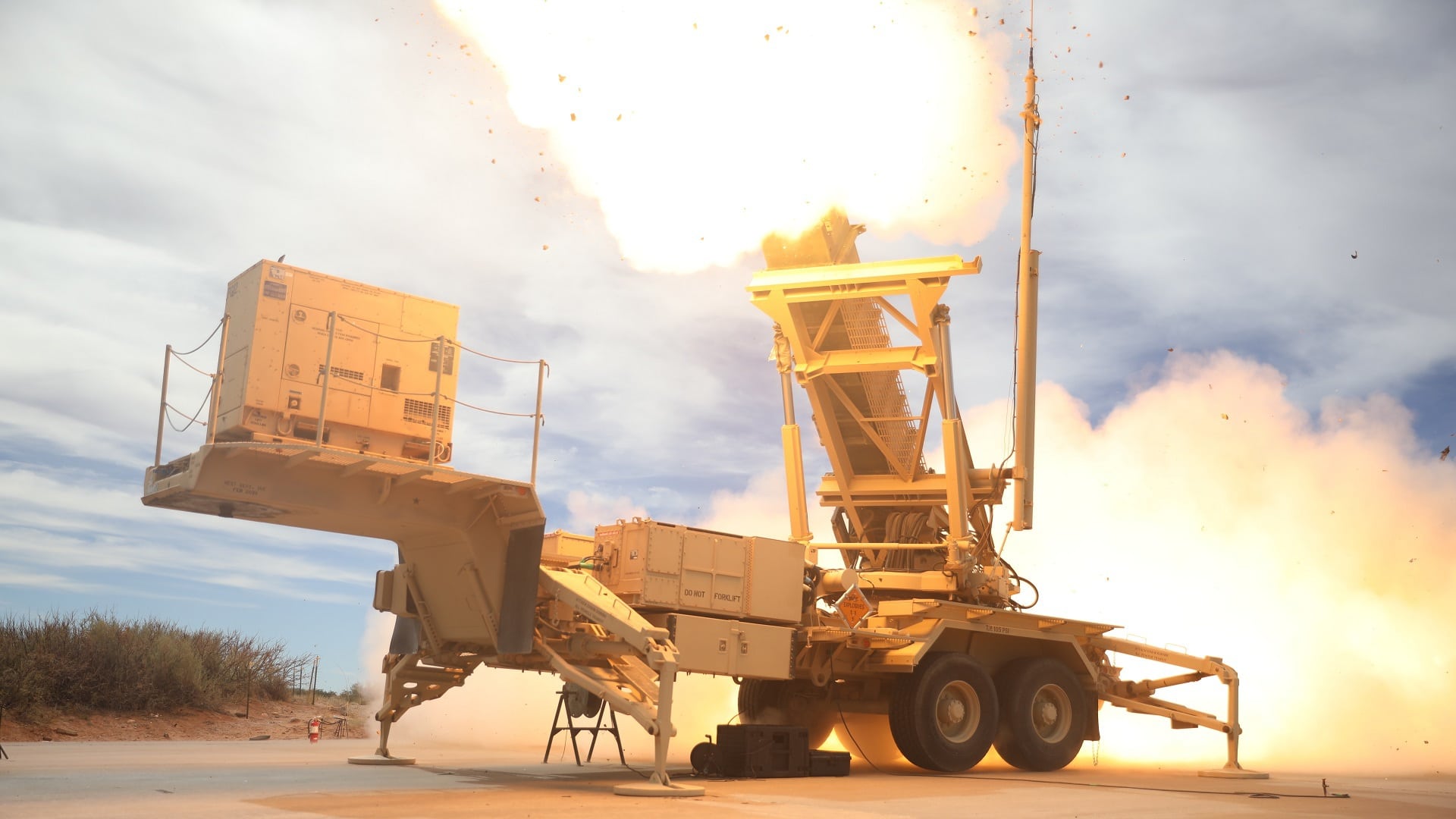
Patriot Missile. Image Credit: Creative Commons.
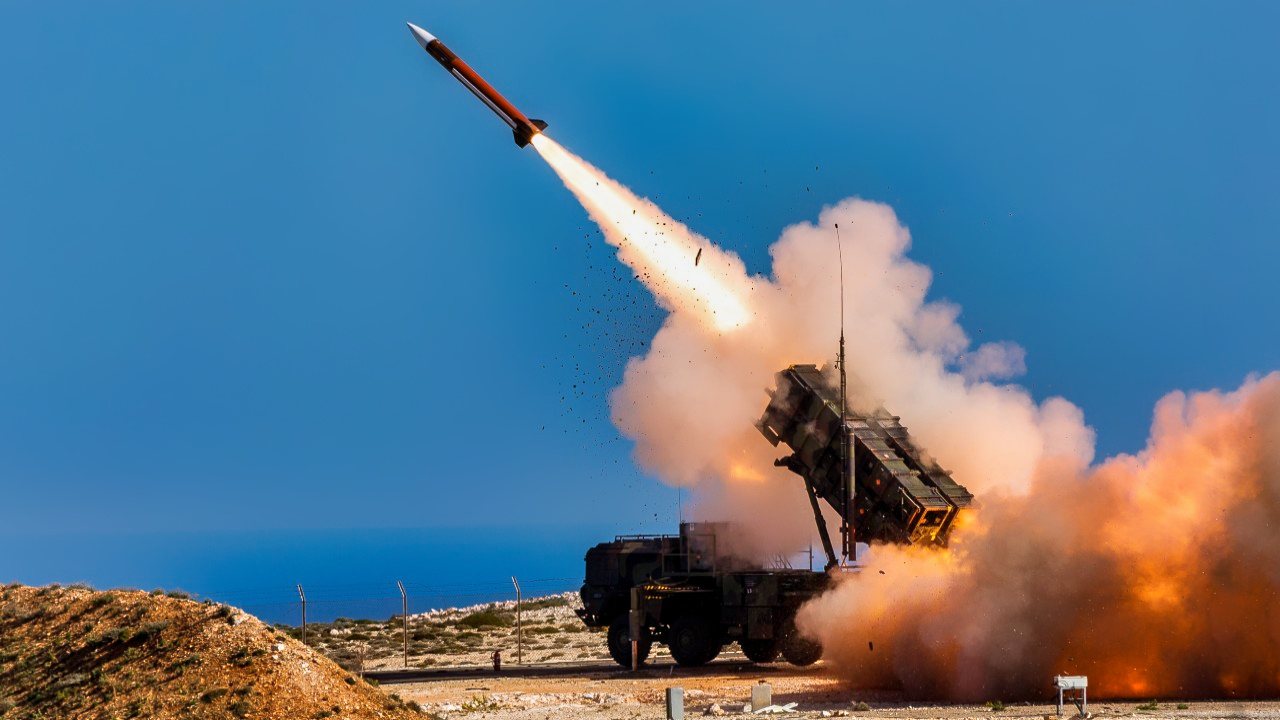
German soldiers assigned to Surface Air and Missile Defense Wing 1 fire the Patriot weapons system at the NATO Missile Firing Installation (NAMFI) during Artemis Strike Nov. 7 in Chania, Greece. Artemis Strike is a German-led multinational air defense exercise. German soldiers Over 200 U.S. soldiers and approximately 650 German airmen will be participating in the realistic training within a combined construct, exercise the rigors associated with force projection and educate operators on their air missile defense systems. (Photo By Officer Candidate Sebastian Apel, Air Defence Missile Group 24)
A September Congressional Budget Office assessment warned that missile defense expenditure during the current conflict would leave U.S. inventories reduced for several years.
What Happened In April 2024?
The U.S. response in 2024 followed an April 1 strike in Damascus that killed senior Iranian Revolutionary Guard commanders. Iran had blamed Israel and retaliated by attacking Israeli territory directly — the first such incident after decades of hostility between the two countries.
The Iranian strike was the start of the 2024 Iran-Israel conflict.
The Iranian response saw more than 300 weapons used, according to Israel’s military. Iranian forces launched 170 drones, more than 30 cruise missiles, and over 120 ballistic missiles. It was a truly enormous retaliatory strike. And each of those weapons presented different threats.
Drones and cruise missiles fly through the atmosphere, while ballistic missiles are much faster and follow an arcing trajectory that can carry them into space before they descend toward their targets. Those differences mean that interception methods also vary.
Israel said that 99 percent of the weapons launched were intercepted, although some ballistic missiles reached its territory and ultimately damaged an air base.
U.S. Central Command also reported destroying over 80 drones and at least six ballistic missiles from Iran and Yemen.
American Ships Helped
Two American destroyers, USS Arleigh Burke and USS Carney, engaged the Iranian ballistic missiles from the eastern Mediterranean. The ships used Standard Missile-3 interceptors — the first time that the weapon was ever deployed in a combat environment.
The interceptors function as missiles launched to destroy incoming weapons before they reach their target.
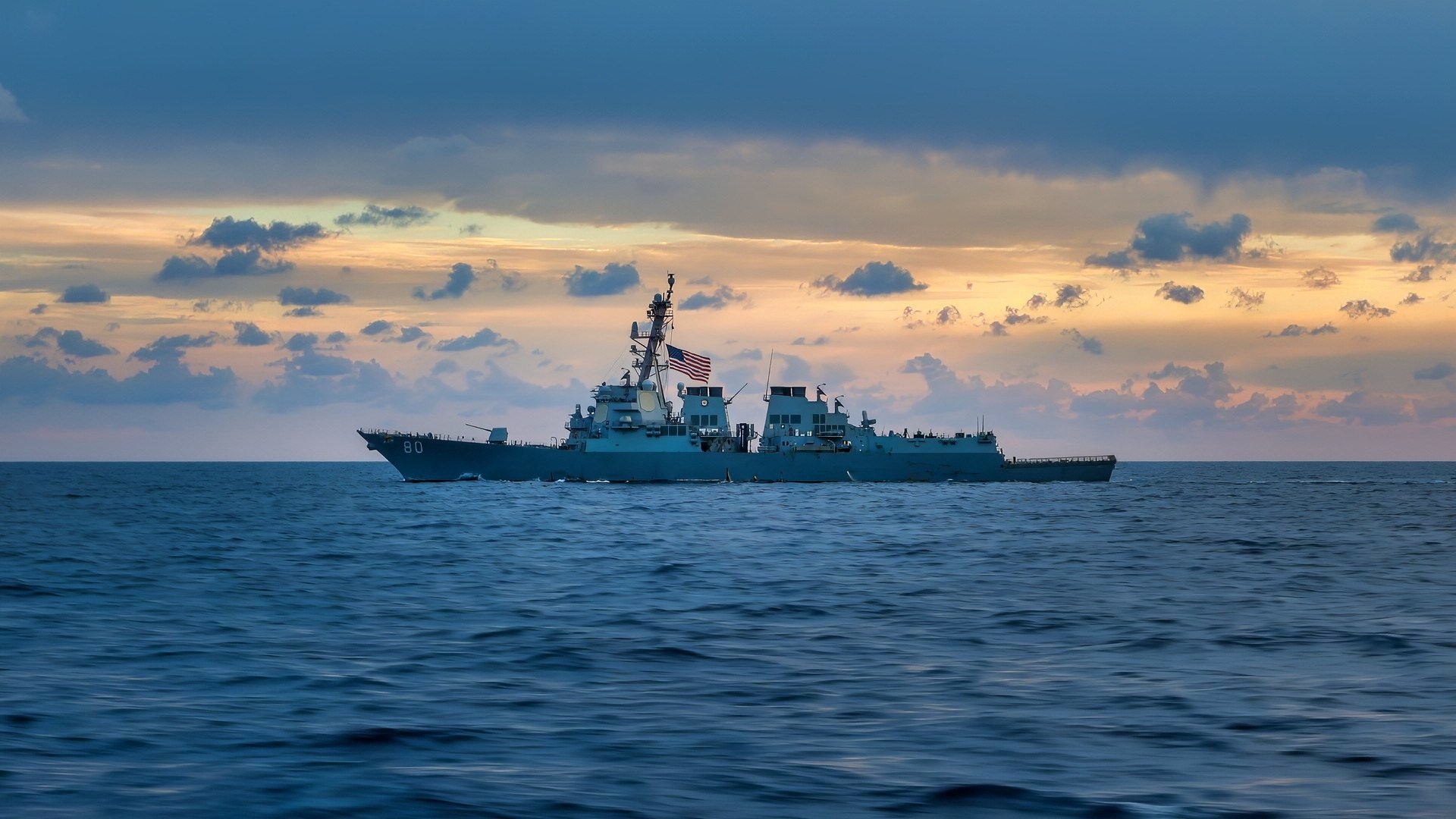
(Oct. 16, 2025) The Arleigh Burke-class guided-missile destroyer USS Paul Ignatius (DDG 117) renders honors to the USS Roosevelt (DDG 80), Oct. 16, 2025. Paul Ignatius is on a scheduled deployment in the U.S. 6th Fleet area of operations to support the warfighting effectiveness, lethality and readiness of U.S. Naval Forces Europe-Africa, and defend U.S., Allied and partner interests in the region. (U.S. Navy photo by Seaman Bradley Wolff)
The SM-3 carries a vehicle that separates from the missile and collides with a ballistic target outside Earth’s atmosphere. It forms part of the Navy’s Aegis ballistic missile defense system, which combines radar, tracking equipment, and weapons aboard suitably equipped warships. The Army’s Terminal High Altitude Area Defense system, or THAAD, intercepts missiles as they descend, either inside or outside the atmosphere. Then, Patriot provides another defensive layer, using interceptors including the PAC-3 to engage threats such as tactical ballistic missiles.
Each of those systems, however, needs its own ammunition. The Navy cannot replace SM-3 missiles fired from its destroyers with interceptors manufactured for Patriot battery systems.
Building More Takes Time
Washington has started a substantial expansion of its interceptor manufacturing. On June 24, Lockheed Martin announced a seven-year contract worth up to $35 billion intended to quadruple production of THAAD interceptors.
The company has also broken ground on the new Munitions Production Center in Troy, Alabama. Expanding factory capability is a positive step, but it does not immediately put more missiles into military inventories — and even speeding up manufacturing doesn’t solve the problem quite quickly enough.
Today, the United States is still engaged in a conflict with Iran while also preparing for potential contingencies in the Indo-Pacific.
Lockheed itself has even acknowledged that a range of potential problems related to funding, supplier performance, workforce availability, and construction schedules could still affect its plans.
On September 17, Lockheed also announced that GM Defense had delivered its first housing components for Patriot PAC-3 Missile Segment Enhancement interceptors. Reuters said that the parts arrived just 22 days after an August 6 manufacturing agreement was signed.
That, then, is progress in supplying components, but turning them into complete missiles still requires additional parts, assembly, and testing before the final weapons can reach operational units. There is still a long journey ahead.
The Shortfall Matters Beyond Iran
Reduced interceptor stocks could become particularly problematic for the United States in a conflict with China. While the U.S. would still possess the most advanced military technologies in the world, a reduced supply of interceptors would make U.S. sites vulnerable to a force whose ballistic and cruise missiles would play a major role in a fight over Taiwan.
Weapons expended against Iran in 2024 or in the ongoing conflict today have implications for American readiness elsewhere, and rebuilding those inventories could take years, leaving military planners to balance their continuing operations in the Middle East against the ammunition required to defend forces in another major conflict.
About the Author: Jack Buckby
Jack Buckby is a British researcher and analyst specializing in defense and national security, based in New York. His work focuses on military capability, procurement, and strategic competition, and he produces and edits analysis for policy and defense audiences. He brings extensive editorial experience, with a career output spanning over 1,000 articles at National Security Journal, and has previously authored books and papers on extremism and deradicalization.