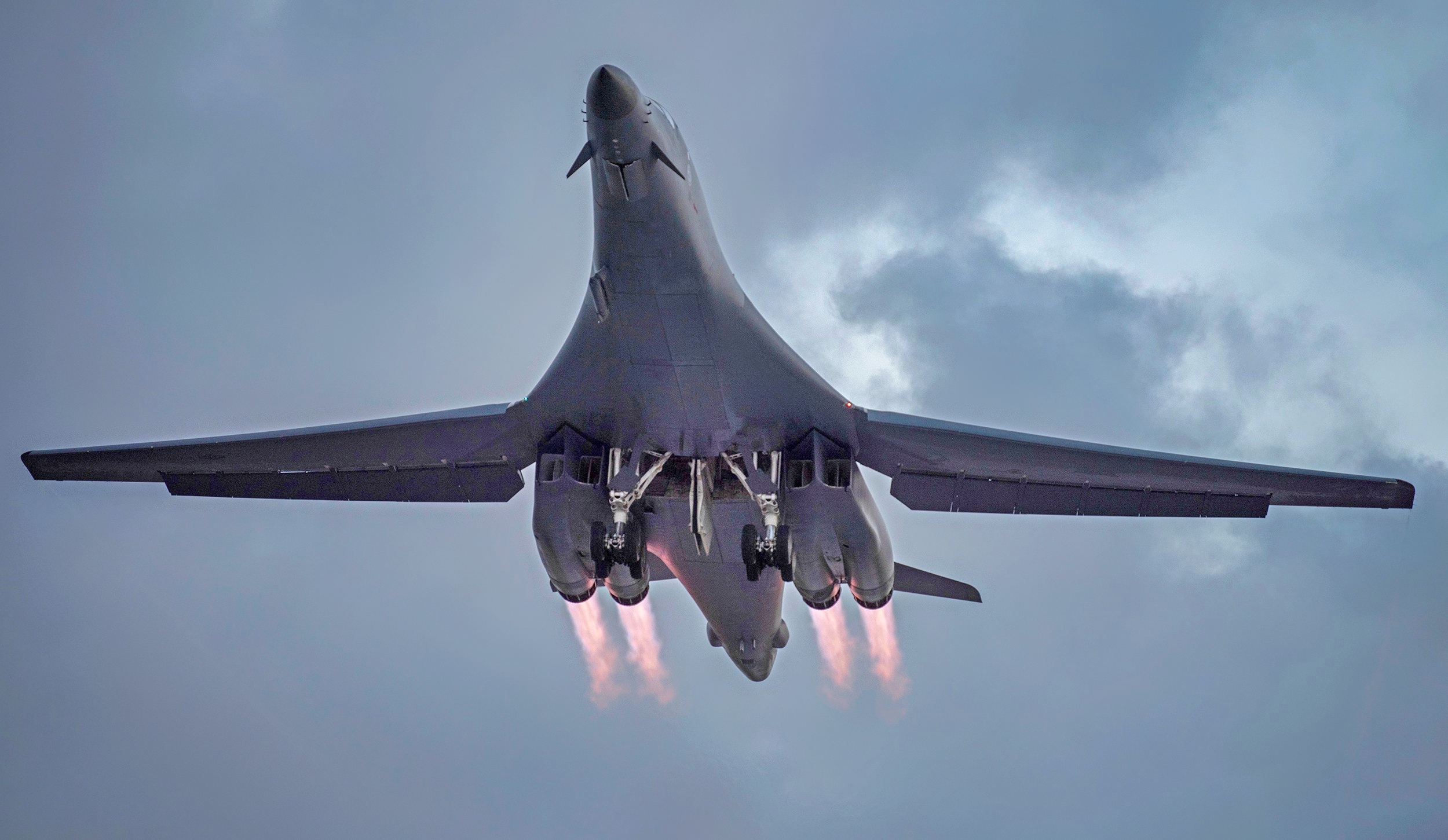
The U.S. military and Iran exchanged fire over the last few days as President Donald Trump’s war against Tehran continues to heat up, showing no signs of stopping.
According to a report from Euronews, far from peace being on the horizon, there has instead been an “increasing number of air strikes between the US and Iran,” as a third U.S. aircraft carrier — the USS Theodore Roosevelt — arrives in the region.
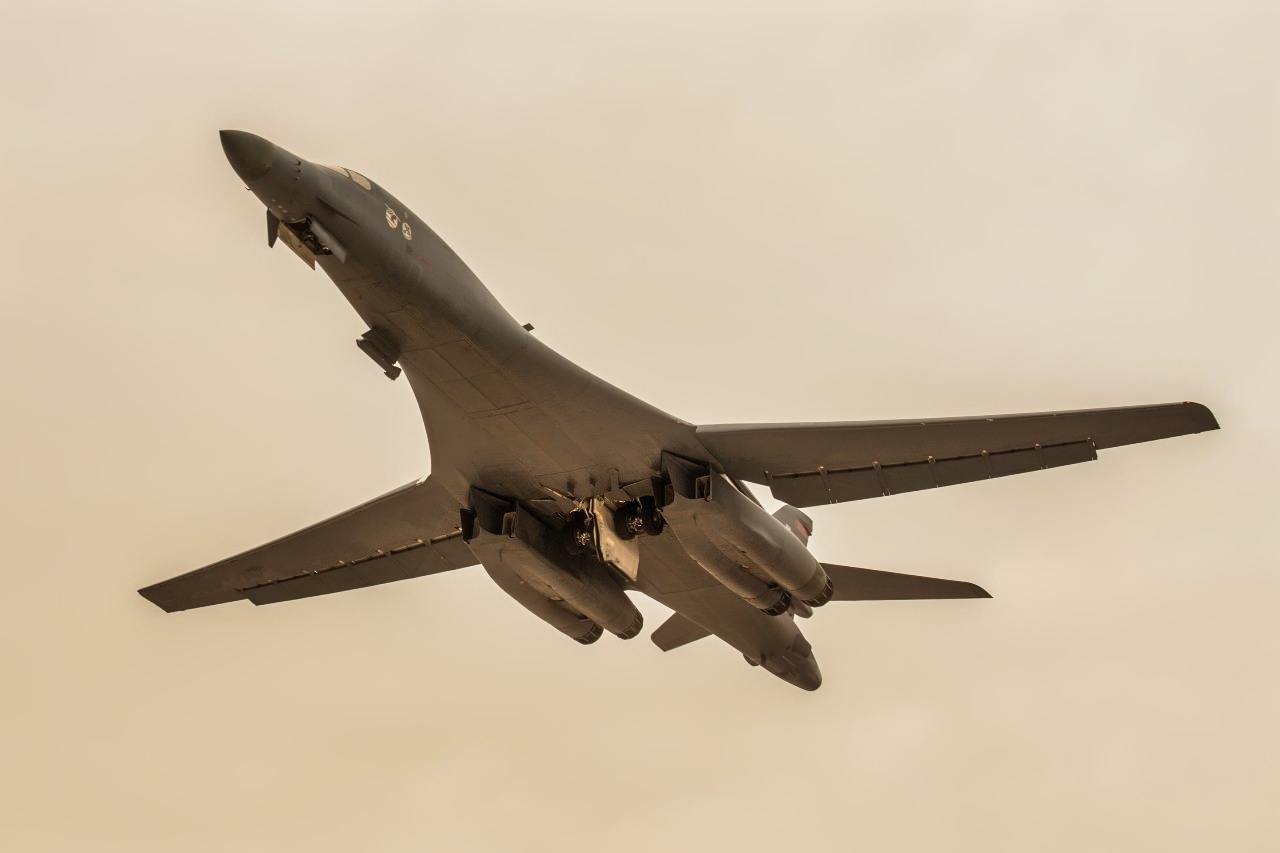
A B-1B Lancer aircraft from the 34th Bomb Squadron departs from Al Udeid Air Base, Qatar, April 8, 2017. This departure marks the airframe’s first mission in the U.S. Air Force Central Command’s area of operations in more than two years. (U.S. Air Force photo by Staff Sgt. Joshua Horton)
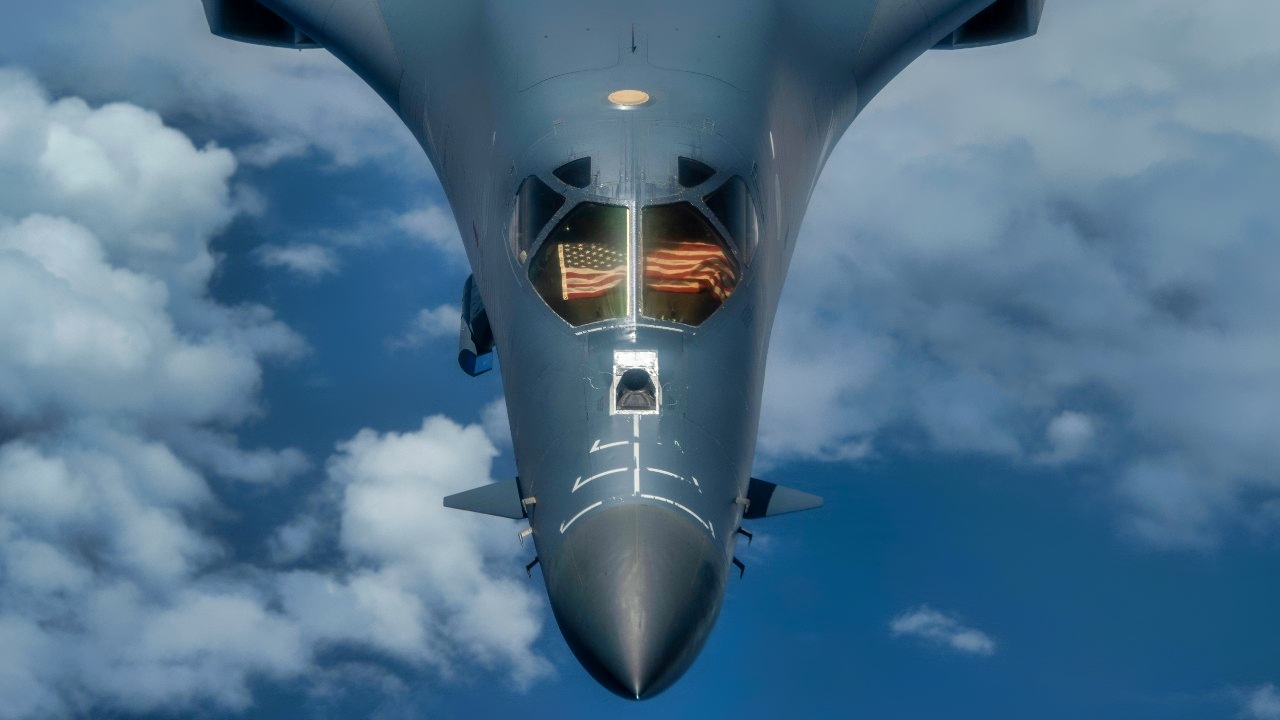
A 9th Expeditionary Bomb Squadron B-1B Lancer flies over the East China Sea May 6, 2020, during a training mission. The 9th EBS is deployed to Andersen Air Force Base, Guam, as part of a Bomber Task Force supporting Pacific Air Forces’ strategic deterrence missions and commitment to the security and stability of the Indo-Pacific region. (U.S. Air Force photo by Senior Airman River Bruce)
Since Sunday, the two countries “have conducted widening airstrikes in a fast-moving display of violence,” Euronews reported, while two oil tankers exploded in the Strait of Hormuz on Monday alone.
U.S. airstrikes targeted Iranian missile launchers while Iran targeted oil tankers in the Strait of Hormuz and a U.S. military facility in Bahrain.
Former Israeli Intelligence Officer Warns Situation is ‘Fundamentally Unsustainable’
In a social media post on Sunday, former Israeli intelligence officer Danny Citrinowicz warned that the current situation was “fundamentally unsustainable.”
“The Trump administration may have no desire for another major war, but Tehran views the continued U.S. naval blockade as an act of war,” he said. “Iran has no intention of accepting this situation indefinitely, let alone surrendering under American military and economic pressure.”
Citrinowicz warned, “The real danger is that neither Washington nor Tehran necessarily wants a broader conflict, yet both believe that time and continued pressure are working in their favor. This is precisely how wars begin even when neither side initially wants one.”
“Washington must understand that not wanting a war is not the same as having a strategy to prevent one,” he continued. “Without a diplomatic breakthrough or a fundamental change in the current approach, further escalation is increasingly likely. The blockade is a tool, not a strategy and certainly not an end in itself.”
Trump Has Rejected Peace Talks, Marginalizing Vice President Vance Who Was In Favor of Peaceful Resolution
Last week, Trump publicly rejected continued peace talks with Iran and chided Vice President JD Vance for pushing for an agreement with Tehran.
Announcing that he had “asked Vice President Vance to focus his complete and total attention” on domestic issues — effectively removing Vance from the Iran talks — Trump declared, “We don’t need a deal with Iran. Those days have long since passed. We’ve got their money, Hundreds of Billions of Dollars, and we’ve got their Strait! Thank you for your attention to this matter.”
The Strait of Hormuz Remains Extremely Dangerous For Commercial Vessels
While Trump has repeatedly declared victory in the Strait of Hormuz, the strait continues to be extremely dangerous and inaccessible for commercial vessels, with explosive attacks on ships now common.
On Sunday, an oil supertanker carrying two million barrels of fuel sank in the Strait of Hormuz after reportedly hitting a mine.
In an interview with Bloomberg earlier this month, International Maritime Organization (IMO) Secretary-General Arsenio Dominguez warned that the strait was still unsafe for ships to transit eight months into Trump’s conflict.
“There is no confirmation that the strait has been cleared of mines, so it is very difficult for me to come here and say it is clear of any hazards on top of attacks from drones and missiles that we are experiencing on merchant ships,” he said.
Trump Has Claimed the War Will End ‘Fairly Soon’
Despite the conflict showing no signs of ending soon, Trump has repeatedly suggested the war is drawing to a close.
“We’re seeing momentum toward the end of this conflict,” said Trump last week. “I think it’s going to be ending fairly soon.”
While Tehran has expressed interest in coming to an agreement with Washington to end the ongoing conflict, the Trump administration has so far rejected Iran’s demands, including an end to the U.S. naval blockade of Iranian ports.
“Right now it hasn’t been very productive because the Iranian demands are simply not just unacceptable, but in some cases outrageous and ridiculous and really not realistic,” protested U.S. Secretary of State Marco Rubio this month.
While Trump’s war is proving increasingly unpopular at home, with a majority of Americans opposing the conflict, the president received praise from former President George W. Bush’s White House director of speechwriting, Marc Thiessen, in a Washington Post article, Thursday.
About the Author: Charlie Nash
Charlie Nash is a journalist and author whose work has appeared in The Spectator, Mediaite, New Statesman, and the American Conservative, among other major publications. His reporting has been featured by The Washington Post, Fox News, the Daily Beast, MS NOW, NewsNation, Hannity, and more. You can follow Charlie on X at @CharlieNash and on LinkedIn.