Iran’s top diplomat has presented Washington’s response to its latest proposal regarding the Strait of Hormuz.
Foreign Minister Abbas Araghchi briefed President Masoud Pezeshkian on the matter during a Cabinet meeting on Wednesday.
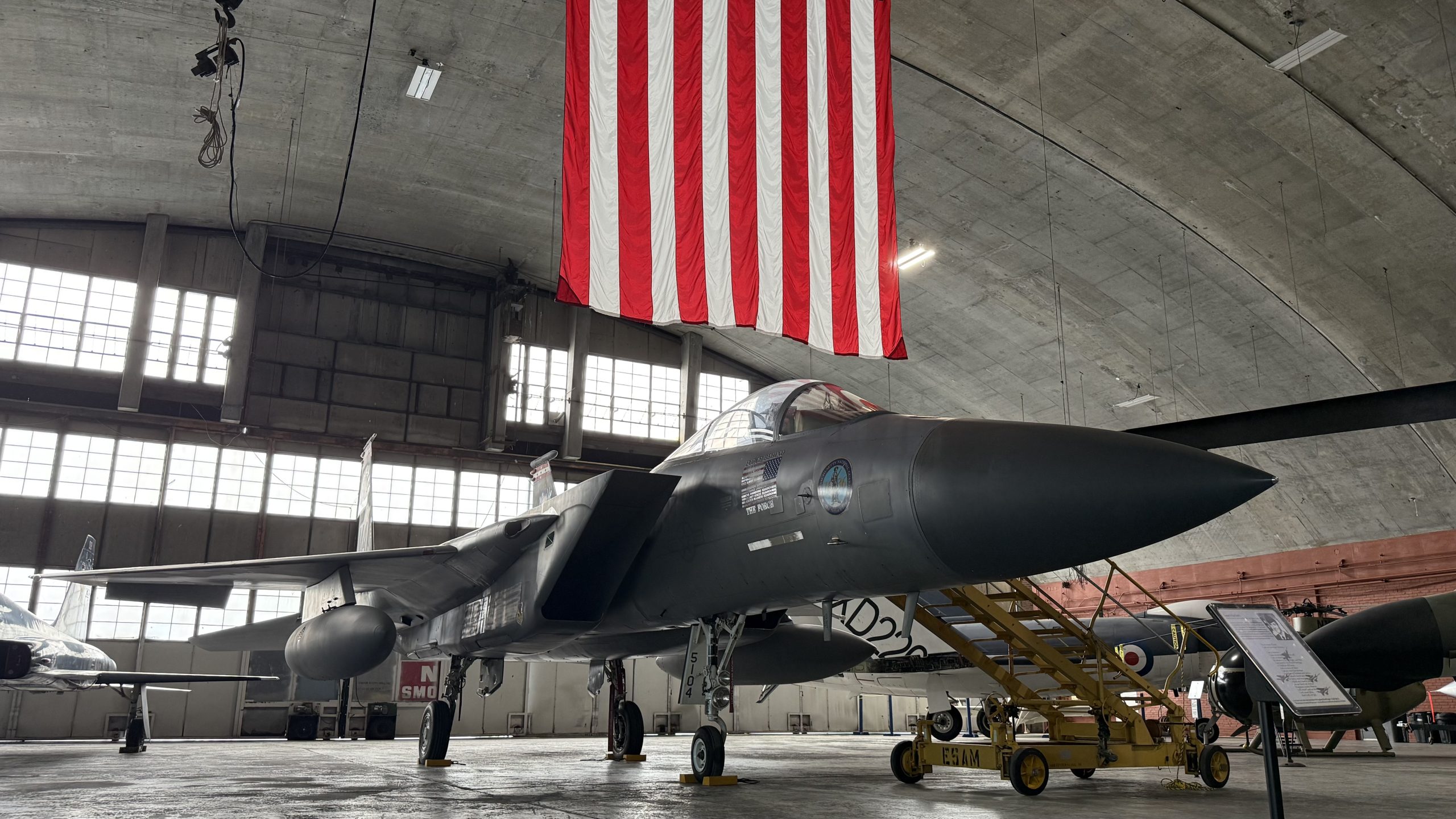
F-15 Museum photo taken by 19FortyFive.com Staff.
Tehran’s announcement did not say whether the U.S. had refused its offer.
According to Reuters, Qatari mediators received Washington’s feedback on Monday. On Tuesday, they relayed the update to Araghchi and his delegation in Doha.
“We will make every effort to bring the agreement to fruition and will firmly stand up for the rights of the Iranian people,” Pezeshkian said. “The agreement must now be based on a win-win strategy.”
President Donald Trump rejected Iran’s latest proposal to reopen the Strait of Hormuz over the weekend. By Monday, however, there was less agreement on whether a new round of talks was planned.
Iran’s Seven-Day Proposal
Araghchi laid out Iran’s proposal at the United Nations on Friday.
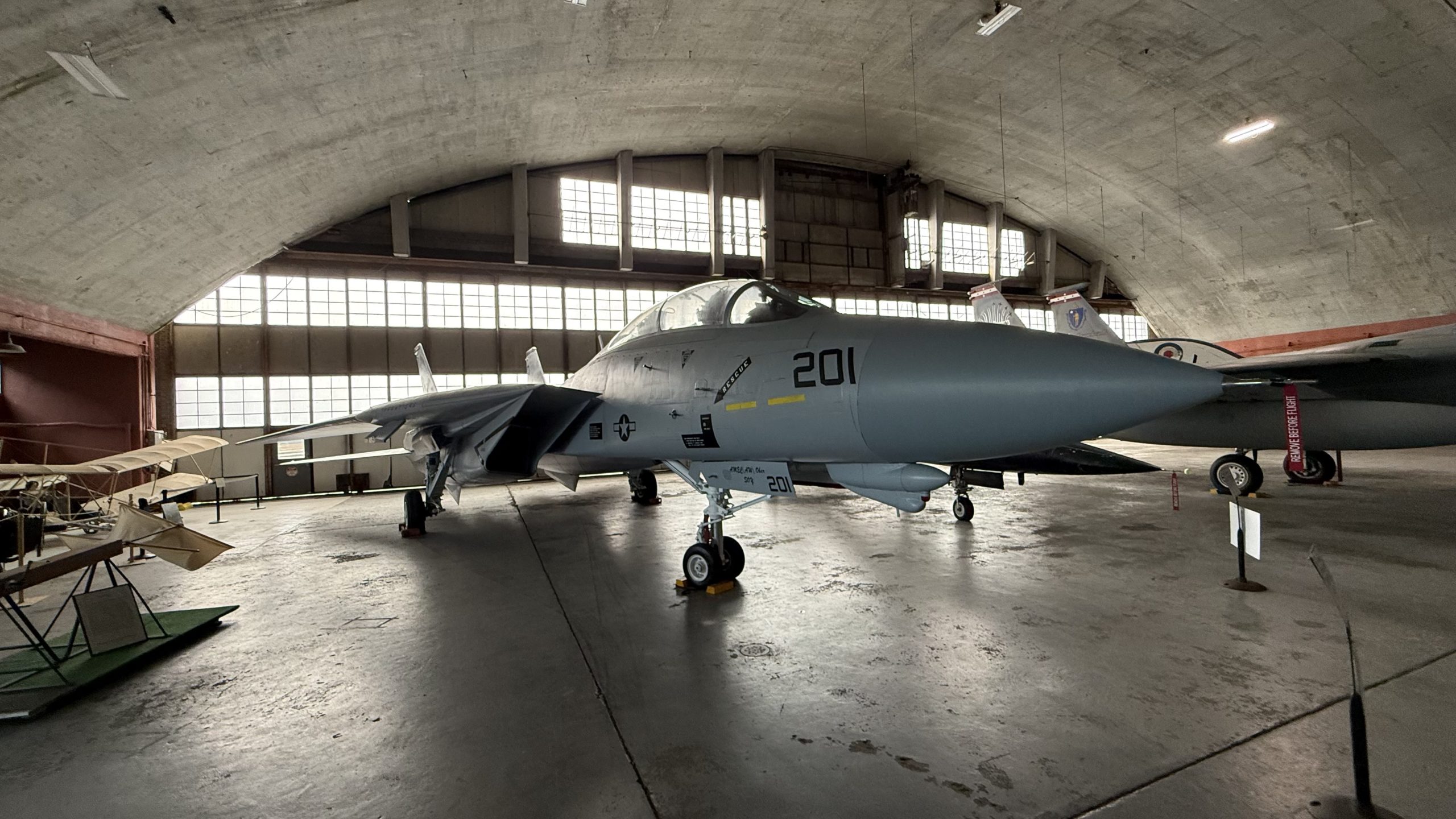
F-14 Tomcat like flown by Iran. 19FortyFive.com photo taken by staff.
Tehran offered to reopen the Strait of Hormuz and resume negotiations over its nuclear program within seven days if Washington lifted its naval blockade of Iranian ports, waived sanctions on Iranian oil sales and observed a cease-fire that included Lebanon.
Iran has also sought the release of frozen Iranian assets.
“The seven-day timeline will start as soon as the United States accepts this plan,” Araghchi told reporters.
Under the timetable he described, Washington would carry out the initial steps within four or five days. The strait would reopen on day six.
“And on day seven, the talks with the U.S. will be started for the final deal on mutually agreed subjects,” Araghchi said.
The “memorandum of understanding,” which was in effect for several weeks over the summer, prompted a brief cease-fire. It also included a hypothetical roadmap for peace talks, before breaking down in July.
Reuters said on Wednesday that the new document being circulated could return the two parties to a wider-ranging version of that deal, including steps to discuss Iran’s nuclear program.
Who Moves First?
One regional official told AP that the United States wants Iran to allow inspectors into the country.
A U.S. official said Trump was willing to grant sanctions relief and release some frozen Iranian funds if Iran made “concrete progress” on nuclear issues.
That did not mean such an offer had already been formally made to Tehran, something Trump strongly denied.
“This is untrue. I offered them NOTHING,” he wrote on Truth Social on Monday.
Araghchi, meanwhile, argued that Iran had already given Washington a route to an agreement.
“If the Americans claim they are seeking an agreement or a peaceful solution, we have presented that solution,” he said Monday.
Qatar Keeps the Talks Going
Trump’s rejection of the Iranian proposal on Saturday did not end the diplomatic exchanges.
The following day, he told Axios that he expected negotiations to continue.
“I expect more talks with Iran [this week],” Trump said. “They want to make a deal, but it is not the deal that I want to make. It is what we would have maybe agreed to a year ago. They overplayed their hand.”
Asked whether he was considering renewed U.S. strikes against Iran, Trump replied: “I am always thinking about it.”
Qatar has remained at the center of the indirect negotiations. Its Foreign Ministry said Tuesday that recent days had included a number of meetings and exchanges of messages between the two sides, some of which took place during the U.N. General Assembly in New York.
Qatari Foreign Ministry spokesperson Majed al-Ansari said Doha was working to “bridge viewpoints and establish common ground” between Washington and Tehran.
“Any agreement faces obstacles,” al-Ansari said, adding that Qatar’s role was to try to overcome the differences between the two sides. Meetings, he said, were continuing.
The public rhetoric has remained considerably harsher.
“I don’t know if they are going to give up yet, but they’ll give up,” Trump told reporters Tuesday. “They are doing very poorly.”
Mohsen Rezaei, head of Iran’s Supreme National Security Council, offered his own assessment later that day.
“We stated our conditions, but Trump is incapable of decision-making,” he said. “Trump is trapped in a quagmire where he can neither negotiate nor fight.”
Economic Pressure Mounts
Washington has continued to tighten sanctions as negotiations proceed.
The Treasury Department on Tuesday sanctioned 10 individuals and entities in Iran, Hong Kong and Pakistan, accusing them of helping Iran’s Ministry of Defense procure weapons and weapon components.
The measures form part of Operation Economic Outcast, the administration’s campaign to cut what the Treasury calls Iran’s “critical financial lifelines.”
“Treasury will not tolerate any support to the regime and will continue to identify, expose, and isolate Iran’s enablers,” Treasury Secretary Scott Bessent said.
The pressure is also visible in Iran’s currency.
The rial fell to another record low on Tuesday, with traders in Tehran exchanging more than 2.5 million rials for the U.S. dollar, according to AP. The previous record of 2.2 million rials to the dollar had been set on September 2, only 27 days earlier.
About the Author: Georgia Gilholy
Georgia Gilholy is a journalist based in the United Kingdom who has been published in Newsweek, The Times of Israel, and the Spectator. Gilholy writes about international politics, culture, and education. You can follow her on X: @llggeorgia.