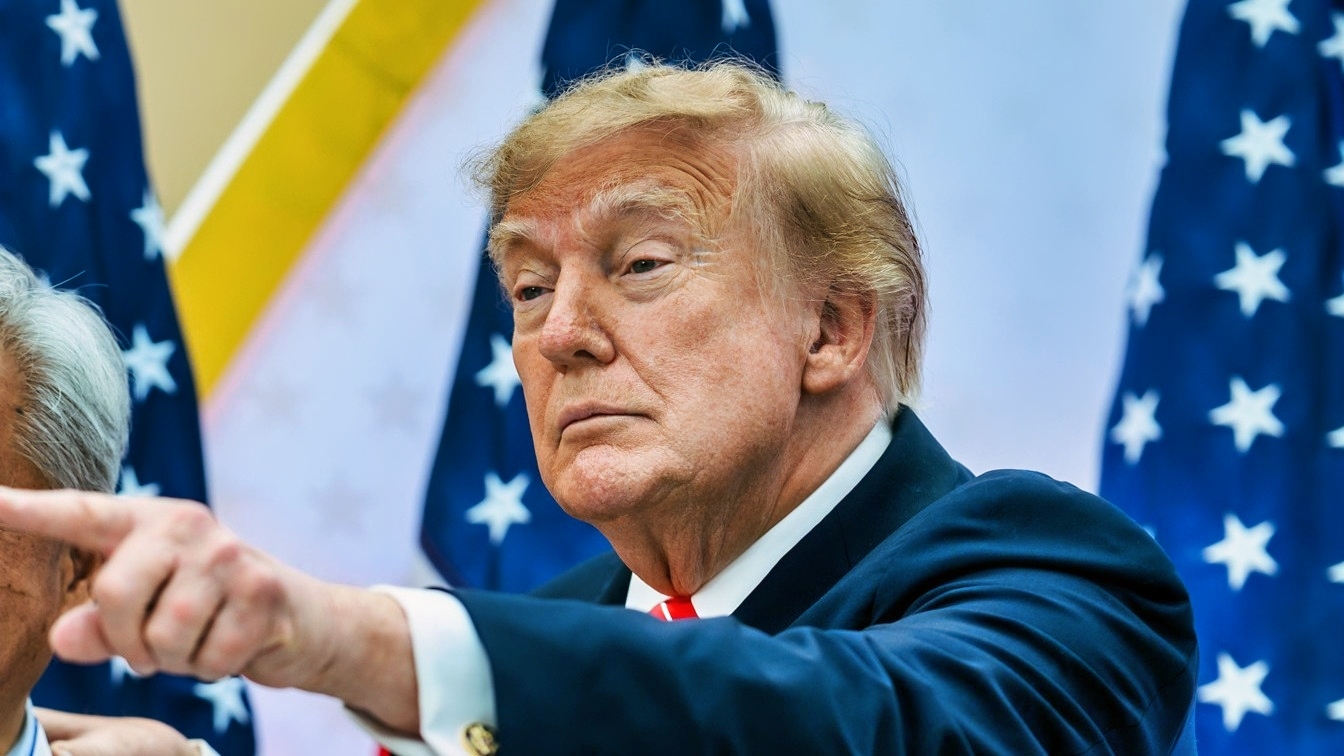
For the past decade, Donald Trump has shown remarkable political resilience—surviving scandals, criminal convictions, and personal controversies that would have derailed the careers of nearly any other politician.
Yet Trump is now implicated in a landslide defeat, suffered yesterday during the 2026 midterms, that seems to stem from general disapproval of the Iran war.

An A-10C Thunderbolt II sits under a sun shade July 29, 2014, at Moody Air Force Base, Ga. The A-10’s primary weapon is a single 30mm GAU-8/A seven-barrel Gatling gun. It can also carry up to 16,000 pounds of mixed ordnance such as cluster bomb units, joint direct attack munitions and AIM-9 Sidewinder missiles. (U.S. Air Force photo/Airman 1st Class Ryan Callaghan)
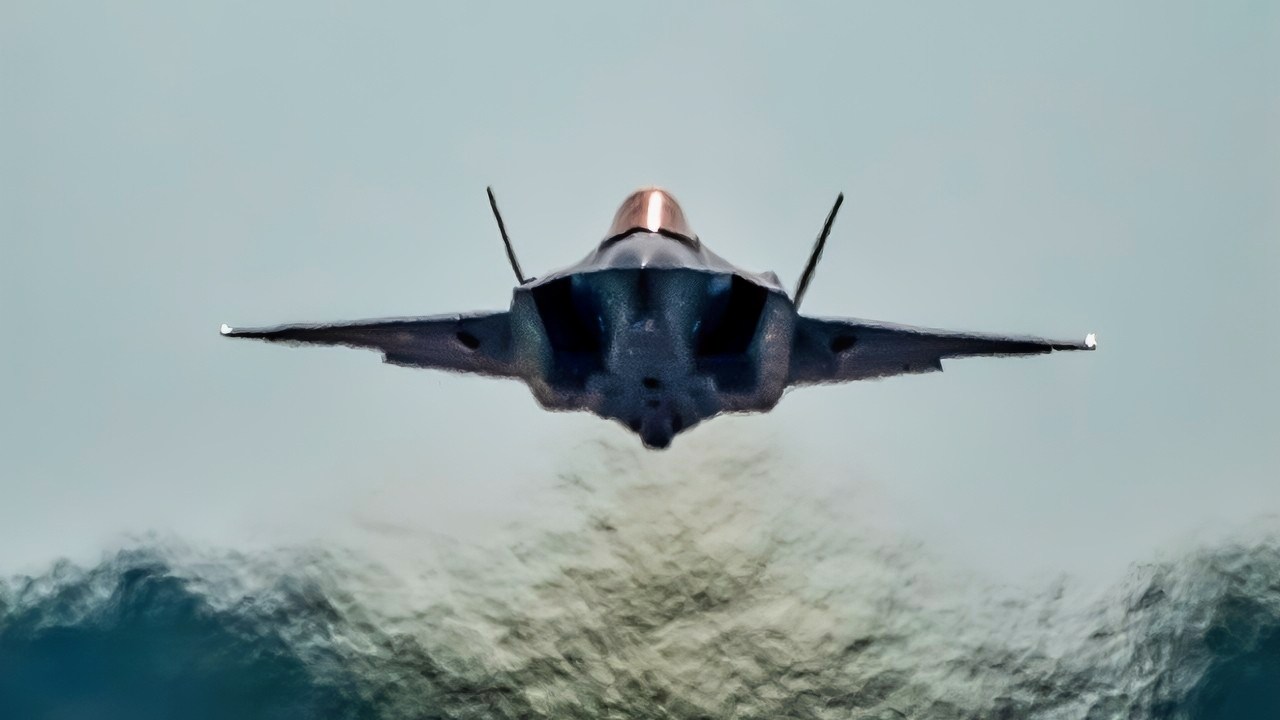
U.S. Air Force Capt. Kristin “Beo” Wolfe, F-35A Lightning II Demonstration Team commander and pilot, takes off from Selfridge Air National Guard base for the 2020 London SkyDrive Air Show in Canada Sep. 12, 2020, Harrison Township, Mich. The F-35 Demo Team flew alongside the F-16 Viper, the F-22 Raptor, the A-10 Thunderbolt II, and the Air Force Thunderbirds aerial demonstration teams in London, Ontario, Canada. (U.S. Air Force photo by Capt. Kip Sumner)
How consequential was the Iran war to the Republican defeat? Trump campaigned on economic improvement and avoiding costly foreign entanglements.
He then proceeded to start a war with Iran that created stifling economic pressure at home. So it’s plausible the Iran war was a central factor in voters’ decision to reject the incumbent’s party at the polls.
The Results
Democrats made gains in both chambers of Congress and in several gubernatorial races, securing at least 228 House seats, surpassing the 218 needed for a majority.
Democrats also gained in the Senate, though the final results are still being verified.
Notably, the Democrats made advances in traditionally Republican states like Texas, South Carolina, Alaska, and Mississippi.
Some of these results are confirmed, some are still pending—but either way, they suggest a dissatisfaction deep enough to extend into the ruby red portions of the map.
However, it’s worth noting: Trump himself was not running for reelection.
Midterm elections have a historical tendency to punish the incumbent president’s party, particularly during a president’s second term.
So the question is how much of the Republican setback reflects the standard trend and how much represents a rebuke of Trump’s choices.
The Economy
Economic dissatisfaction was already high.
Then the Iran conflict added another source of pressure through its effect on the global energy market.
Fighting and disruptions around the Strait of Hormuz threatened oil supplies, driving up petroleum prices and squeezing Americans at the gas pump, where national gasoline prices averaged well over $4 per gallon.
Meanwhile, diesel prices exceeded $6 per gallon.
At the same time, year-over-year inflation reached 3.7% in September.
Together, this created an economic situation that would have been hard for any incumbent to sidestep.
That many of these economic factors stemmed from a war that the incumbent decided to start made the political situation especially fraught.
The Broken Promise
Trump was deeply critical of the Washington establishment’s tendency to engage in overseas military commitments.
His political appeal came largely from his skepticism toward prolonged Middle Eastern conflicts.
That message resonated with voters who associated previous administrations with wars that accomplished little strategically, yet cost the taxpayer significantly.
Trump was elected, in part, to uphold this promise—to prioritize American domestic conditions first and foremost before spilling blood and treasure on foreign wars.
The Iran war undermined this campaign message, however, standing in stark contrast with Trump’s political branding.
Some voters felt duped, as if they had supported a president promising restraint but instead got yet another Middle Eastern conflict.
When perceived betrayal combines with tangible economic pain, the situation can be politically damaging.
The Coalition Problem
Trump’s 2024 victory depended partly on improved Republican performance among younger and Hispanic voters.
Pre-election POLITICO/PF Global polling suggested those gains were weakening.
Approximately 9.5% of self-reported 2024 Trump voters intended to vote Democratic, compared with 2.4% of Harris voters intending to support Republicans.
Among Hispanic Trump voters, identification with the MAGA movement declined from 56% to 37%.
And among Trump voters ages 20–29, the proportion certain to vote fell from 50% to 38%.
POLITICO reported that the Iran war contributed to dissatisfaction among some younger Republican supporters.
Hispanic voters also expressed concerns about immigration enforcement and the economy.
The point is, the war was one important source of dissatisfaction among voters, but far from the only one.
And of course, presidential parties typically lose ground during midterm elections.
It’s a historical trend that needs to be considered before attributing Republican losses solely to Iran or to Trump.
Trump’s political career has repeatedly demonstrated that personal controversy alone won’t kill his career.
But voters seem to care more about economics and foreign entanglements than whether Trump is scandal-prone.
About the Author: Harrison Kass
Harrison Kass is a writer and attorney focused on national security, technology, and political culture. His work has appeared in Tablet, City Journal, The Hill, The Spectator, and The Cipher Brief. He holds a JD from the University of Oregon and a master’s in Global & Joint Program Studies from NY—more at harrisonkass.com.