You truly could not make up the irony.
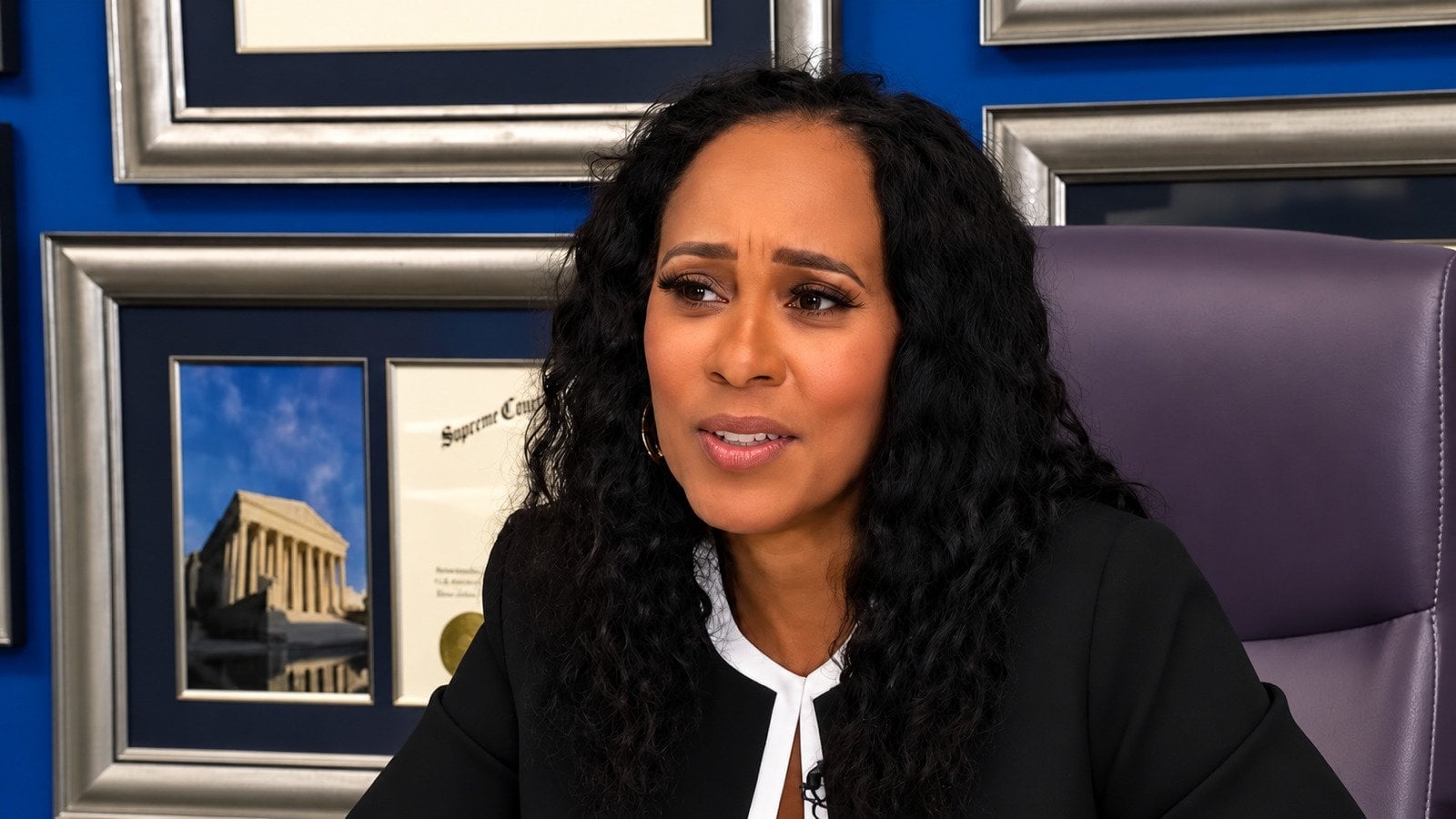
Fulton County District Attorney Fani Willis — the prosecutor whose name became inseparable from the Georgia election case against President Trump — says someone filed a New York voter registration in her name.
And the address on the application?
Trump Tower.
The bogus filing reportedly did not stop there. It identified the lifelong Democrat as a Republican, used a false date of birth, carried a signature Willis says was forged and listed the Fulton County Courthouse as her mailing address.
Yes, the filing reportedly used those exact details.
Someone allegedly combined Willis’ real workplace in Georgia with President Trump’s famous Fifth Avenue address in Manhattan and tried to place the result on New York’s voter rolls.
OMG. Fulton County DA Fani Willis, who indicted President Trump for questioning the 2020 election, reveals someone fraudulently altered her voter registration to be at TRUMP TOWER in NYC, as a Republican
You cannot make this up
“It came to my attention that someone… pic.twitter.com/DilGfN7zir
— Eric Daugherty (@EricLDaugh) October 25, 2026

The facts are almost too on-the-nose, but one distinction matters from the beginning:
This was an allegedly fraudulent voter-registration application. It was not a fraudulent vote.
According to the original report from WSB-TV Channel 2 Atlanta, Willis learned about the filing only after the New York City Board of Elections sent her a notice saying the registration was being canceled because officials suspected it was fraudulent. The station’s report, published October 23, tied that notice to application documents Winne reviewed in Willis’ office during a separate interview.
Willis told investigative reporter Mark Winne that she neither completed nor signed the application.
Documents reviewed in her office reportedly showed a Trump Tower residence, the Fulton County Courthouse as the mailing address, an incorrect birth date, the wrong political party and a signature Willis said was not hers.
The New York City Board of Elections told Willis that it found no record of any ballot being cast under the registration.
The board canceled it.
WSB-TV said Winne uncovered the story while interviewing Willis about an unrelated case, making the cancellation notice and the documents in her office the first public evidence of the bizarre filing.
That means the system did catch this particular filing before it could become a fraudulent vote — an important fact that some of the first viral posts blurred while marveling at the political irony.
Someone registered to Vote as Fani Willis and listed the address as Trump Tower.
Democrats say this stuff never happens and now it’s happening to them. pic.twitter.com/ZEb1V0Ap16
— ALX
(@alx) October 25, 2026

But catching it does not make the filing harmless.
Someone was apparently able to submit enough information in another person’s name to create a voter-registration record that required formal cancellation.
The target was not an unknown private citizen with no way to attract attention.
It was the elected district attorney of Fulton County — one of the most recognizable prosecutors in America.
If Willis had not received the cancellation notice, the public might never have heard about it.
That should concern people on both sides of the political divide.
The New York City Board of Elections says a person may register online, in person or by mail. For mailed applications, the form must be completed and signed, and the board specifically says it does not accept digital or Adobe-generated signatures.
The board also explains that a voter’s residence address determines which contests that person is eligible to vote in.
The official guidance says mailed forms must arrive no later than 10 days before the election. It also tells voters to re-register after moving and says New York uses address-confirmation records from the Postal Service and government agencies to keep its rolls current.
So the Trump Tower address played a real administrative role in the filing instead of serving as a throwaway joke.
An address is central to where a voter belongs on the rolls and which elections appear on the ballot.
WSB-TV reported that election officials said anyone attempting to use this registration to vote would have been required to provide identification or other proof of residence.
That safeguard appears to have done its job here.
Still, Willis believes the filing was an act of harassment.
Given the details, that conclusion is not difficult to understand.
A lifelong Democrat was registered as a Republican. A Georgia prosecutor was assigned a Manhattan residence.
And the Manhattan residence chosen was the building most closely associated with the man she once prosecuted.
This looks less like random paperwork and more like a political taunt with someone else’s identity attached to it.
Hoodline reported that no application date, public case number or suspected filer has been disclosed. It also noted that Willis’ office is now communicating with a New York prosecutor about whether criminal charges should follow, while the publicly available account still leaves the filing method, submission timeline, reviewing prosecutor, identity of the person behind it and any additional evidence collected unresolved.
As of publication, no suspect has been publicly identified and no charge has been announced.
Those unknowns matter.
The outlet also traced the story back to Winne’s unrelated interview with Willis and emphasized that the public record still does not reveal when the application was submitted or how far any criminal review has progressed.
There is no basis yet to say who submitted the application, how it was accepted, whether the filer expected it to survive review or whether the entire act was designed simply to provoke Willis.
But the existence of the filing is not being denied.
Neither is the fact that it had to be canceled.
That is why the story detonated online.
Willis spent years at the center of a case accusing President Trump and others of improperly challenging the administration of the 2020 election in Georgia.
Now she says she became the victim of a fraudulent election-related filing bearing her own name — with Trump Tower written into the middle of it.
HAHAHAHAHAHAHAHA
Fani Willis, who once prosecuted Trump for his election denial, just fell victim to voter fraud.
Her voter registration was switched to NYC, address to Trump Tower – and it worked! pic.twitter.com/SVaN9CAj2T
— End Wokeness (@EndWokeness) October 25, 2026
That last viral description goes too far when it says the scheme “worked.”
The registration was discovered and canceled, and election officials say no vote was cast.
But the episode still exposes an uncomfortable truth that should not be buried beneath the jokes.
Fraudulent registration attempts do happen.
They can involve stolen identities, false addresses, forged signatures and deliberately provocative details.
Election integrity requires officials to detect these attempts, cancel bad records, preserve accurate rolls and prosecute people who knowingly abuse the system.
That is the honest takeaway here.
The safeguards appear to have prevented a fraudulent vote.
The notice alerted Willis.
The registration was canceled.
Now investigators have a filing that may point back to whoever submitted it.
The next question is whether New York authorities will identify that person and bring a case.
Willis says she wants to make sure there is no confusion about her eligibility to vote in Georgia. That concern is understandable because a false registration in another state could create precisely the kind of administrative uncertainty that election officials are supposed to prevent.
It is also why every legitimate voter should care about clean registration records.
This is bigger than Fani Willis.
Americans should be able to trust that no one can casually create or alter a voter record in their name.
They should also be able to trust election officials to catch the attempt before a ballot is cast.
In this case, officials say they did.
Now the person behind the Trump Tower filing needs to be found.
Because the irony may be incredible.
The alleged identity fraud is not.
This is a Guest Post from our friends over at WLTReport. View the original article here.
The post Someone Registered Fani Willis To Vote At Trump Tower — Then The Notice Arrived appeared first on 100PercentFedUp.com.