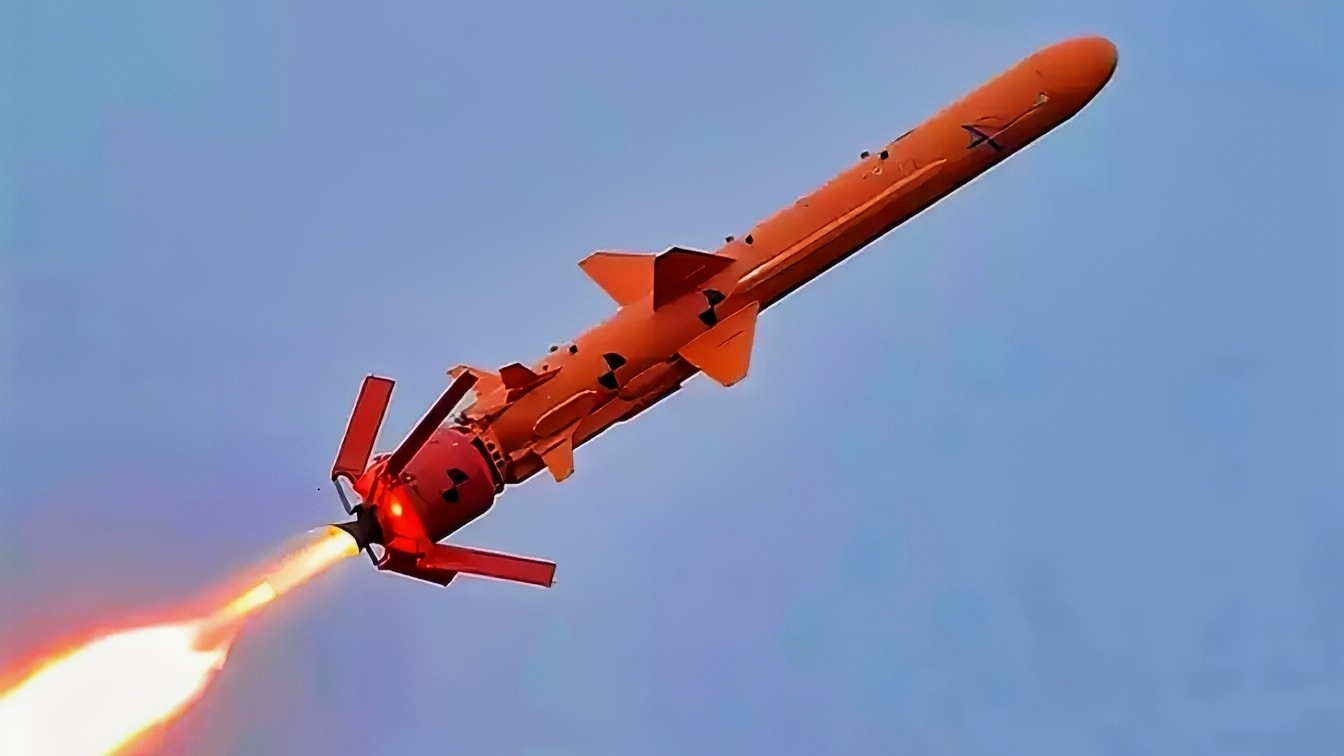
Ukraine answered Washington’s one-way “energy ceasefire” with a thousand drones. President Trump has called for an energy ceasefire that has been completely ignored by Russia.
Ukrainian President Volodymyr Zelenskyy accused Russia of launching at least 76 attacks on energy or oil and gas targets over a week’s time last month.
MSTA Russian Artillery Creative Commons Image
Artillery from Ukraine War Creative Commons Image
And the Ukrainians, seeing Trump easing sanctions on Moscow, are responding in kind.
“Over this past week, the Russians have attacked Ukraine with almost 2,700 attack drones, 1,700 aerial bombs, and 66 missiles, most of them ballistic,” Zelenskyy said. ”
Overnight into Sunday, October 18, Kyiv launched one of the largest aerial attacks of the war, sending waves of long-range drones toward Moscow, St. Petersburg and a broad swath of western Russia.
According to ABC News, Russia’s Ministry of Defense claimed its air defenses shot down 1,015 of them. That’s Moscow’s count of what it shot down. The oil terminal burning on the evening news tells you how many got through.
St. Petersburg Governor Alexander Beglov said emergency crews were battling fires at the city’s oil terminal, the Ruchyi oil depot and industrial warehouses in the Kolpinsky District.
“Emergency services continue to work on extinguishing fires at the St. Petersburg oil terminal, the Ruchyi oil depot and industrial warehouses in the Kolpinsky District,” he said.
One person was killed, and five others were wounded. The Associated Press reported that a logistics center owned by retailer Ozon and a data center run by Russian tech giant VK were also hit.
In the surrounding Leningrad region, Gov. Alexander Drozdenko said the raid struck two transformer substations in Yanino, leaving about 20,000 people without electricity.
ABC noted the raid appeared to be the biggest St. Petersburg has seen in the entire war.
Russia’s second biggest city spent most of the last four and a half years treating the war as something that happened somewhere else. Not anymore.
The Refinery Campaign Is The Strategy
This didn’t come out of nowhere.
Ukraine has been working over Russia’s oil and gas refineries for well over a year.
In June, Ukrainian drones hit the Gazprom Neft refinery in Moscow’s Kapotnya district, putting black smoke over the Russian capital.
Moscow claimed it downed 992 drones in that 24-hour period. Four months later, the number crossed four digits.
The AP, citing a review by the Carnegie Endowment, reported that Ukrainian drones have repeatedly struck 16 major Russian refineries, representing about 38 percent of the country’s nominal refining capacity.
The same reporting found that some Ukrainian drone models have doubled their range in a year and now routinely hit targets within 1,000 kilometers of the border.
The result has been gasoline shortages inside Russia, with rationing in some regions.
The math is simple. Oil pays for the war. Every refinery that goes down is fuel that doesn’t reach the front and export revenue that doesn’t reach the Kremlin.
A 1,000-drone raid is a saturation play.
Radars, interceptor stocks, and air defense crews all have limits.
Flood the airspace across 15 regions at once, and some of them will leak through. In St. Petersburg, that fraction found the oil.
This has been the war’s most cost-effective strategic campaign. Ukraine is doing it at industrial scale, with airframes the AP describes being assembled at night at hidden sites in rural Ukraine. No bombers needed.
Washington Wanted A Pause To Allow Russian Diesel Into The US
The timing makes this raid more than just another big number. On Oct. 11, President Trump announced that Russia and Ukraine had agreed to an “energy ceasefire” but offered no details.
Kyiv reluctantly halted its refinery strikes for three days. However, ABC reported that the Kremlin never abided by it, and Russia kept hammering Ukraine’s power grid.
Zelenskyy said Russia hit Ukraine’s energy, oil and gas sector 76 times in the week after the announcement, firing almost 2,700 attack drones, 1,700 aerial bombs and 66 missiles.
So Ukraine struck back in a tit-for-tat operation. On Oct. 15, its drones hit a refinery in Ryazan, and Trump called the renewed strikes a disgrace, arguing they were driving up world oil prices, but not uttering a word over Russia’s actions.
Compounding things, he also waived the Graham Act sanctions package Congress passed to target Russia’s oil and gas industry, following a deal with Putin to lift sanctions on Russian diesel.
Trump said he held off because he didn’t want to drive Russia away from the bargaining table.
Meanwhile, Ukraine reported that its Starlink access on its drones was abruptly restricted, disrupting military operations. Zelenskyy later told NBC that U.S. intelligence sharing had resumed after a period of being blocked
A ceasefire that only one side observes is a free gift to the side that doesn’t. Asking the country absorbing 2,700 drones a week to stop hitting back was a strange way to bring anyone to the table.
The Hypocrisy Of Moscow Knows No Bounds
Kyiv knows it has to pay a price for its actions. Kyiv is spending political capital with its most important backer every time a refinery burns.
There’s operational risk too. During the Oct. 18 raid, a Ukrainian drone strayed into Lithuania and damaged a moving car. Ukraine’s Foreign Ministry apologized, saying Russian electronic warfare may have diverted it.
So is it working? Kremlin spokesman Dmitry Peskov insisted Kyiv can’t change the course of events. However, the strikes haven’t slowed.
On Nov. 1, Ukrainian drones hit the LUKOIL refinery in Kstovo in the Nizhny Novgorod region, and Moscow opened a terrorism case.
Senior Russian official Alexander Novak acknowledged Ukraine had resumed hitting Russian plants, striking three refineries and a gas-chemical complex.
Moscow opening a terrorism case over the refinery hit is tone-deaf at best and massive hypocrisy at its worst. Russia has been targeting Ukrainian civilians and energy grids for almost five years.
They’ve killed over 17,000 civilians, and the death toll may be much higher due to the lack of reporting in Russian-occupied areas.
Washington asked for a pause.
Russia ignored it, so Kyiv sent a thousand drones.
They set the oil in St. Petersburg on fire.
About the Author: Steve Balestrieri
Steve Balestrieri is a National Security Columnist. He served as a US Army Special Forces NCO and Warrant Officer. In addition to writing on defense, he covers the NFL for PatsFans.com and is a member of the Pro Football Writers of America (PFWA). His work was regularly featured in many military publications.