
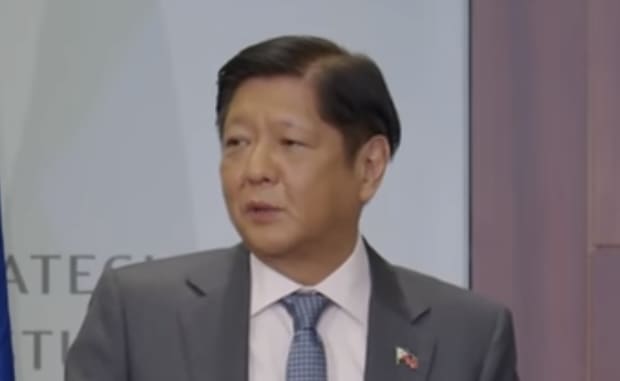
Philippine President Ferdinand Marcos Jr. declared a “national energy emergency” on Tuesday amid the war in the Middle East involving Iran.
According to Newsweek, Marcos warned the country’s fuel supply was in “imminent danger.”
JUST IN:
President Ferdinand Marcos Jr declares national energy emergency in the Philippines. pic.twitter.com/Y0sBKdVsa9
— BRICS News (@BRICSinfo) March 24, 2026
Newsweek explained further:
Marcos issued Executive Order 110 a day after a presidential office spokesperson said the country was facing a “price disruption,” not a full-blown crisis, according to local media.
The move comes as the war involving Iran disrupts traffic through the Strait of Hormuz, a 21-mile-wide chokepoint that carries roughly a quarter of the world’s seaborne oil.
Asia is the region most exposed to the oil shock. But while China, Japan and South Korea hold strategic reserves that can cover months of demand, many Southeast Asian economies operate with far thinner buffers.
The Philippines is in particularly dire straits, with the Middle East accounting for roughly 95-98 percent of its oil imports. The U.S. treaty ally’s fuel supply will dry up in just two months if the government doesn’t secure enough backup supplies, Department of Energy Secretary Sharon Garin said during a Tuesday panel, per the Philippine Inquirer.
“The declaration is anchored on the determination by the Secretary of Energy that recent hostilities in the Middle East involving the United States of America, Israel, and Iran have heightened geopolitical tensions in the region that plays a critical role in global oil production and transportation, creating uncertainty in global energy markets, severe disruptions in supply chains, and significant volatility and upward pressure on international oil prices, thereby posing a threat to the country’s energy security,” a statement from the presidential communications office read.
“The Executive Order further cites the closure of the Strait of Hormuz, a critical energy corridor for global oil shipments, as disrupting the flow of petroleum products to international markets and constraining global fuel supply, with corresponding implications on the stability and adequacy of domestic energy supply. As a net importer of petroleum products, the Philippines remains highly dependent on external sources of fuel supply and is therefore vulnerable to disruptions in global oil production and transportation,” it continued.
“To safeguard national interest by ensuring the stability of domestic energy supply, the uninterrupted delivery of essential services, the continuity of economic activity, and the welfare of all citizens, particularly vulnerable sectors, and to mitigate the impact of the conflict in the Middle East, the Executive Order adopts the Unified Package for Livelihoods, Industry, Food, and Transport (UPLIFT) as the government’s coordinated, whole-of-government response framework,” it added.
President of the Philippines Ferdinand “Bongbong” Romualdez Marcos has signed Executive Order No. 110, declaring a State of National Energy Emergency throughout the country due to the ongoing conflict in the Middle East and the closure of the Strait of Hormuz. pic.twitter.com/lmubYQpOIB
— OSINTdefender (@sentdefender) March 24, 2026
More from the Associated Press:
The government has started to provide 5,000 pesos ($83) each to large numbers of motorcycle taxi drivers and other public transport workers nationwide to help them cope with soaring gasoline and diesel prices. Free bus rides have also been provided to students and workers in selected cities.
About 2.4 million Filipinos live and work in the Middle East, including about 31,000 in Israel and 800 in Iran. Most have opted, however, to stay and work in the region, with only several hundreds being flown home so far with government help since the Middle East hostilities began.
A Filipina caregiver, Mary Ann de Vera, was killed in Tel Aviv, Israel, in an Iranian missile strike on Feb. 28 while helping bring her elderly charge to a bomb shelter, Philippine officials said.