

President Donald Trump has publicly admitted that, should he resume major military strikes against Iran, the most immediate targets he would strike include Iran’s Pickaxe Mountain.
Speaking to reporters on Thanksgiving at his Mar-a-Lago estate, the president confirmed he is considering a potential return to strikes and said he had spoken with Israeli Prime Minister Benjamin Netanyahu in recent days.
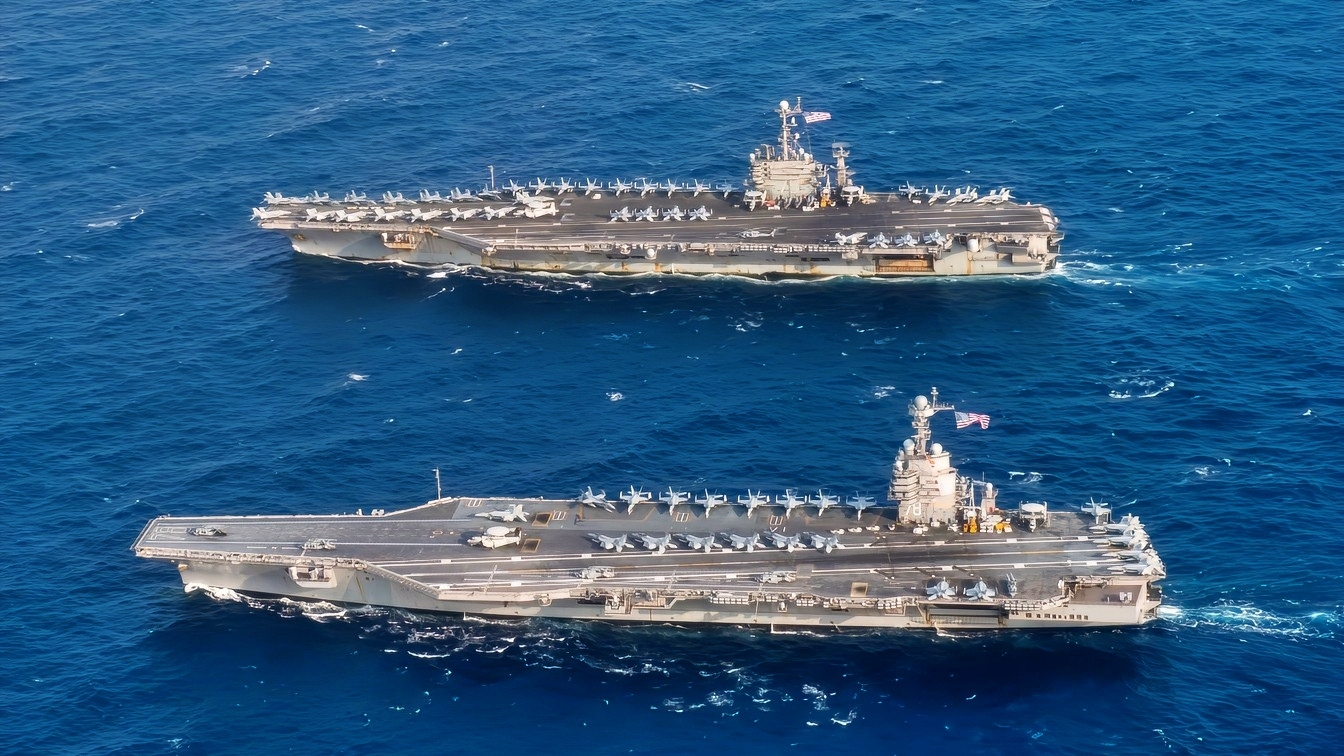
Two Aircraft Carriers US Navy Photo
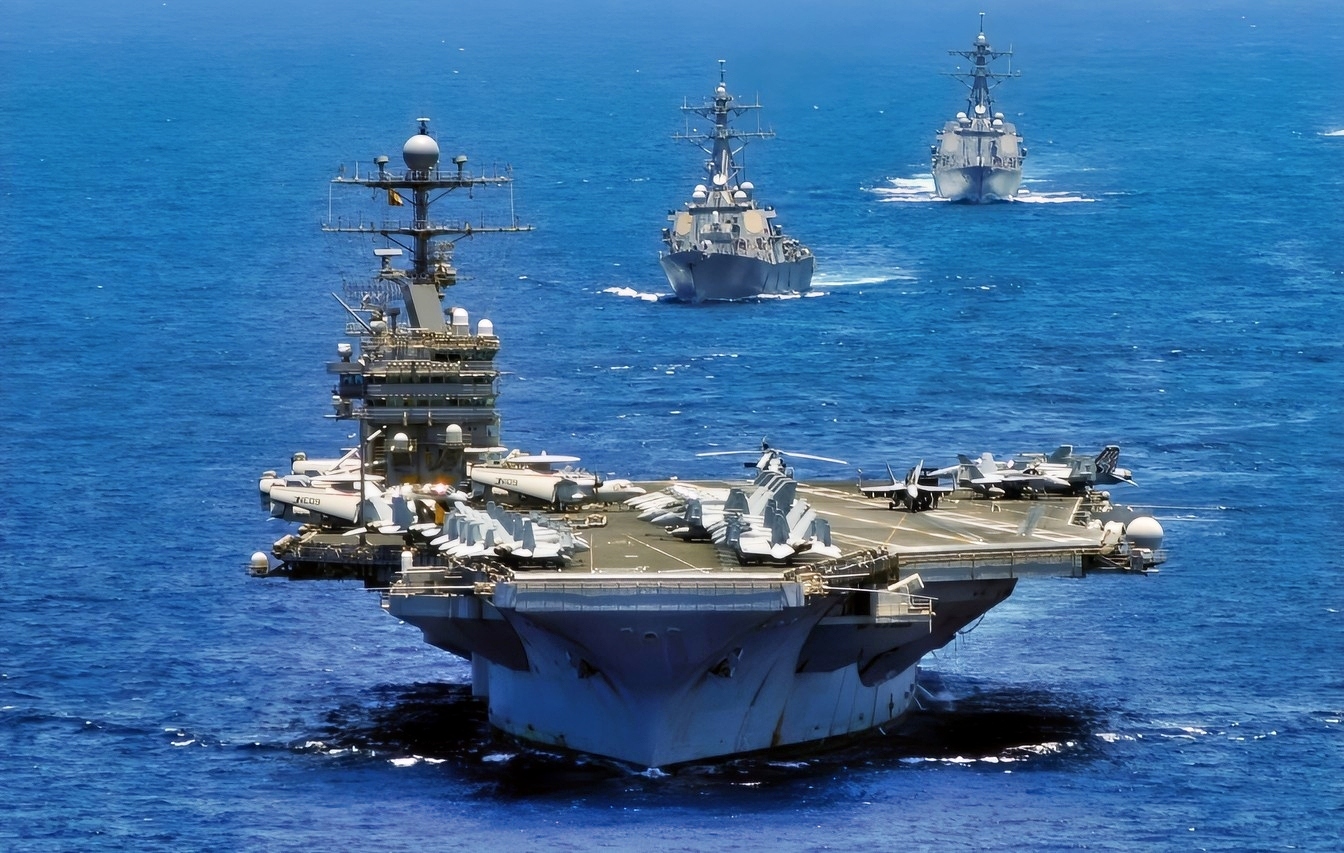
INDIAN OCEAN (Sept. 5, 2008) The aircraft carrier USS Abraham Lincoln (CVN 72) leads ships from the Abraham Lincoln Strike Group in formation as they transit the Indian Ocean. The Abraham Lincoln Strike Group is on a scheduled deployment in the U.S. 7th Fleet area of responsibility operating in the western Pacific and Indian oceans. (U.S. Navy photo by Mass Communication Specialist 2nd Class James R. Evans/Released)
The president made the comments as Israel continues to push him to authorize a new round of joint strikes against Iran, and as senior members of Israel’s own security establishment remain divided over whether Israel should be prepared to resume operations without American participation.
And while President Trump still insists that Tehran has an opportunity to negotiate an agreement, he also appears to be skeptical that Iranian leadership will take advantage of it.
What Trump Said
Speaking to American military personnel on November 26, the president said that his administration is already in a position to decide when the war with Iran ends, and that the U.S. military is better prepared to resume offensive strikes if necessary.
“We’re getting stronger. We sent an extra aircraft carrier there. We’re loaded up,” he said.
After conversations with military personnel, Trump specifically identified the underground nuclear facility at Pickaxe Mountain as a target for the next bombing campaign, should it begin. He did, however, indicate that intelligence suggests there has been little activity at the site.
“We would absolutely hit Pickaxe Mountain, but we haven’t seen any real activity there,” he said.
The president also suggested that Russian President Vladimir Putin and Chinese President Xi Jinping are interested in bringing the conflict to an end, despite both countries’ governments’ relationships with Tehran.
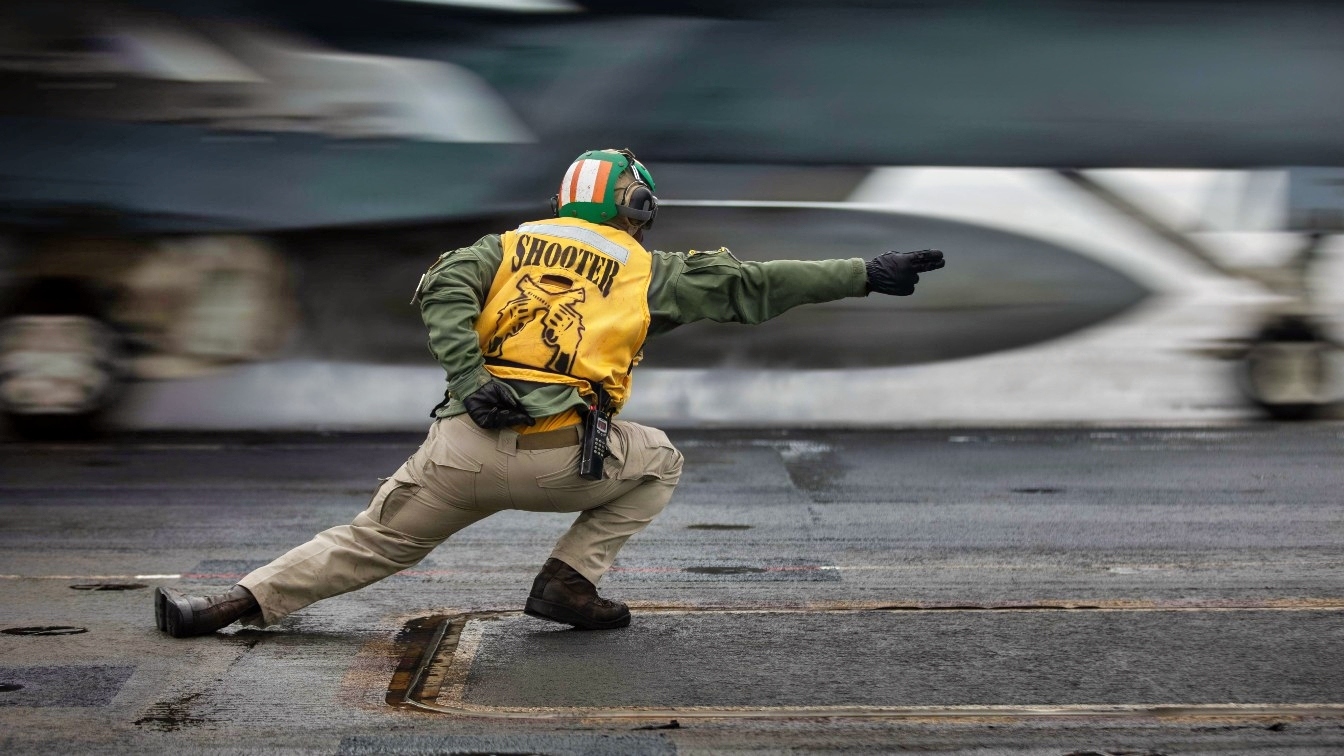
U.S. Navy Lt. Miguel Smith launches an F/A-18E Super Hornet, attached to the “Pukin Dogs” of Strike Fighter Squadron (VFA) 143, from the flight deck of Nimitz-class aircraft carrier USS Dwight D. Eisenhower (CVN 69) May 7, 2026. Eisenhower is underway conducting flight deck certification in the Atlantic Ocean in preparation for future operations. (U.S. Navy photo by Mass Communication Specialist 3rd Class Jamison Sutton)
President Trump also downplayed reports that Moscow and Beijing may be providing intelligence to Tehran that disadvantages the United States.
Why Trump Wants to Hit Pickaxe Mountain
Pickaxe Mountain is near Iran’s Natanz uranium enrichment complex and is understood to house an underground facility that Western intelligence agencies have monitored for years.
The site has also been the focus of nuclear weapons researchers — because while Iran maintains that its nuclear program is intended only for civilian purposes, the construction of such a hugely fortified underground facility raises obvious questions about what Iran is looking to hide.
And, since the first round of U.S. strikes against Iranian nuclear facilities last year, Pickaxe Mountain has widely been seen as the obvious place for Iran to hide its remaining highly enriched uranium and other assets.
Unlike conventional nuclear facilities, the Pickaxe Mountain site is protected by so much rock, more than 100 meters, in fact, that makes U.S. strikes against the site a particular challenge.
While the U.S. possesses some of the world’s most powerful bunker-busting weapons, it is not certain that conventional weapons could realistically destroy the infrastructure housed within the rock.
The U.S. military may, however, be capable of rendering the facility inoperable by shutting down entrances and exits to the site, even if the infrastructure inside is not permanently destroyed.
Western intelligence agencies could then monitor the site to ensure that work is not conducted to access the materials inside — and if activity is witnessed, the United States would need to engage in “lawnmowing” operations, in which additional strikes keep Iranian officials from gaining access to the site.
However, that would present a long-term challenge for the United States.
What is particularly interesting about President Trump’s recent comments is his acknowledgment that the United States has actually observed very little recent activity at the site.
In September, CSIS published an analysis identifying an increase in construction activity at the site throughout the year. Analysts are concerned that Tehran may be working to access the site, or perhaps conducting nuclear activities at other underground facilities whose precise locations remain unknown to international inspectors.
In recent weeks, reports of underground missile “cities” have emerged, including video footage that appears to show large stockpiles of weapons and launch systems kept safely underground.
Israel May Not Wait for Trump
While President Trump still appears to be hopeful that economic pressure will slowly force Tehran to make concessions and come to the negotiating table, Israel may not be so patient.
Reports described this week how Mossad Director Roman Gofman has become supportive of the idea of Israel initiating a new campaign against Iran without the immediate support of the United States. The growing interest in launching a solo strike campaign has reportedly been driven by reports that Tehran may be working to build chemical weapons.
Israel Defense Forces Chief of Staff Lt. Gen. Eyal Zamir, however, believes that U.S. participation would increase the likelihood of the strikes achieving lasting results.
Trump now faces several pressures: the incoming Democratic investigations that will tie up his administration for years, Democrats’ plans to curtail his war powers and financing for the Iran war, a desire not to cause devastating damage to civilian infrastructure in Iran, and the need to wrap up the war as quickly as possible.
About the Author: Jack Buckby
Jack Buckby is a British researcher and analyst specializing in defense and national security, based in New York. His work focuses on military capability, procurement, and strategic competition, and he produces and edits analysis for policy and defense audiences. He brings extensive editorial experience, with a career output spanning over 1,000 articles at National Security Journal, and has previously authored books and papers on extremism and deradicalization.