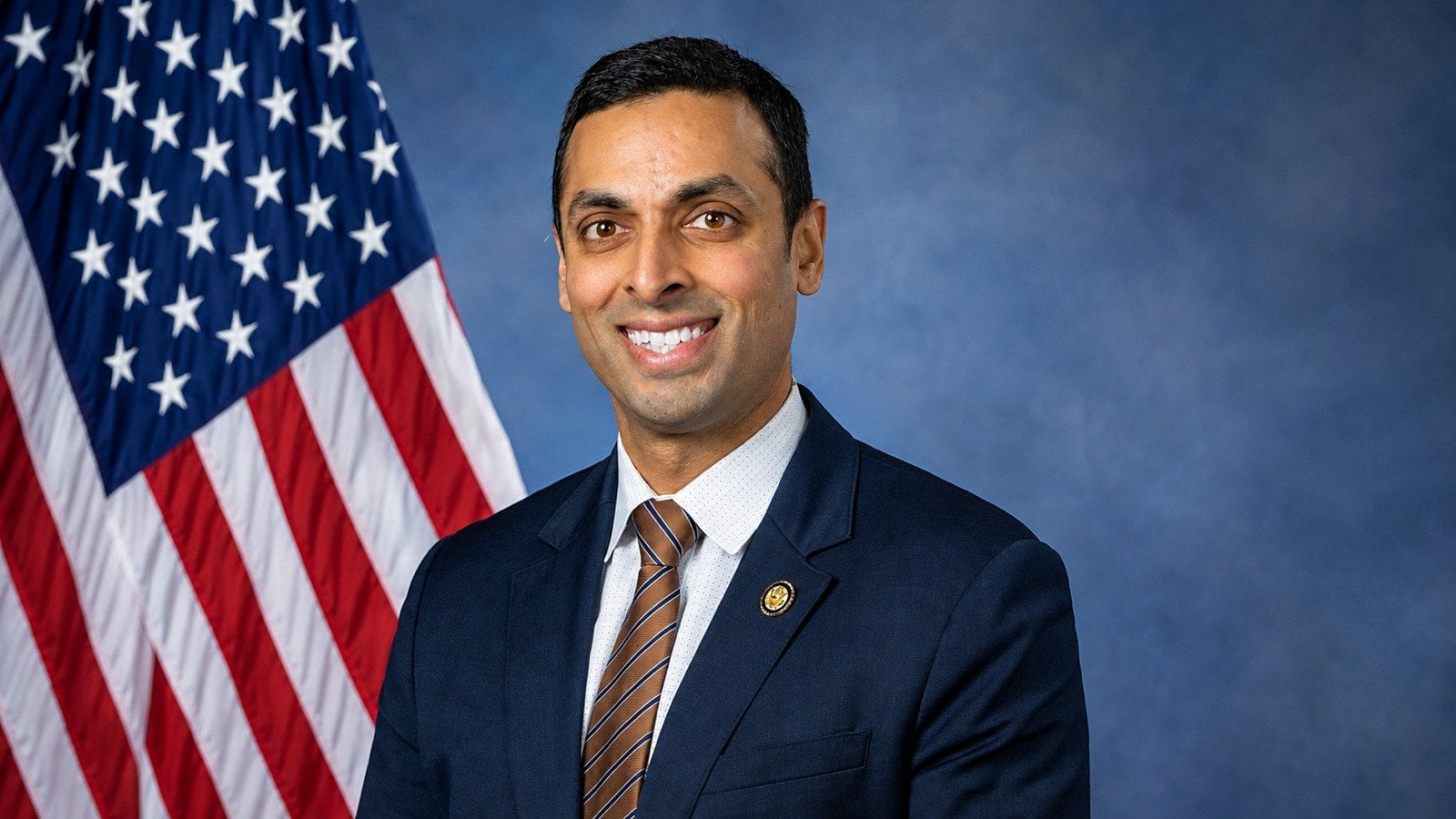
A sitting member of Congress says the FBI and Justice Department have formally notified him that federal agents intercepted his phone conversations during a court-authorized surveillance operation.
The notices are real. The unanswered questions around them are enormous.
Rep. Suhas Subramanyam, a Virginia Democrat, released two FBI letters showing that communications to or from his phone were captured during separate surveillance periods this spring. He says the calls were with Virginia state Sen. Louise Lucas, the president pro tempore of the state Senate, who was under federal investigation.
One distinction matters immediately: The letters do not say Subramanyam was a target of the investigation, and they do not accuse him of a crime. They say he was a party to communications intercepted under orders signed by a federal judge.
The FBI intercepted my phone conversations with State Senator Louise Lucas during the redistricting referendum in Virginia.
Trump has weaponized the FBI to investigate his political enemies, but I will not back down. pic.twitter.com/PWhsJQDWwo
— Rep. Suhas Subramanyam (VA-10) (@RepSuhas) September 3, 2026
What the FBI notices actually say
In a statement published by Subramanyam’s congressional office, the lawmaker posted images of both notices and accused President Trump’s Justice Department of using federal law enforcement for political purposes. That is Subramanyam’s allegation; the notices themselves do not address motive.
The first notice says a judge authorized interception on March 6, 2026. It lists an authorized surveillance period running from March 6 through April 5 and says communications to or from Subramanyam’s telephone were intercepted during that window.
The second notice describes another judicial authorization dated April 13. It lists a surveillance period from April 14 through May 14 and again says communications to or from his phone were intercepted.
The letters are dated July 7 and August 24. Neither identifies the underlying offense, quotes any captured conversation, names the phone or facility that was targeted, or says whether investigators considered Subramanyam’s calls relevant to the case.
Subramanyam said the calls involved Lucas and were captured as part of the investigation into her. He tied the timing to Virginia’s redistricting fight and to congressional demands for Attorney General Pam Bondi to testify about the Epstein investigation.
Those claims raise serious questions, but the publicly released paperwork cannot answer them. A notice that a conversation was intercepted is not proof that the person receiving it was suspected of wrongdoing, nor does it reveal why a judge approved surveillance of the targeted line.
House Democrat says his phone calls with a state legislator was wiretapped by FBI https://t.co/VKD3k2C5gd
— Axios (@axios) September 3, 2026
The investigation did not begin in a vacuum
The Washington Examiner reported that federal agents executed court-approved searches in May at Lucas’s office and at a nearby cannabis dispensary. Public details about the investigation remain sparse.
The outlet also reported that the investigation was opened during the Biden administration. If accurate, that chronology complicates the congressman’s assertion that the probe itself originated as retaliation by the current administration, though it does not settle whether later surveillance decisions were properly motivated or handled.
That is the central factual tension. Subramanyam sees the timing and the people involved as evidence of political targeting.
The known timeline shows an investigation with roots predating President Trump’s current administration. Without the sealed application, supporting affidavit, court orders and relevant investigative history, the public cannot fairly resolve that dispute.
No charge against Subramanyam is identified in the notices. The letters also do not establish that Lucas committed a crime.
Searches, surveillance orders and intercepted communications are investigative steps—not verdicts.
Rep. Suhas Subramanyam said that his phone conversations with the Virginia Senate’s top Democrat were intercepted by the FBI and Justice Department as part of a federal investigation into her. https://t.co/yoaL44K96i
— NEWSMAX (@NEWSMAX) September 4, 2026
Why an intercepted caller receives a notice
Federal wiretaps are governed by Title III, one of the most tightly regulated investigative tools available to law enforcement.
The Justice Department’s guidance on Title III orders says an authorizing judge must find probable cause tied to specified crimes and reason to believe relevant communications will be obtained. The government must also explain why ordinary investigative methods have failed, appear unlikely to succeed, or would be too dangerous.
An order authorizes interception over a described phone, facility or premises for a limited period. That design explains how someone who is not the surveillance target can still be heard: A targeted person can speak with many people, and those conversations may be captured while the order is active.
The law also requires agents to minimize interception of communications that are not relevant to the authorized investigation. Exactly how minimization was applied here is not disclosed by the two notices.
Under 18 U.S.C. § 2518, a judge generally causes an inventory notice to be served within 90 days after an interception order ends.
Section 2518 requires an interception application to be submitted in writing, under oath or affirmation, to a judge with jurisdiction. It must identify the requesting officer and describe the suspected offense, targeted location or facilities, communications sought and person involved, if known.
A judge may authorize interception only after finding probable cause that a qualifying offense occurred or is imminent, relevant communications will be obtained, and the targeted facilities or location are connected to the offense or person. The judge must also find that ordinary investigative methods failed, appear unlikely to succeed, or would be too dangerous.
The resulting order must specify the known target, location or facilities, communications, offense, authorized agency and approving official. It must require minimization of unrelated interception and generally cannot run longer than necessary or 30 days; extensions require a renewed application and the same judicial findings.
The notice identifies the existence and dates of the order and says whether communications were intercepted. The judge may direct that notice to named people and to other parties whose communications were captured when doing so is in the interest of justice.
In other words, receiving an inventory notice establishes that a person’s communication was intercepted. By itself, it does not establish that the person was the target, a subject, or suspected of any offense.
The documents the public has not seen
The most important facts remain sealed or undisclosed.
Which phone was targeted? What crime did prosecutors identify to the judge?
What are your thoughts?

What evidence supported probable cause? Why were less intrusive techniques considered inadequate?
Were Subramanyam’s conversations minimized, retained or shared?
Those answers would separate three very different possibilities: routine incidental interception during a lawful investigation, surveillance whose execution crossed legal or policy lines, or an investigation influenced by political considerations.
Right now, the public record proves something narrower but still extraordinary: A federal court authorized surveillance connected to a Virginia state senator’s investigation, and a sitting congressman’s calls were among the communications intercepted.
Subramanyam is demanding scrutiny of why that happened.
The Justice Department and FBI now face pressure to explain as much as they lawfully can without compromising a pending investigation. The legitimacy of secret surveillance depends on public confidence that the power was used for evidence, not politics.
This is a Guest Post from our friends over at WLTReport. View the original article here.
The post FBI WIRETAP REVELATION: Sitting Congressman Says Federal Agents Intercepted His Calls appeared first on 100PercentFedUp.com.