
As the war in Iran continues to escalate, Iran’s neighbors and other regional nations are anxiously awaiting the conflict to end so that trade can return to normal. Pakistan, which shares a border with Iran, has been hit especially hard by the ripple effects of the ongoing conflict. The two nations were very close trade partners prior to the start of the war. However, since March, Pakistani businesses have taken considerable losses after losing some of their most important international customers. In Islamabad, officials have been working hard to broker a peace between the United States and Iran. Unfortunately, following the recent attacks, diplomacy is looking less and less likely.
Pakistan and the Iranian Market
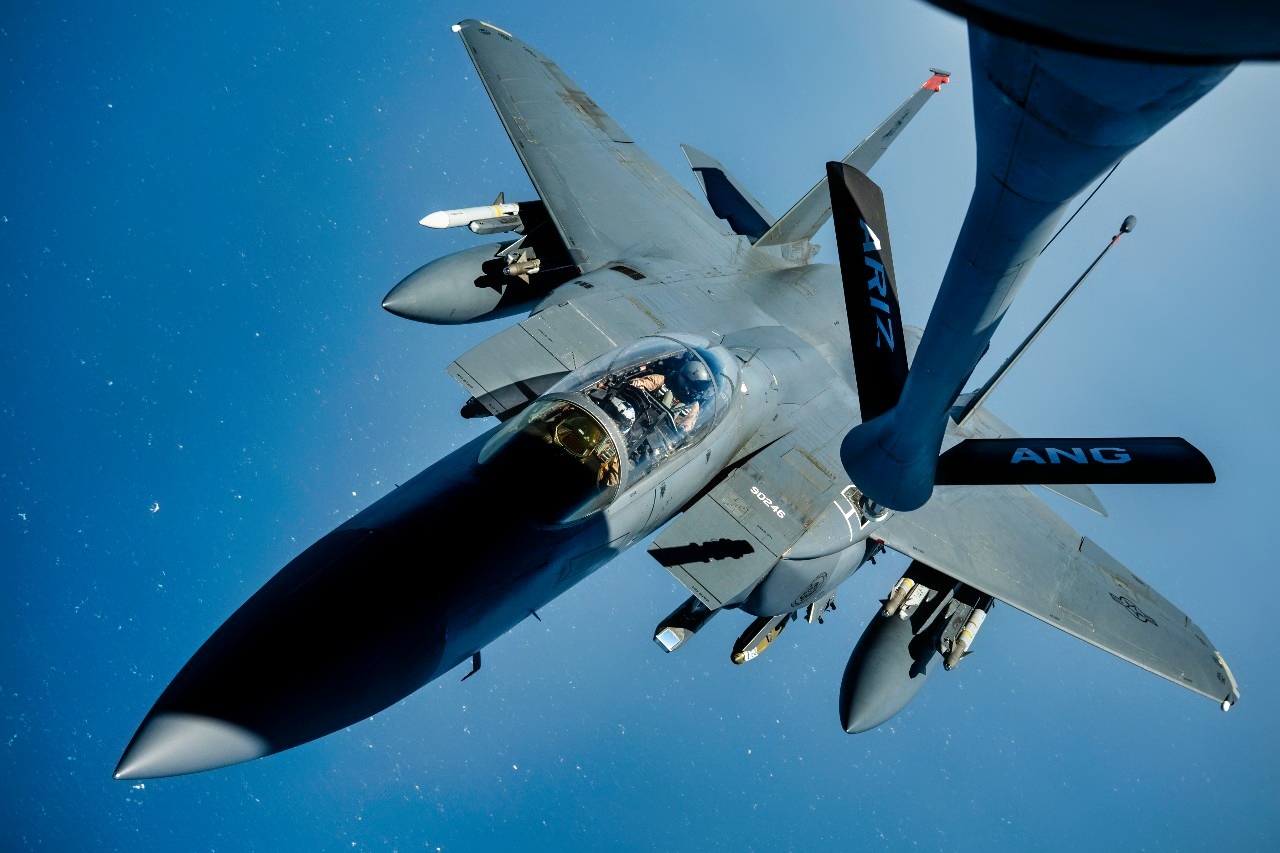
A U.S. Air Force KC-135 Stratotanker offloads fuel to U.S. Air Force F-15 Strike Eagles over the U.S. Central Command area of responsibility, April 11, 2025. The F-15E is deployed to the CENTCOM AOR to reinforce regional stability and deter aggression from violent extremist organizations.. (U.S. Air Force photo by Senior Airman Keegan Putman)
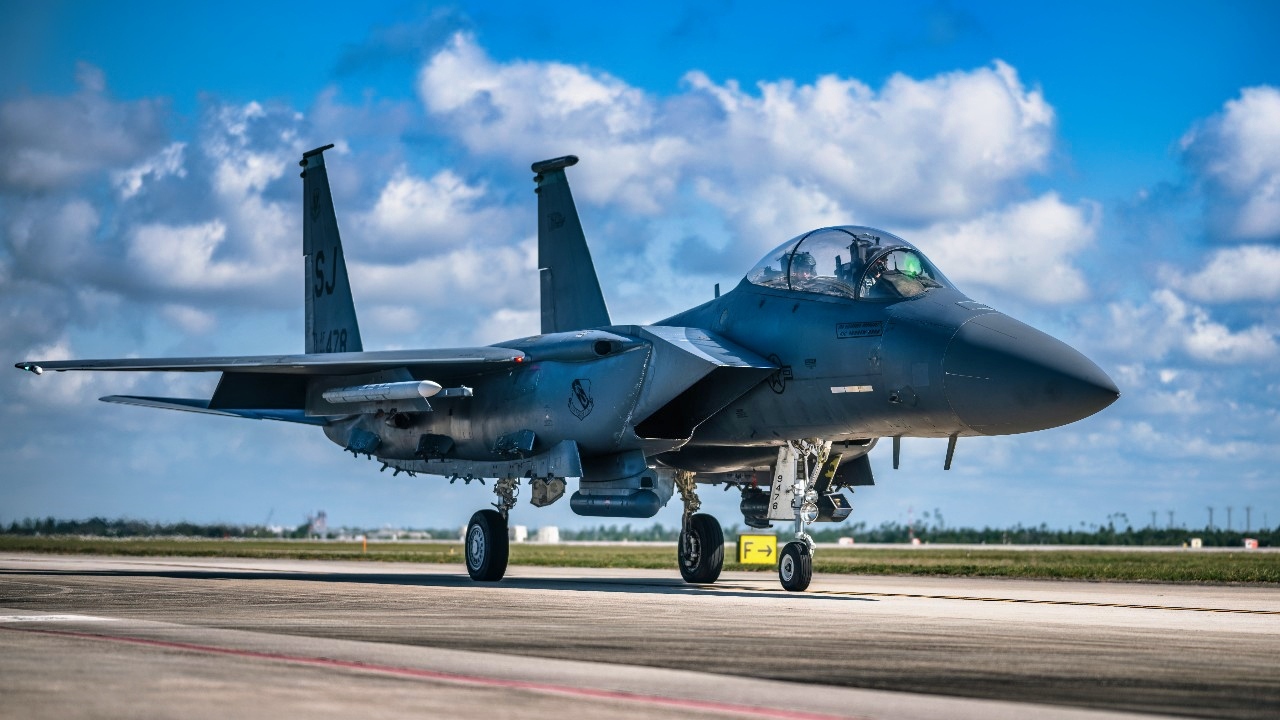
A U.S. Air Force F-15E Strike Eagle assigned to the 335th Fighter Squadron, Seymour Johnson Air Force Base, North Carolina, taxis during Checkered Flag 25-2 at Tyndall AFB, Florida, May 14, 2025. Checkered Flag, one of the Department of Defense’s largest air-to-air exercises, integrates fourth and fifth-generation aircraft to enhance mobility, deployment, and employment capabilities. (U.S. Air Force photo by Airman 1st Class Zeeshan Naeem).
Pakistan and Iran share a border that is around 565 miles long and have been seeking to increase trade with each other for some time now. However, when the war first broke out in March, the border between the two was closed, preventing many businesses in Pakistan from trading. Following the ceasefire in June, the border was briefly reopened, causing a resurgence in cross-border exports, but when the conflict reignited, it was closed again.
“We’re sending our products, and we don’t know whether they’ll cross or get stopped,” Ghulam Mustafa, a mango exporter, said during a conversation with The New York Times. For Mustafa and other businesses across Pakistan, the war has not only increased their fuel prices but also restricted their access to a vital international partner.
Pakistan’s economy is heavily reliant on foreign trade. Its biggest partners are Saudi Arabia, China, and Iran. However, because of the war, trade with Iran has all but ceased. Trade with Saudi Arabia is continuing, but with oil prices rising and a potential blockade of the Bab al-Mandeb Strait on the horizon, trade with the Saudis is expected to decline in the near future.
Meanwhile, investment from China has dropped nearly 30% this year so far due to security concerns and other economic uncertainties. Meanwhile, trade with its other neighbors, Afghanistan and India, is off the table due to heightened tensions with the two. This leaves Pakistan with only one option: hope the war in Iran ends soon so that trade can resume.
Trying to Broker a Peace Deal
With goods waiting on the border, businesses in Iran and Pakistan are eagerly awaiting a peace settlement to resume trade. Some traders are even resorting to smuggling, which is both expensive and dangerous due to armed militants in Pakistan’s chaotic Balochistan province. The country’s biggest exports, agricultural products like mangos and other fruits and vegetables, have declined by around 30% due to rising freight costs and subpar harvest yields. To compensate for the shrinking export market, some traders have been forced to cut their prices and sell their goods at local auctions, hoping to make some sort of profit before the harvest rots.
Meanwhile, in Islamabad, the government has been trying hard to broker a peace deal between the United States and Iran. Pakistan played a significant role in brokering the initial 60-day ceasefire and tried to act as a mediator between the two sides to establish a lasting peace, but these efforts ultimately went nowhere. Since then, Pakistan, along with Qatar, has been in close talks with both parties in trying to secure a diplomatic end to the war, but also to no avail. “The solution is in the hands of Mr. Trump,” said Aitbaar Ali Syed, a fruit and vegetable exporter based in Karachi. “If he wants, he can solve all these problems.” Unfortunately, the U.S. seems to be unable or unwilling to secure a diplomatic end to the conflict. Despite numerous talks with Iran, neither side seems to be able to reach a satisfying compromise, leaving no other option than to continue the war.
No Option Left but to Wait
Consequently, Pakistan is left with no option but to wait out the war while its economy struggles. To make matters worse, traders also have to deal with the numerous sanctions placed on Iran and any country doing business with it. U.S. sanctions have targeted nearly all trade, aside from food and a small number of other essential items. Industrial materials and textiles are obviously right out. These sanctions date back to the late 1970s, with the logic of restricting Iran’s defense industrial capabilities. The unfortunate side effect is that Pakistan has been restricted from the potentially lucrative market. “When banks read the word ‘Iran,’ they get spooked,” said Asfandyar Khan Mandokhail, who’s with a major Pakistani trade organization.
Currently, traders in Pakistan are watching and waiting for their moment to capitalize on the Iranian market. As a result of the war, however, the U.S. has tightened its economic clamps on Tehran, which has made trade of all sorts, even illegal smuggling, much more difficult. Along with the chance to increase imports to Iran, many large business owners and analysts in Pakistan are looking for their chance to get involved in post-war efforts to reconstruct Iran. Pakistan possesses the materials and manpower necessary to assist in the postwar settlement.
The question currently remains how long everyone will have to wait before said reconstruction begins.
About the Author: Isaac Seitz
Isaac Seitz, a Defense Columnist, graduated from Patrick Henry College’s Strategic Intelligence and National Security program. He has also studied Russian at Middlebury Language Schools and has worked as an intelligence Analyst in the private sector.