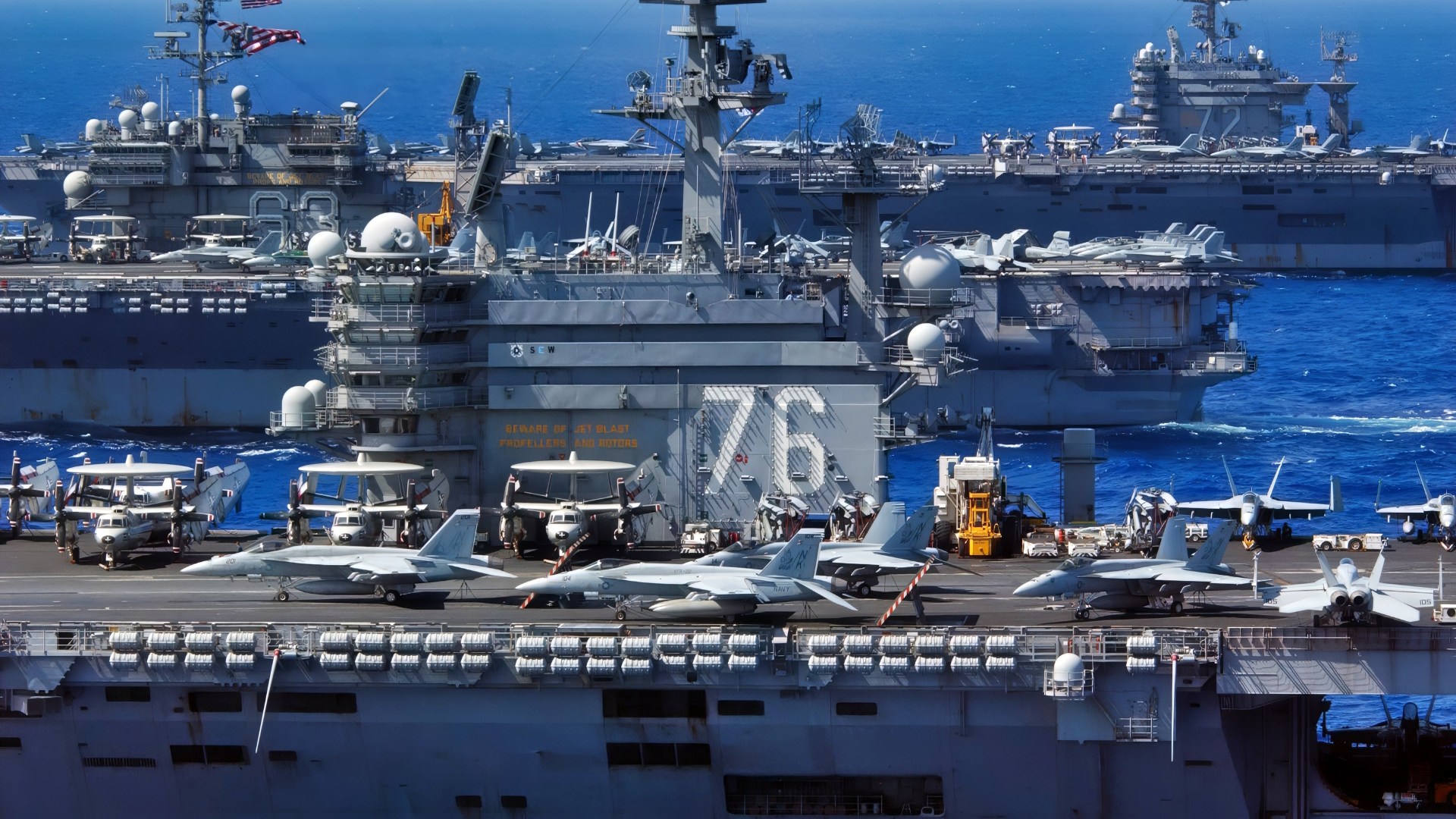
President Donald J. Trump just launched Project Freedom—a U.S.-led naval mission to physically force commercial shipping through Iran’s blockade of the Strait of Hormuz under armed military protection. Hundreds of fighter jets, helicopters, drones, and surveillance aircraft are now providing 24/7 overwatch over the strait, with U.S. Navy destroyers escorting vessels and a “red, white, and blue dome” of defenses already shooting down Iranian missiles and drones.
Project Freedom: How Trump Just Started Forcing Ships Through the Strait of Hormuz
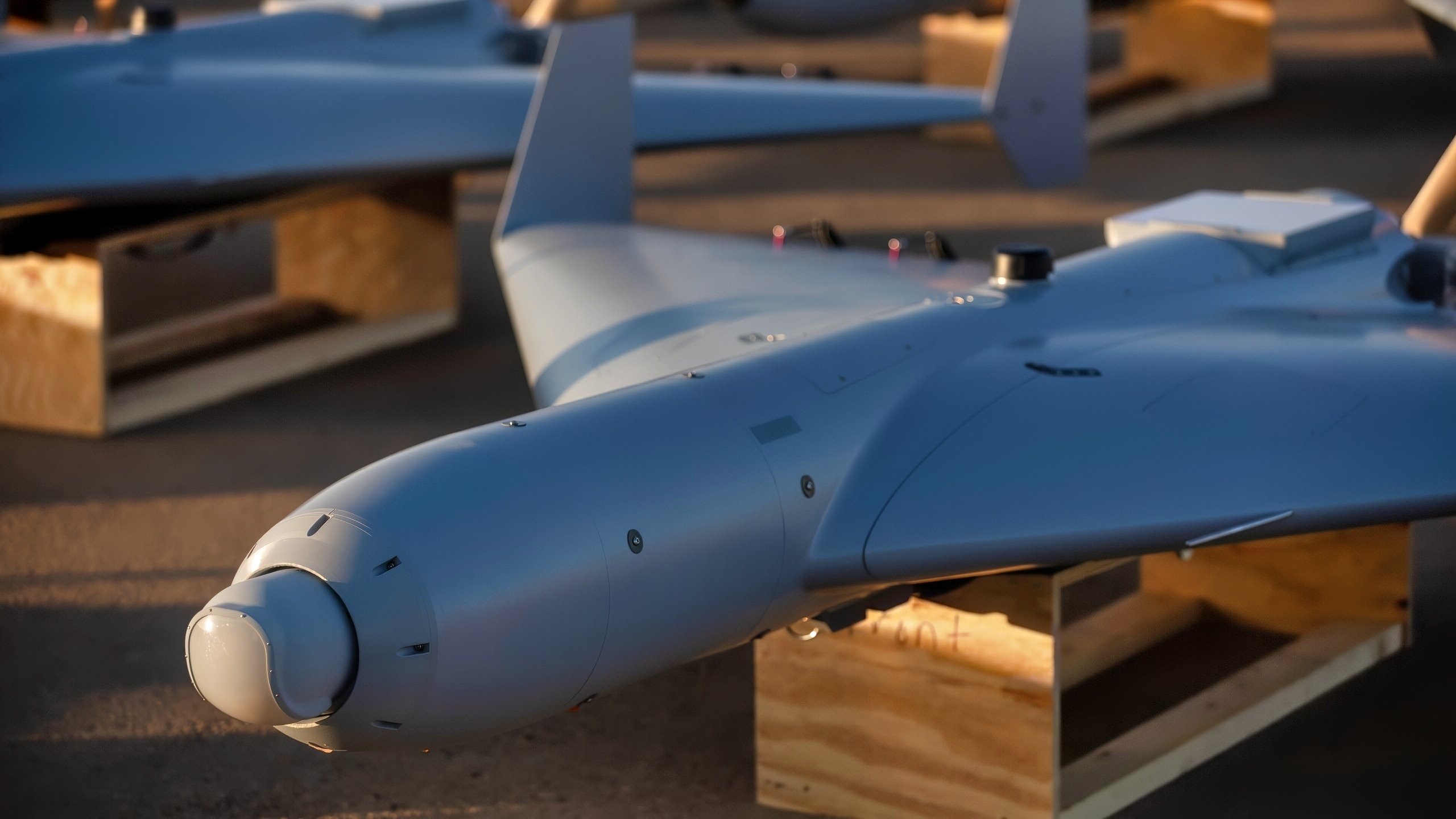
U.S. CENTRAL COMMAND AREA OF RESPONSIBILITY (Nov. 23, 2025) Low-cost Unmanned Combat Attack System (LUCAS) drones are positioned on the tarmac at a base in the U.S. Central Command operating area, Nov. 23. Costing approximately $35,000 per platform, LUCAS drones are providing U.S. forces in the Middle East low-cost, scalable capabilities to strengthen regional security and deterrence. (Courtesy Photo)
The U.S. military has begun actively pushing commercial shipping through the Strait of Hormuz under armed protection as part of a new operation dubbed Project Freedom.
It’s the most direct attempt yet to restore traffic through the critical waterway after Iran attempted to shut it down – despite Washington’s insistence that the U.S. doesn’t need access to the Strait in the same way European and Asian countries do.
The effort was announced by President Donald Trump on May 4 and is already underway, with U.S. Navy warships escorting or guiding vessels through contested waters while intercepting Iranian attacks.
The question now is whether the operation can reopen the strait in any meaningful sense, or simply demonstrate that a handful of ships can pass through under heavy military protection – the latter of which doesn’t fundamentally change the dynamics of the situation.
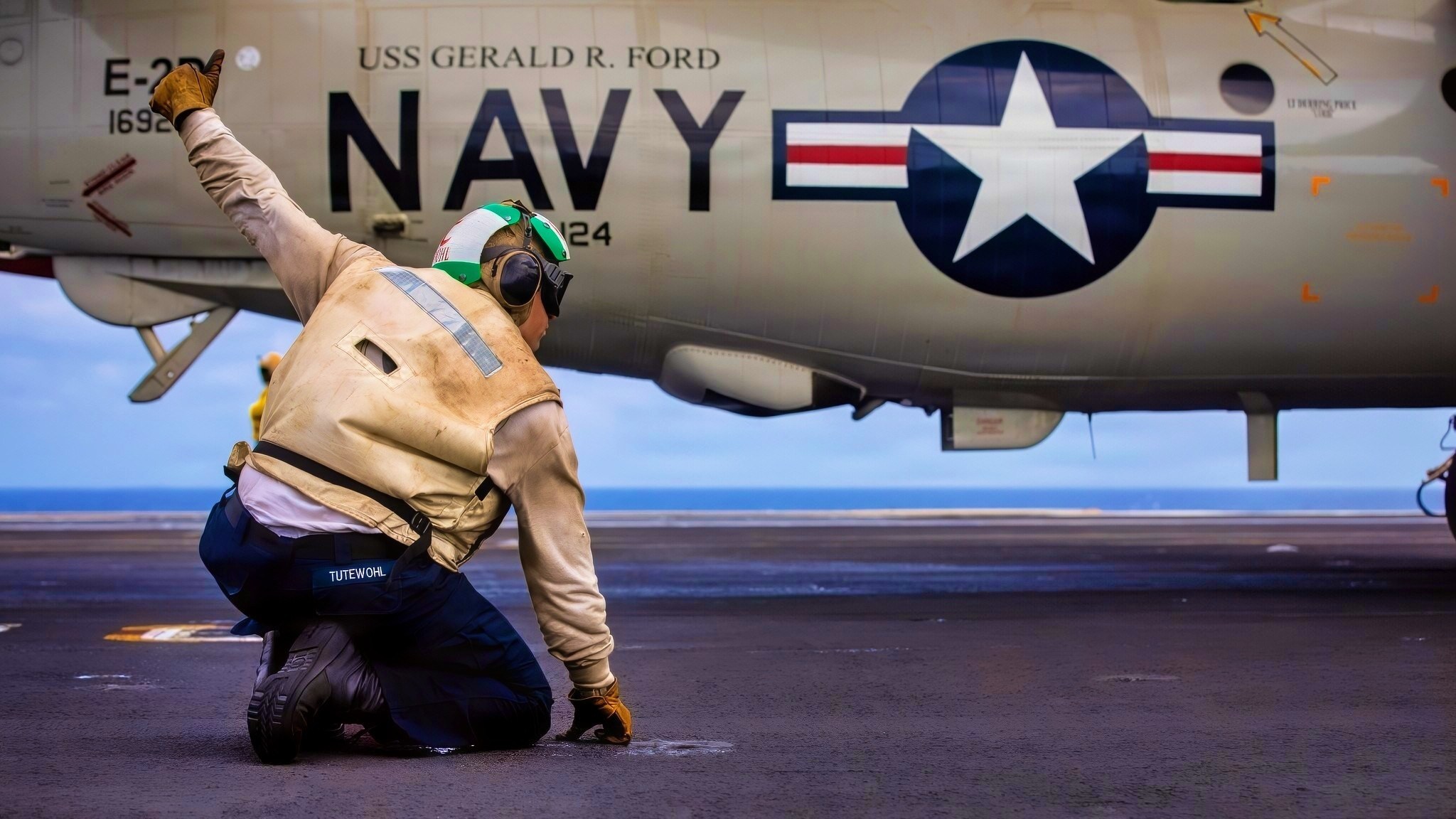
A U.S. Sailor, assigned to Airborne Command and Control Squadron 124, signals the launch of a Carrier Air Wing 8 E-2D Hawkeye aircraft on the flight deck of the world’s largest aircraft carrier, Ford-class aircraft carrier USS Gerald R. Ford (CVN 78), while underway in the Caribbean Sea, Nov. 29, 2025. U.S. military forces are deployed to the U.S. Southern Command area of responsibility in support of Operation SOUTHERN SPEAR, Department of War-directed operations, and the president’s priorities to disrupt illicit drug trafficking and protect the homeland. (U.S. Navy photo)
Project Freedom Explained
Project Freedom is a U.S.-led naval effort to restore maritime traffic through the Strait of Hormuz by physically moving ships through the waterway under military protection. The operation began on May 4, following Trump’s announcement that the U.S. would begin guiding vessels through the strait after Iran’s actions left hundreds of ships effectively stranded.
U.S. Central Command confirmed that American naval forces are now actively supporting commercial transit. In a statement, CENTCOM said guided-missile destroyers had moved into the Arabian Gulf after transiting Hormuz and were “actively assisting efforts to restore transit for commercial shipping.”
“As a first step, 2 U.S.-flagged merchant vessels have successfully transited through the Strait of Hormuz and are safely headed on their journey,” CENTCOM also said.
As an initial step, CENTCOM said two U.S.-flagged merchant vessels had successfully passed through the strait and were continuing their voyages, providing the first concrete evidence that the operation is working at a limited scale. Meanwhile, the Pentagon has established what it describes as an “enhanced security area” along the southern side of the strait, primarily through or near Omani waters, to create a controlled transit corridor for commercial shipping.
During a briefing, Defense Secretary Pete Hegseth said that the United States had established a “red, white and blue dome” over the strait that serves as a “direct gift” to other nations. “This operation is separate and distinct from Operation Epic Fury,” Hegseth said, adding that the ongoing efforts constitute a “temporary mission.”
“We expect the world to step up at the appropriate time, and soon we will hand responsibility back to you,” Hegseth said.
Why Trump Is Doing It
President Trump has pitched the effort as a humanitarian campaign designed to assist ships and crews currently trapped in the region. In announcing the effort, Trump said vessels in the strait were running low on essential supplies and described them as “victims of circumstance.”
Trump also sought to prevent Iranian strikes on the ships passing through the strait, insisting that if any strikes were to occur, the U.S. would respond with force.
“If, in any way, this Humanitarian process is interfered with, that interference will, unfortunately, have to be dealt with forcefully,” Trump said.
The president also went further in comments reported by Fox News, warning that any Iranian attack on U.S. vessels would trigger a reaction so overwhelming that Iran would be “blown off the face of the earth.”
What the U.S. Military Is Doing Exactly
Project Freedom is a layered military operation that provides naval escort and air cover, as well as the threat of retaliation, to prevent Iranian strikes that would block the passage of stuck ships.
U.S. Navy guided-missile destroyers are operating in and around the strait to escort or guide commercial vessels, while aircraft and surveillance systems provide continuous monitoring.
Defense Secretary Hegseth has already confirmed that the operation includes “hundreds of fighter jets, helicopters, drones and surveillance aircraft providing 24/7 overwatch for peaceful commercial vessels, except Iran’s.”
The operation has already seen direct combat, too, with Reuters reporting that U.S. forces intercepted Iranian missiles and drones targeting vessels. U.S. forces have also reportedly sunk multiple Iranian boats during engagements in recent days. The U.S. military has confirmed that six Iranian small boats have been sunk and Iranian cruise missiles intercepted after Project Freedom was announced.
But Will it Work?
Project Freedom has reportedly already enabled two U.S.-flagged ships to transit Hormuz under escort, but more than 1,500 vessels remain stranded, and insurers are still treating the route as high risk. The latest measure helps, but it does not solve the problem.
Mine-clearing could also take months and may not restore commercial confidence. And, there’s the threat of Iran; the regime has already warned it will target foreign forces operating in the strait.
About the Author: Jack Buckby
Jack Buckby is a British researcher and analyst specializing in defense and national security, based in New York. His work focuses on military capability, procurement, and strategic competition, producing and editing analysis for policy and defense audiences. He brings extensive editorial experience, with a career output spanning over 1,000 articles at 19FortyFive and National Security Journal, and has previously authored books and papers on extremism and deradicalization.