JERUSALEM – A massive section of Jerusalem’s Hasmonean period city wall has been unearthed at the Tower of David Jerusalem Museum, revealing one of the most complete and longest segments ever discovered from the Maccabean era. The imposing fortification, built in the late 2nd century BCE, stretches over 40 meters long and measures approximately 5 meters wide – a testament to Jerusalem’s strength during the period when Jewish sovereignty was restored after the Maccabean revolt.
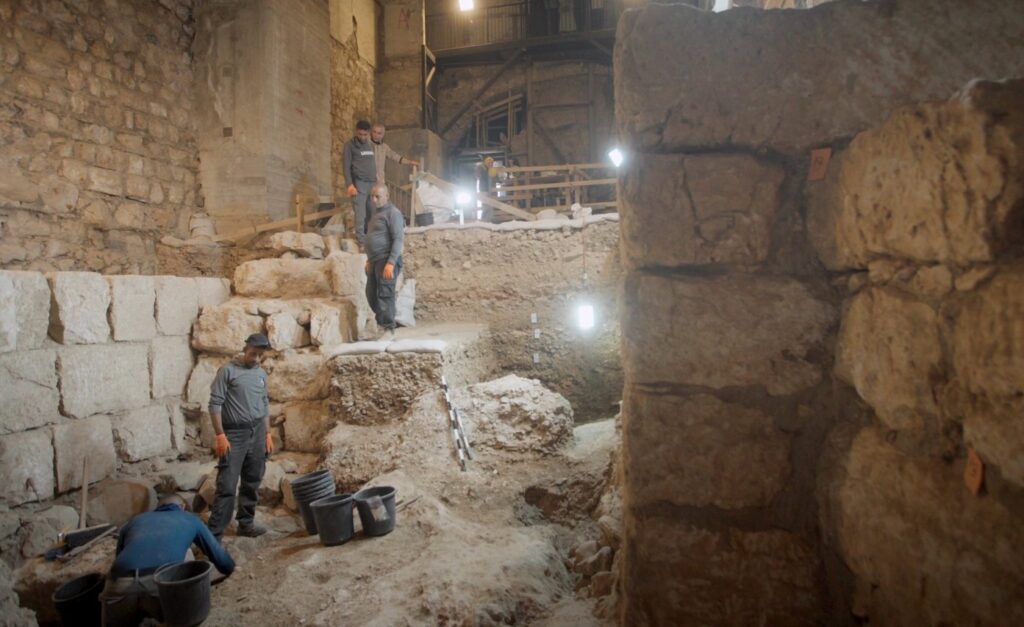
Uncovering of the Hasmonean wall segment in the Kishle. Photo Gabriel Volcovich
The Israel Antiquities Authority excavation, conducted in preparation for the Museum’s new Schulich Wing of Archaeology, Art and Innovation in the historic Kishle complex, has exposed what ancient sources called the “First Wall.” The structure is meticulously constructed of large, heavy stones featuring the chiseled boss characteristic of Hasmonean architecture. While the massive wall originally rose more than ten meters high, only its foundation remains visible today.
But why was this formidable defensive structure – described by the 1st century CE historian Josephus as “impregnable” and fortified by 60 towers along its length – systematically demolished?
The answer connects directly to the turbulent period following the Maccabean victory. The Sages teach that Jerusalem’s walls represent not merely physical protection but the city’s spiritual sovereignty. When King Solomon dedicated the First Temple, he declared: “But will God indeed dwell on the earth? Behold, the heaven and heaven of heavens cannot contain You; how much less this house that I have built!” (I Kings 8:27). Yet Jerusalem’s walls symbolized the Divine presence dwelling among the Jewish people in their land, making their destruction a matter of both political and spiritual significance.

Dr. Amit Re’em, Excavation Director on behalf of the Israel Antiquities Authority, in the Kishle excavation. Photo: Emil Aladjem, Israel Antiquities Authority
According to excavation directors Dr. Amit Re’im and Dr. Marion Zindel from the Israel Antiquities Authority, the wall’s destruction was deliberate, not the result of time or random attack. Two scenarios emerge from historical records. The first involves Antiochus VII Sidetes, a descendant of Antiochus IV Epiphanes – the villain of the Hanukkah story – who besieged Jerusalem in 134-132 BCE. Josephus records that the Hasmonean leader John Hyrcanus I negotiated peace with Sidetes, using treasures from King David’s tomb to secure terms. The armistice required Jerusalem to dismantle its fortifications as a condition for lifting the siege. The newly discovered wall may be physical evidence of that painful compromise.

David Jerusalem Museum
The second possibility points to King Herod, who sought to erase Hasmonean legitimacy and establish his own dynasty. Destroying their monumental construction projects, including this city wall, would have served as a political declaration: the Hasmonean era had ended, and Herod was now sovereign.
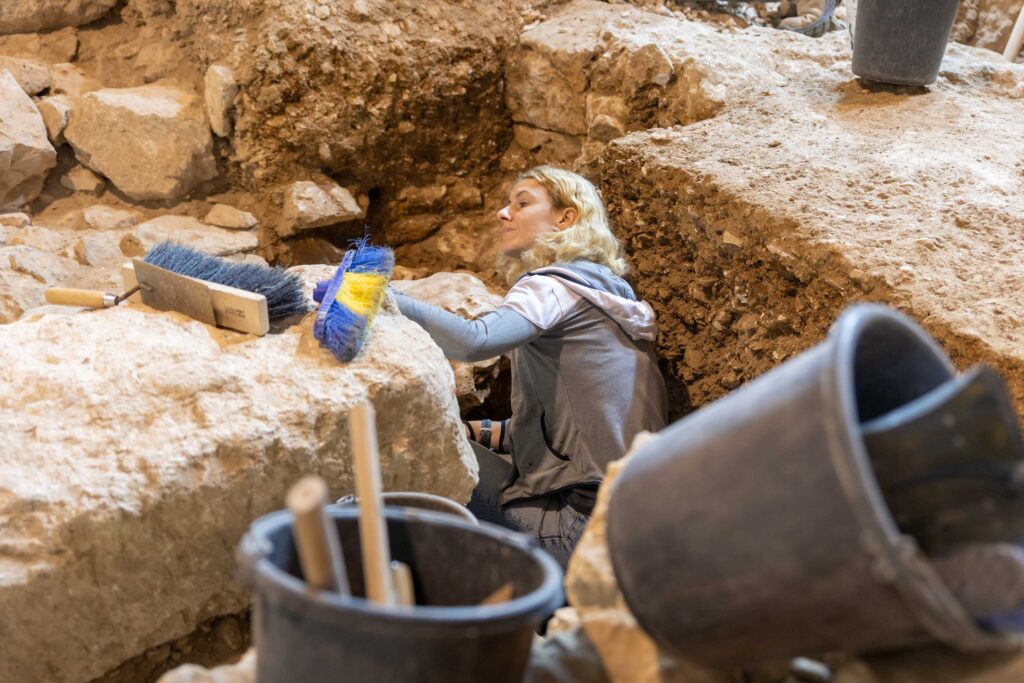
Dr. Marion Zindel, Excavation Director on behalf of the Israel Antiquities Authority, in the Kishle excavations. Credit: Dor Pazuelo, Tower of David Jerusalem Museum
Archaeological evidence supports the wall’s violent history. Excavations in the 1980s at the base of the First Wall uncovered hundreds of catapult stones, arrowheads, slingstones, and lead bullets – weapons from Antiochus VII’s siege that failed to breach the Hasmonean fortification and fell harmlessly at its foundation. These artifacts are now displayed at the Tower of David Jerusalem Museum.
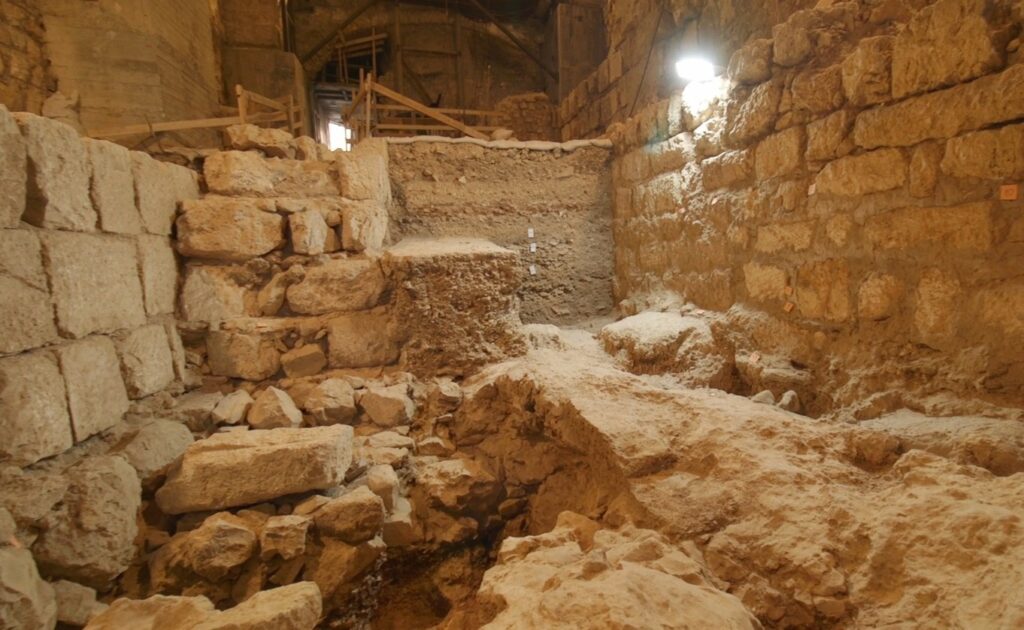
On the left is the Hasmonean-period wall uncovered in the excavation Photo: Emil Aladjem, Israel Antiquities Authority
The Kishle complex, where the wall was discovered, carries its own layered history. The Ottoman-era structure served as a prison during both Turkish and British rule, and later housed Israeli police facilities. Its name derives from the Turkish word for barracks. The building stands adjacent to the citadel traditionally called the Tower of David, though its main structure dates to Herod’s reign rather than the biblical king’s era.
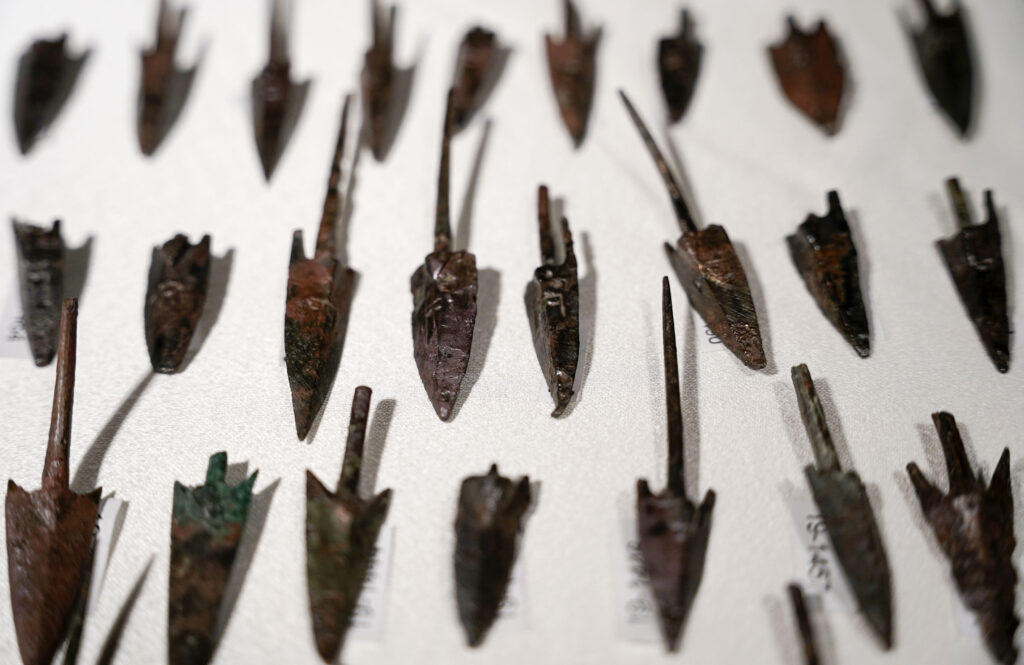
Hasmonean-period arrowheads on display at the Tower of David Jerusalem Museum. Photo Ricky Rachman, Tower of David Jerusalem Museum
This section of the First Wall is part of a broader defensive system that once encircled the expanded city during the Second Temple period. Other segments have been identified on Mount Zion, in the City of David, in the Citadel courtyard, and along the exterior of Jerusalem’s Old City western wall. Together, these sections reveal how the Hasmonean dynasty transformed Jerusalem from a modest settlement into a fortified capital befitting a sovereign Jewish state.
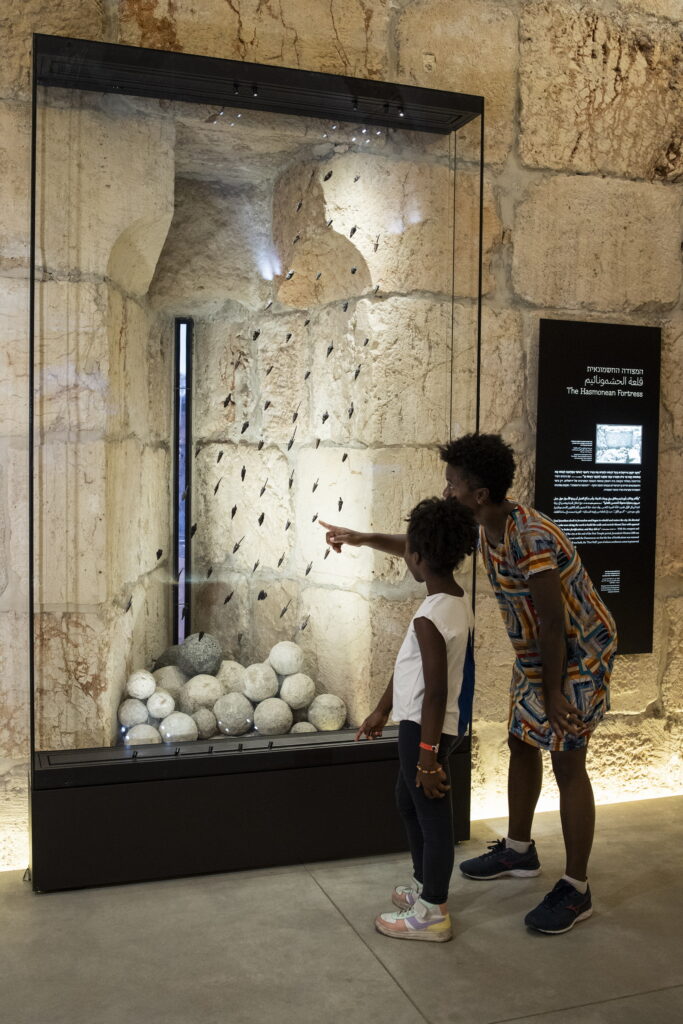
Display of Hasmonean-period arrowheads and catapult stones at the Tower of David Jerusalem Museum.Photo: Oded Antman, Tower of David Jerusalem Museum
Heritage Minister Rabbi Amichai Eliyahu stated, “This segment of Jerusalem’s ancient city wall uncovered by the Israel Antiquities Authority is tangible and moving evidence of Jerusalem’s might and stature during the Hasmonean period. The archaeological discoveries allow us to connect to the historical continuity that binds us – generations of Jews, to Jerusalem, and demonstrates and exhibits our proud heritage to the world.”

Hasmonean-period arrowheads and catapult stones on display at the Tower of David Jerusalem Museum. Photo: Emil Aladjem, Israel Antiquities Authority
The timing of this discovery carries particular resonance. As Jews worldwide celebrate Hanukkah, commemorating the Maccabean victory and the rededication of the Temple, this wall emerges as physical proof of that triumph. The Hasmoneans who built this fortification were the same leaders who defeated the Seleucid Greeks, purified the Temple, and rekindled the menorah. Their military success enabled them to construct defenses that would protect Jerusalem for generations.
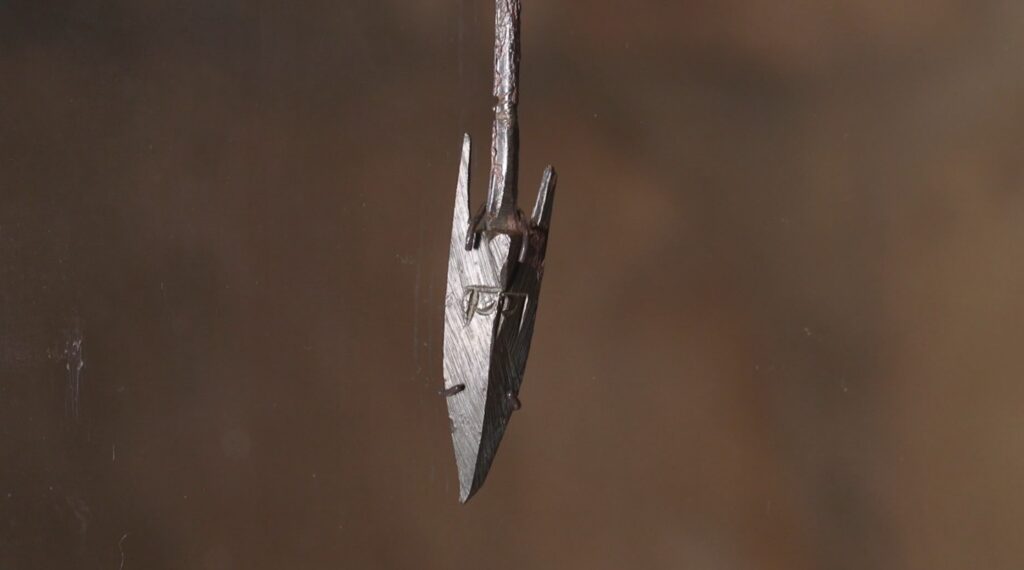
Hasmonean-period arrowhead on display at the Tower of David Jerusalem Museum. Photo: Emil Aladjem, Israel Antiquities Authority
When the new Schulich Wing opens, visitors will stand on transparent floors above these ancient stones, creating a direct visual and physical connection to Jerusalem’s Hasmonean past. The wing, funded by the Schulich Foundation established by Canadian philanthropist Seymour Schulich, will integrate archaeological preservation with contemporary art.
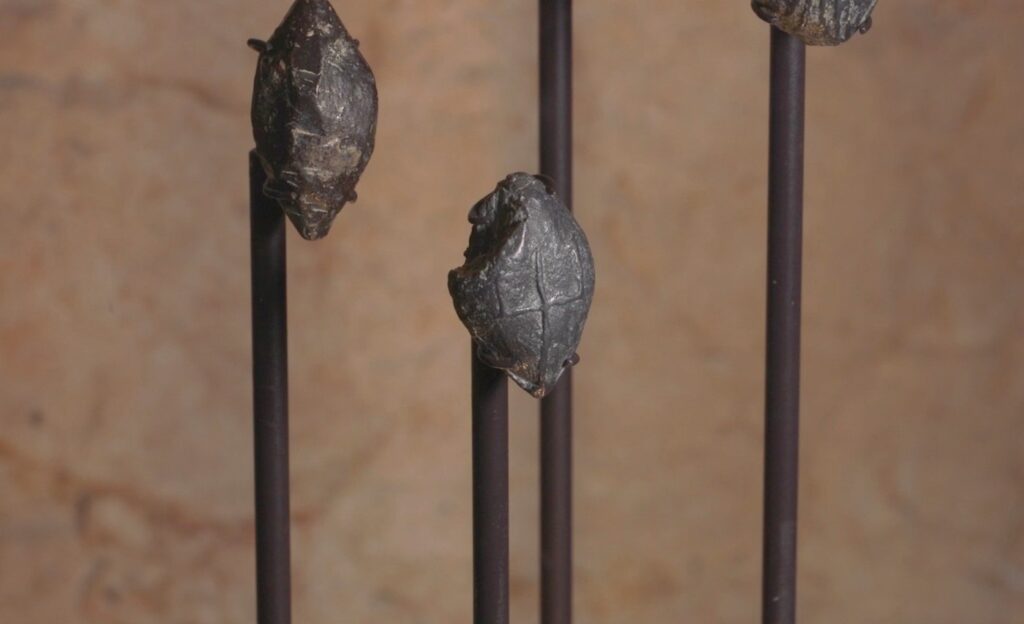
A Hasmonean-period lead sling bullets that were discovered and are now on display at the Tower of David Jerusalem Museum. Photo: Emil Aladjem, Israel Antiquities Authority
The discovery of this wall section reinforces what Jews have maintained for millennia: Jerusalem belongs to the Jewish people, sustained by an unbroken chain stretching from the Maccabees to the present day. The stones speak for themselves – no historical revisionism can erase what lies beneath Jerusalem’s surface. Each excavation yields more evidence of continuous Jewish presence, sovereignty, and connection to this land. The Hasmonean wall stands as a monument to Jewish independence reclaimed, even as its destruction reminds us that sovereignty must be defended in every generation.
The post Ancient Hasmonean Wall Uncovered in Jerusalem: Evidence of Maccabean Power and Mysterious Destruction appeared first on Israel365 News.