Russian President Vladimir Putin has not indicated that he’s anywhere close to giving up on his ambitions and war aims in Ukraine.
However, some observers have noticed that the way Putin has been talking about the war has changed over time.
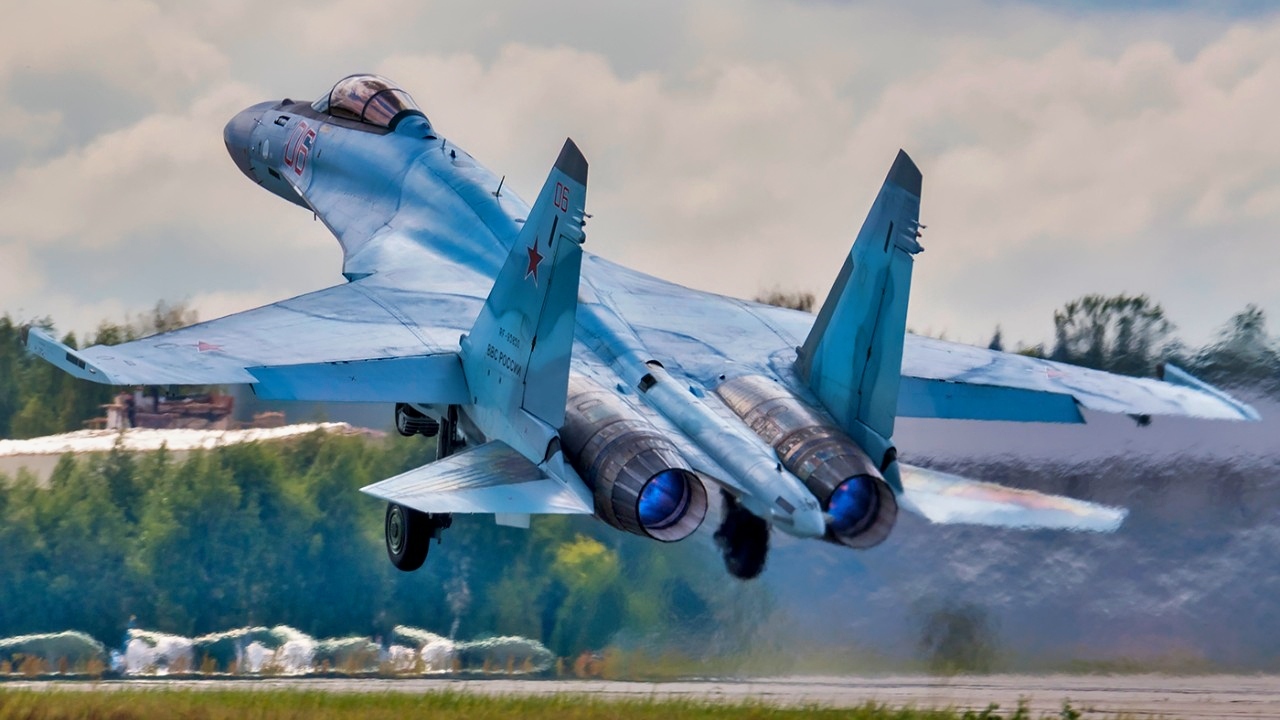
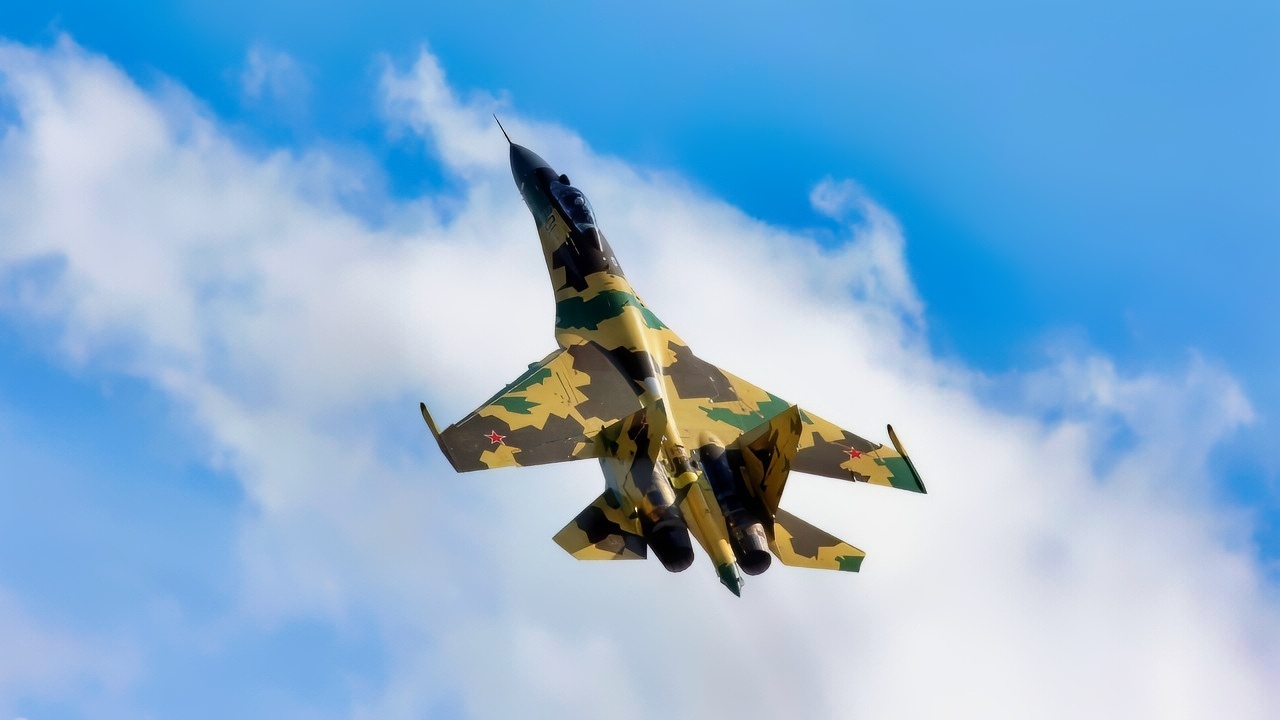
Su-35 Fighter from Russia. Image Credit: Creative Commons.
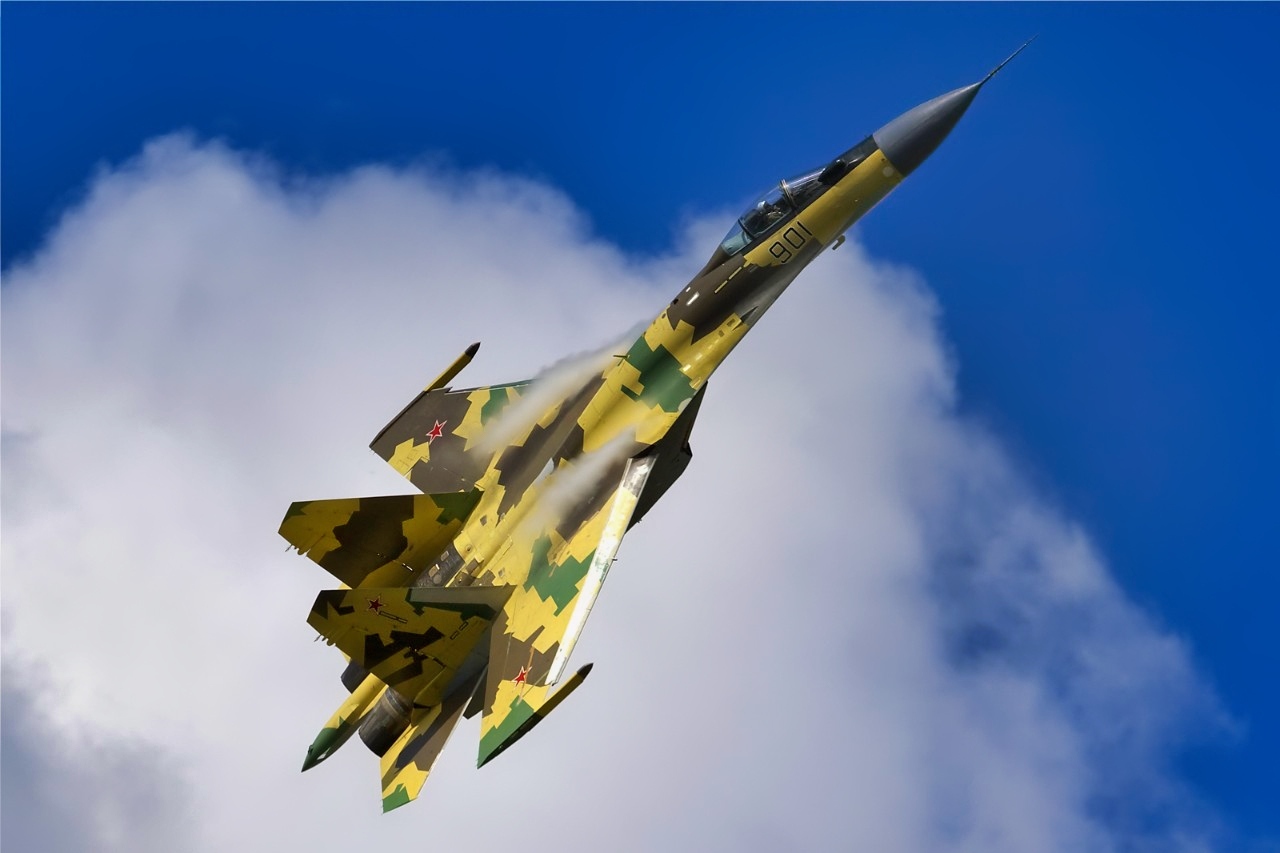
Su-35. Image Credit: Creative Commons.
According to Newsweek, in an analysis by David Averre, if one analyzes some of Putin’s recent speeches, “cracks begin to appear in the carefully curated narrative.”
Averre notes that Putin, in his writings from before the invasion, had long argued that Ukraine is “entirely a product of the Soviet era,” and that its territory exists at Russia’s expense.
Once the war began, Putin began characterizing it more as a way to strike back against Western influence, including the threat of an enlarged NATO.
“We are simply left with no other option to defend Russia and our people other than the one we are forced to use today…the goal is to protect people who have been subjected to eight years of abuse and genocide at the hands of the Kyiv regime. To this end, we will strive for the demilitarization and denazification of Ukraine,” Putin said after the invasion, per Newsweek’s translation.
In the fall of 2022, when he declared a “partial mobilization,” Putin declared that Russia was taking on “the entire military machine of the collective West,” even though Ukraine’s Western allies had by that point barely begun to deliver the level of military hardware that would arrive later. He also argued that Ukraine was fighting “under the actual command of Western advisers.”
And while Newsweek noted that Putin began the conflict talking about the best interests of Ukraine’s people, he had all but dropped that type of rhetoric by 2024.
Enter Trump
Newsweek also noted that Putin’s rhetoric changed again in early 2025, when Donald Trump returned to the White House.
Trump, whose closeness to Putin unleashed a thousand conspiracy theories and one impeachment in his first term, had spent the 2024 campaign vowing to end the Russia-Ukraine war on his first day back in office, although nothing like that occurred.
The analysis noted that once Trump came back, Putin, at least at first, was less inclined to accuse the U.S. of propping up Kyiv.
“I think we need to discuss this with our American colleagues and partners, perhaps even call President Trump and discuss it together,” Putin said in March of 2025 about a potential ceasefire. His infamous “All of Ukraine is Ours” statement came in June of last year.
Where Things Stand Now
In the summer of 2026, the war is four and a half years old, and there are no indications that any peace talks are in the offing.
“There are no illusions of peace, brotherhood or mutually beneficial resolutions left; even Putin speaks almost exclusively in terms of war, revenge, victory and defeat,” the Newsweek analysis says.
The analysis also noted that this year’s “Victory Day” festivities, back in May, were much more muted than usual.
“We decided that we would definitely hold festive events, but without a demonstration of military hardware; not only for security reasons, but primarily because the Armed Forces must focus their attention on the final defeat of the enemy,” Putin said at the time of the parade.
More recently, Newsweek noted, Putin has “unwittingly made a series of major admissions” about how much Ukraine has succeeded in causing harm to Russia.
Ukraine, Putin said in a state TV interview this week, has “opened Pandora’s box” with its recent attacks on Russia’s infrastructure. But he said that Ukraine has shown the ability to “inflict economic damage on our country. They lead to losses,” although the Russian leader added that “no turning point in the confrontation with Russia could have occurred, nor did it occur.”
In the same interview this week, Putin dismissed recent peace proposals by Ukraine as too “exotic” to consider.
A Glaring Contradiction
“Putin’s fundamental story has not changed,” the Newsweek analysis concludes. “Ukraine still has no real agency; its government is a puppet, its military a proxy, its successes the work of Western ‘masters’ and ‘curators.’”
“And yet, by Putin’s own account, this supposedly subordinate state can strike Moscow, disrupt Russian logistics, damage the economy, and even interfere with national elections. Ukraine will never be Russia’s equal, but it forces the Kremlin to behave like it has something to fear.”
About the Author: Stephen Silver
Stephen Silver is an award-winning journalist, essayist, and film critic, and contributor to the Philadelphia Inquirer, the Jewish Telegraphic Agency, Broad Street Review, and Splice Today. The co-founder of the Philadelphia Film Critics Circle, Stephen lives in suburban Philadelphia with his wife and two sons. For over a decade, Stephen has authored thousands of articles that focus on politics, national security, technology, and the economy. Follow him on X (formerly Twitter) at @StephenSilver, and subscribe to his Substack newsletter.