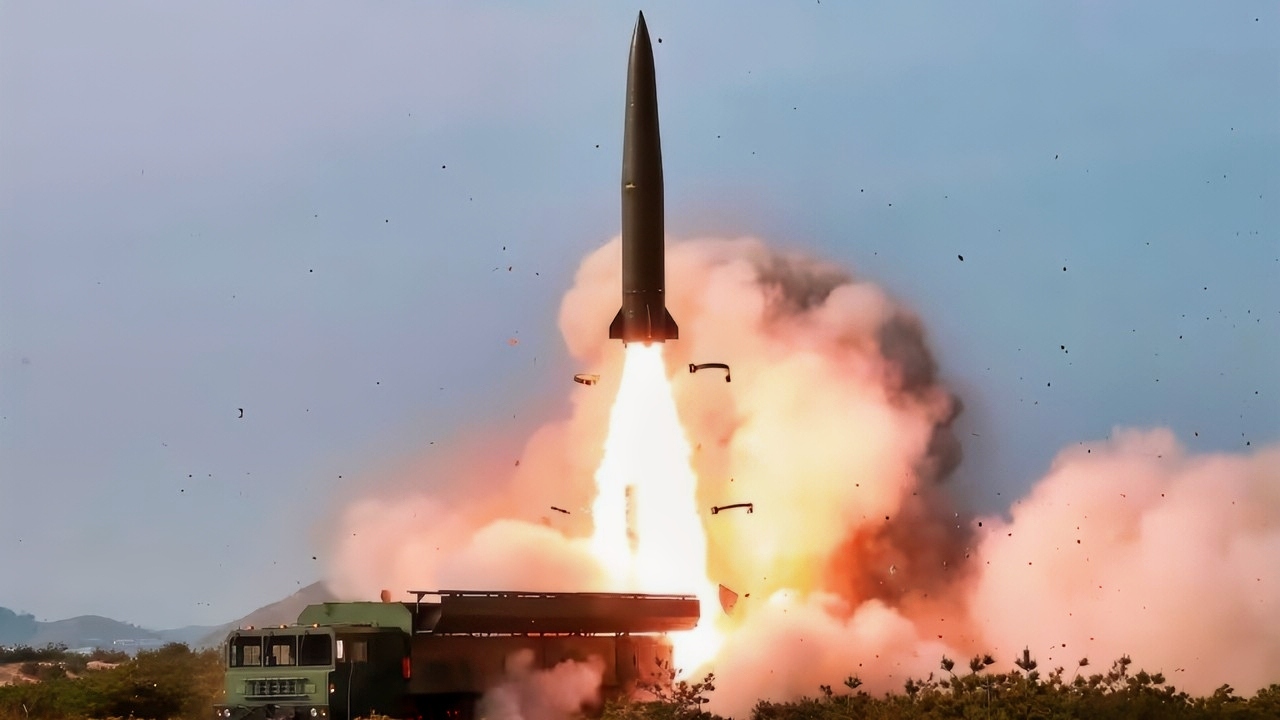
According to recent reports, North Korea intends to deploy a missile unit to Western Russia and intends to supply Moscow with 120 ballistic missiles and up to six launchers, according to Ukrainian intelligence.
Pyongyang has supplied Russia with ballistic missiles in the past, some of which have been used recently in Russia’s large-scale attacks against Kyiv.
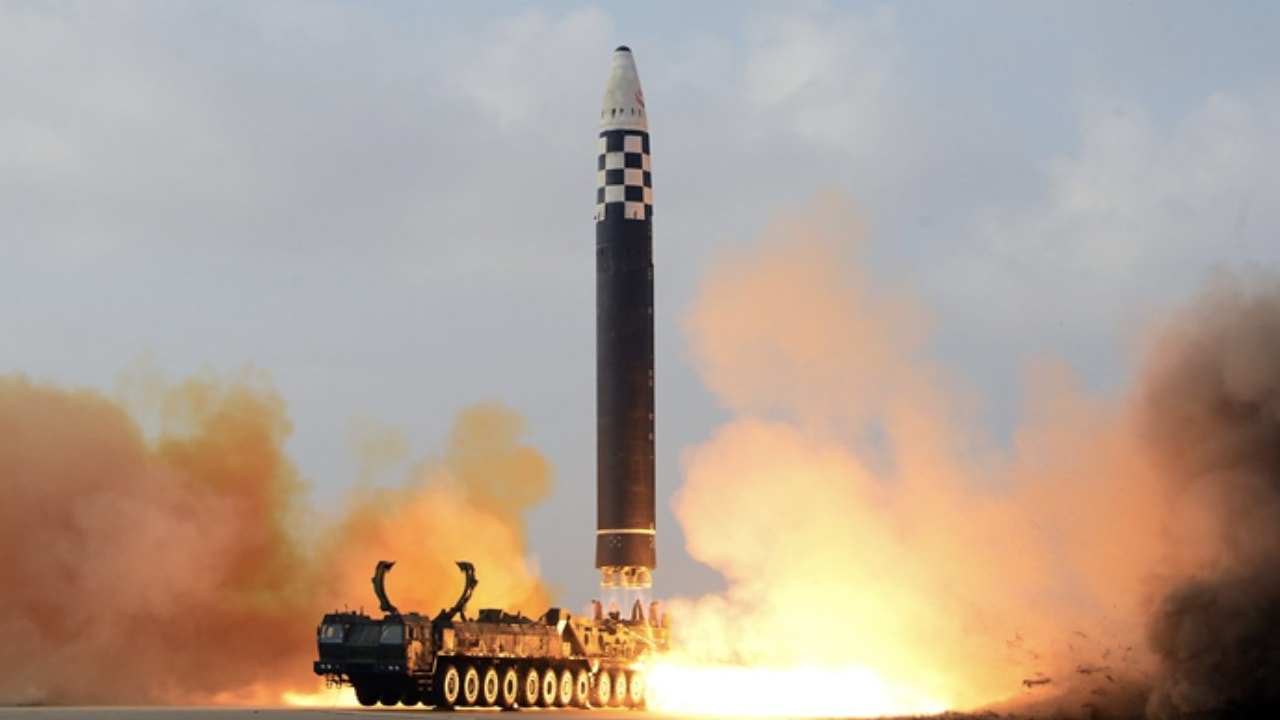
North Korean ICBM. Image Credit: KCNA/North Korean State Media.
The reports come as Ukraine struggles to keep its supply of air defense missiles stocked, making it more difficult to defend the capital and other populated areas against Russian missiles, particularly ballistic missiles.
North Korea has been a valuable military partner to Moscow in its war against Ukraine, supplying the Russians with artillery, ammunition, ballistic missiles, and even its own soldiers.
North Korean Missile Units in Russia
Andrii Cherniak of Ukraine’s Main Directorate of Intelligence reported that North Korea is sending a missile unit comprised of around North Korean personnel to the western regions of Russia, likely to the region of Voronezh.
The unit will likely join the 112th Missile Brigade and supply the Russians with six launchers and up to 120 ballistic missiles. According to Cheriak, the agreement is set to be formally finalized sometime within the next month.
As of yet, it is unclear what role exactly the North Koreans will play in Russia’s missile operations. It is likely that they will be sent to train the Russians to operate missile launchers or to receive training themselves.
Pyongyang has been deeply involved in Russia’s war effort since 2023 and has provided ballistic missiles to Moscow in the past.
Some reports indicated that North Korea has provided another batch of 40 KN-23 and KN-24 missiles. Last week, Russia fired its first Korean-made ballistic missiles at Ukraine since 2025.
Likewise, on Wednesday morning, during Russia’s latest ballistic missile attack against Kyiv, Moscow reportedly utilized two Korean Kn-23 missiles, which struck logistics centers in Ukraine’s capital.
Rob Lee, a senior fellow at the Foreign Policy Institute, assessed that Korean-made ballistic missiles were a serious threat to Ukraine. “Ballistic missile defense is one of Ukraine’s greatest vulnerabilities, so any increase in the quantities of ballistic missiles they face will pose a greater challenge.”
Assessing Korean-Made Missiles in Ukraine
The Hwasong-11A, or KN-23, likely the missile delivered in the largest quantities to Moscow, is a short-range ballistic missile that bears a striking resemblance to the Russian 9M723 Iskander.
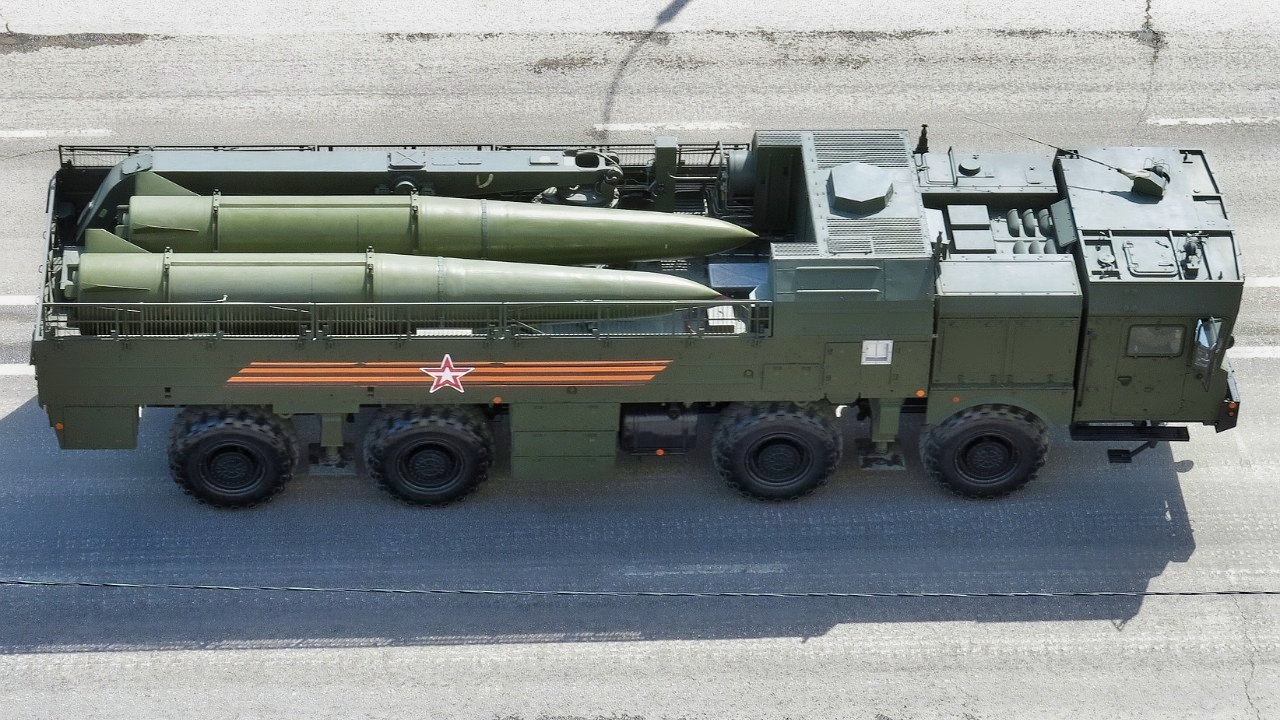
Iskander-M. Image Credit: Creative Commons.
It has an estimated range of around 690 kilometers and a payload of 500 kilograms.
The missile shares many similarities with Russia’s Iskander platform, leading many to suspect that Russia may have played a role in its development, though there is no substantial proof.
The KN-23 was reportedly first used against Ukraine in 2023, after debris from a Russian missile strike indicated that the missile was manufactured in North Korea.
Since 2023, the Russians have used the missile in their large-scale missile attacks, until its inventory reportedly ran dry in August, 2025.
It is commonly believed that the KN-23 is less accurate than its Russian counterparts, due to subpar manufacturing and Pyongyang’s relative lack of experience.
Last week, a ballistic missile impacted a residential area in Kyiv, killing several civilians and injuring dozens more.
Ukrainian sources assessed that the strike was perpetrated by a KN-23, which likely missed its intended target and strayed into a residential area.
In 2024, sources at the time also claimed that the missile had a high failure rate due to poor manufacturing and frequently exploded in midair before reaching its targets. According to Andriy Kostin, Ukraine’s top prosecutor at the time, about half 50% of North Korean-made missiles fired by Russia malfunctioned, and subsequently missed their targets and exploded in the air.
Troubling News for Ukraine and South Korea
Despite the current shortcomings in North Korean manufacturing, the KN-23’s use in Ukraine has troubling implications for both Ukraine and South Korea.
Ukraine, as has been widely reported, is currently suffering a crippling shortage of Patriot PAC-3 interceptor missiles, which are Kyiv’s most reliable defenses against ballistic missiles.
The KN-23, even if it is less accurate than regular Russian missiles, still poses a significant threat to Kyiv, which currently has no way to defend itself against them.
In fact, the missile’s lower accuracy rate provides an even greater threat to civilians, as the missile could easily miss its target and strike a civilian residential building.
For South Korea, Pyongyang’s involvement against Ukraine is equally troubling.
Prior to the war, North Korea’s army, the Korean People’s Army (KPA), had relatively little combat experience beyond the Korean War in the 50s.
Now, however, thanks to the Russians, the KPA has received valuable experience in modern combat.
According to some reports, the KPA has received specialist trainers from the Russian Army to help train and prepare North Korea for modern drone-centric warfare.
Likewise, experience from Ukraine will help Pyongyang’s ballistic missile manufacturers assess their missiles under active combat conditions and make improvements based on lessons learned.
While the KPA still has a long way to go before it reaches adequate modernization standards, experience in Ukraine is helping to turn the North Korean Army into a more effective fighting force.
MORE – How to Make Putin End the Ukraine War
About the Author: Isaac Seitz
Isaac Seitz, a Defense Columnist, graduated from Patrick Henry College’s Strategic Intelligence and National Security program. He has also studied Russian at Middlebury Language Schools and has worked as an intelligence Analyst in the private sector.