Top AI Researchers Terrified of a “Chernobyl Moment”: a Mass Casualty Event, or Worse, That Turns the World Against AI Forever

Uncategorized

US and Chinese AI researchers are calling for global cooperation on the tech, fearing that its unchecked development could lead to an unimaginable catastrophe. 

“AI is a global technology with global benefits, global harms, and a consistent tendency for new capabilities to eventually proliferate,” Stephen Casper, a computer scientist at MIT who spoke at a major AI conference in Beijing this month, told Wired.

“One thing that almost everyone in AI can agree on right now is that AI doesn’t need a Chernobyl moment,” he added.

Casper didn’t elaborate further on this analogy, but by invoking the infamous nuclear disaster, it’s clear that the fear isn’t just over the catastrophe itself. It’s also that it could irreversibly tarnish the public perception of AI and stifle its development, much like how the Chernobyl disaster continues to hang over nuclear power writ large.

Flavors of AI doomsaying vary dramatically, ranging from Skynet-style scenarios to mass unemployment. But more recently, as it’s become clear that one of AI’s most practical applications is generating code, experts have been sounding the alarm on AI’s potential to disrupt cybersecurity. Hackers could easily abuse AI agents and coding tools to orchestrate devastating cyberattacks, both increasing the scale of these attacks and lowering the skill needed to carry them out.

This narrative has in part been stoked by AI companies, as when Anthropic announced, and then refused to publicly release, its Claude Mythos model, purportedly because it was so powerful that it could easily break into “every major operating system and every major web browser.” 

The risk is deepened by the rise of open-source and open-weight AI models which are free to use and are favored by researchers for the transparency they provided — but lack the oversight that leading commercial AI models do. A source at one of China’s leading AI companies told Wired that security concerns are one of the reasons that advanced models in China are no longer being released as open source.

Lin Yun, a professor at Shanghai Jiao Tong University warned that he expects hackers to gain an edge using AI in the short term, but that in the long term, AI could be also used to shore up cybersecurity, underscoring the need for global cooperation.

“If different countries understand the risks in similar ways, it becomes easier to develop shared safety principles and technical standards,” Yun told Wired. “The key is to find areas where sharing can reduce systemic risk without exposing sensitive operational details.”

Cooperation on this issue between two geopolitical rivals may seem far-fetched, especially since the US and China also happen to be the out-and-out leaders in AI. But Casper compared the current situation to how the US and the Soviet Union worked to rein in nuclear threats, despite aggrandizing their own nuclear stockpiles.

More on AI: Anthropic Scared, Calls for Global Freeze on AI Advances

The post Top AI Researchers Terrified of a “Chernobyl Moment”: a Mass Casualty Event, or Worse, That Turns the World Against AI Forever appeared first on Futurism.
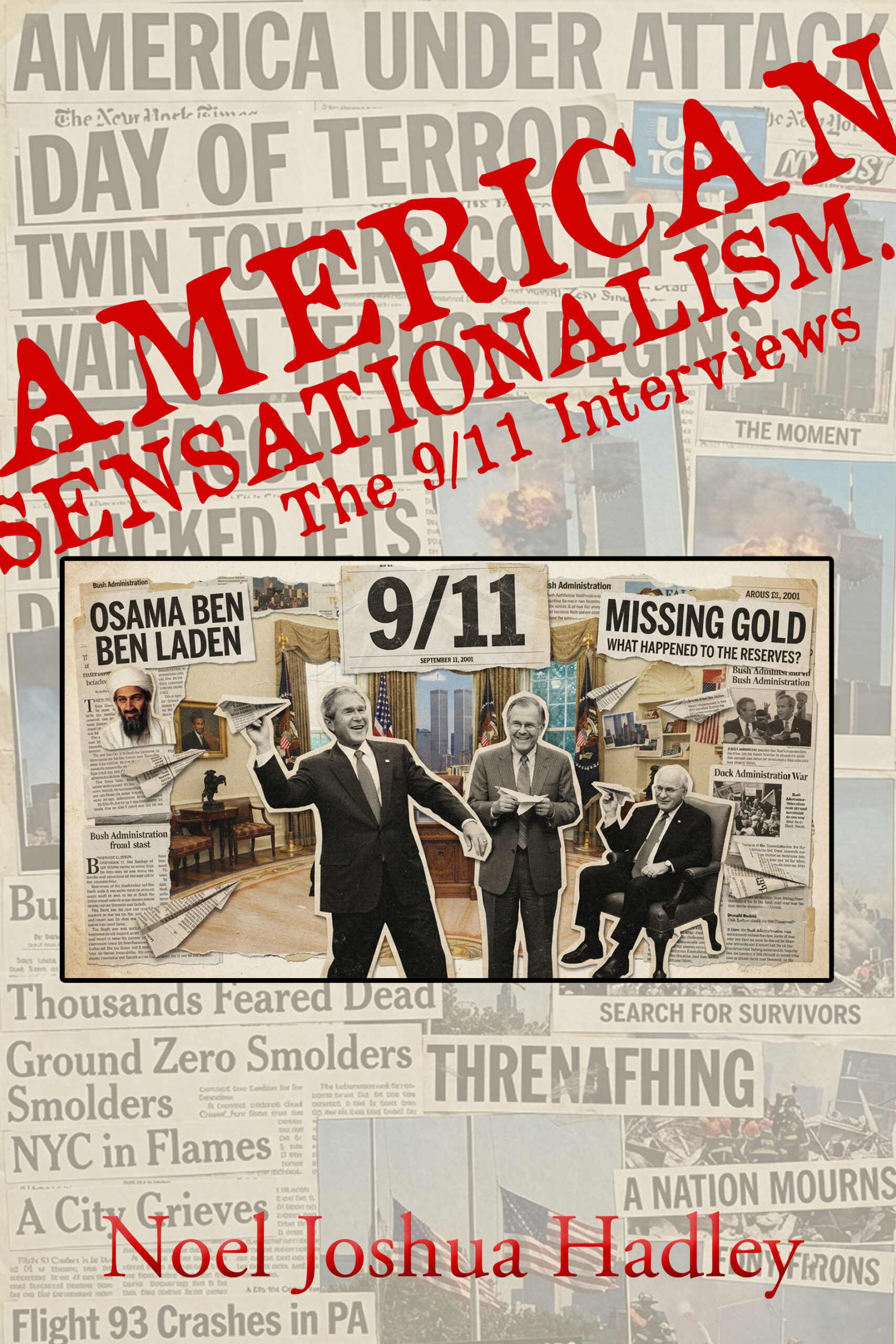
IN the summer of 2019, I was seated in the wine cellar of a walled Medieval town high above the Dordogne Valley of France, not far from Sarlat-la-Canéda, making phone calls, writing reports. I have given this story in other places and it appears as though you’re about to hear it again. Rob Skiba is a name you that you might be familiar with. Though he had made a name for himself as a Nephilim researcher, more recently Rob had taken a dive into the deep end of the pool via flat earth research. The recorded interviews I conducted between he and Rick Hummer, a fellow flat earth investigator and close friend of his, was published while still occupying that very wine cellar. Read all about it. Chicago Is Not a Mirage.

Word quickly spread. Within a few short weeks, dozens of flat earth researchers began accepting my invite for a private interview, if not a series of interviews. From a 17th-century tower built by King Louis XIV, and with a stunning view of the Alps, I sat down with Robbie Davidson, founder of the Flat Earth International Conferences, conducting multiple sessions. While staying in Dumfries, Scotland, David Weiss agreed to take part in the interviews, as did Bob Knodel of Globebusters. There were others. But when I asked the interviewees to discuss the moments that shaped their lives, among the many PSYOPs, false flag attacks, and hoaxes that were discussed, only these men committed commentary to the false 9/11 narrative.

The resulting recordings ballooned into The Unexpected Cosmology, a book which became a website and was even intended as an anthology. And of course, the following discourse was originally a chapter. It was Walt Disney who stated, “Disneyland will never be completed. It will continue to grow as long as there is imagination left in the world.” Those sentiments remain applicable here as well. American Sensationalism: The 9/11 Interviews was always intended to be expanded upon with the inclusion of new researchers. So I’m sorry to say the project became stagnant during the Covid-19 psychodrama. I took a break to tackle other projects. We lost Rob Skiba. Rob offered hours of private conversation regarding his life but we never got around to the big one. 9/11. It was in the cards. Sadly, Bob Knodel died soon afterwards. Voices are being squeezed from an entire generation. Gnosis passes with them.

In the aftermath, the FE community became fractured. People began going their separate ways. Robbie Davidson, among a noted few others who were interviewed for the project, got up and left the movement altogether. It is not my intent to erase his or the contributions of others if only brief. They came, they went, their testimonies remain.

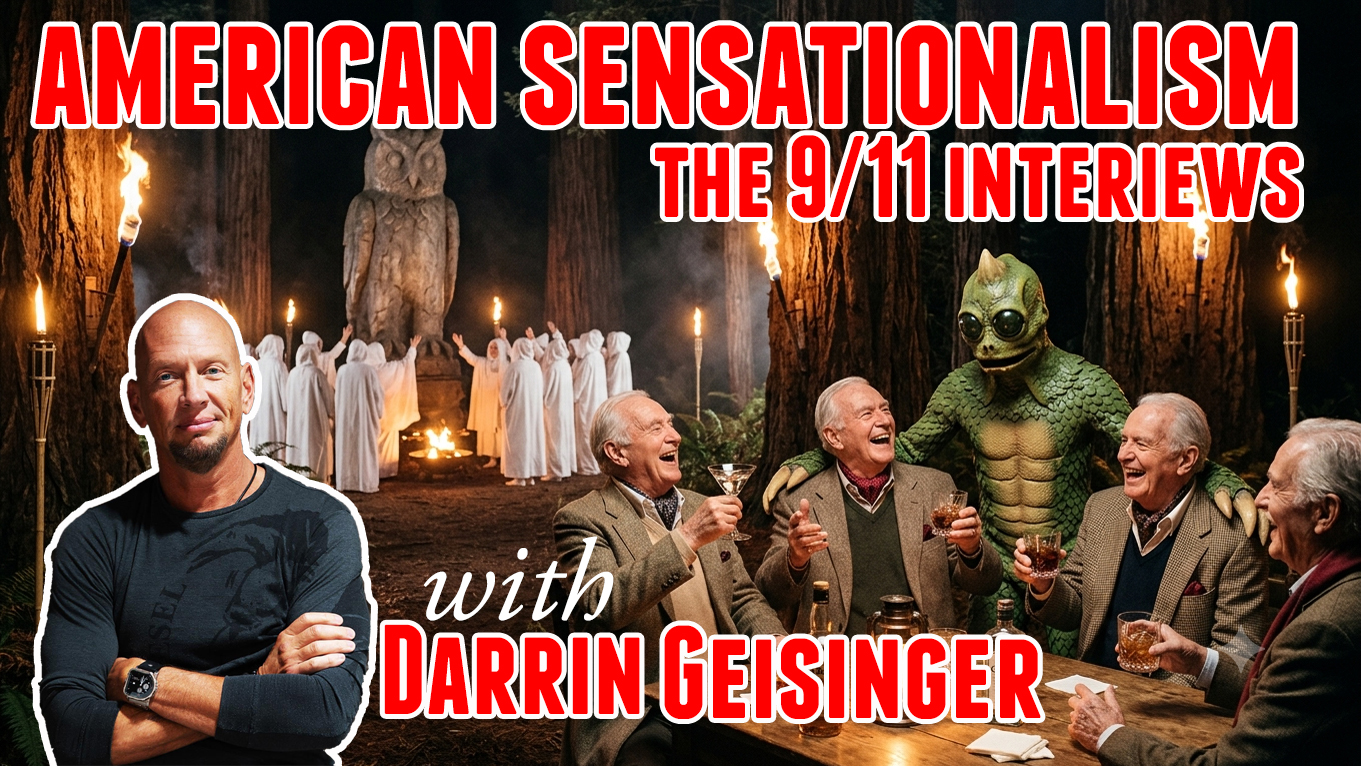
The original vision may have hit roadblocks but it is not forgotten. I expanded this paper a few years later to include testimony from author Pauly Hart, a dear friend of mine. I had wanted to continue that trend every year thereafter but you know how it goes. For the 25th anniversary of the attack I have redirected my efforts to its first large scale expansion, including Andrew Hoy and Darrin Geisinger into the mix. Perhaps others will lend their experiences to the recorder in time.

The following is their report.

Watch the Interviews