
The U.S. Navy Still Has 11 Carriers, Virginia-Class Submarines, and 250 Years of Combat Experience — None of That Stops the Decline
The People’s Liberation Army Navy (PLAN) is a highly capable force and the world’s largest navy by hull count. The service plays a key role in China’s anti-access/area-denial (A2/AD) strategy in the western Pacific.
The PLAN has modernized rapidly in recent years. Its leading platforms include advanced, versatile destroyers, such as the Types 055 and 052D, as well as a growing submarine fleet.
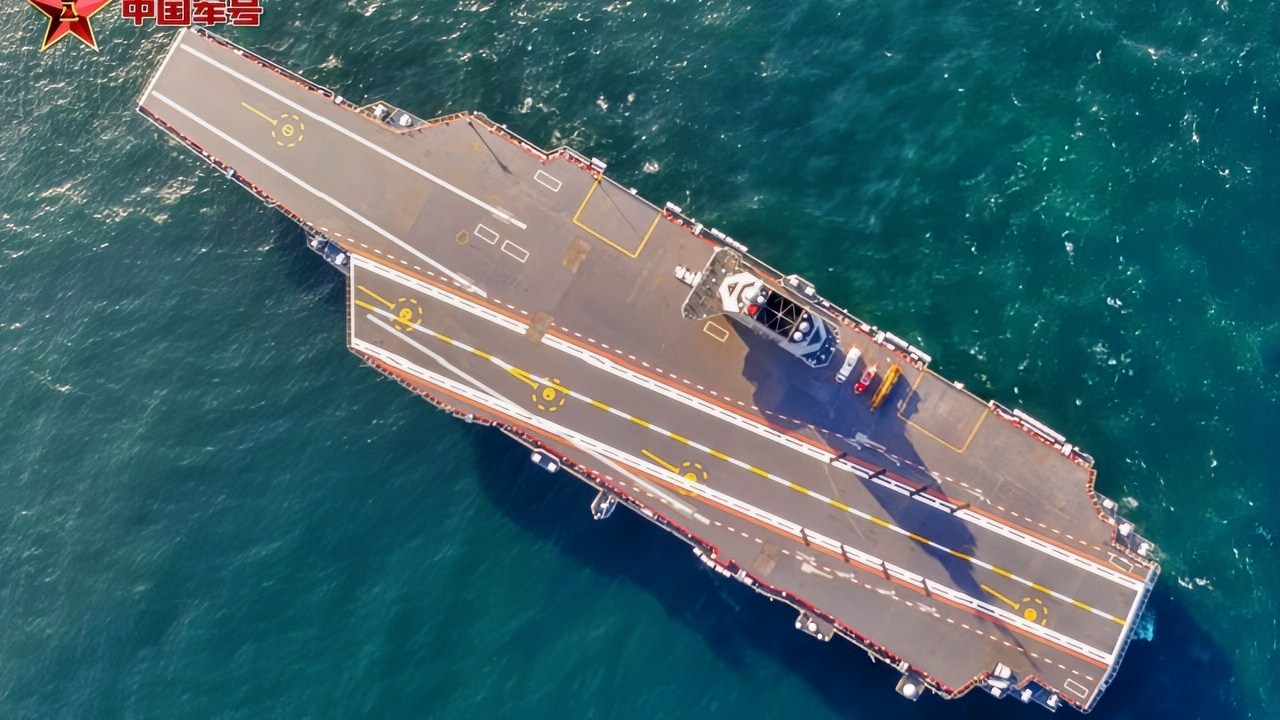
CV-18 Fujian aircraft carrier from China. Image Credit: Creative Commons.
The service is a credible, potent threat near China’s coast. While it lacks the global power-projection capabilities of the U.S. Navy, the PLAN is built to excel in localized, high-intensity scenarios. Its capabilities extend the reach of A2/AD far beyond its borders, allowing China to project power farther into its region than ever before.
China’s PLAN Is Rapidly Becoming The World’s Most Powerful Navy:
China’s PLAN is #2 with a bullet. It might not be long before China’s navy is the most powerful naval force in the world, given the pace of its modernization and the sheer number of warships China produces. Indeed, the PLAN is now the largest navy by ship count, and it continues to grow.
The U.S. Department of Defense’s 2024 China Military Power Report assessed that the PLAN had a battle force of more than 370 ships and submarines and highlighted its maturing power-projection capabilities.
The PLAN’s fleet includes destroyers, frigates, corvettes, submarines, and landing craft. China is also the world’s largest naval shipbuilder, enabling it to rapidly expand its fleet.
The PLAN is increasingly modernizing. Large destroyers such as the Type 055 are joining newer aircraft carriers whose sophistication is increasing, and the technology gap with the United States is closing.
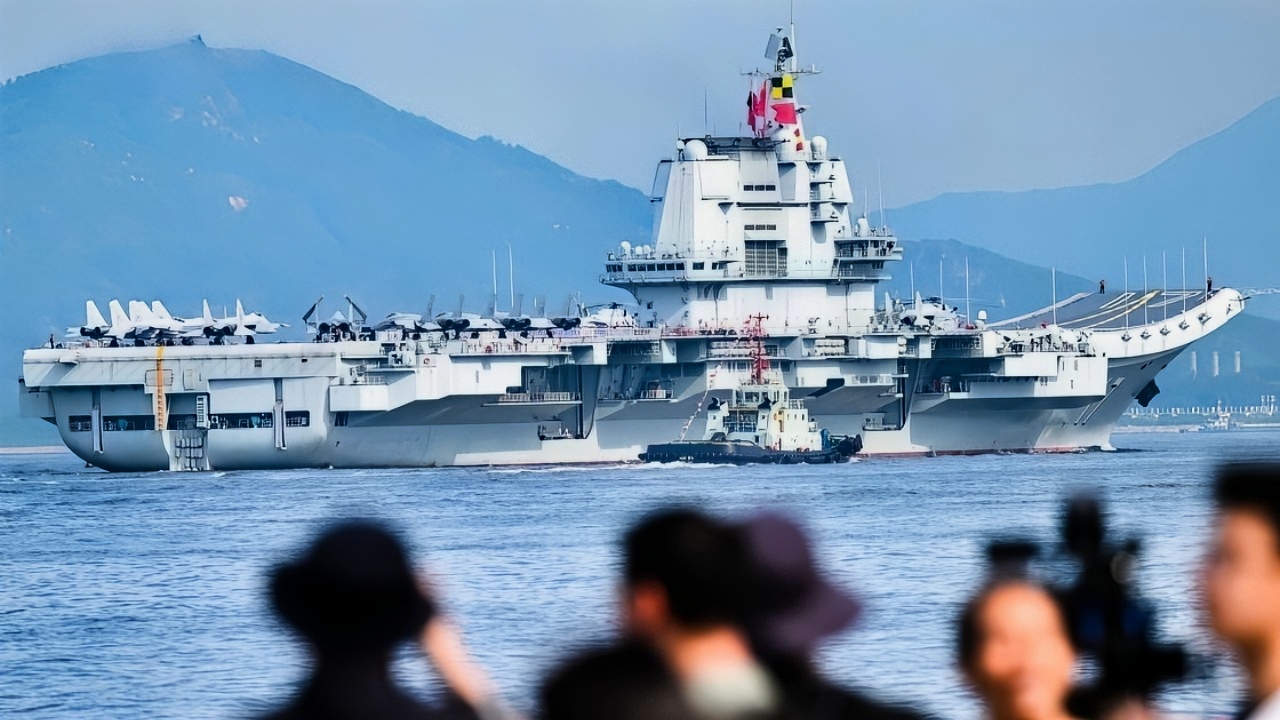
China Aircraft Carrier in Port. Image Credit: Chinese Navy.
The PLAN commissioned the Type 003 Fujian in November 2025. It was the first Chinese carrier equipped with electromagnetic catapults, which enable heavier aircraft and airborne early warning platforms to operate on deck.
China’s navy is thus a rapidly growing, numerically superior force that is transforming from a regional to a global power. While the U.S. Navy remains qualitatively superior in certain aspects, China’s relentless shipbuilding means the balance of naval power is shifting—and that change poses significant strategic challenges, particularly in the Indo-Pacific.
China’s Sea Denial Strategy:
The PLAN’s approach draws heavily on Julian Corbett’s principles of sea denial. Corbett proposed to prevent an enemy from using the sea for military or economic purposes, and his principles are often employed by a weaker power that is not in a position to achieve complete command of the sea.
China’s Corbett-inspired sea-denial strategy focuses on using its submarines, missile boats, and aircraft to exert constant pressure and deny adversaries access to its near seas, especially within the first island chain. It prioritizes controlling vital maritime communication lines and littoral areas over absolute control of the high seas.
The goal is to disrupt enemy communications and limit their freedom of action through the use of missiles, mines, drones, and submarines. The objective is not to seek decisive battles.
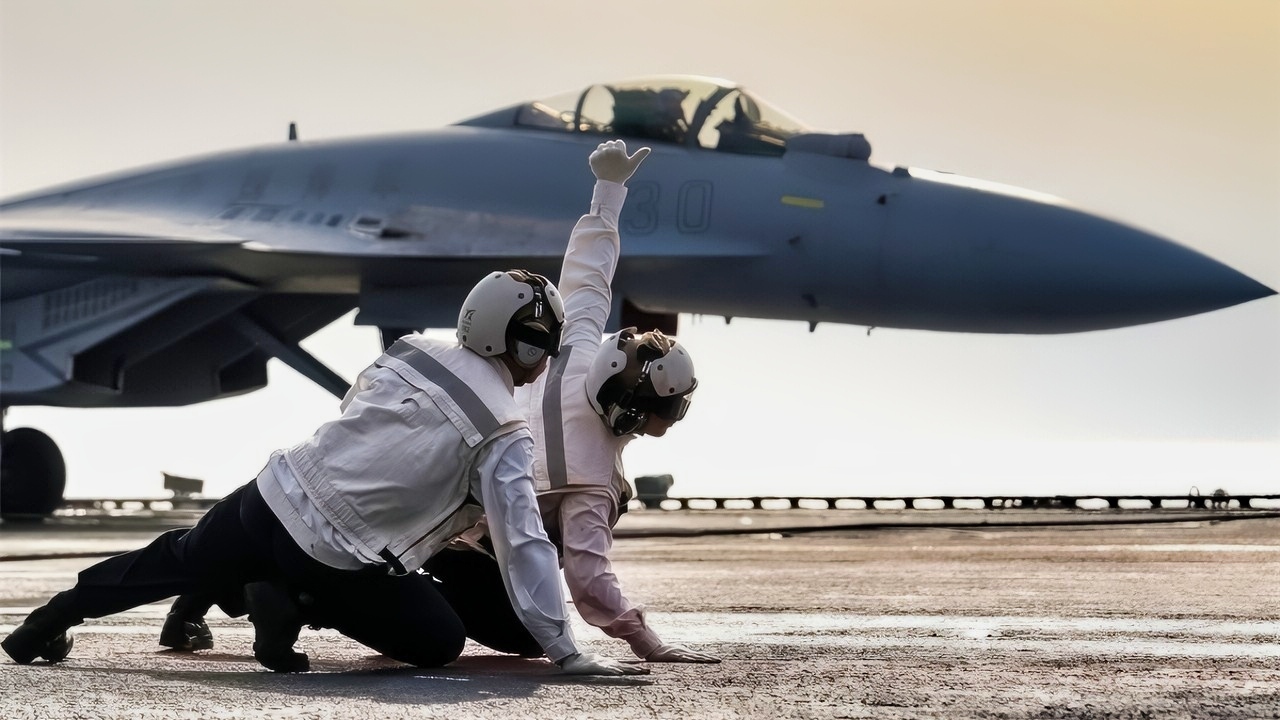
China Aircraft Carrier Operations. Image Credit: Chinese Navy.
Sea control is a “positive” objective—it allows one to use the sea—and the U.S. emphasis on ensuring freedom of navigation is part of a positive sea strategy. Corbett considered sea denial to be “negative” in nature, focusing solely on preventing the adversary’s freedom of action.
The United States Navy Is Still #1, But In Decline:
The U.S. Navy is still the best in the world. While the PLAN has more ships, the Navy retains a commanding lead in capital ships and tonnage.
However, the Navy is in decline, and the sorry state of the U.S. shipbuilding industry means the Navy cannot match PLAN ship-for-ship construction—it also has a harder time maintaining the ships in service.
According to estimates, China has 230 times the shipbuilding capacity of the United States. That is a sobering statistic, and it was an utterly preventable fact.
Still, while the Navy’s Nimitz-class carriers are aging out, they are being replaced one-for-one by Ford-class carriers. Aircraft carriers still reign supreme on the seas—no other platform offers the same power-projection and deterrence capabilities.
US Virginia-Class Submarine Fleet Is Unequaled:
Beyond its sprawling fleet of surface ships, the United States also boasts a large submarine fleet that is being modernized through the continued introduction of Virginia-class submarines. In addition, the Navy has many modern light warships, and, along with Russia, it is the only nation with cruisers in its fleet. In terms of fleet composition, firepower, and the ability to project power across the globe, the U.S. Navy is still in a class of its own.
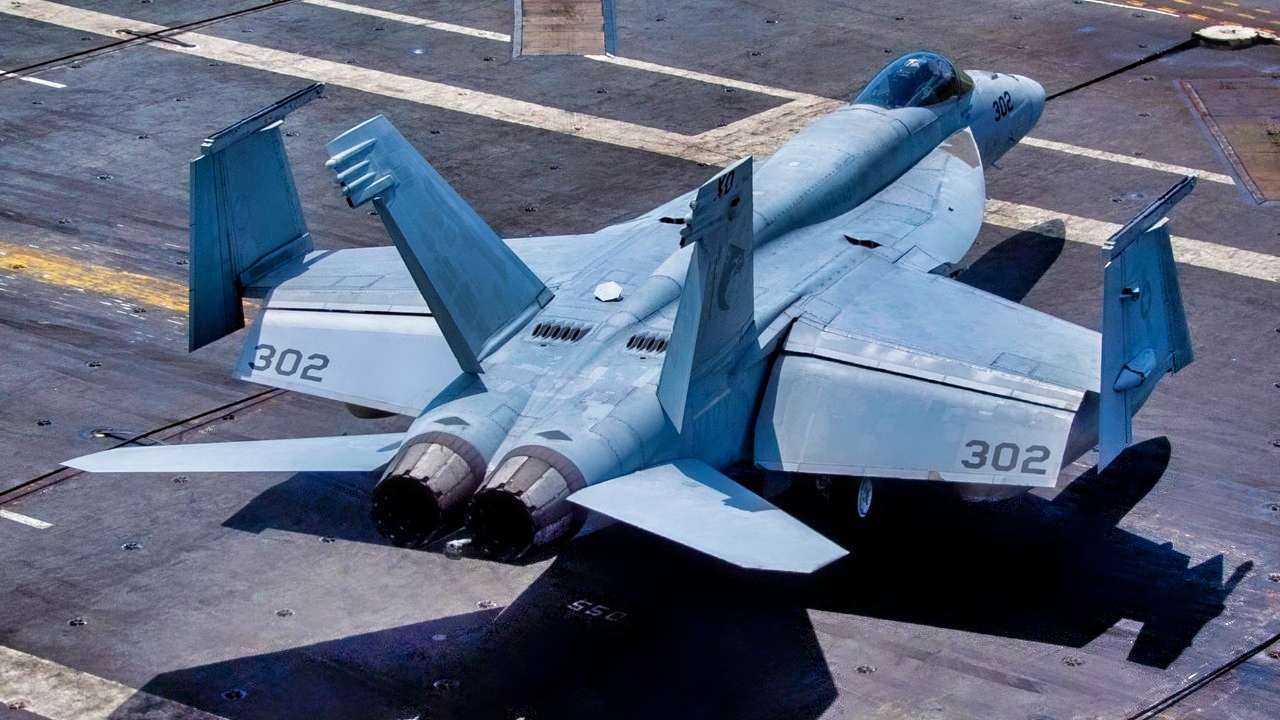
A Sailor directs an F/A-18E Super Hornet from the “Kestrels” of Strike Fighter Squadron (VFA) 137 on the flight deck of the aircraft carrier USS Nimitz (CVN 68) in the South China Sea, May 12, 2025. Nimitz is underway in the U.S. 7th Fleet area of operations on a scheduled deployment, demonstrating the U.S. Navy’s unwavering commitment to a free and open Indo-Pacific. (U.S. Navy Photo by Mass Communication Specialist Seaman Apprentice Franklyn M. Guage)
As of 2025, the fleet stood at nearly 296 battleforce ships. A deployable force of 287 ships was planned for Fiscal Year 2026, and the procurement of 19 battleforce ships should sustain an upward trajectory thereafter.
The Congressional Budget Office’s (CBO’s) 2025 analysis of the Navy’s shipbuilding plan sees a long path toward fulfilling the ambition of 390 battleforce ships by 2054. According to the CBO, shipbuilding costs will average about $40 billion per year in 2024 dollars.
The Navy would purchase a total of 364 new combat, logistics, and support ships. Overall, under the 2025 plan, the Navy would buy more current-generation ships and more smaller ships than it would have purchased under any of the 2024 plan’s three alternatives.
The US Aircraft Carriers Outnumber China’s For Now:
The U.S. Navy’s greatest strength is its 11 aircraft carriers, which form the backbone of its global force projection. There are 10 Nimitz-class carriers and the newer Ford-class flagship, the USS Gerald R. Ford (CVN-78).
These massive vessels carry numerous fighter jets and support aircraft, ensuring U.S. air superiority and rapid response to crises. At least one carrier strike group is deployed overseas at all times.
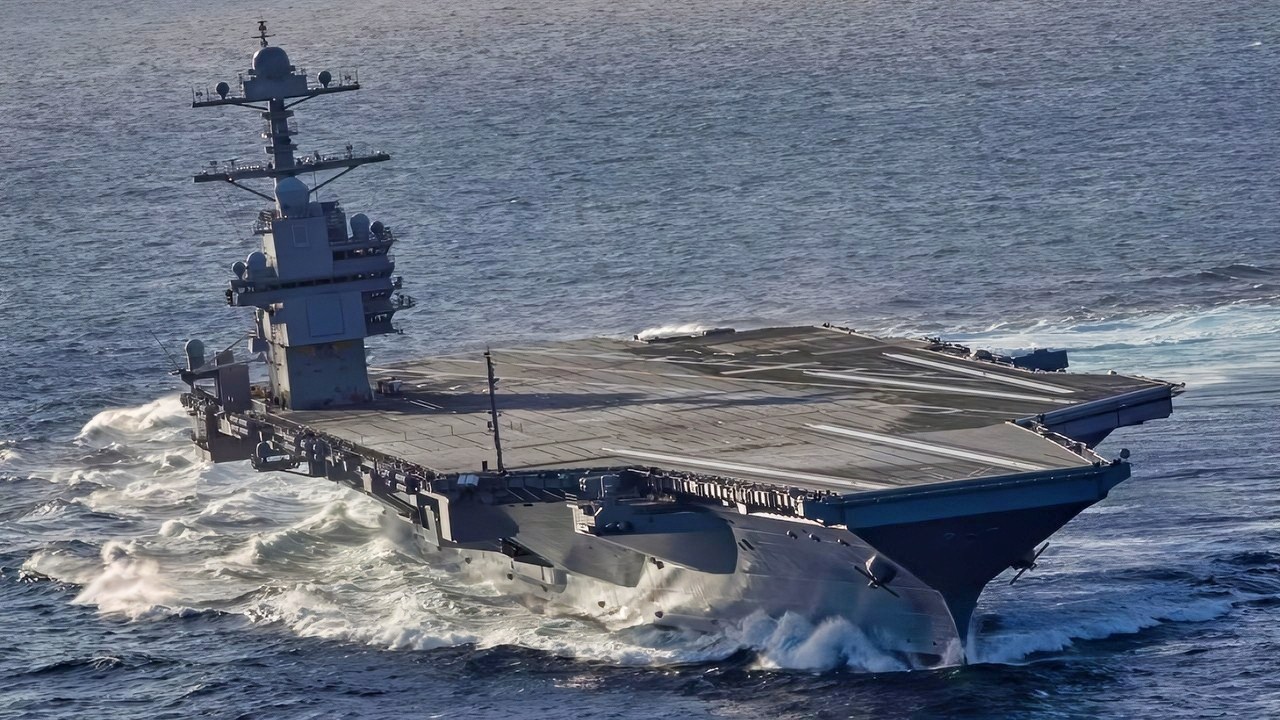
USS Gerald R. Ford Aircraft Carrier. Image Credit: Creative Commons.
Further, the Navy’s cutting-edge technology and capacity for rapid innovation, global presence, extensive training, strategic partnerships, and ability to project power worldwide make it the most potent and versatile force at sea, even if China builds more ships.
However, China is rapidly building carriers and is expected to have a half-dozen by 2035.
Destroyers Are Still An Area Of Strength:
The United States also still holds an advantage in guided missile cruisers and destroyers. The latter in particular are the backbone of any modern fleet, with their multi-mission capabilities, speed, and cruising range.
The United States, however, will retire all of its cruisers by 2029. For now, the Navy is keeping the USS Gettysburg (CG-64), USS Chosin (CG-65), and USS Cape St. George (CG-71) in service until that year.
The United States need not fight alone. As CSIS points out, if U.S. allies in the region chose to fight with the United States in a war with China, it would negate the PLAN’s numerical advantages. The Japan Maritime Self-Defense Force operates 4 cruisers, 34 destroyers, 10 frigates, and 4 helicopter carriers—2 of which are capable of launching and recovering F-35s. South Korea’s navy operates 3 cruisers, 6 destroyers, 16 frigates, and 5 corvettes.
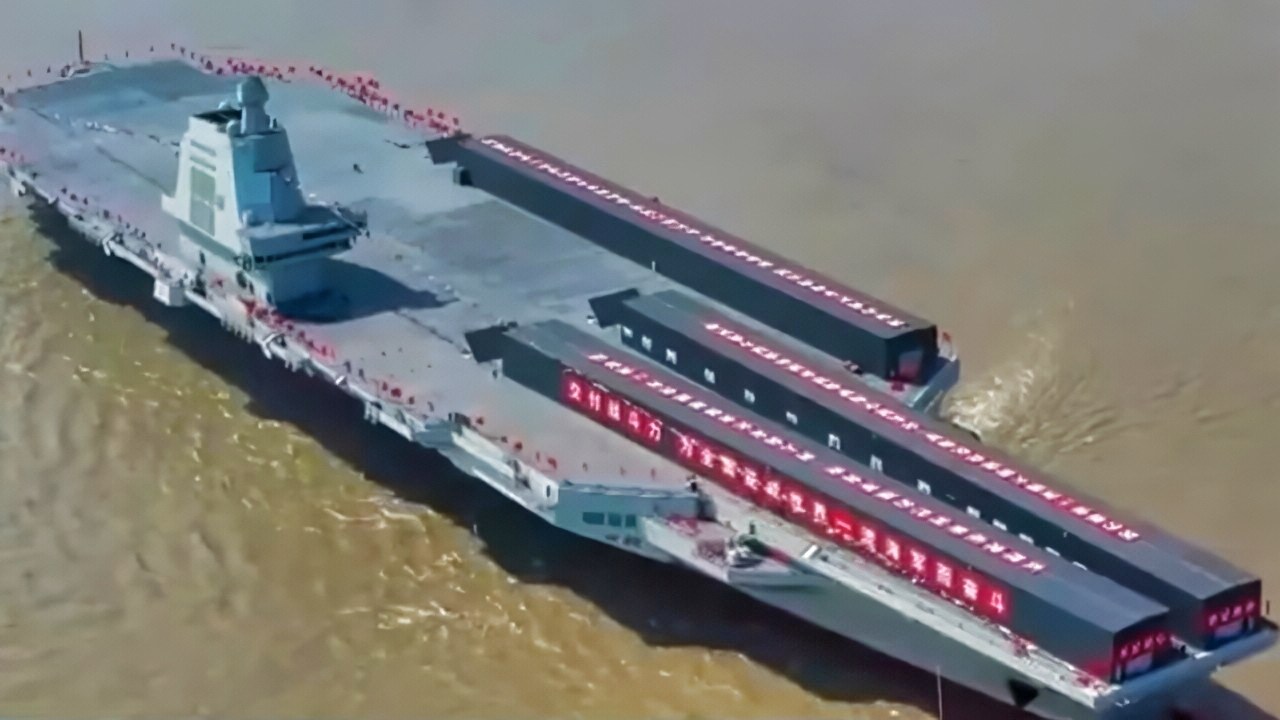
China New Carrier Type 003 CCTV Screencap Photo.
The United States still has an enormous advantage that China cannot match. It is a vastly more combat-experienced force with 250 years of fighting at sea to draw on. China’s navy is only about three decades old, and, like its army, has no combat experience.
But all the trends are pointing downward for the United States.
About the Author: Steve Balestrieri
Steve Balestrieri is a National Security Columnist. He served as a US Army Special Forces NCO and Warrant Officer. In addition to writing on defense, he covers the NFL for PatsFans.com and is a member of the Pro Football Writers of America (PFWA). His work was regularly featured in many military publications.