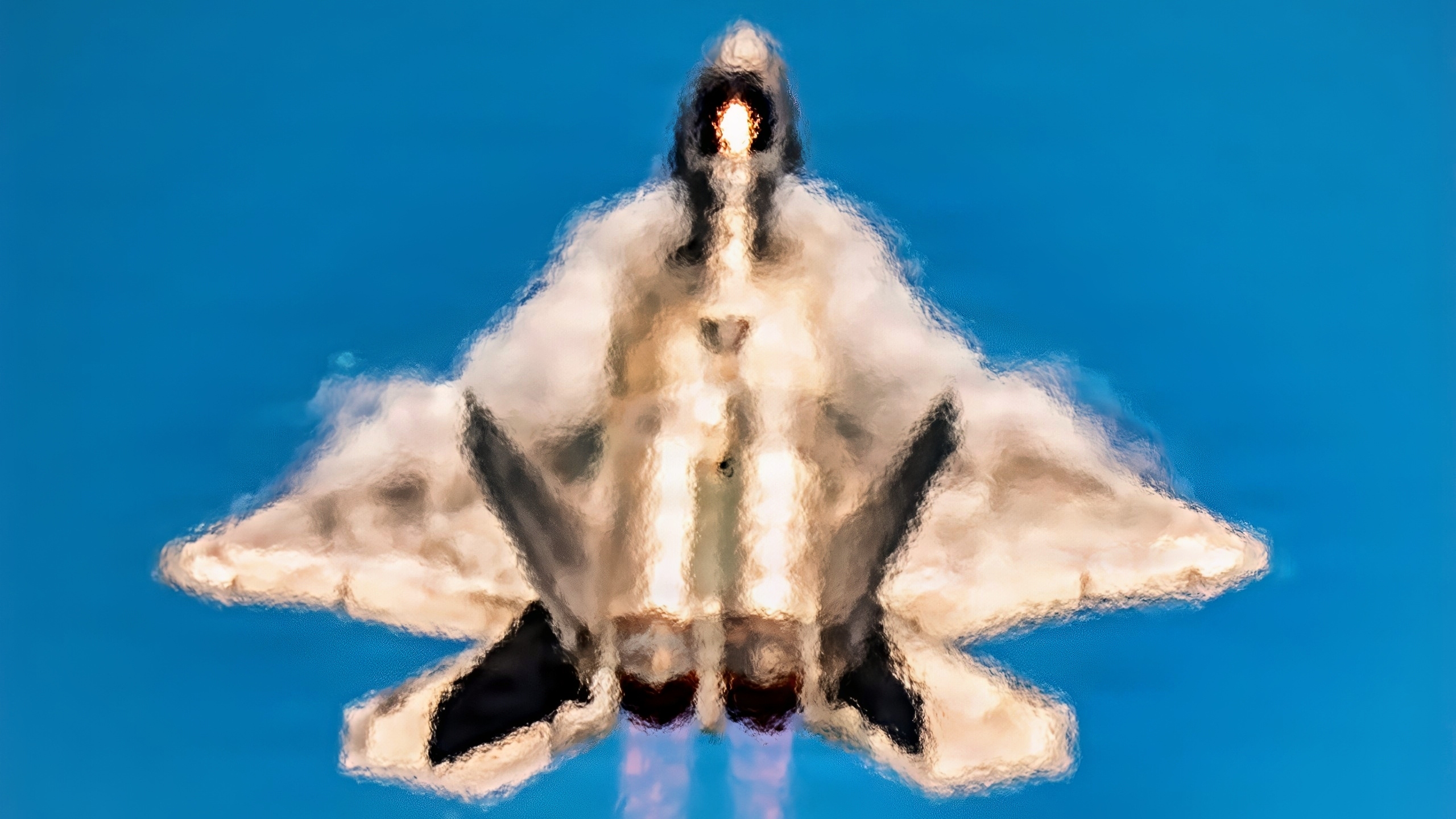
For more than a decade now, the decision to end F-22 Raptor production has been controversial among everyone from military analysts and lawmakers to Air Force officials themselves.
As global conflict heats up and the United States and Europe prepare for potential conflicts with major powers like China and Russia, it’s hard to ignore the fact that the United States chose to end production of what is still considered the premier air superiority fighter in the world.
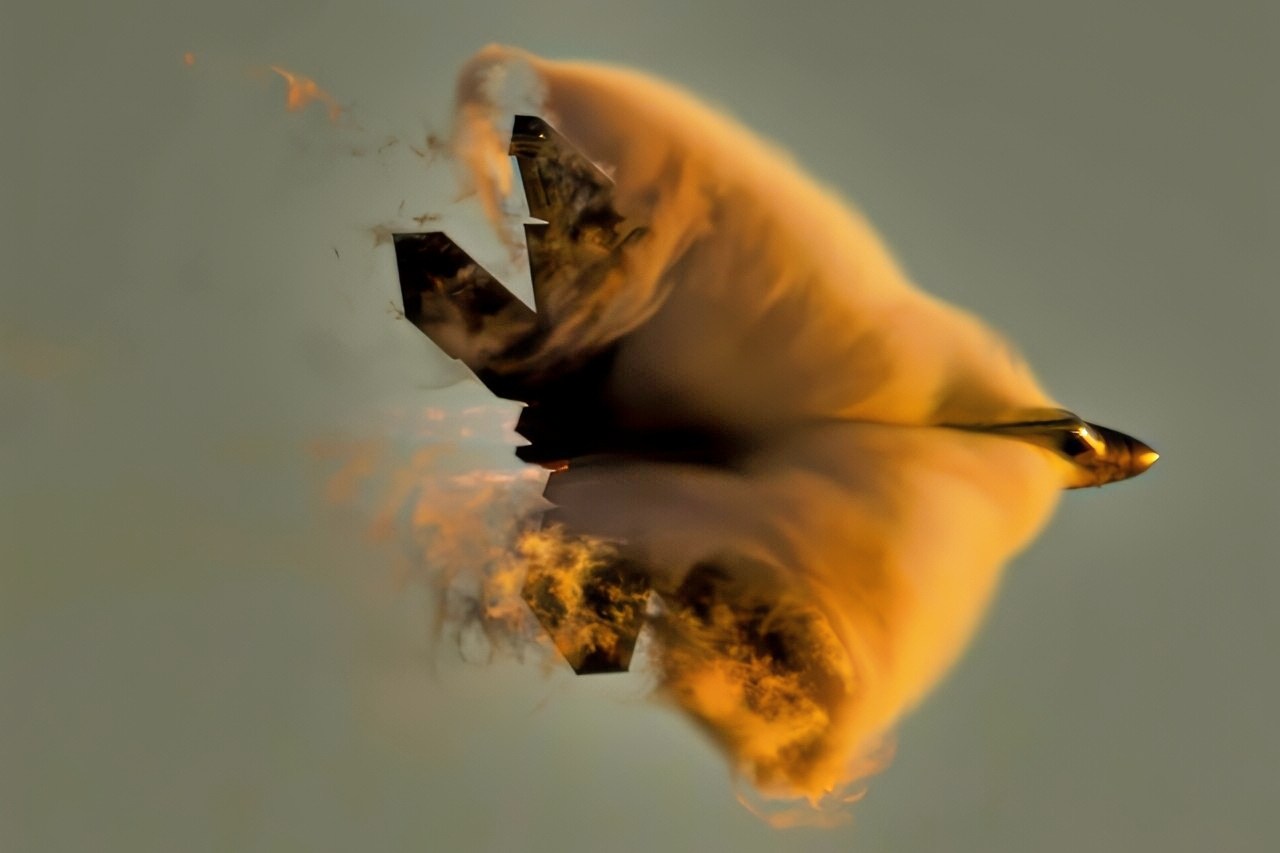
F-22 Raptor Flying in the Dark Clouds. Image Credit: Creative Commons.
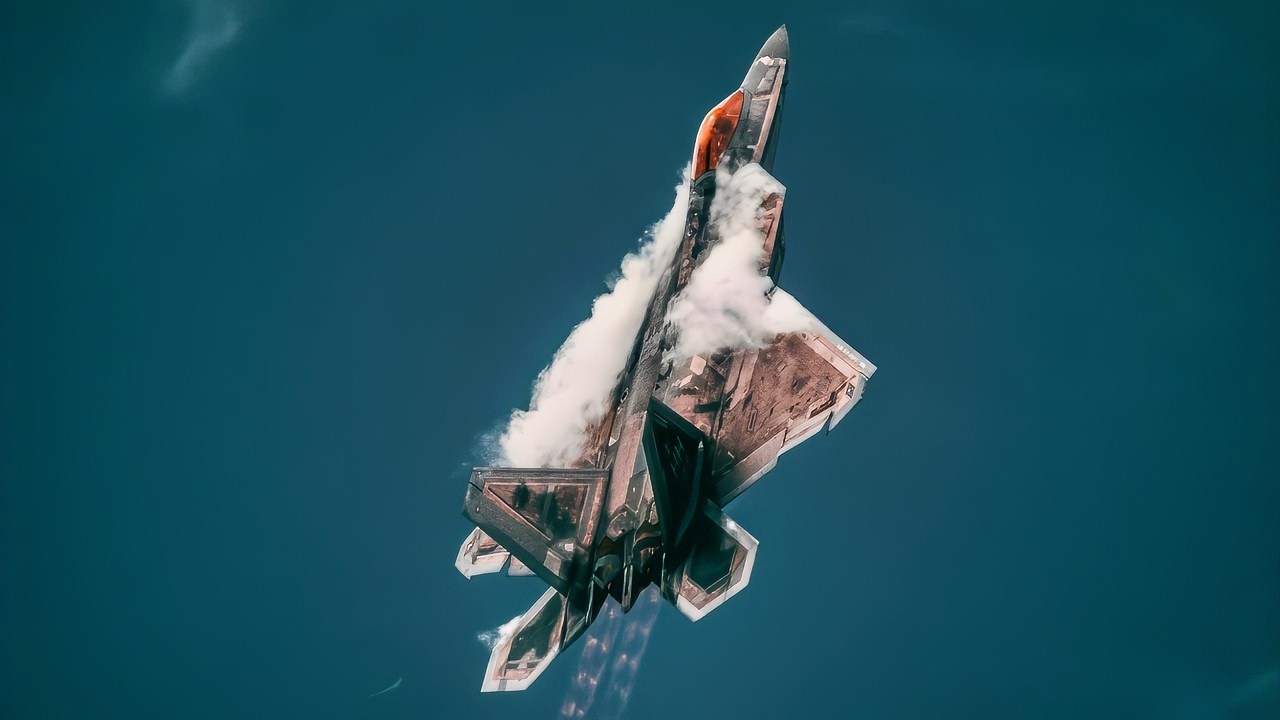
A U.S. Air Force F-22 Raptor performs a vertical climb during the 2025 Marine Corps Base Hawaii (MCBH) Kaneohe Bay Air Show, at MCBH, Aug. 9, 2025. The Kaneohe Bay Air Show provided an opportunity to showcase the aircraft, equipment, and capabilities of the armed forces in the Indo-Pacific region to the local community. The air show, which contained aerial performances, static displays, demonstrations, and vendors, was designed to celebrate MCBH’s longstanding relationship with the local community. (U.S. Army photo by Pfc. Peter Bannister)
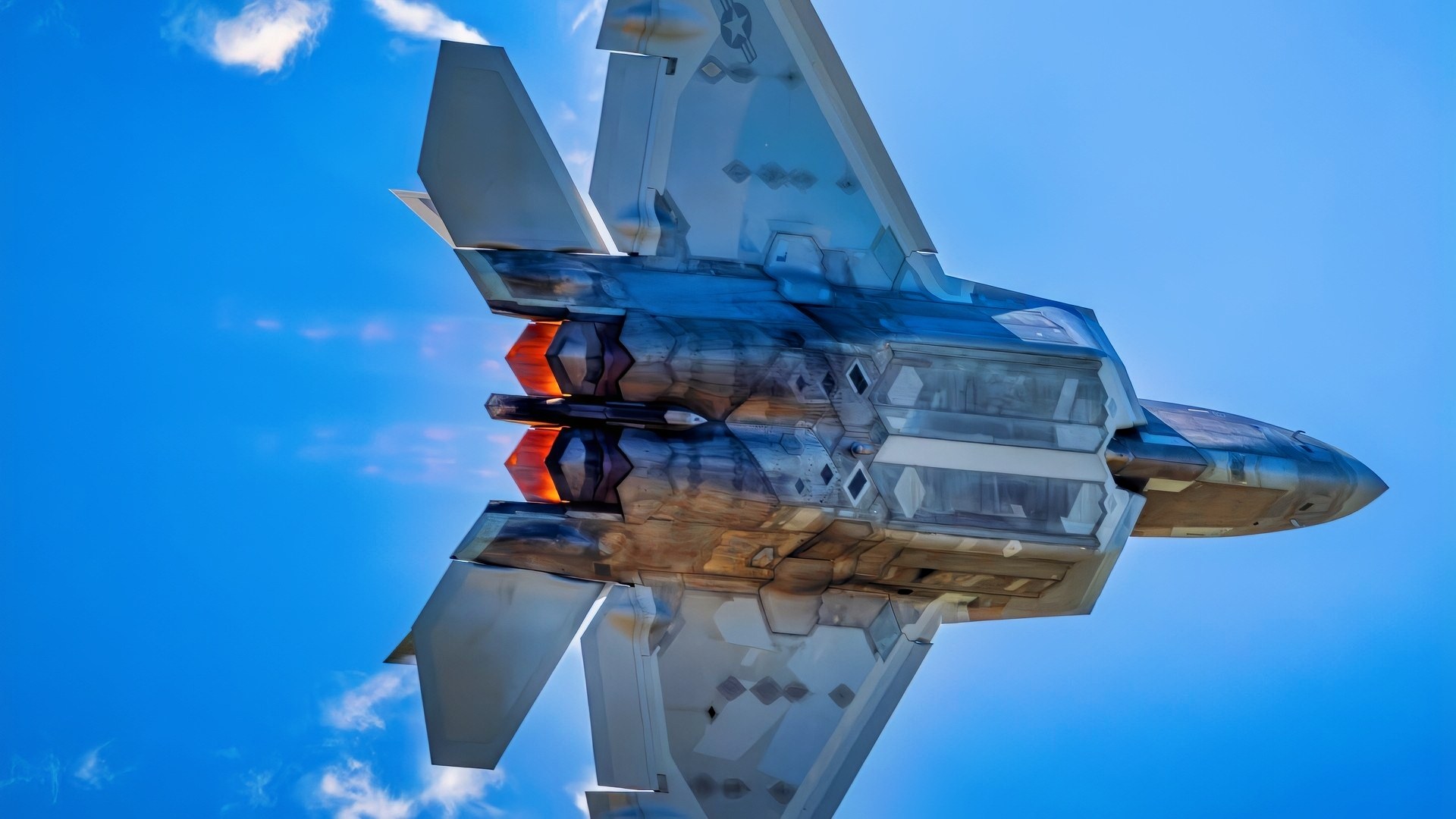
An F-22 Raptor performs an aerial demonstration at Naval Air Station Oceana, Virginia, Sept. 19, 2025. Rapid changes in angle of attack create visible vapor around the aircraft, providing a clear view of its aerodynamic performance. This demonstration highlights the F-22’s advanced maneuvering capabilities, showcasing its speed, agility, and thrust-vectoring performance. (U.S. Air Force photo by Staff Sgt. Lauren Cobin)
But alas, it did – and while there are plenty of good arguments to be made that it was the wrong decision, the United States is also on the verge of fielding the most advanced new fighter jets and bombers in the world.
If they arrive in time, the debate may prove moot.
Meet the F-22 Raptor
The F-22 Raptor is the product of the Cold War-era Advanced Tactical Fighter program, which began in the 1980s as the U.S. Air Force sought a successor to the F-15 Eagle.
Lockheed Martin won the design competition in 1991, and the first aircraft rolled out in 1997. By 2005, the Raptor had entered service and was succeeding in every way intended: it could seize and maintain air superiority against the most advanced enemy aircraft and air defense systems on the planet.
It was also the world’s first operational fifth-generation stealth air dominance fighter.
The Raptor is powered by two Pratt & Whitney F119 engines; it can supercruise at supersonic speeds without afterburner and reach speeds over Mach 2. The aircraft can also operate at altitudes above 50,000 feet.
The Raptor also maintained its stealth despite carrying weapons, featuring internal weapons bays that accommodated AIM-120 AMRAAMs, AIM-9 Sidewinders, and a 20mm cannon.
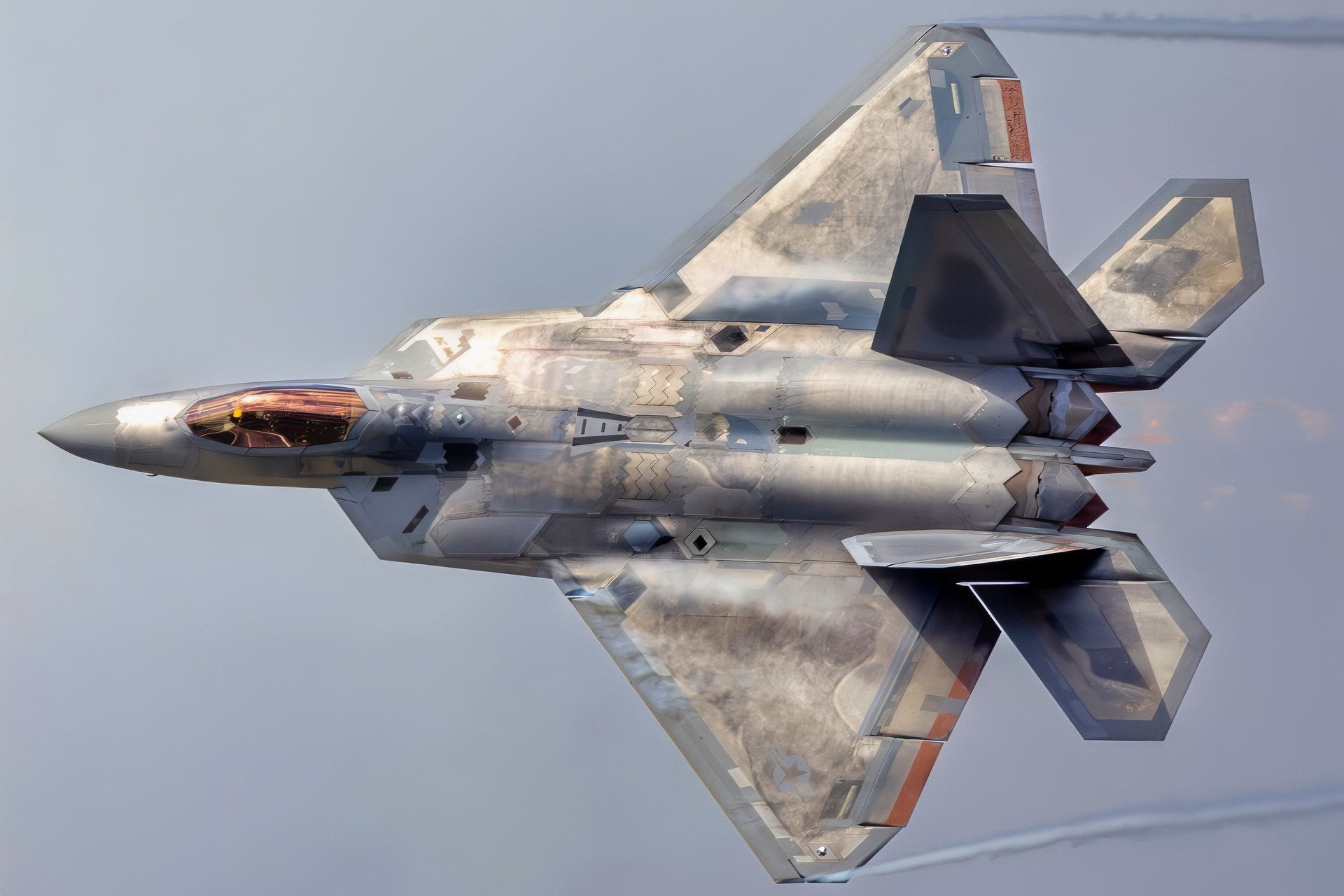
An F-22 Raptor performs an aerial demonstration at Naval Air Station Oceana, Virginia, Sept. 21, 2025. Designed for both air superiority and ground attack missions, the F-22 demonstrates the flexibility and power of fifth-generation fighter technology. (U.S. Air Force photo by Staff Sgt. Lauren Cobin)
When required, it can also carry precision-guided bombs.
It is the Raptor’s combination of supercruise, maneuverability, stealth, integrated avionics, and sensor fusion technology that makes it such a valuable asset – even today.
But only 187 of these aircraft were ever built before the line was terminated, and today the Air Force operates a smaller surviving fleet, with some of the older Block 20 Raptors used primarily for testing and training.
But even so, despite the small fleet, the Raptor serves alongside newer and more numerous aircraft – notably the F-35 Lightning II – and remains central to U.S. air superiority, particularly in the Indo-Pacific.
Why Production Was Ended
The Raptor was a tremendous success in all aspects, but production was ended in 2009 when then-Defense Secretary Robert Gates chose to cap the program at 187 operational aircraft.
There was a good reason for the decision, too: the United States was engaged in Iraq and Afghanistan, and the Pentagon had argued that the Air Force did not require hundreds of high-end air superiority fighters to fight insurgent groups that did not possess advanced air forces of their own, nor did they have any sophisticated air defenses.
It meant that defense planners could be far more flexible, choosing to prioritize procurement of the cheaper and more versatile F-35 Lightning II.
The World Changed Around It
The problem, though, was that the strategic environment eventually changed in the years that followed.
Iraq and Afghanistan did not need to be met with overwhelming air-superiority fighters, but China soon began expanding its own military capabilities and has not stopped since.
Russia also invested heavily in its own modern air defenses and fighter aircraft, and the Air Force found itself wishing that it had more Raptors available for global operations. But by then, the production line had gone.
It’s worth noting that, despite a persistent online myth, the tooling and equipment required to build the aircraft were not destroyed.
In fact, the Air Force eventually confirmed that around 95 percent of the specialized tooling had been preserved and stored at Sierra Army Depot in California.
So why, then, could the Air Force not simply fire up the production lines and start building more Raptors to prepare for future wars?
The simple answer is: the factories had moved on, and so had the workers. Many critical components were also no longer in production, and in 2016, an Air Force study confirmed that returning to production would require major investments in new subsystem design.
It would also involve requalifying a large number of new suppliers and rebuilding manufacturing capacity, with a potential cost of at least $10 billion before a single new aircraft could even be delivered.
Here’s the Good News
The good news, though, is that the U.S. may not need more Raptors anyway.
The Air Force is already preparing to field an entirely new generation of aircraft that goes above and beyond the Raptor, and which is specifically designed to counter the threats of the 2030s and beyond.
The F-35 continues to enter service in large numbers, but the B-21 Raider stealth bomber is expected to enter operational deployment in the near future, too – and potentially in the hundreds.
The F-47, which is the Next Generation Air Dominance program’s flagship fighter, is also expected to become America’s next air superiority fighter.
It will exceed the Raptor by every metric, and is expected to fly alongside autonomous Collaborative Combat Aircraft drones that promise capabilities – and reach – that go far beyond anything the F-22 ever promised.
The Raptor is an extraordinary aircraft, but in just a matter of years, the debate over whether ending its production was wise or not will no longer be relevant.
About the Author: Jack Buckby
Jack Buckby is a British researcher and analyst specializing in defense and national security, based in New York. His work focuses on military capability, procurement, and strategic competition, producing and editing analysis for policy and defense audiences. He brings extensive editorial experience, with a career output spanning over 1,000 articles at 19FortyFive and National Security Journal, and has previously authored books and papers on extremism and deradicalization.