
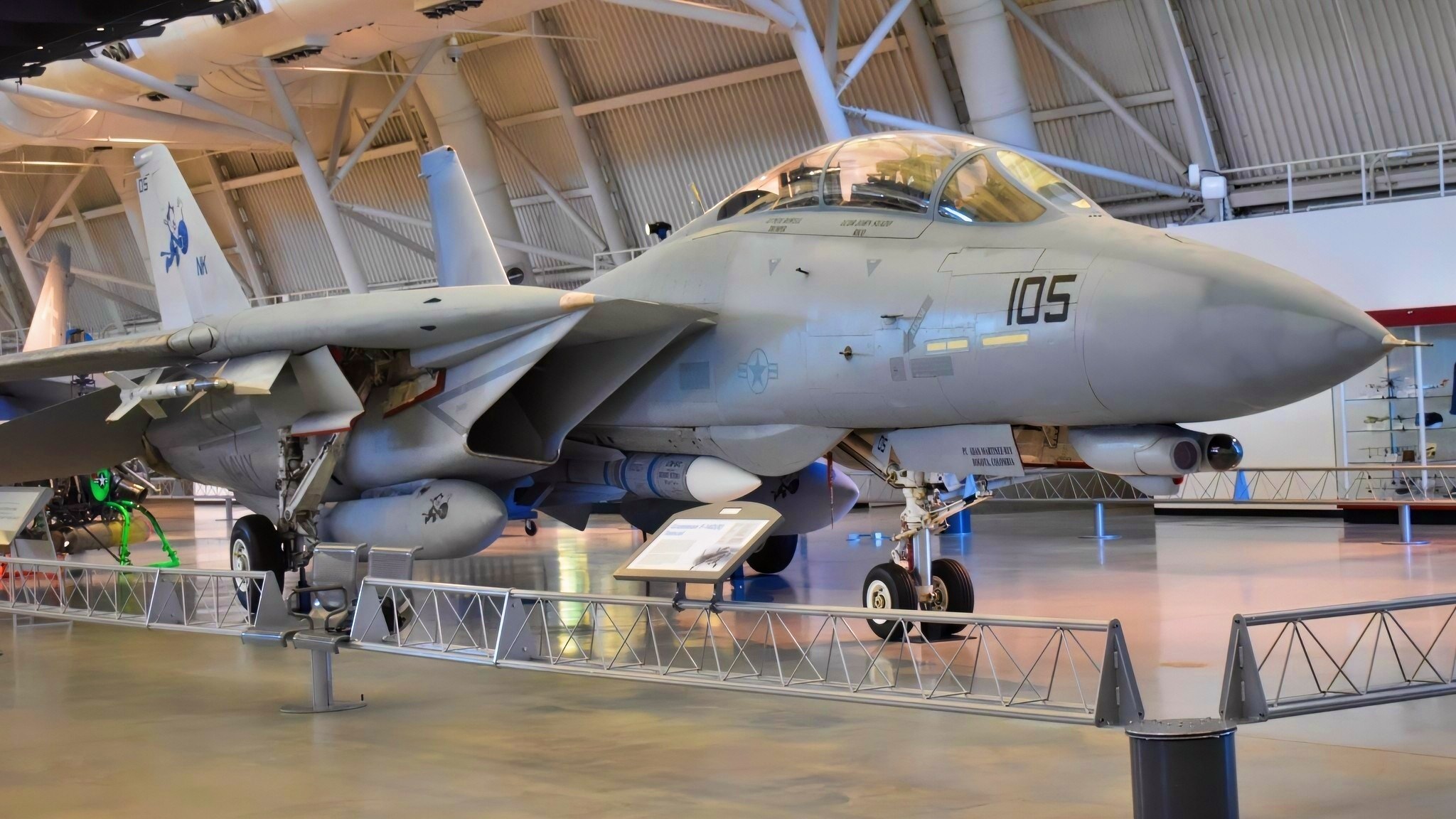
Key Points and Summary – The F-14 Tomcat became a Cold War and pop culture icon, but it spent most of its career shackled to the wrong engines.
-Navy leaders blasted the Pratt & Whitney TF30 as a “terrible” mismatch, prone to compressor stalls, flameouts, and a long string of crashes that forced pilots to “fly the engine” as much as the jet.
-Originally designed for the F-111 bomber, the TF30 was never meant for aggressive dogfighting.
-General Electric’s F110 finally transformed the Tomcat in the late 1980s—but budget politics meant many F-14s were stuck with flawed powerplants almost until retirement.
-BONUS – All photos and videos are from visits the National Security Journal made to various F-14 Tomcats on display across the United States in 2025.
The F-14 Tomcat’s One Big Weakness: Its “Terrible” Engines
The F-14 Tomcat, which first flew in 1970 and first deployed in 1974, remained in service into the 2000s. The Navy retired it in 2006, when the Super Hornet succeeded it.
The Tomcat was a historically significant aircraft with a very long life and a pretty major pop culture footprint, most notably when it was featured in the original Top Gun movie in 1986.
However, the F-14 had one major flaw throughout its run: its engine wasn’t particularly good. That engine was the TF30 engine, built by Pratt & Whitney.
F-14 “Terrible” Problems
In 1984, the then-Secretary of the Navy, John F. Lehman, Jr., denounced the F-14 engine as “terrible” in an appearance before Congress, as reported by the Washington Post. The secretary alleged that the engines had caused 24 accidents up to that point, including one that year in the Arabian Sea.
Capt. Lee Tillotson, the Navy’s coordinator at the time of the F-14 program, told the Post that “I don’t think there’s any question” that the engine caused “a very high probability of engine stalling.”
“From the very start, you essentially teach the pilots to fly the engine as a priority over flying the airplane,” Tillotson told the Post. “The pilot has to be very aware of what he does with the throttle at all times.”
Navy Secretary Lehman, the previous year, had told the House Appropriations subcommittee that the engine in the F-14 was “probably the worst engine-airplane mismatch we have had in many years. The TF30 engine is just a terrible engine and has accounted for 28.2 percent of all F14 crashes.”
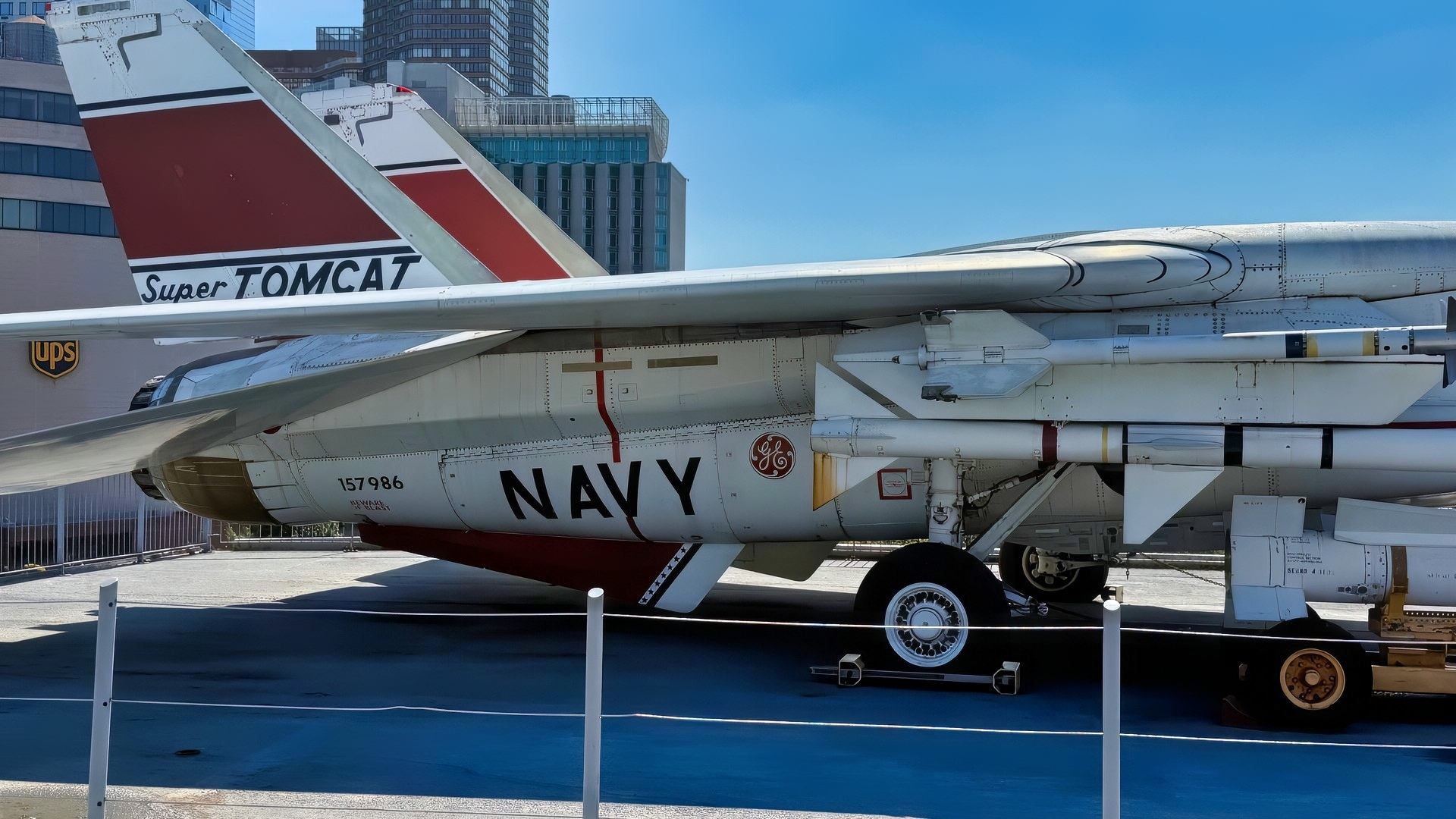
F-14D Tomcat in NYC on USS Intrepid. Image Credit: National Security Journal Taken on 9/19/2025.
“The sooner we are out of it, the happier I will be,” Lehman also said before the committee. “I guess the good news is that all the Iranian F-14s have the TF30, too.”
Iran, more than 40 years later, still flies F-14s, and Israel blew up several of them during the two countries’ conflict this summer.
Pratt & Whitney defended the engine in the 1984 article, with a spokesman declaring that “we are expecting that Pratt & Whitney engines will power some F-14s right up to the year 2000.”
A HistoryNet article also looked at what went wrong.
“F-111s weren’t expected to fly as extreme a flight envelope as were Tomcats, so the problem was not a major consideration. But the fact remained that TF30s were never intended to be fighter engines; they were not meant to deal with the constant and rapid throttle movements and high-angle-of-attack situations that modern combat involved,” HistoryNet said.
That wasn’t all.
“The TF30 was prone to compressor stalls and surges when operated at high angles of attack or yaw if the power levers were moved too aggressively—common during air combat maneuvering.”
But it wasn’t the plan to keep that engine on the F-14 forever.
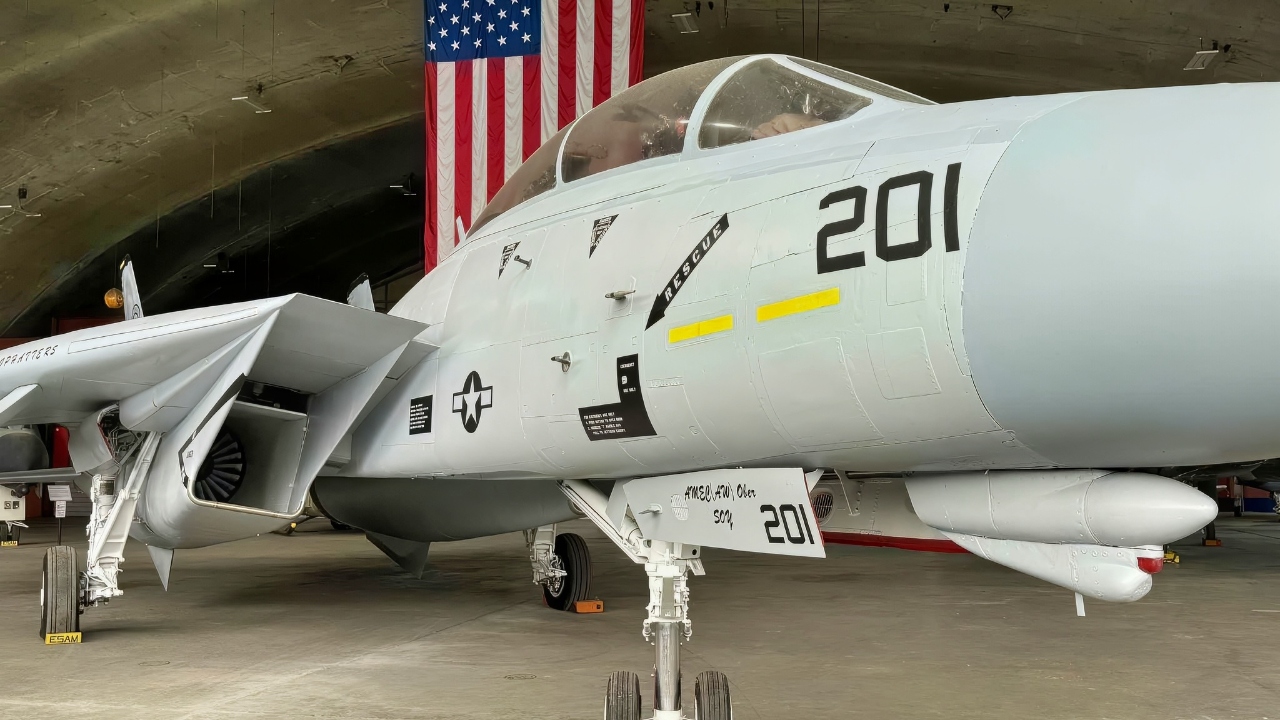
F-14 Tomcat. Image Credit: Jack Buckby/National Security Journal.
In an Aviation Geek Club story in 2024, one former F-14 pilot wrote about one incident in which he suffered a “dual flameout.”
“In an F-4, my engines would have been fine. But with the notorious TF30, they flamed out as I increased angle-of-attack up in that rarified air,” John Chesire, the former F-14 pilot, explained it in the story.
Continuing Problems for F-14
While some of them were replaced eventually, the engines remained a problem throughout the rest of the Tomcat’s life. That history was laid out in a 2021 Sandboxx article.
“When the F-14 Tomcat first entered service, it was powered by a pair of Pratt & Whitney TF30 engines that had been designed for the F-111B, which was more multi-role bomber than fighter,” the Sandboxx analysis said.
General Electric F110-GE-400s began replacing the TF-30 engines in some Tomcats in 1987, although, per Sandboxx, “many F-14s continued running the old engines well into the 2000s.”
The Sandboxx story laid out what exactly the problem was, while still calling it “one hell of a jet” that many aviation enthusiasts consider their favorite.
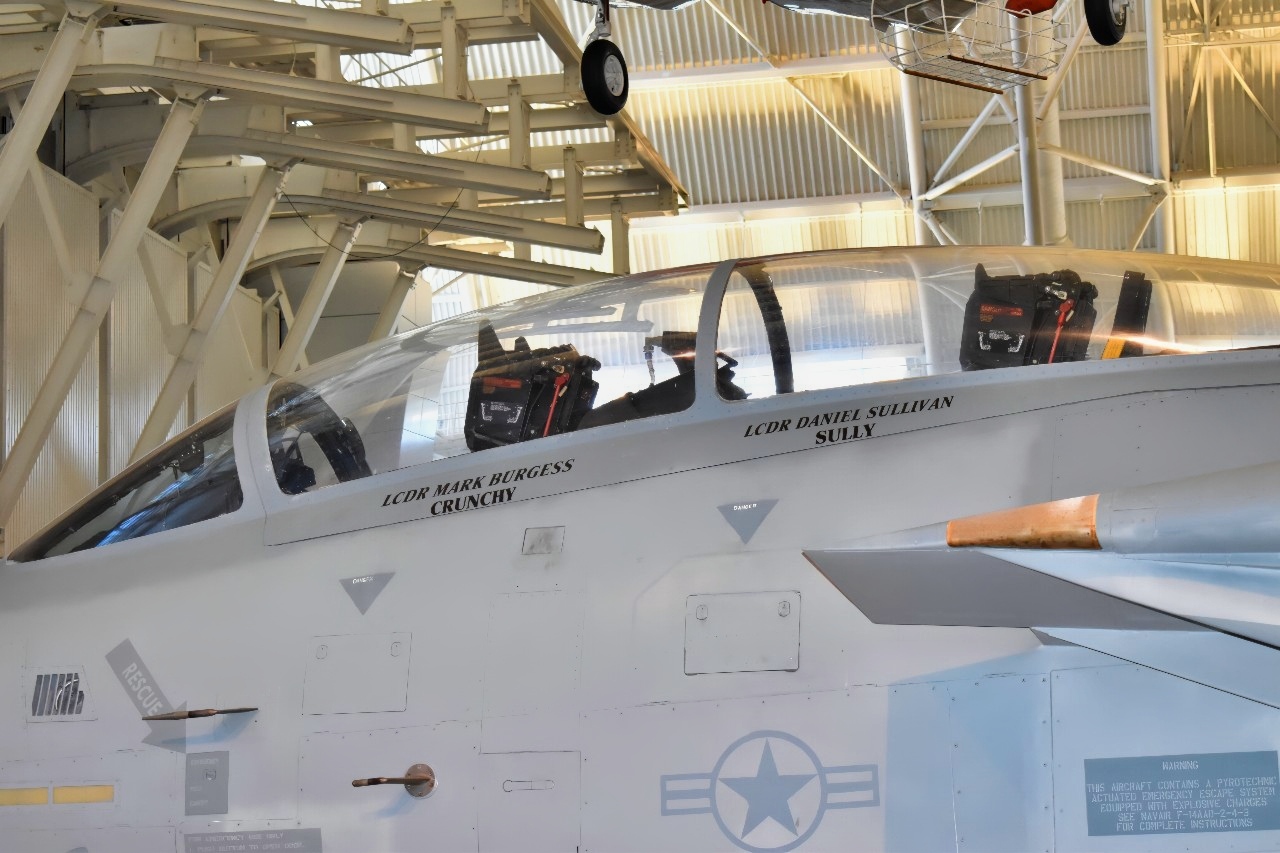
F-14 Cockpit at F-14 Tomcat at Steven F. Udvar-Hazy Center. Image taken on September 5, 2025, by National Security Journal.
“The truth is, the F-14 Tomcat was a highly advanced fighter that was really purpose-built for a world-ending nuclear conflict. When you look back on the program, its challenges, and subsequent solutions, the image becomes a bit clearer,” the analysis said.
“The F-14 made sense when we were on the verge of World War III… but without a Soviet boogeyman to keep Uncle Sam’s pocketbook upturned and shaking, it became an incredibly expensive and sometimes problematic solution to a problem nobody had anymore. And to make matters worse, only a portion of the F-14 fleet was ever as capable as most of the world believed.”
Sandboxx added that Tomcat had once been described as “a nice aircraft powered by two pieces of junk,” though it’s unclear who first said that.
Problem Solved?
The engine replacements finally began in 1987, when the F-14s began receiving the General Electric F110, and those new engines “offered more thrust and eliminated many of the reliability problems associated with the TF30.”
But all was not smooth sailing.
“The truth is, a yoyoing budget made the transition from the TF30 to the F110 slow going,” Sandboxx reported. “By 1996, nine years after the F110 entered service in the F-14, the Navy F-14 fleet included just 126 Tomcats with the new GE engines, while the other 212 were still flying on the troublesome TF30. In fact, F-14As running the TF30 were still flying for the Navy until as late as 2004.”
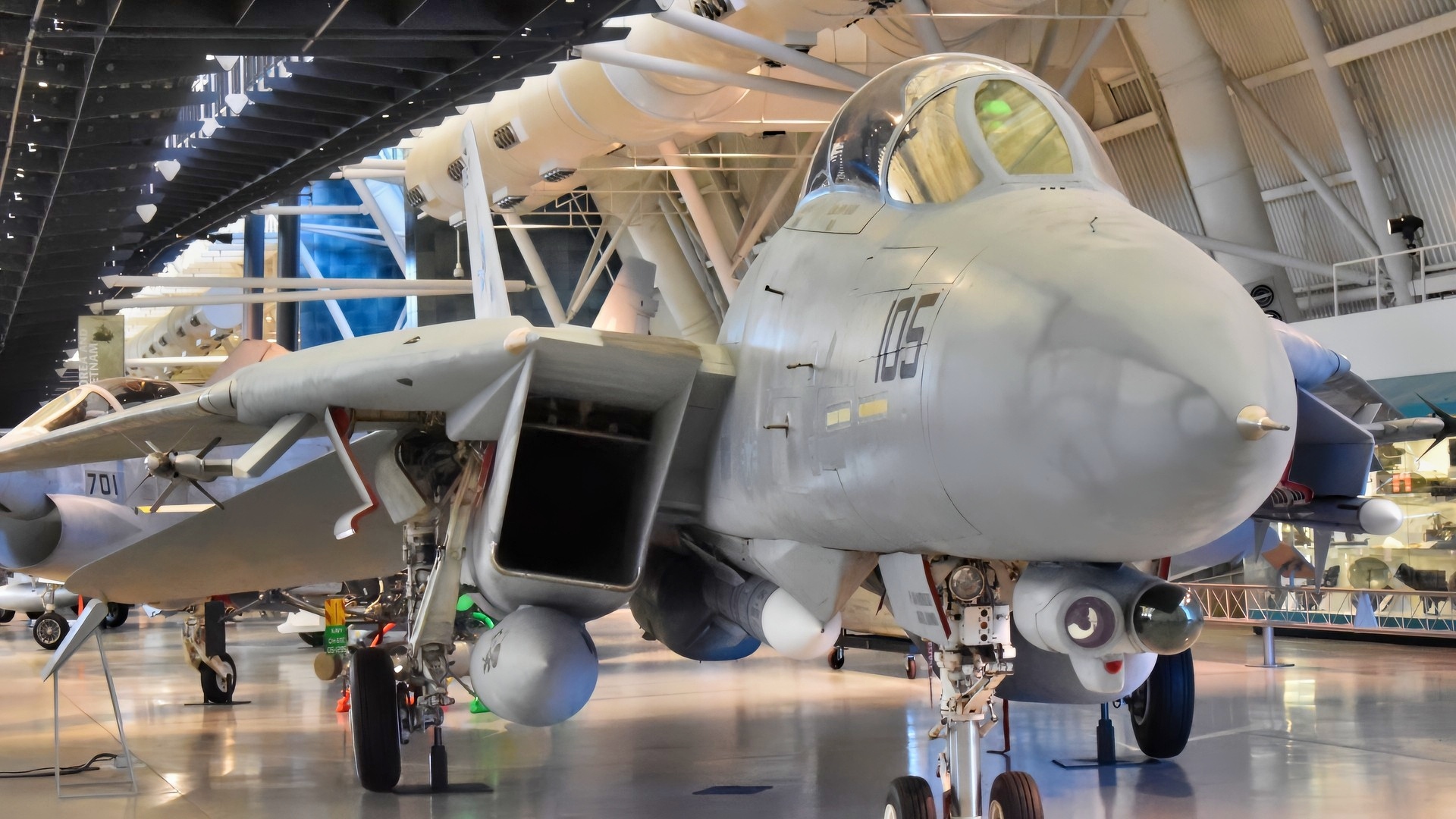
F-14D Tomcat Fighter NSJ Original Image. Taken by Dr. Brent M. Eastwood.
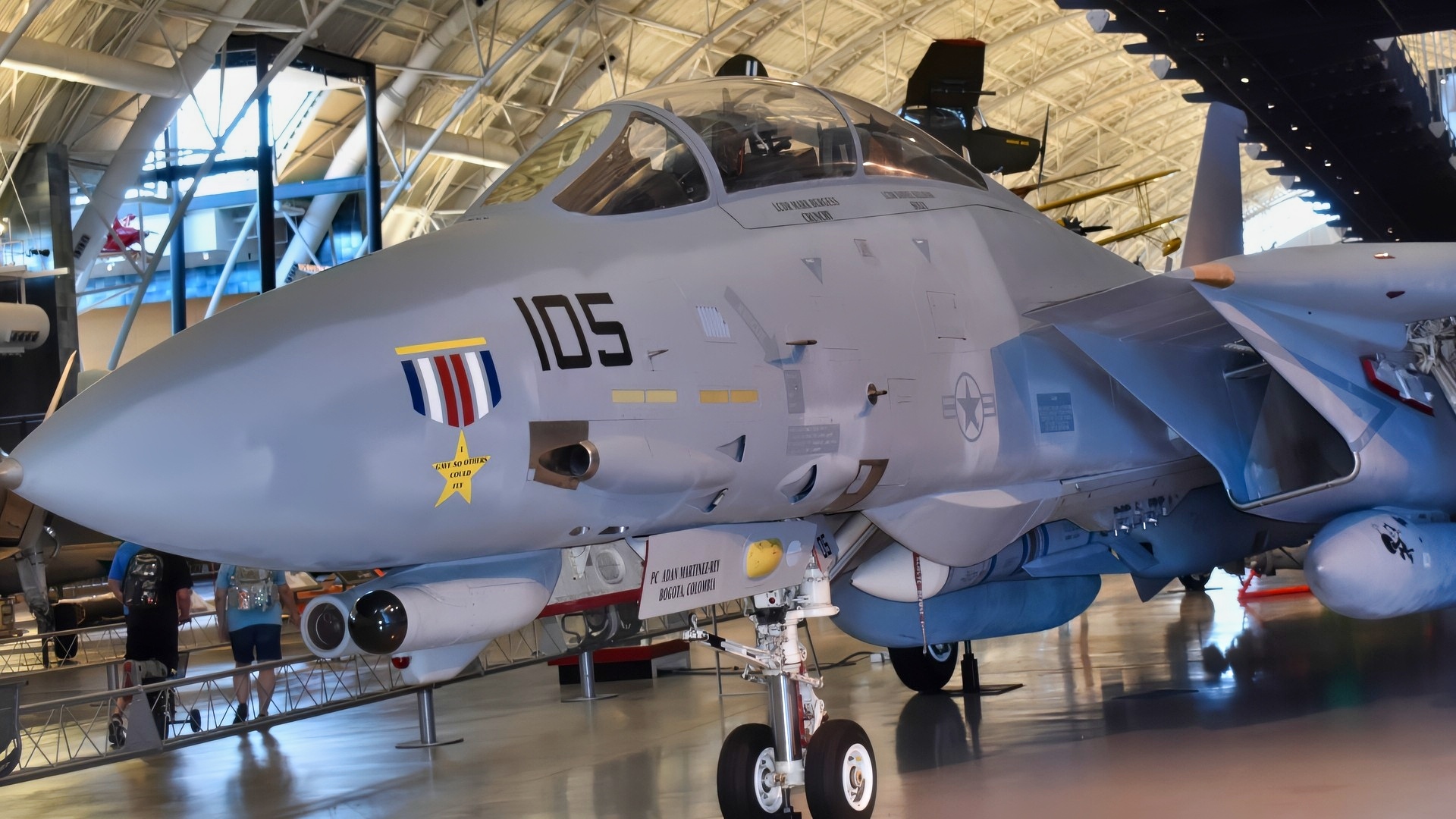
F-14D Tomcat Fighter Image from National Security Journal
“The TF30 was never intended to be the F-14’s duty engine. It was used to get the Tomcat project airborne and into flight test and initial service,” the HistoryNet article said.
“The TF30 was to be replaced by an ephemeral Advanced Technology Engine that was being developed for the F-15—the Pratt & Whitney F401. The ATE never materialized, so Tomcats sailed on with the TF30 until near the end of the production run, when a good General Electric engine, the F110, became available and created the F-14D as well as some retrofitted A models that were labeled F-14A+ (later redesignated F-14Bs).”
About the Author: Stephen Silver
Stephen Silver is an award-winning journalist, essayist, and film critic, and contributor to the Philadelphia Inquirer, the Jewish Telegraphic Agency, Broad Street Review, and Splice Today. The co-founder of the Philadelphia Film Critics Circle, Stephen lives in suburban Philadelphia with his wife and two sons. For over a decade, Stephen has authored thousands of articles that focus on politics, national security, technology, and the economy. Follow him on X (formerly Twitter) at @StephenSilver, and subscribe to his Substack newsletter.