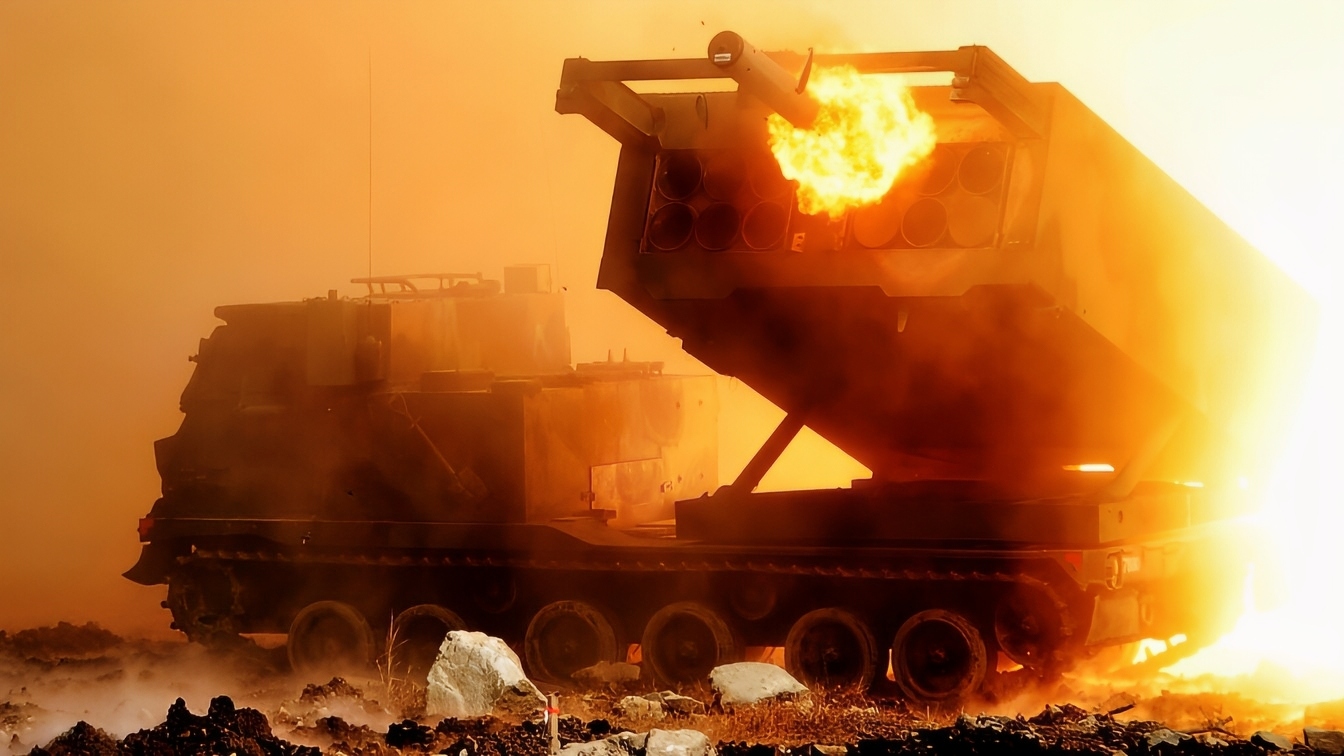
The Houthi Attack: What Happens Now? While the war between Iran and the United States has remained cool over the last few days, the “Yemeni front” has continued to escalate as the Houthis continue to trade blows with the coalition led by Saudi Arabia.
Over the weekend, the Houthis carried out a strike against Saudi Aramco’s Jazan refinery, which processes more than 400,000 barrels of crude oil per day.
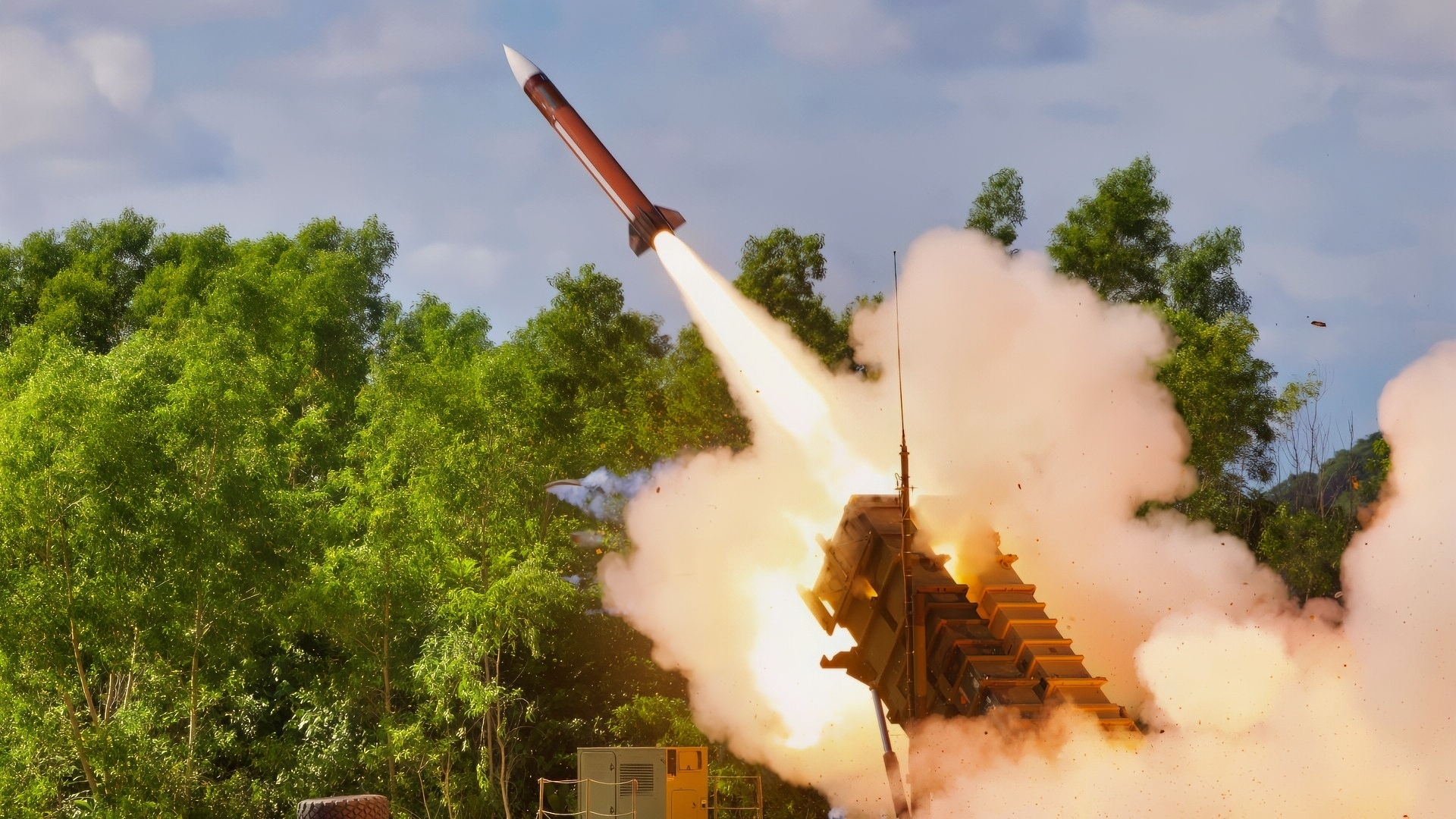
KOROR, Palau — A Patriot Advanced Capability 2 Interceptor missile is fired from an M903 Patriot Launching Station assigned to Battery D, 1st Battalion, 1st Air Defense Artillery Regiment during the patriot live fire portion of Exercise Tenacious Archer 25 on Aug. 21, 2025. Exercise Tenacious Archer 25 is a training event designed to build interoperability, capacity, and relationships that deter aggression and promote peace through strength. The exercise sharpens the brigade’s ability to operate across multiple domains, reinforcing U.S. Army Pacific’s commitment to regional security and stability.(U.S. Army photo by Capt. Frank Spatt)
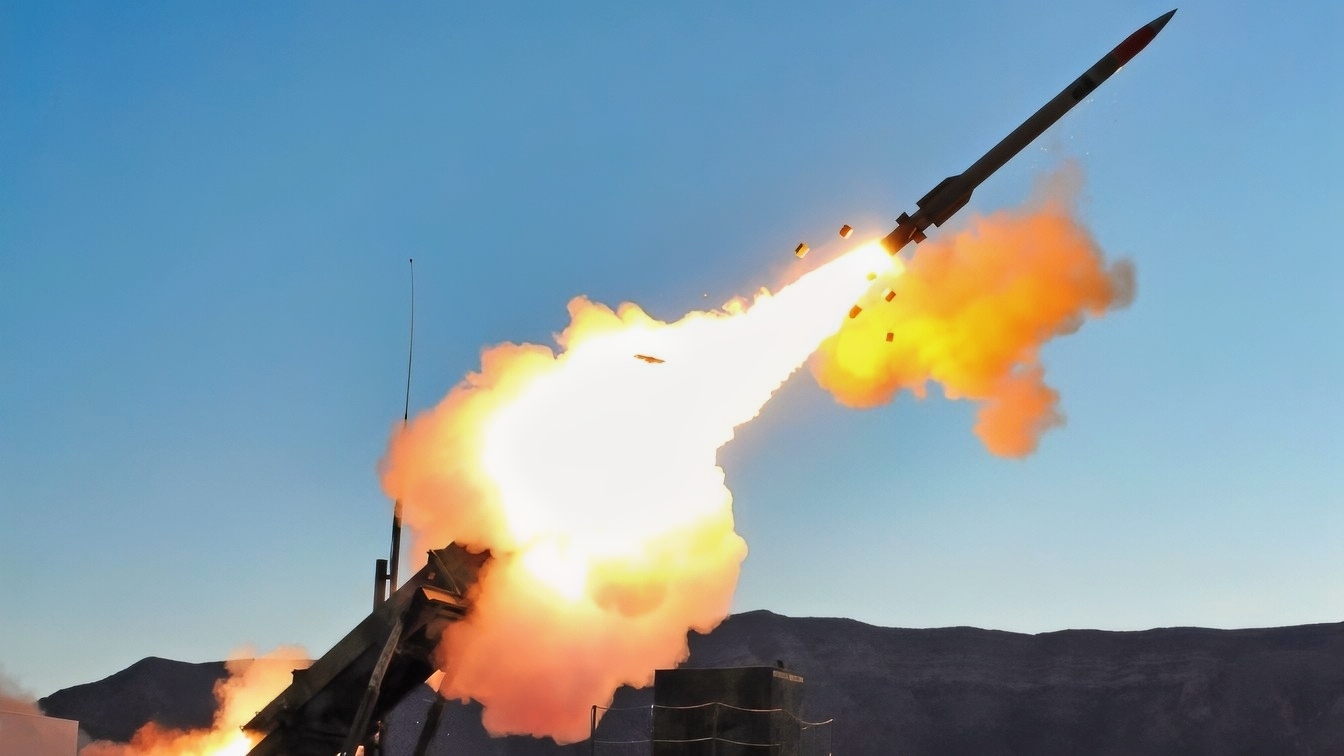
The Army test fires a Patriot missile in a recent test. The Patriot missile system is a ground-based, mobile missile defense interceptor deployed by the United States to detect, track and engage unmanned aerial vehicles, cruise missiles, and short-range and tactical ballistic missiles. Patriot, along with other missile defense systems, are included in the Army Air and Missile Defense 2028, which provides the Army’s overarching vision for the AMD force, describes how the AMD force is postured to support the Army and joint forces, and articulates what must be accomplished to achieve the 2028 desired end state of preventing and defeating adversary air and missile attacks through a combination of deterrence, active and passive defense, and support to attack operations. (U.S. Army photo)
At the same time, Saudi Arabia recently signed a defense pact with Pakistan and Turkey, signifying that an attack on one nation was an attack on all.
This new defensive agreement, along with increasing attacks from the Houthis, threatens to escalate the conflict even further, throwing the region into greater chaos.
Increasing Houthi Activity
Over the past few days, the Houthis have been increasing their attacks against Saudi Arabia and its allies in Yemen.
According to reports, the militant group launched several ballistic missiles against al-Makha in Yemen and its commercial port.
According to Yemen’s armed forces, the attack killed three civilians, leaving dozens more wounded in the wake of the attack.
Earlier attacks against government positions killed at least 11 people, with many more wounded.
According to the military, air defenses managed to intercept seven drones while two ballistic missiles fell into the sea, ultimately missing their targets.
The attacks in Yemen followed the Houthis’ launch of a ballistic missile against Saudi Aramco’s Jazan refinery on Sunday.
According to local authorities, a fire broke out at the refinery and was promptly extinguished. No casualties were recorded as a result of the attack or the resulting fire.
The Houthis have struck Aramco facilities in the past. According to some sources, the Jazan refinery, which processes more than 400,000 barrels a day, was shut down in late July.
The Saudi military also reported that air defenses had engaged several Houthi drones that were targeting the commercial quay and storage in the port.
The Houthis claimed that the attacks were carried out against military troops and weapons in the area.
The Mecca Defense Agreement
Against the backdrop of attacks from the Iranian proxy group, Saudi Arabia recently entered into a military alliance with Turkey and Pakistan.
Under the new agreement, an attack against one nation is an attack against all, similar to NATO’s Article 5.
The agreement among the three Sunni Muslim countries, according to Turkey’s Foreign Ministry, is not aimed at Iran but rather at enhancing military security and partnership among them. Signed in Mecca, the agreement aims to enhance cooperation and security among the three Muslim-majority nations amid the ongoing deterioration of the situation in the Middle East.
Although the pact pledges mutual support among all three member states, it imposes no legal obligation on any signatory to provide military aid in the event of an actual attack.
Following the attack on Saudi Arabia on Sunday, neither Pakistan nor Turkey has made any moves that might signify imminent military action on behalf of Saudi Arabia.
Mecca Joint Defense Agreement drew heavy criticism from Iran, which derided the whole agreement as a pointless endeavor. “The Saudis should know that a paper agreement with Turkey and Pakistan does not bring them security, just as years of unilateral milking of the Americans did not bring them security,” Ebrahim Rezaei, a member of the National Security Commission, wrote on social media.
With no legal obligation to come to each other’s aid, one could argue that the Mecca Agreement is ultimately a toothless military alliance, much like the League of Nations after WWI.
Containing Iran and its Proxies
While the U.S. has struggled to contain Iran, the Yemeni front is continuing to escalate following attacks from the Houthis.
The Houthis first entered the war in July, when they announced their blockade against all Saudi tankers transiting the Bab al-Mandeb Strait. Since then, the Houthis have launched numerous attacks against civilian tankers and port cities along the Red Sea.
These attacks have added further instability in the oil market, which has already struggled following the closure of Hormuz.
While oil prices have not spiraled out of control as some economists feared, the two-front war on tankers has prevented the market from fully recovering from the initial shock of the war.
Although the United States threatened to make the Houthis pay for their attack on civilian tankers, the U.S. seems to be happy to leave the situation for the Saudi-led coalition to handle.
Saudi Arabia and its regional allies have technically been locked in a war with the Houthis for more than a decade.
The conflict came to a standstill in 2023 when the UN brokered a ceasefire.
Although the Houthis attacked civilian tankers after Israel’s operation in Gaza began, tensions between Saudi Arabia and the militant group remained sour, but the ceasefire mostly held up. It was not until last month that the conflict between the two officially reignited.
About the Author: Isaac Seitz
Isaac Seitz, a Defense Columnist, graduated from Patrick Henry College’s Strategic Intelligence and National Security program. He has also studied Russian at Middlebury Language Schools and has worked as an intelligence Analyst in the private sector.