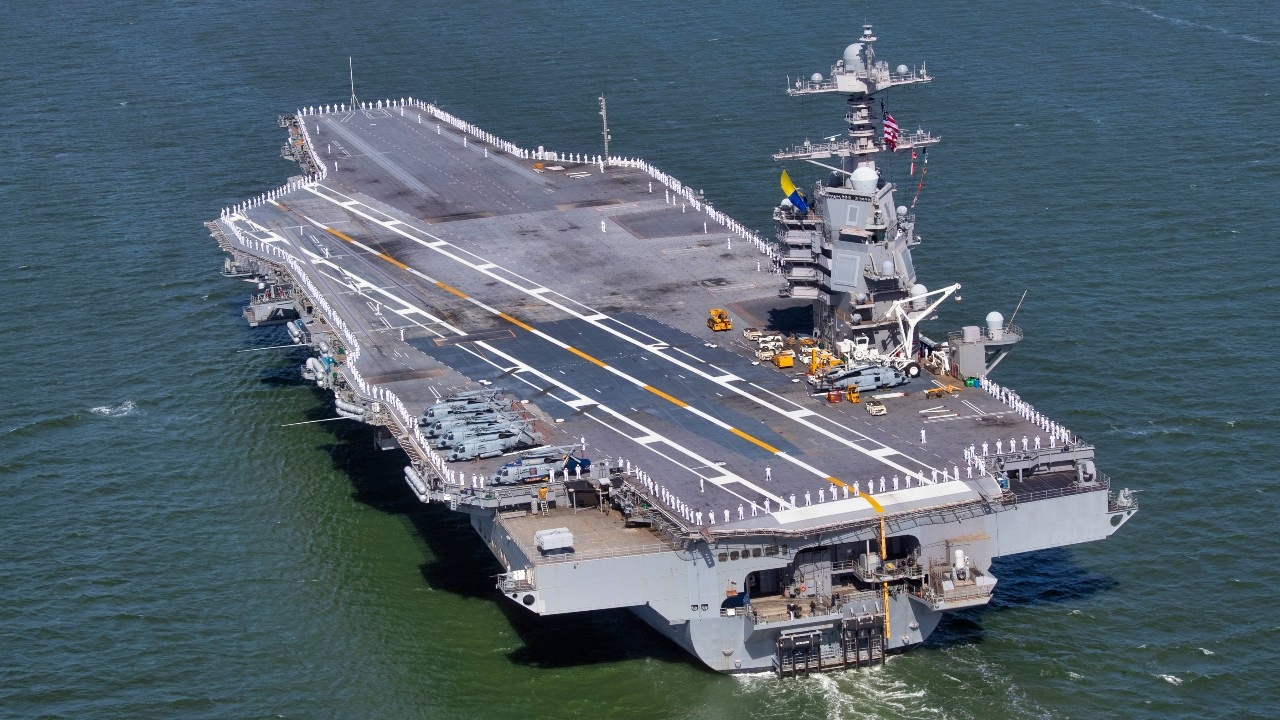
The Ford-Class Aircraft Carrier Has a Massive Nuclear Power Supply to Be Future-proof
One of the key characteristics of the Gerald R. Ford-class aircraft carriers is that they are designed around electrical power generation in a way that the preceding class, the Nimitz carriers, never were.
That shift drives everything in the carriers, from how they launch aircraft to what weapons the Ford-class can bring to bear.
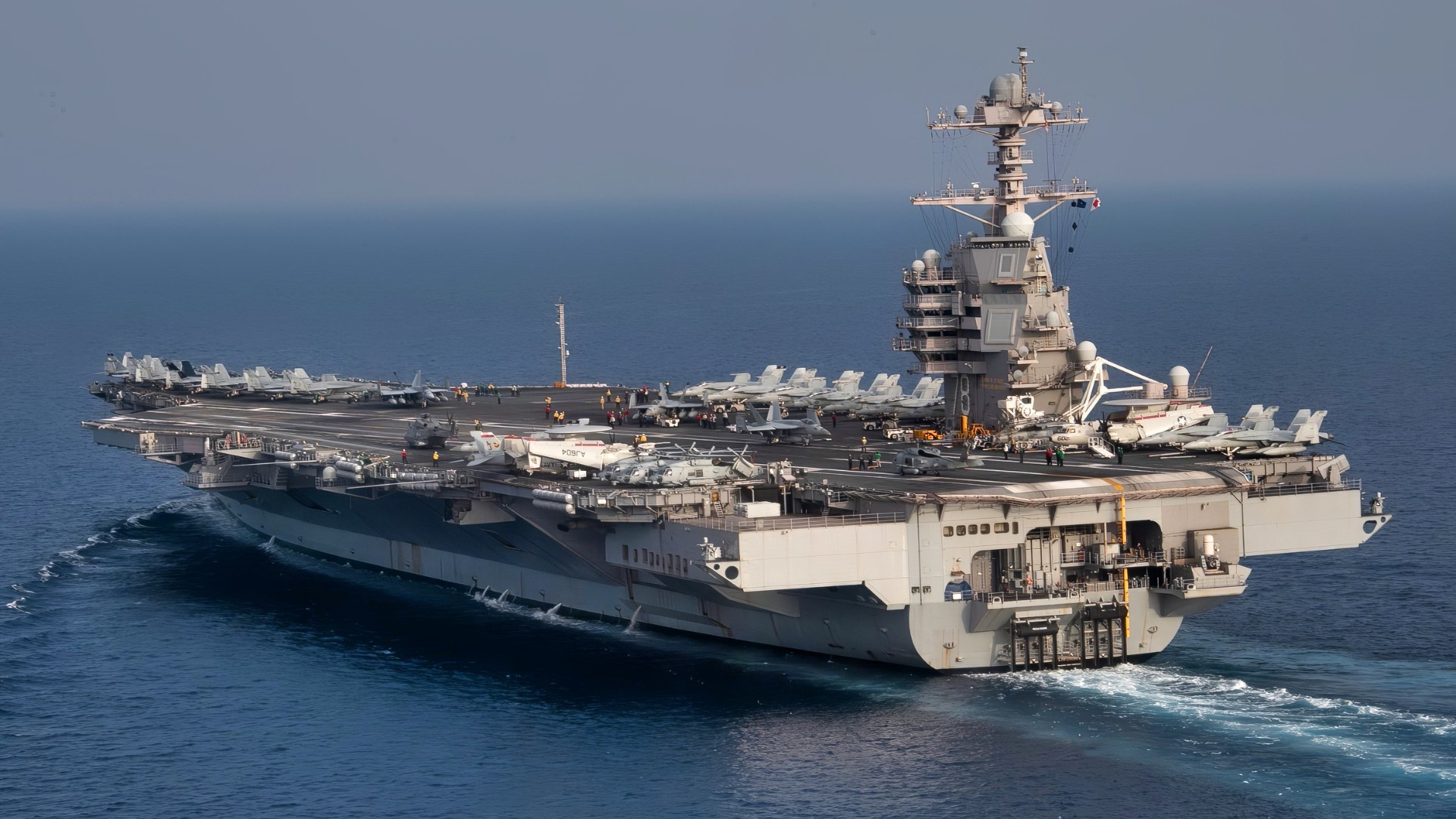
The world’s largest aircraft carrier USS Gerald R. Ford (CVN 78) steams in the Adriatic Sea, June 23, 2023. Gerald R. Ford is the U.S. Navy’s newest and most advanced aircraft carrier, representing a generational leap in the U.S. Navy’s capacity to project power on a global scale. The Gerald R. Ford Carrier Strike Group is on a scheduled deployment in the U.S. Naval Forces Europe area of operations, employed by U.S. Sixth Fleet to defend U.S., allied, and partner interests. (U.S. Navy photo by Mass Communication Specialist 2nd Class Jackson Adkins)
More Power for Ford-Class
The Nimitz-class was designed in the 1960s, and though it certainly generates vast amounts of electricity to run the ship’s subsystems like radar, its electrical loads are much lower than those of the Ford-class, and the Nimitz-class generates about 64 megawatts of electrical power.
Much of that energy goes into generating steam for the carrier’s catapults and propulsion.
The Ford-class, on the other hand, is thought to generate around 300 megawatts of electrical power, giving the ships about three times the electrical generation capacity of the Nimitz-class.
Not only do the Fords generate much more power, but they also produce vastly more usable electrical power, depending on how power is measured.
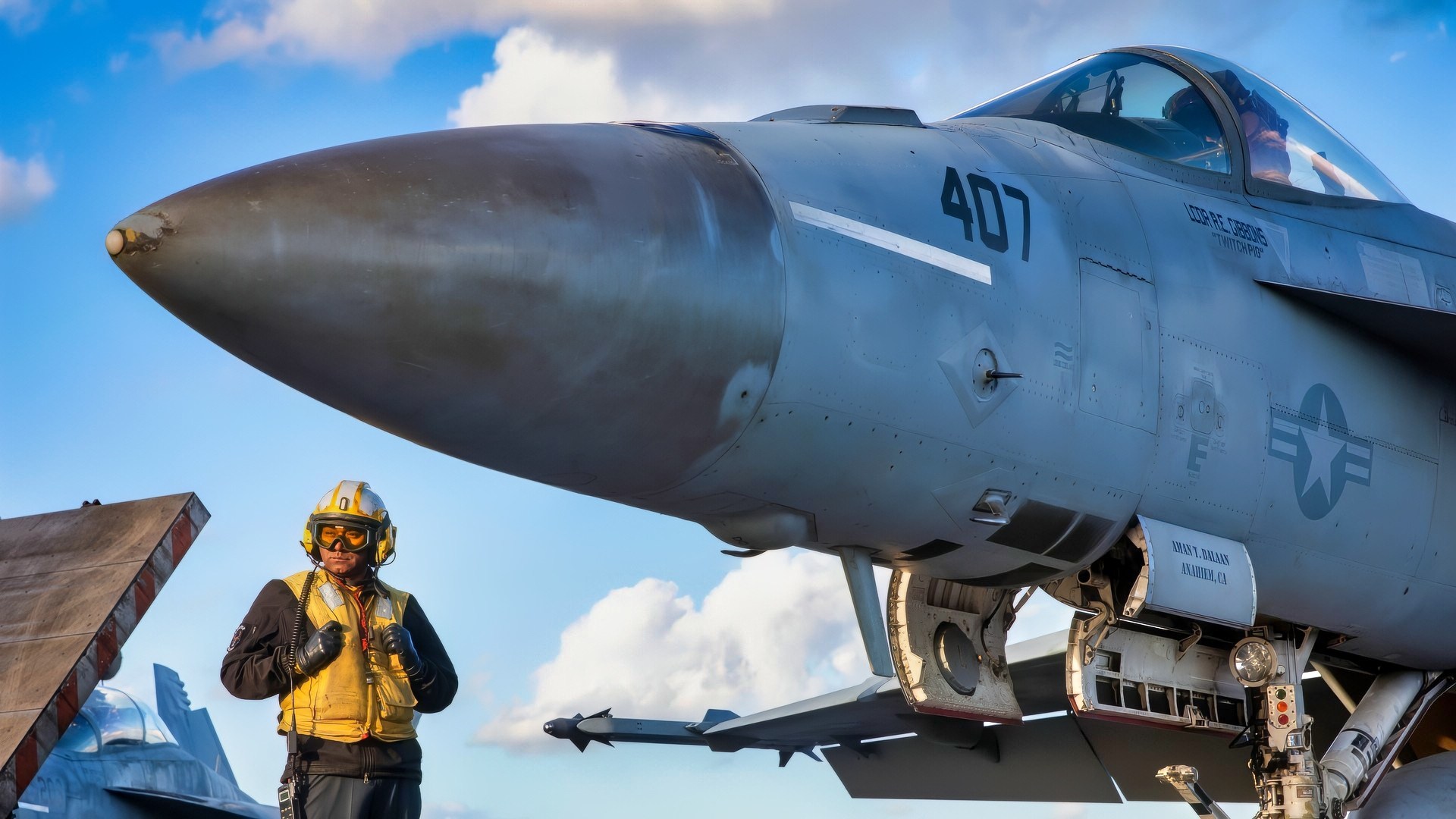
Aviation Boatswain’s Mate (Aircraft Handling) 1st Class Jose Mejiacastro, assigned to Air Department aboard the world’s largest aircraft carrier, USS Gerald R. Ford (CVN 78), prepares to signal to a Carrier Air Wing 8 F/A-18E Super Hornet attached to Strike Fighter Squadron 87 on the flight deck, Sept. 26, 2025. Gerald R. Ford, a first-in-class aircraft carrier and deployed flagship of Carrier Strike Group Twelve, is on a scheduled deployment in the U.S. 6th Fleet area of operations to support the warfighting effectiveness, lethality and readiness of U.S. Naval Forces Europe-Africa, and defend U.S., Allied and partner interests in the region. (U.S. Navy photo by Mass Communication Specialist 2nd Class Mariano Lopez)
The Why
The Nimitz-class design was sufficient for steam-powered aircraft catapults, and relatively light computing loads complementing analog and mechanical systems. But by the 2000s, that architecture hit a ceiling.
Electrical demand increased to the point that there was little available excess electricity generation for new and future electricity-intensive systems.
The Ford-class was therefore designed with a new reactor, optimized for electrical output.
The class also saw its steam catapults removed from its design and replaced with the Electromagnetic Aircraft Launch System (EMALS).
EMALS, in essence, replaces the carrier’s traditional steam catapults with linear electromagnetic motors.
It requires large bursts of electrical power discharged over just a few seconds. EMALS launches aircraft more smoothly, placing less stress on the aircraft during takeoff. But the benefits go beyond just reduced fighter airframe fatigue.
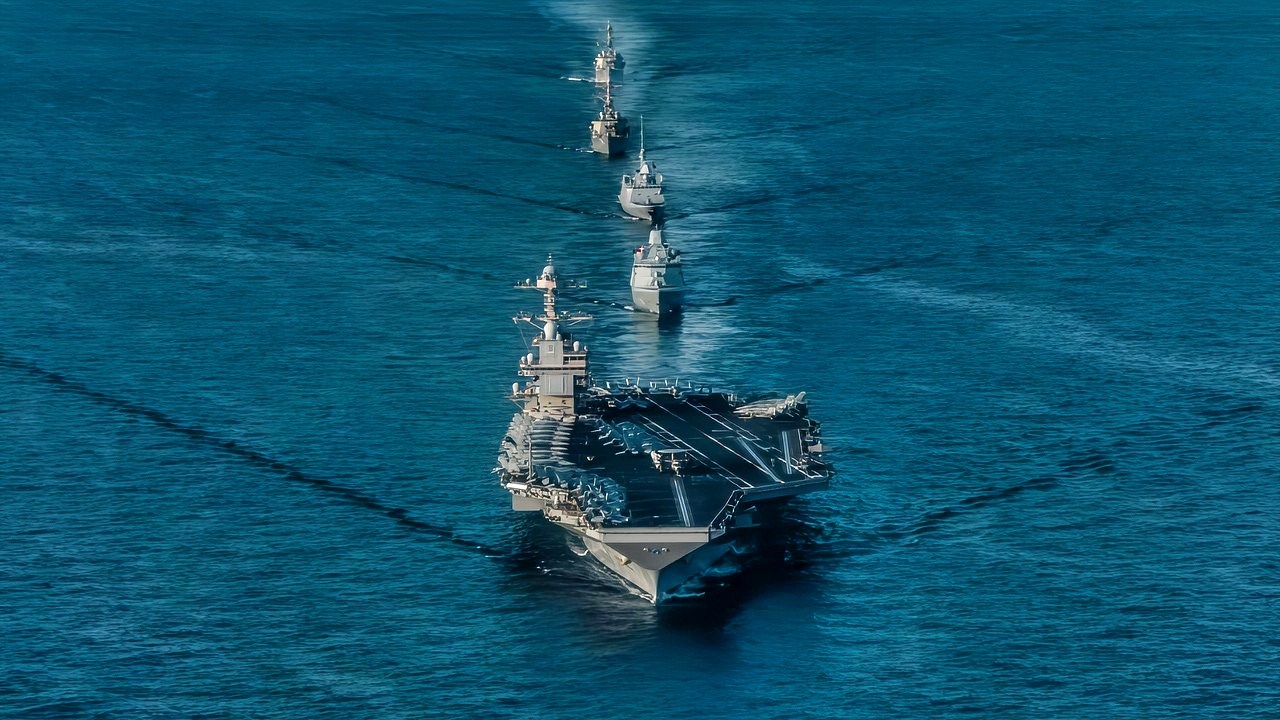
USS Gerald R. Ford Aircraft Carrier Training. Image Credit: U.S. Navy.
Because the EMALS system can be dialed in and fine-tuned, very light reconnaissance UAVs and other lightweight aircraft can launch safely via EMALS.
So too can very heavily-loaded aircraft. The Ford-class’s Advanced Arresting Gear, or AAG, is also electronically controlled and dynamically adjusts stopping force for different kinds of aircraft.
The Ford-class carriers are also much more electricity-intensive in their electronics. Dual-band radar systems, significantly expanded computing and networking capabilities, and a higher degree of automation that reduces crew size all require greater electrical power. So too does the Ford’s advanced weapons elevators.
Into the Future: Laser Weapons
Arguably, one of the main benefits of the Ford-class’s electrical generation capacity is future-proofing for over-the-horizon technologies.
Directed-energy weapons, or lasers, as well as sensors and electronic warfare systems of increasing power, are a major strategic advantage. Though the Navy does not currently field a laser weapon across the carrier fleet, testing is ongoing.
If it reaches technological maturity, it holds great promise for the defense of aircraft carriers. The ongoing wars in Ukraine and the Middle East reveal in stark terms the price disparity between missile defense and missile launch.
Air defense interceptors are very effective — but are also pristine, hugely expensive missiles. Slow to manufacture and quick to use, when expended, the sites they protect are left defenseless.
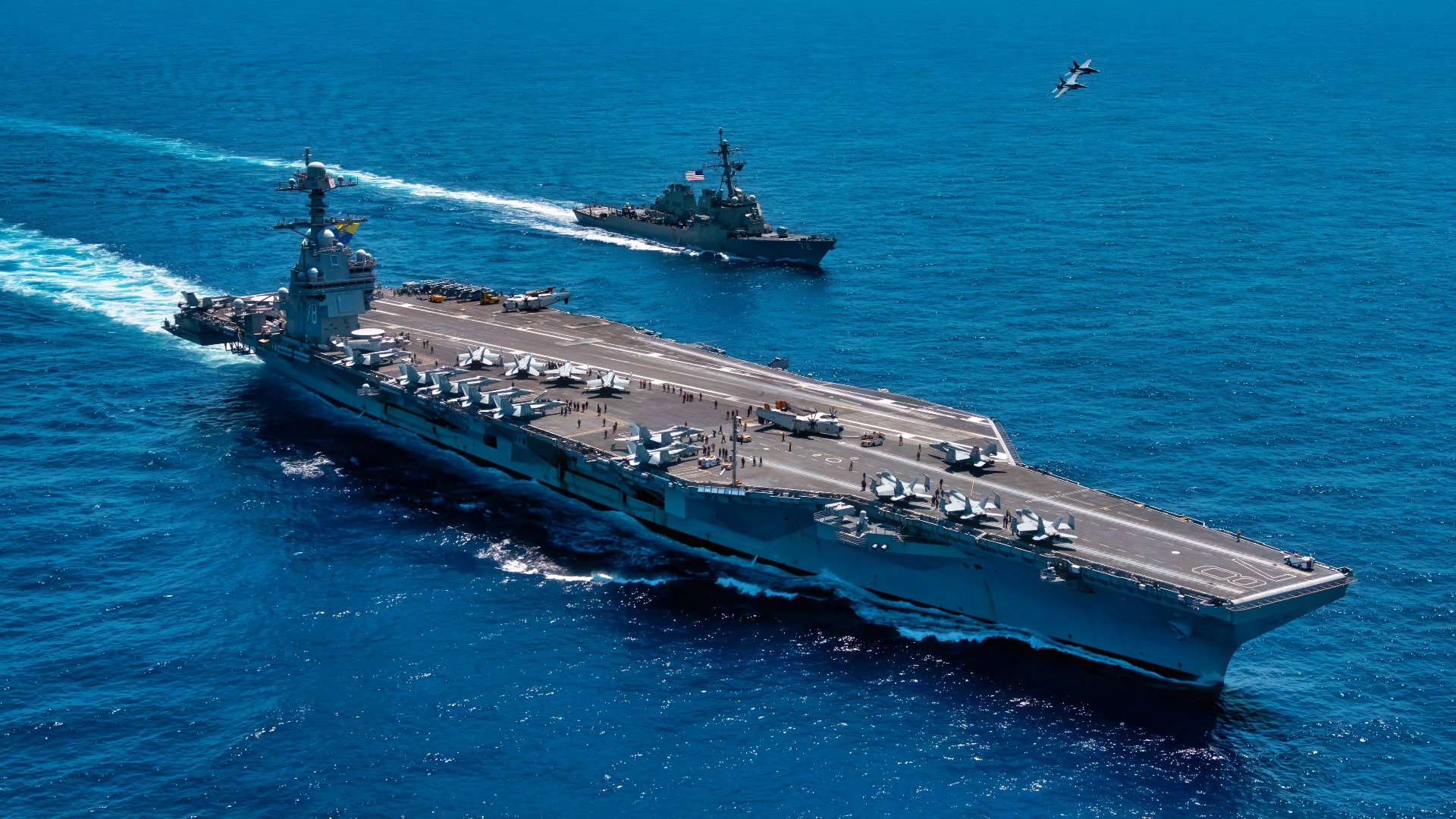
An F/A-18F Super Hornet, attached to the “Blacklions” of Strike Fighter Squadron (VFA) 213 and a F/A-18E Super Hornet, attached to the “Golden Warriors” of Strike Fighter Squadron (VFA) 87 fly over the world’s largest aircraft carrier, USS Gerald R. Ford (CVN 78), the Arleigh Burke-class guided-missile destroyer USS Mahan (DDG 72), April 11, 2025. The Gerald R. Ford Carrier Strike Group is underway in the Atlantic Ocean completing integrated naval warfighting training. Composite Training Unit Exercise (COMPTUEX) is the Joint Force’s most complex integrated training event and prepares naval task forces for sustained high-end Joint and combined combat. Integrated naval training provides America’s civilian leaders and commanders highly-capable forces that deter adversaries, underpin American security and economic prosperity, and reassure Allies and partners. (U.S. Navy photo by Mass Communication Specialist 2nd Class Maxwell Orlosky
Laser weapons, on the other hand, have a magazine capacity limited only by electrical power generation. Their placement on aircraft carriers is advantageous, as the nuclear reactors on these vessels can generate nearly limitless energy.
Though oft-touted as the future of naval warfare, railgun technology has eluded the United States Navy.
But if it also matures, it could benefit the U.S. Navy. Unlike traditional naval guns, which chemically accelerate projectiles via controlled explosion, railguns accelerate non-explosive projectiles to much greater speeds.
One obstacle the Navy faced was excessive rail wear caused by projectile abrasion.
Though work is ongoing in Japan, the Navy shelved its railgun research projects.
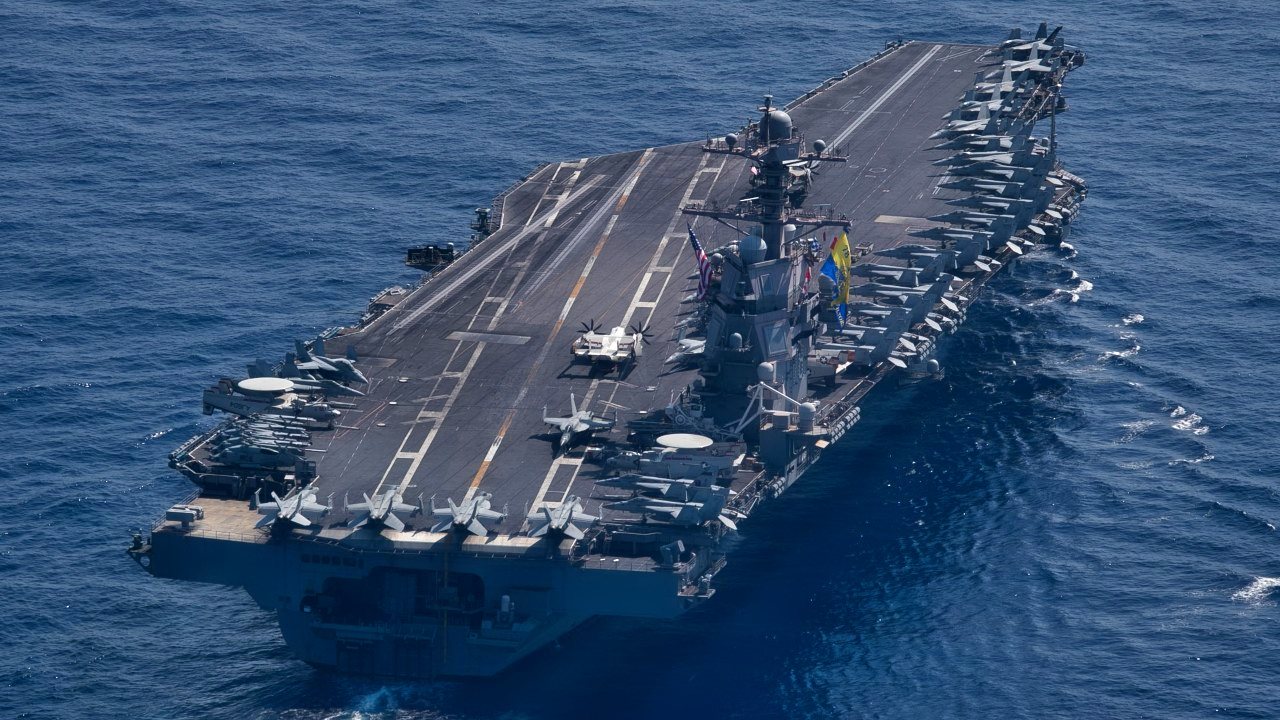
Ford-Class. Image Credit: Creative Commons
Artwork depicting the new Trump-class battleship, announced by the president, suggests that railgun research may be renewed in the future, though how it would overcome the aforementioned challenges remains to be seen.
The Ford-class, in essence, was designed from the outset with the integration of future technologies in mind, recognizing that current technological limitations may be overcome.
But the second ship of the class, the upcoming USS John F. Kennedy, has experienced delays related to the Advanced Weapons Elevators and Aircraft Launch and Recovery Equipment, detailed in a House Armed Services Committee statement.
“Initial class design challenges are resolved, as evidenced by Ford’s successful operations, however, early class production-focused challenges and associated learning continue on CVN 79. All lessons learned and improvements by both the Navy and industry teams are being implemented in construction on CVN 80 and 81 [the third and fourth Ford-class carriers slated for build].”
MORE – China’s New H-20 Stealth Bomber Will Be In the Air Soon Thanks to the Iran War
MORE – Move Over, F-35: The A-10 Warthog Is the ‘Punisher’ Iran Can’t Seem to Beat
About the Author: Caleb Larson
Caleb Larson is an American multiformat journalist based in Berlin, Germany. His work covers the intersection of conflict and society, focusing on American foreign policy and European security. He has reported from Germany, Russia, and the United States. Most recently, he covered the war in Ukraine, reporting extensively on the war’s shifting battle lines from Donbas and writing on the war’s civilian and humanitarian toll. Previously, he worked as a Defense Reporter for POLITICO Europe. You can follow his latest work on X.