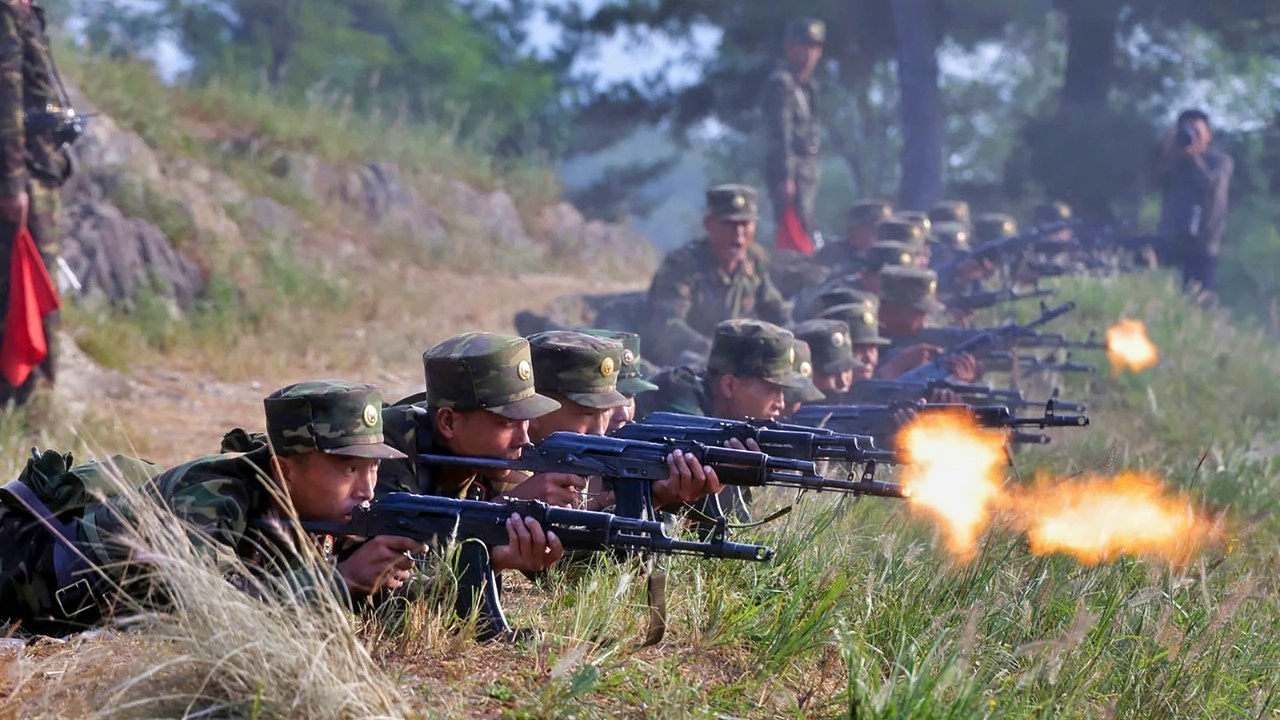
Ukrainian President Volodymyr Zelenskyy’s recent warnings that North Korea would provide additional support to Russian forces invading Ukraine were proven accurate this week when Ukrainian military intelligence reported that a North Korean missile unit had begun deploying to western Russia.
According to the intelligence, Pyongyang’s direct involvement in the war in Ukraine could see as many as 120 additional ballistic missiles provided to Russia.
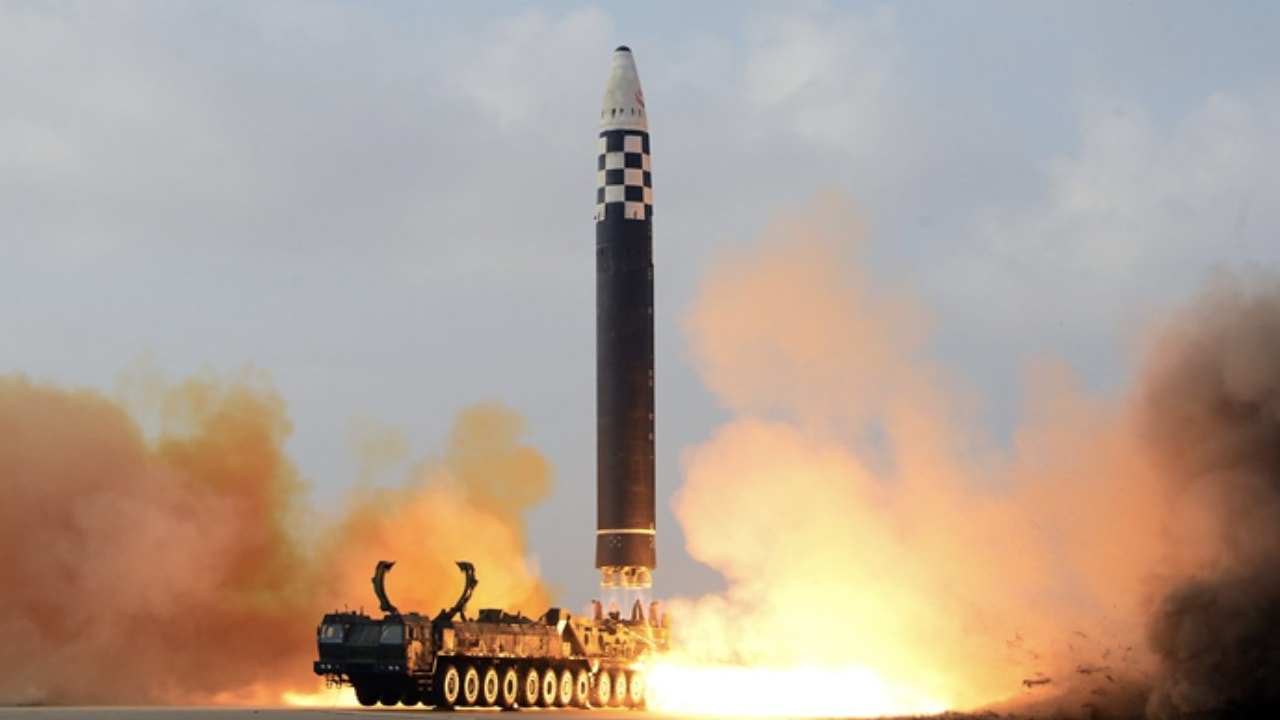
North Korean ICBM. Image Credit: KCNA/North Korean State Media.
Speaking to Reuters, Andrii Cherniak, a representative of Ukraine’s Main Intelligence Directorate, said that approximately 90 North Korean military personnel will be stationed in the Voronezh region, where they would form part of Russia’s 112th Missile Brigade.
The planned deployment is expected to include as many as six mobile launchers and 120 short-range ballistic missiles, the KN-23 and KN-24, Cherniak told Reuters.
The precise role of the personnel being sent to Russia, including whether they would launch the weapons themselves or primarily train and support Russian crews, is unclear.
Neither Russia nor North Korea immediately confirmed the Ukrainian assessment. Kyiv has not publicly released satellite imagery or other evidence establishing the unit’s location, meaning the reported deployment could not be independently verified.
A New Level Of North Korean Support
North Korea’s role in the Ukraine war is well documented at this point – and it’s also not disputed.
What began as ammunition shipments has gradually evolved into the deployment of troops and, according to Ukraine, now potentially an organized ballistic missile unit operating inside Russia.
The timing makes sense, too, as Russia now relies more heavily on ballistic missiles while Ukraine’s stockpile of Patriot interceptors runs low, making interception nearly impossible.
Western intelligence agencies first concluded in late 2023 that Pyongyang had begun supplying Russia with large quantities of artillery ammunition and short-range ballistic missiles, assessments later echoed by South Korea and Ukraine.
Since then, North Korea has emerged as one of Moscow’s most important foreign military suppliers, helping Russia sustain the high rate of artillery and missile strikes that have characterized the war.
What We Know
Ukraine’s Main Intelligence Directorate (HUR) also estimates that North Korea has supplied Russia with roughly 150 KN-23 and KN-24 ballistic missiles, with an additional shipment of around 40 missiles recently arriving alongside military personnel, per the latest report from Reuters.
It follows warnings from President Volodymyr Zelenskyy that the North Korea-Russia military partnership continues to deepen, with Russia desperate for all the outside support it can get and the isolationist North Korea looking for support from a much larger regional force.
In his nightly address on July 25, Zelenskyy said that Ukrainian intelligence had determined Russia was preparing to receive an additional 30,000 North Korean troops and ballistic missile launchers in the Voronezh region.
“Russia wants to receive another 30,000 troops from North Korea. Since June, preparations have been underway in Russia’s Voronezh region to receive them,” Zelenskyy said.
“North Korea is also preparing to transfer additional launchers for ballistic missiles to Russia,” he continued.
If confirmed, the latest deployment would be another major step beyond previous arms transfers.
Instead of simply exporting missiles for Russian forces to operate, North Korea would now be embedding a dedicated missile unit within Russia’s military, potentially allowing its personnel to help maintain or prepare ballistic missile launches against Ukraine.
Such a development is significant, but it is now likely to dramatically alter geopolitical calculations, with North Korea already isolated from most of the rest of the world and Russia largely unconcerned about any backlash given the sanctions it already faces from the West.
Ballistic Missiles Are Ukraine’s Achilles Heel
The additional North Korean missiles could arrive at a critical moment in the war, with Russia now more heavily dependent on ballistic missile attacks as Ukraine steps up its long-range strikes against Russian infrastructure.
Ballistic missiles are now frequently slipping through Ukrainian air defenses, with Moscow finding itself heavily reliant on its Iskander-M ballistic missiles to punish Ukraine for its ongoing campaign of “long-range sanctions.”
On August 4, Russia launched 24 ballistic missiles and four Zircon cruise missiles at Kyiv and surrounding areas. Ukrainian officials said that none of the ballistic missiles were intercepted, with the attack killing at least 17 civilians and destroying warehouses and civilian infrastructure.
Zelenskyy Needs Allies to Act Fast
Meanwhile, President Zelenskyy continues to push his allies to ramp up the delivery of Patriot interceptors, even as the United States faces its own missile shortage following weeks of strikes against Iran.
Russia is believed to have conserved much of its ballistic missile inventory throughout the war because the weapons are expensive to produce and difficult to replace – and during previous phases of the war, Ukraine had a large stockpile of interceptors to counter them.
Today, that is no longer the case, and with North Korea stepping up its support, Russia has the ammunition it needs to put extreme pressure on Kyiv to cease its long-range campaign, return to the negotiating table, and meet Putin’s demands.
If Zelenskyy doesn’t do it, and if interceptors don’t arrive soon, the coming winter could see Russia’s apparently growing supply of ballistic missiles plunge the nation into darkness with repeated strikes on critical energy infrastructure.
MORE – How to Make Putin End the Ukraine War
About the Author: Jack Buckby
Jack Buckby is a British researcher and analyst specializing in defense and national security, based in New York. His work focuses on military capability, procurement, and strategic competition, producing and editing analysis for policy and defense audiences. He brings extensive editorial experience, with a career output spanning over 1,000 articles at 19FortyFive and National Security Journal, and has previously authored books and papers on extremism and deradicalization.