Iran War Ending? We Should Hope So: The world is sitting in stunned confusion (perhaps pleasant surprise is a better term, considering where it looked like we were headed on Friday) as President Donald J. Trump has announced his intention to place his planned strikes on Iranian energy and water infrastructure on hold.
People everywhere are trying to figure out whether the pause in the strikes is serious or just a bluff for Washington to buy time to get into a better position to strike.

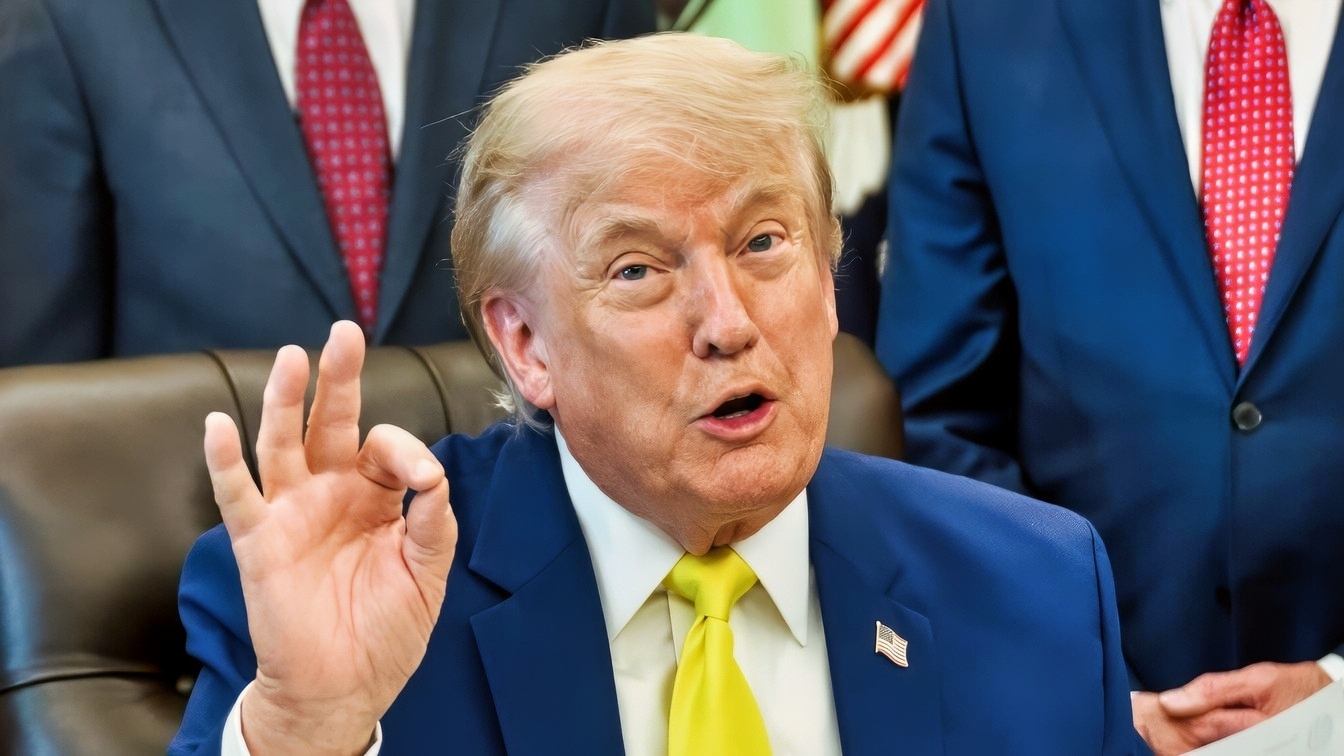
Donald Trump In New York City White House Photo
It seems, though, that reality might have (finally) smacked the forty-seventh president and his advisers in the face.
Depleting Ourselves Thanks to Iran War
America’s Strategic Petroleum Reserve (SPR) is nearing 300 million barrels, the lowest it has been since 1983. That SPR has been one of the few things keeping the global energy markets afloat, as the Strait of Hormuz (SoH), a waterway responsible for 20 percent of the global crude oil supply, another nearly 20 percent of the natural gas flows, and one-third of the world’s agricultural inputs (as well as key industrial inputs).
With America’s SPR running low, as experts warn that going below 300 million barrels compromises the integrity of the salt caverns that house the SPR, the ability for Washington to stunt the pain of the SoH closure from being felt throughout the country is running out.
If the war continued, the SoH would remain closed until Americans could militarily reopen it. That is highly unlikely.
If the US Navy could have forcibly reopened the Strait, it would have done so long ago.
The longer the war continued, especially if the Trump administration escalated, the harder the economic collapse would be — at a most inconvenient time politically (this is not to say that the war will not resume at some point after the Midterm elections in November are decided).
But if Trump did continue with his attacks as planned, the world would be in for massive shortages of diesel fuel, jet fuel, and liquefied natural gas (LNG).
Few countries, if any, would be capable of fully replacing the lost energy production from the Middle East, which would effectively be closed off to the rest of the energy market.
An End to Abundance Thanks to Hormuz Closure
Oil prices would then go beyond $150 per barrel. Shortages in energy products would compel the US government to ration energy as the SPR drained faster than it could be replaced. With the loss of the SPR, the fear of “energy lockdowns” could easily become a reality here in the United States.
That price spike — especially of diesel fuel — would create massive shortages of all related products (possibly including food).
With shortages of key products, such as foodstuffs, more price spikes occur. The more expensive things get due to fuel shortages and the resulting price increases in fuel, the higher the level of inflation. As inflation increases, so too does the interest rate.
Should interest rates rise, unemployment levels will rise as well. A rise in unemployment puts an overall drag on the US economy.
While the crisis unfolded in the United States, the ability of even the US military to sustain operations in wartime against distant Iran would decline. Already, US military capabilities in the Middle East have deteriorated.
The more that the energy and related economic crisis resulting from the prolonged closure of the SoH (and the Strait of Bab el-Mandeb) expands, the harder it will be for the US military to wage war upon an Iran that is increasingly hardened against the US military campaign.
Pain In the Gulf
At the same time, the damage to the Gulf Arab states that produce so much oil and natural gas and rely upon the Straits of Hormuz and the Bab el-Mandeb being open would be profound.
Indeed, the loss of their energy flows could easily lead to an economic collapse in one or all of the Gulf Arab states.
Should that occur, the chances of political upheaval in the region increase (and the US faces even bigger geopolitical problems in that area that go beyond the Islamic Republic of Iran).
That’s to say nothing of the damage to the stock market, which the president uses as a barometer for the success of his economic and financial policies.
Yes, the market has maintained itself. How much of that was from manipulation and other skullduggery remains to be seen.
Is Trump’s Economic Luck Running Out?
Nevertheless, the president has been quite pleased that the crash so many experts feared has not come about.
If the SoH remained closed, with the SPR draining to catastrophic levels, reality could easily return to a market that has miraculously been untethered from reality.
If that were to occur, then the real nightmare scenarios of another Great Financial Crisis or even a depression could become reality.
Right now, the US and the rest of the world economy are in for a tough remainder of the year.
But if the war is truly over, and the US side can get the SoH and Bab el-Mandeb reopened soon, the pain will not morph into economic, financial, and political agony.
About the Author: Brandon J. Weichert
Brandon J. Weichert is Senior National Security Editor. He also manages The Weichert Brief on Substack. Weichert also hosts “National Security Talk” on Rumble. He is the author of four bestselling national security books, the most recent of which is A Disaster of Our Own Making: How the West Lost Ukraine (Encounter Books). Follow him via Twitter/X @WeTheBrandon.