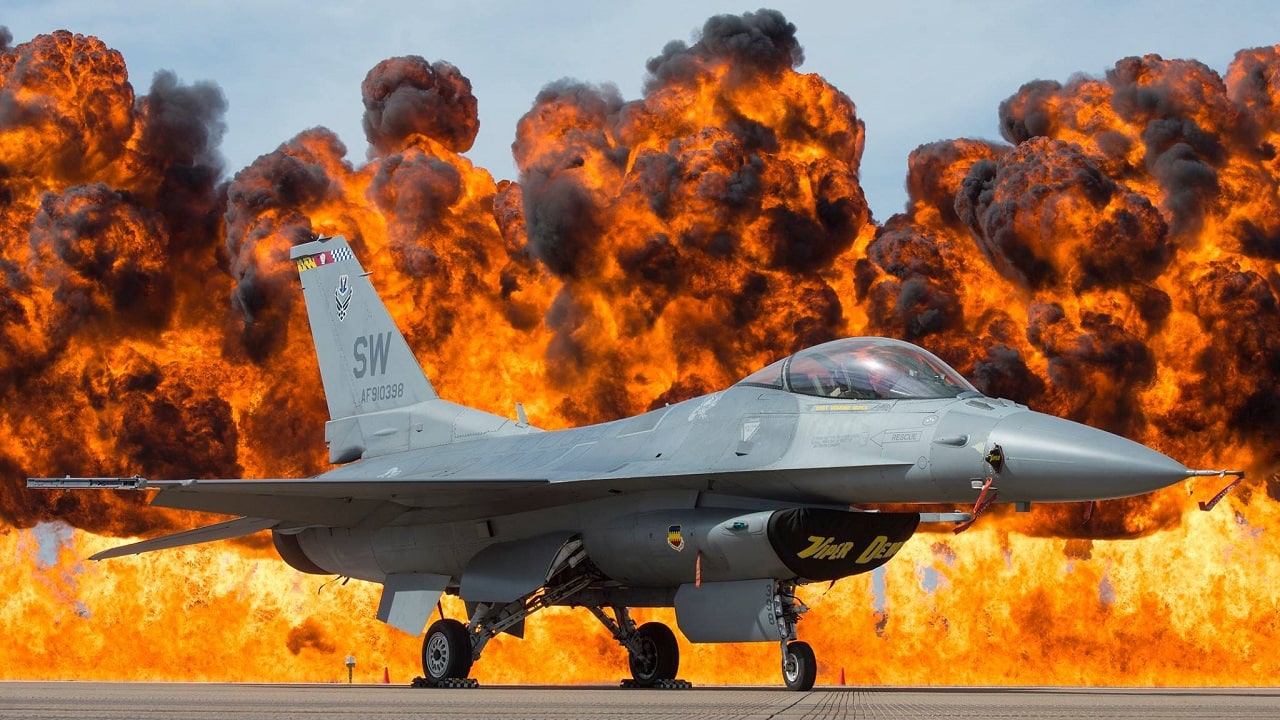
President Trump has rejected Iran’s new proposal for opening the Strait of Hormuz and ending the seven-month clash, while leaving room for talks.
“I reject their proposal,” Trump told reporters at the White House on Saturday. He said Tehran wanted a deal because “they’re losing so badly,” adding: “We’re winning tremendously.”
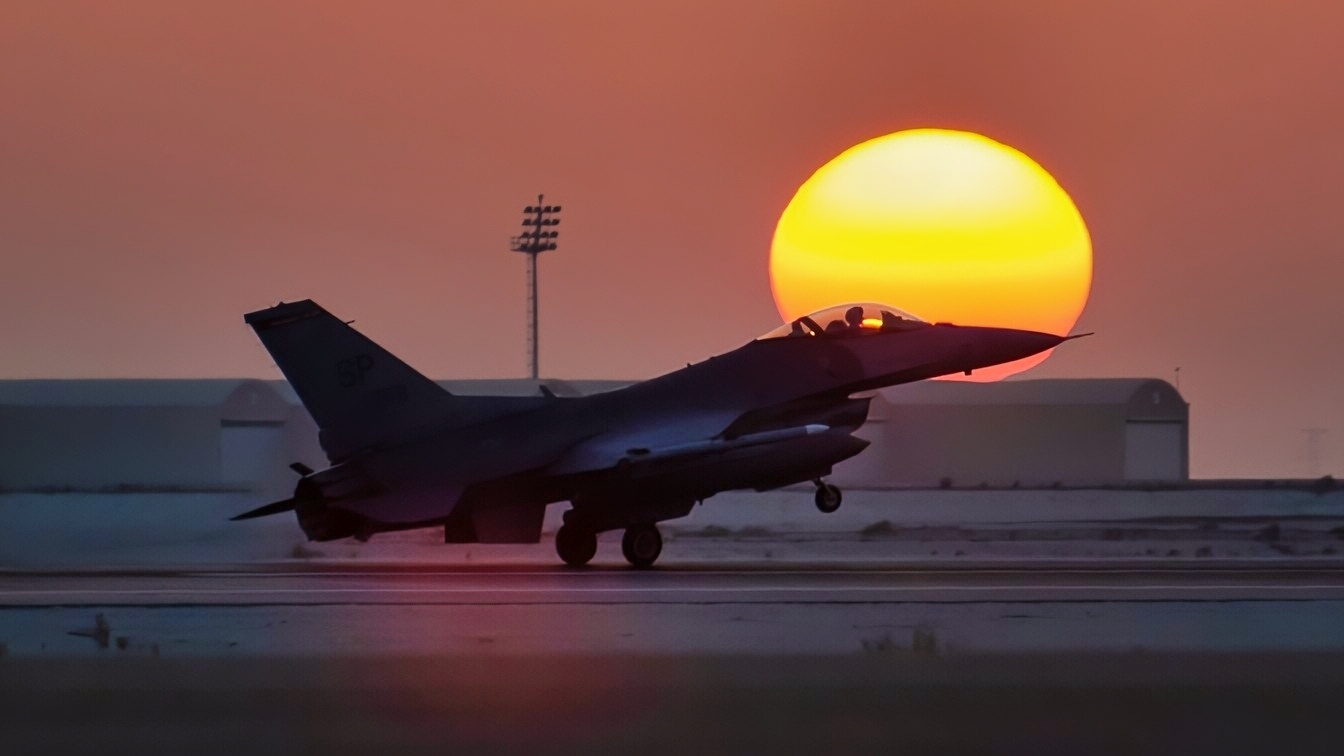
F-16 in Sunset US Air Force Photo
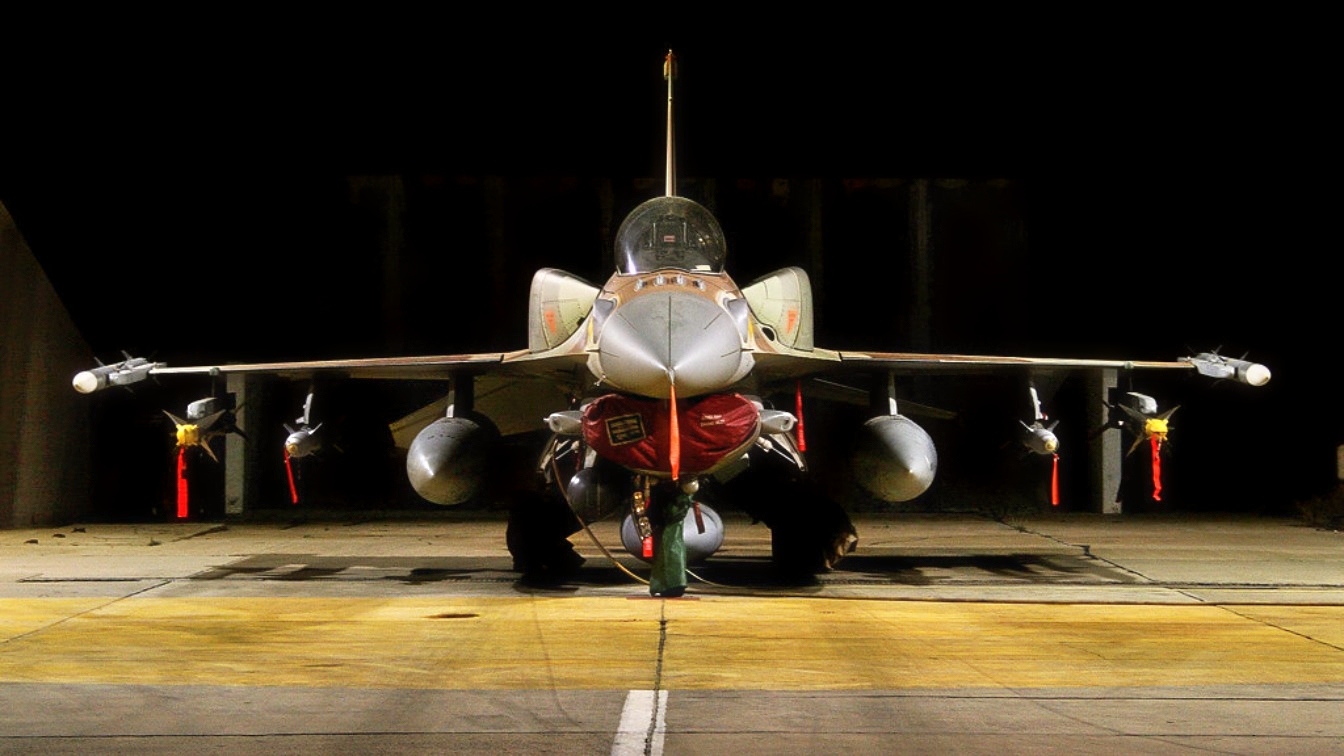
Israeli F-16 Fighter Jet IDF Flickr Photo
But by Sunday, Trump seemed less convincing as he told Axios in a phone call that “I expect more talks with Iran” this week, arguing that while Tehran wanted a deal, they “overplayed their hand.” Pressed on whether there was the prospect of new strikes, Trump replied: “I am always thinking about it.”
There are already question marks about the prospect of those talks, with Iran’s IRNA news agency reporting Monday that “Iran’s delegation in New York has no plans for negotiations with the United States,” according to an unnamed source close to the delegation, who added that Iran’s position had been sent to Washington via Qatar.
Iran’s Seven-Day Offer
Iranian Foreign Minister Abbas Araghchi made the offer at the General Assembly in New York and relayed it through Qatari go-betweens.
Araghchi said the Strait of Hormuz could be opened to traffic within seven days if Washington met Iran’s conditions, and that negotiations could resume.
The demands include lifting the U.S. naval blockade of Iranian ports, lifting restrictions on Iranian oil exports, and a general cessation of fighting in the region, including in Lebanon.
Several of the demands recall the agreement Washington and Tehran reached earlier this year, before talks collapsed.
Iranian President Masoud Pezeshkian said in a CBS Face the Nation interview that Washington would take the next step.
“Both sides need to open up first,” he said, before negotiations could resume over outstanding disputes.
Washington’s concern is partly one of timing. U.S. officials say Tehran wants major concessions before the two sides reach a general agreement.
“They were asking for everything up front,” U.S.
Ambassador to the United Nations Mike Waltz said Sunday, while also questioning Iran’s willingness to negotiate “in good faith” over its nuclear program.
Araghchi responded sharply in an NBC Meet the Press interview, saying that he was “surprised” Waltz was discussing the proposal “as if he hasn’t read it.
‘Doomsday War’
“We are fully prepared for the war to be resumed,” Araghchi told NBC, adding that Iran would fight back “even if it comes to a doomsday war.” But at the same time, he left the door open to negotiations. “Diplomacy can never fail,” he said, arguing that there was still “always hope for diplomacy.”
Iran’s Islamic Revolutionary Guard Corps, a listed terrorist group by Washington, claimed that it had captured a REMUS 600 underwater drone. CENTCOM rejected claims that it had lost control of any operational drone, with spokesman Capt. Tim Hawkins telling the press that Washington maintained “positive control of all of our operational drone assets.”
Treasury Secretary Scott Bessent launched Operation Economic Outcast last month, and said its goal was to “sever every economic lifeline” that funds the “tyrannical regime” in Tehran.
“Our objective is to sever every economic lifeline that sustains this tyrannical regime until Tehran stands alone,” Bessent said when announcing the campaign on August 24.
Oil Exports Are Up
Before the war broke out in February, the Strait of Hormuz usually saw around 125 large commercial ships pass through every day, carrying roughly 20 percent of the world’s daily crude oil and LNG exports.
Reuters cited preliminary Kpler data suggesting that crude exports among major Middle Eastern oil producers have averaged 12.8 million barrels in September.
Official export figures via the Strait of Hormuz fell to as low as 4 million barrels per day at the height of the conflict earlier this year.
Saudi Arabia is behind much of this rebound. Riyadh is scheduled to ship 5.4 million barrels per day in September, up from 2.446 million barrels per day in August.
Oil prices climbed today following Trump’s rejection of Tehran’s demands. Brent crude was up by around 2.86% on Monday.
Saudi Arabia has also spoken out against the use of strategic waterways such as the Strait of Hormuz as leverage. Foreign Minister Prince Faisal bin Farhan said he “rejects any party’s use” of such passages as a means of “pressure, threat, or harm.”
About the Author: Georgia Gilholy
Georgia Gilholy is a journalist based in the United Kingdom who has been published in Newsweek, The Times of Israel, and the Spectator. Gilholy writes about international politics, culture, and education.