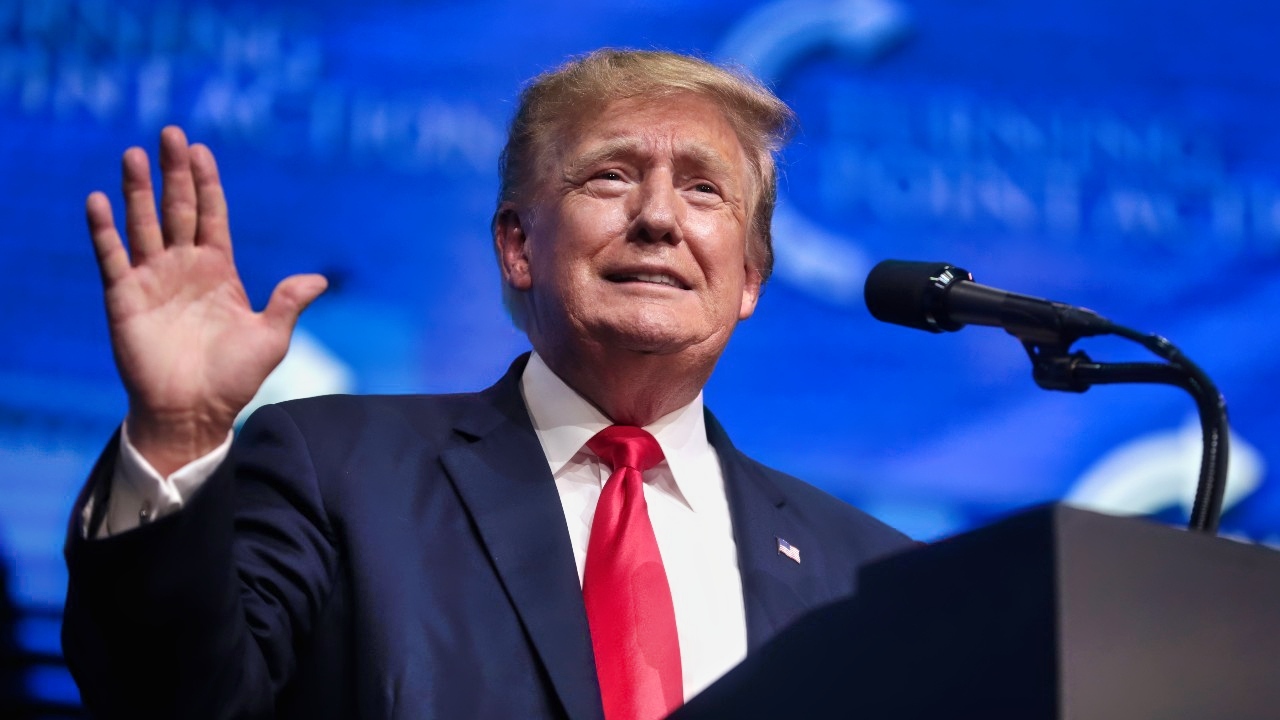
U.S. President Donald Trump has declared that Iran is “dead.” In a Truth Social post on Monday, 31st August, Trump described Iran as a “failed nation”, adding: “They have no Navy, they have no Air Force, they have no currency, they are not paying their soldiers or police.”
He also claimed that Iranian inflation had reached 300%, and Tehran was “in total disarray and incapable of properly representing the country”.
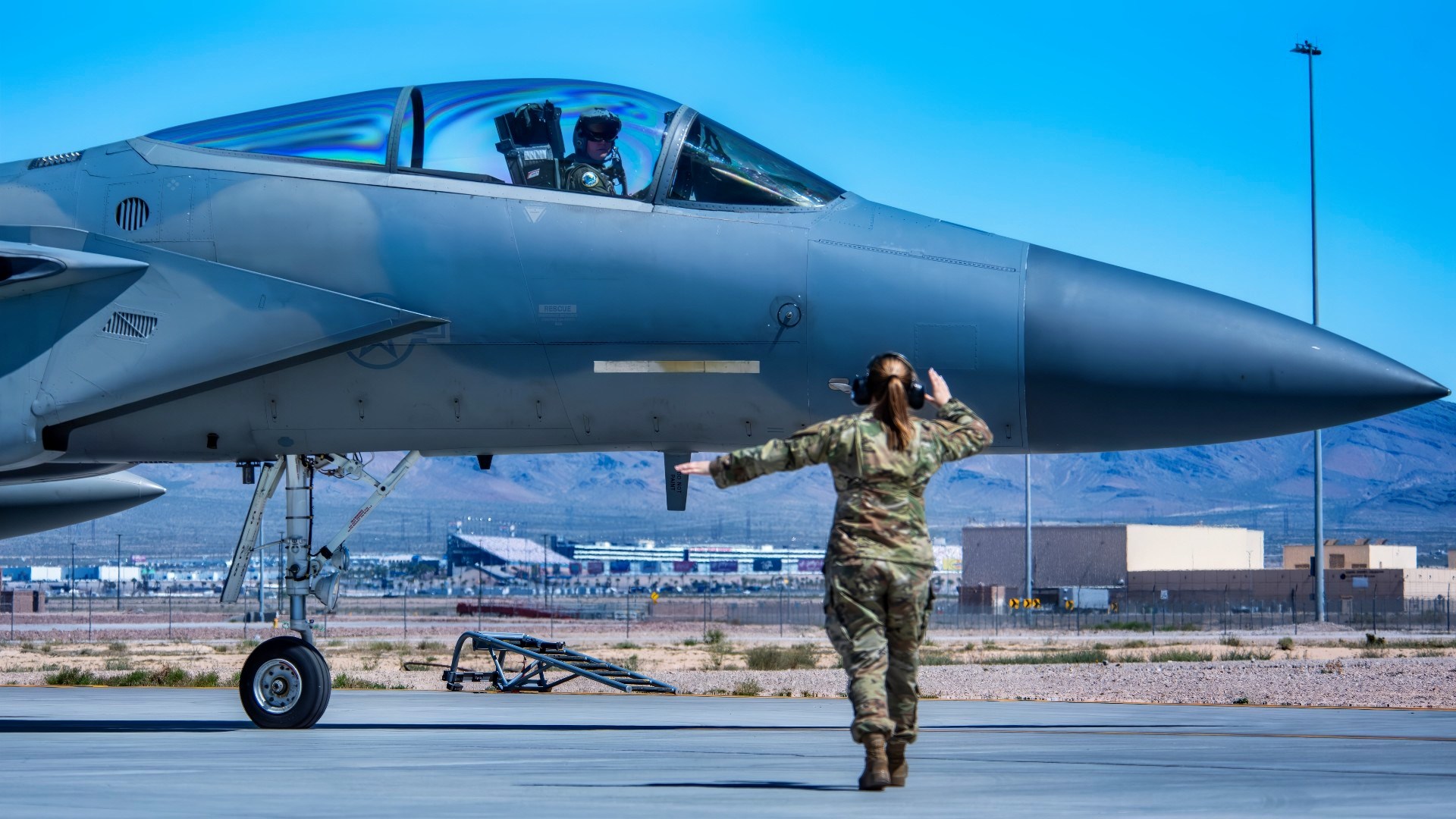
U.S. Air Force Senior Airman Marydith Stidham, a 125th Aircraft Maintenance Squadron crew chief, marshals Capt. Steven Fleming, a 125th Fighter Squadron F-15C Eagle pilot, while taxiing on the flightline at Nellis Air Force Base, Nevada, April 16, 2024. Units assigned to the 125th Fighter Wing participated a two-week exercise in support of the USAF Weapons School. During the exercise, the wing operated in both daytime and nighttime vulnerability periods in a contested degraded environment, preparing students for real-world conditions. (U.S. Air Force photo by Senior Airman Jose Miguel T. Tamondong)
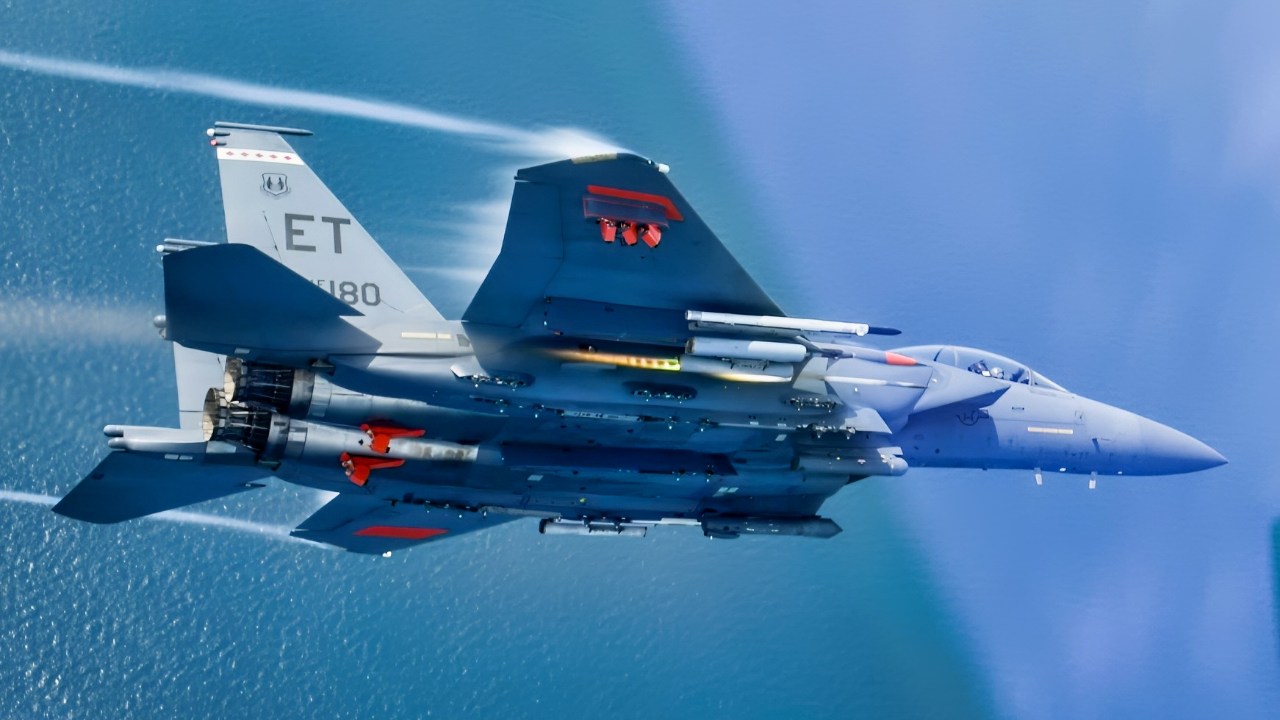
A 96th Test Wing F-15E Strike Eagle flies during a test mission May 22, 2025 over Eglin Air Force Base, Florida. The 96 TW and the 53rd Wing teamed up to test AGR-20F Advanced Precision Kill Weapon System II laser-guided rockets on the F-15E in May in an effort to get the capability to the warfighter as quickly as possible. (U.S. Air Force photo by Staff Sgt. Thomas Barley)
Trump is adamant that the Persian state is dead. But is he right?
Iran Survives.. For Now
Well, not quite.
Iranian inflation is high, but nowhere near 300%. A Reuters report in July, using official Iranian data, put inflation at 66%. Of course, you should take that with a pinch of salt, but the figures are close to International Monetary Fund estimates of 68.9% inflation for the country in 2026.
Iran has been battered militarily, and much of its armed forces felt the brunt of U.S.-Israeli attacks during the conflict’s infancy weeks.
The Iranian Navy is not quite “dead”, to use Trump’s words, as it still maintains control over the Strait of Hormuz (which, for the most part, remains closed). However, the first six weeks of the war cost Iran up to $145 billion, indicating major losses following a month and a half of persistent bombardment.
The Iranian leadership may have changed hands, but not necessarily direction.
For sure, the country’s second Supreme Leader died within minutes of the war starting, and his replacement hasn’t been seen publicly since, but for the most part, the authoritarian regime which has controlled the country for nearly five decades remains in power today.
The End May Be Nigh
Nevertheless, Iran is feeling the full effects of the war, even if it remains reluctant to surrender.
Six months of conflict, partly militaristic but mostly economic, have had a major effect on the Iranian economy. One U.S. dollar will now buy you 2 million Iranian rials – a record low that only appears to be worsening.
Trump’s economic campaign appears to be working, even if Tehran remains adamant it isn’t.
Iran, a major oil exporter, has seen its crude loadings collapse from around 2 million barrels per day in March to no more than 255,000 five months on – a fall of 500,000 from July to August alone.
In part, the U.S. Naval blockade is to blame for the downfall of Iranian exports, with vessels unable to leave Iranian ports while the war continues.
However, Tehran itself is inflicting its own damage. A six-month-long closure of the Strait of Hormuz may be frustrating the exports of its Middle Eastern neighbors, but equally many Iranian ports are reliant on the strait’s opening.
Commodities, Rather Than Money
Iran’s Central Bank Governor Abdolnaser Hemmati insists the country is not close to running out of money.
He’s claimed Tehran has adequate foreign-exchange reserves for the foreseeable future, and that the regime could inject as much as $2 billion into currency markets if required.
However, having money is one thing; having commodities is another. Senior Fellow at the Foundation for Defense of Democracies Miad Maleki told Fox News that he believes the Iranian economy is “on the verge of collapse, if it hasn’t already collapsed yet”.
“They can keep printing money, but they can’t really print the type of commodities that they need, such as gasoline, such as wheat,” he said.
Historically, printing more money has typically resulted in hyperinflation. Perhaps the most famous example was the Weimar Republic – a short-lived government in Germany whose collapse was succeeded by Adolf Hitler and the Nazis.
Purchasing power drops dramatically during hyperinflation, to the point where civilians can’t afford basic necessities.
So… Is Iran Dead?
Iran is not what many would describe as “dead”. If it were, the U.S. wouldn’t still be at war with it.
However, it is dying, and the economic pressure will only mount as blockades and sanctions continue to choke the regime’s economy.
A more important question, arguably, is: how does it die?
Fuel and food shortages will naturally lead to civil unrest – something the regime fought at the turn of the new year.
This time, however, it’s less equipped, and the ever-boisterous messaging from Tehran over who is winning the war may fall on the deaf ears of a starving nation not before long.
About the Author: Shay Bottomley
Shay Bottomley is a British journalist. He has written for the Western Standard, Business Insider, Maidenhead Advertiser, Slough Express, Windsor Express, Berkshire Live and Southend Echo.