
Every time an American or American interest gets hit, U.S. forces should target the highest-ranking person on that list for elimination.
By Michael Rubin, Middle East Forum
A missile hit the grounds of the U.S. Embassy in Baghdad on March 14, 2026, causing minor damage. From the beginning of Iran’s 1979 Islamic Revolution, embassy attacks have become the mark of Iran and its proxies.
Not only did the Iranian regime begin its conflict with the United States by seizing the U.S. Embassy in Tehran, holding fifty-two diplomats hostage for 444 days but, in 1983, Iranian-directed militias bombed the U.S. Embassy in Beirut and Kuwait.
Nor was the March 14, 2026, attack the first on America’s Iraq embassy. In 2019, Iranian-backed Iraqi militias stormed the perimeter of the embassy.
Ignoring the attack would only encourage further attacks. The original seizure of the U.S. Embassy in Tehran, for example, was actually the second Iranian attack on that compound.
On February 14, 1979, guerillas attacked the building in the heart of Tehran, taking the U.S. ambassador and approximately 100 diplomats hostage before releasing them.
President Jimmy Carter’s lack of response convinced Ayatollah Ruhollah Khomeini’s militants to try again.
Terrorism is a tactic. It works when its benefits outweigh its costs. Accordingly, Trump must act decisively to raise the stakes to Iran and its allies of any attack on U.S. property.
First, just as Trump vetoed former Prime Minister Nouri al-Maliki’s attempt at a comeback, so, too, should he now make clear that Prime Minister Mohammed Shia’ al-Sudani is no longer acceptable to Washington because, at a minimum, he has failed to uphold the sanctity of diplomatic property.
Sudani has been a successful prime minister; the infrastructure development on his watch is incredible. He has transformed Baghdad’s skyline.
But second terms are a rarity in Iraq, and so there is no shame in standing down, especially since there are Coalition Framework candidates acceptable to Najaf, Washington, and regional states who demonstrated their capabilities in the background—managing Saddam Hussein’s trial, for example—but are untouched by corruption scandals or any accusation of fealty to Tehran.
Iraq will not see the peace its people deserve until it has a prime minister willing to stand up to militias and assert full sovereignty over Iraqi territory, from Bashiqa to Basra.
Second, Trump or Secretary of War Pete Hegseth should publish a ranked list of pro-Iranian politicians and militia leaders—Maliki, Badr Corps commander Hadi al-Amiri, Harakat Hizbullah al-Nujaba leader Akram al-Kaabi, and Kata’ib Hezbollah Secretary General Ahmad al-Hamidawi, for example.
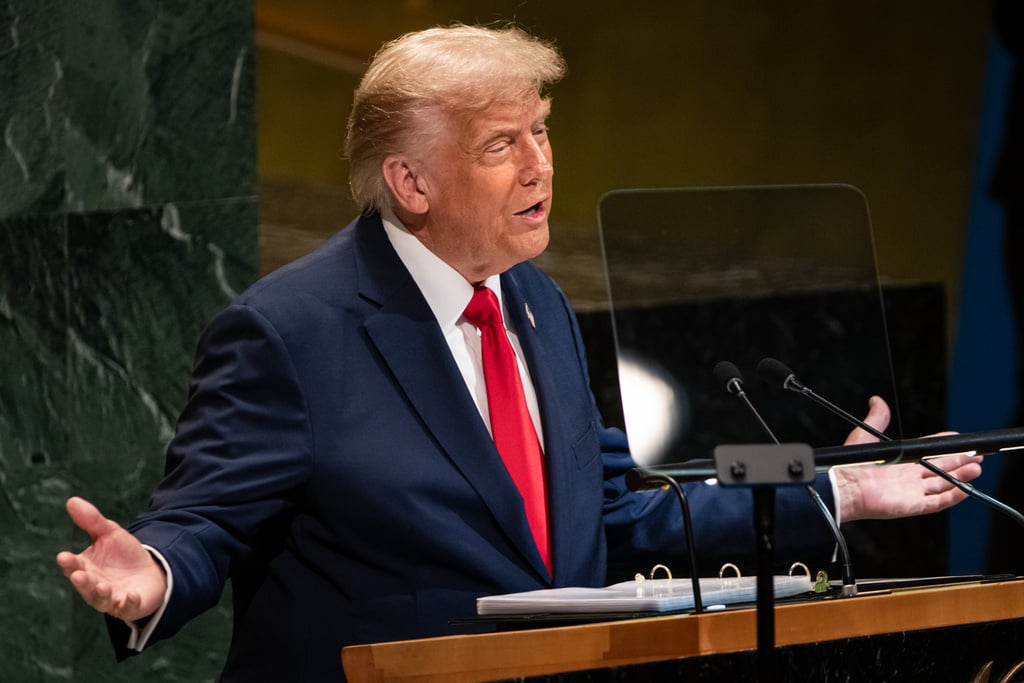
Every time an American or American interest gets hit, U.S. forces should target the highest-ranking person on that list for elimination.
The Trump administration should treat not direct culpability as the standard for retaliation, but rather, ideological proximity.
If targets want safety, they should not associate with terrorists. In 1998, for example, President Bill Clinton ordered a retaliatory strike on a Sudanese pharmaceutical plant after Al Qaeda attacked U.S. embassies in Tanzania and Kenya.
Sudanese and many Western journalists immediately began questioning if the Al-Shifa factory was involved in chemical weapons production, or if its products really were medicines.
This misses the point, however. If the Sudanese regime did not associate with reactionaries and terrorists, it would not need worry about being targeted in any situation.
There was a reason why Clinton chose Sudan and not the Seychelles for his retaliation.
If any Iraqi leaders want to remove themselves from the pro-Iranian militant list, they can either leave Iraq or turn themselves into American forces; otherwise, each should consider themselves dead men walking.
In many cases, they employ their sons, cousins, and nephews as trusted aides.
In such a circumstance, Trump or Hegseth should make clear that the U.S. planners will not view family members who remain in proximity as anything more than collaborators, and that a human shield strategy will fail.
The Islamic Republic and its militias target American property and Americans themselves because they believe that they can get away with it.
Maliki and al-Amiri might whine that they are not responsible if the missiles originated inside Iran, but the White House should dismiss their complaints for two reasons.
First, they have value to the Iranian regime and so their elimination would have value to Washington. Second, Iraqi militiamen regularly help Iranians with targeting by sending GPS coordinates and other data.
For too long, Americans have played softball in Iraq. It is time to show the Iranians and their Iraqi proxies what happens when they touch an embassy or a diplomat.
The post How should Trump respond to the missile strike at the US embassy in Baghdad? appeared first on World Israel News.