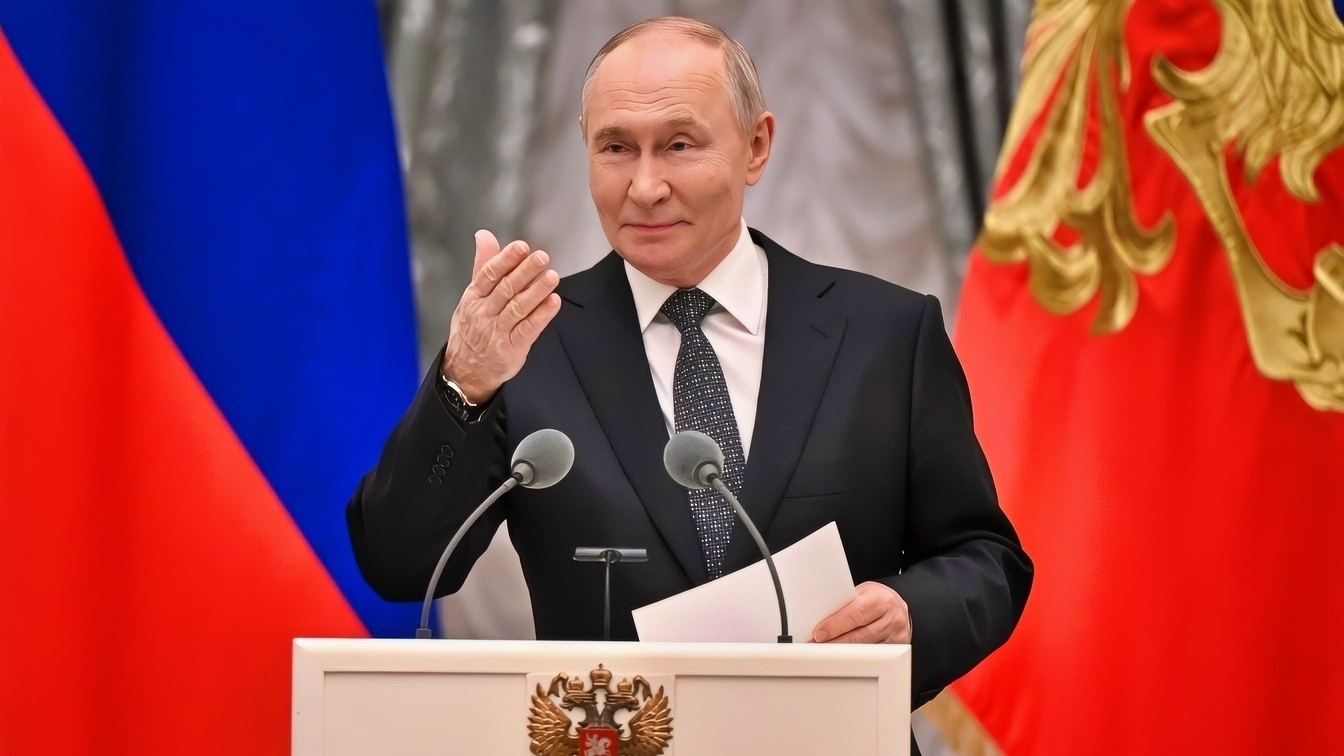
Recently, Moscow launched a deadly missile strike against a cargo ship near Odesa that killed ten people.
Not to be outdone, Ukraine has retaliated with its largest drone attack against Russia (involving 400 drones).
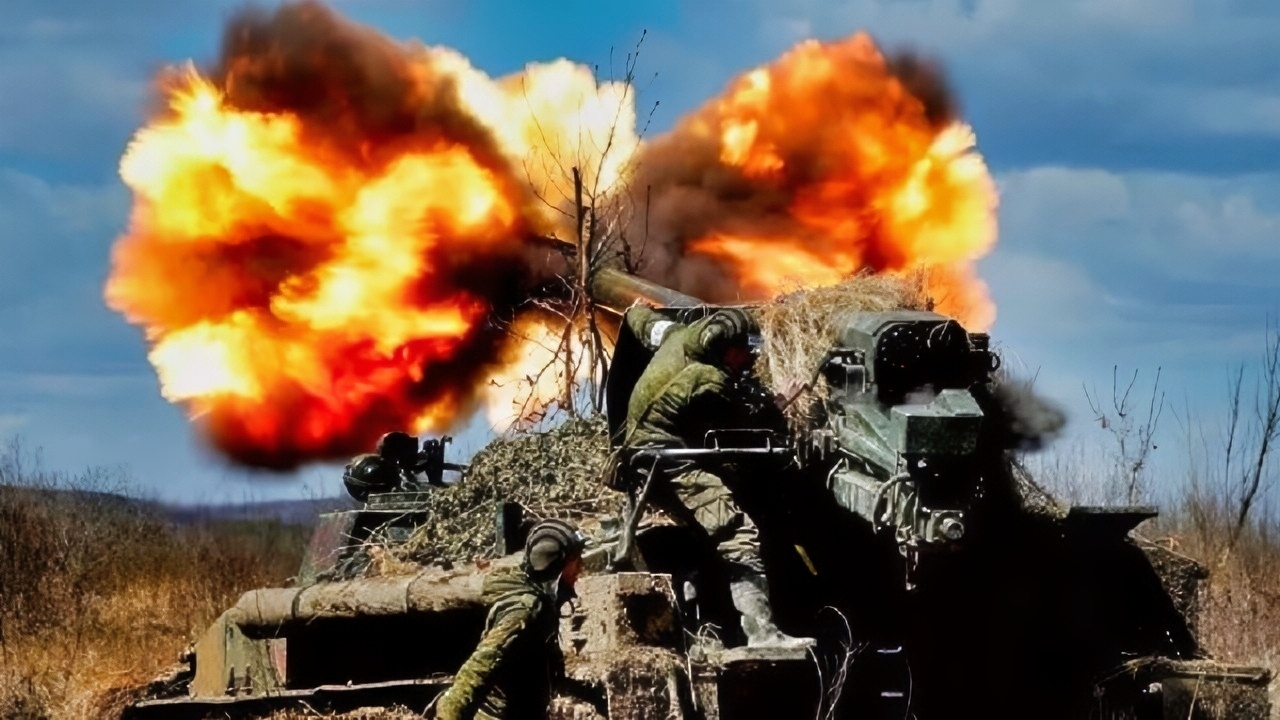
2S7 Malka Creative Commons Photo
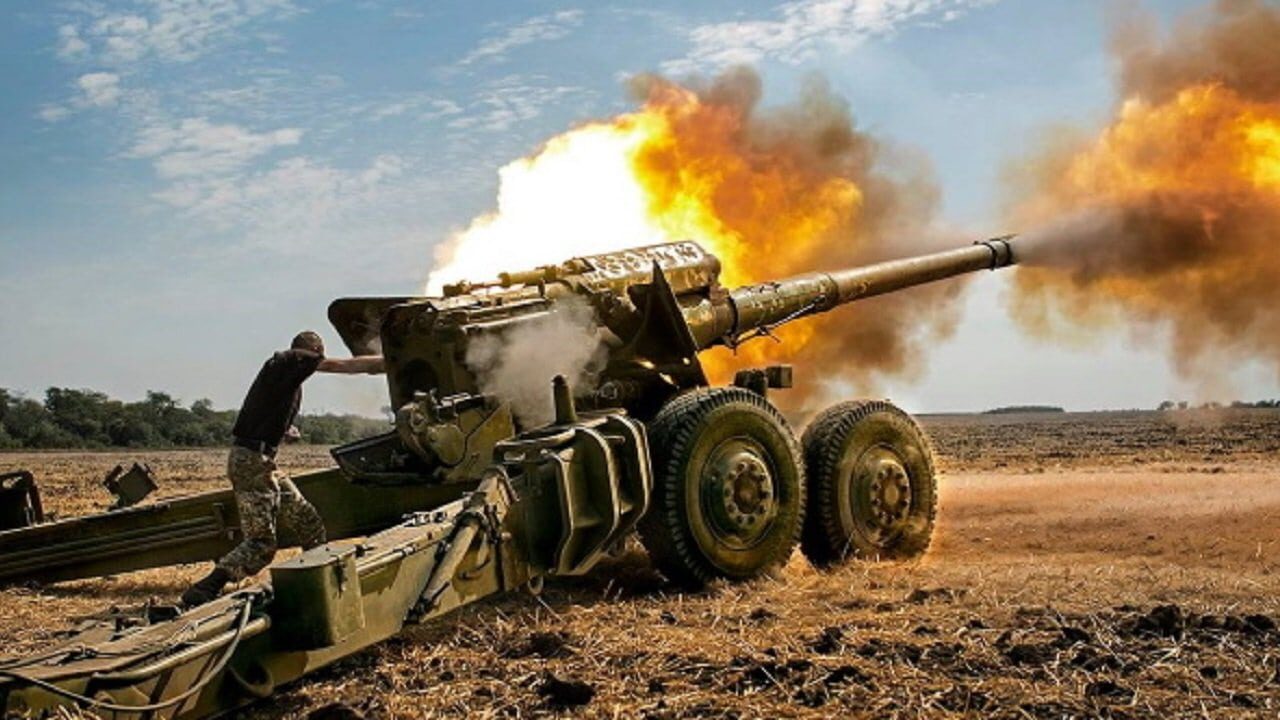
Artillery from Ukraine War Creative Commons Image
The war is intensifying on both sides in what is clearly a race to destroy the other side’s economy, the true support strut for the war.
The Battlefield Expands Beyond the Frontlines
Indeed, both sides in the conflict are widening the list of targets they consider legitimate. Russia is increasingly attacking Ukraine’s economic lifelines, such as the recent strike on the Kharkiv oil refinery, while Ukraine is steadily expanding its campaign against Russia’s logistics network, energy infrastructure, and industrial base.
The battlefield is no longer confined to the trenches of eastern Ukraine. It now stretches from the Black Sea to the suburbs of Moscow.
The Russian strike on the merchant vessel near Odesa was particularly significant because it demonstrated Moscow’s willingness to increase pressure on Ukraine’s maritime economy.
Since Ukraine successfully reopened portions of its Black Sea export corridor, grain shipments have become one of Kyiv’s few remaining reliable sources of foreign currency.
By striking commercial shipping itself rather than merely targeting port facilities, Russia is signaling that no part of Ukraine’s export system should be considered safe.
By attacking Ukraine as Russia has done, Moscow discourages foreign shipping companies from daring to enter Ukrainian ports (what few remain).
Therefore, Russia reduces Ukraine’s export revenue, harming its overall (already ailing) economy.
Ukraine’s Strategy: Take the War Deep Into Russia
Ukraine, meanwhile, is pursuing a very different strategy.
Rather than attempting to match Russia missile for missile, Kyiv continues investing heavily in long-range drones capable of penetrating hundreds of miles into Russian territory, aiming to weaken Moscow’s infrastructure and command centers.
According to Russian officials, approximately 400 Ukrainian drones were launched during the latest wave of attacks, with many targeting the Moscow region itself.
Russian air defenses reportedly intercepted most of the incoming drones. Although interception does not mean the attacks were unsuccessful at the strategic level.
Every drone Ukraine launches at Russia, the Russians must then expend expensive interceptors–all while maintaining massive homeland air-defense networks.
Then, the Russians must disperse military assets away from the frontlines. Just as importantly, repeated attacks undermine the Kremlin’s long-standing narrative that ordinary Russians remain insulated from the war.
Ukraine’s Evolving Target List
The targets are themselves evolving.
Earlier in the war, for example, Ukraine focused significantly on blasting Russian oil refineries and fuel depots.
Now, Kyiv concentrates on hitting Russian logistics hubs, warehouses, ammunition stores, transportation grids, and other industrial facilities.
Indeed, Ukraine obliterated the warehouse for Russia’s largest online retailer (known as “Wildberries”). Kyiv argues that many of these commercial warehouses have been integrated into Russia’s wartime logistics network, serving as storage or distribution centers for military supplies and drone components.
Ukraine’s strategy to impose long-term costs on Russia and force Moscow to spend enormous resources on defense should evoke a sense of urgency and awareness of the economic and human toll involved in this conflict.
When Does Putin Really Escalate?
At what point, then, does Vladimir Putin decide that the current level of retaliation is no longer sufficient (as it clearly is not)?
Already hawkish voices around Putin have called for massive retaliation not only against Ukraine, but also against perceived military targets–like drone factories–inside NATO countries, such as Germany.
Some voices around Putin have even demanded that the Russians upgrade their nuclear warfare doctrine to allow Putin to initiate “limited” nuclear weapons strikes on Ukraine and, possibly, NATO targets.
Even if Putin did not go for a nuclear strike or a more robust set of airstrikes against either Kyiv or a NATO target, if he opted instead to abandon his “Special Military Operation” (SMO) designation and mobilize Russia fully for total war upon Ukraine, Putin is aware of the strain that’d impose on his already strained economy—and the greater the strain, the more serious the political fallout for Putin.
Putin’s understands the risks of unintended consequences.
That is why he has held off escalating against NATO, no matter how tempting it might be (or how appealing it is to his own people, who badly want to win the war and punish NATO for what they view as having brought the war upon them).
But the attacks by Ukraine on Russia only risk escalating into that very paradigm that Putin has striven to avoid.
Possible options for escalation presented to Putin include a renewed campaign against Ukraine’s electrical grid, larger missile salvos against transportation infrastructure, intensified attacks on Black Sea shipping, expanded cyber operations against Ukrainian and European networks, or increased efforts to interdict Western military assistance before it reaches the battlefield.
Moscow could also intensify sabotage and covert action throughout Europe, an area where Western intelligence agencies have already warned of increasing Russian activity.
The Dangerous Escalation Ladder
Regardless of how one interprets recent events, neither Russia nor Ukraine appears capable of achieving decisive military victory in the near term.
So, both sides are drastically escalating in the hopes they can exhaust each other’s economy first.
But history is filled with conflicts that expanded not because leaders deliberately sought a wider war, but because each successive round of retaliation became politically impossible to ignore.
That is the trajectory this conflict increasingly resembles.
Whether the strategy of escalation to deplete each other’s adversary’s economy succeeds is uncertain. What is clear, though, is that every new drone strike on Moscow–as well as each new Russian assault on Ukraine’s commercial shipping–raises the political pressure on both governments to respond with greater force.
The danger is not simply that the war continues.
It is that the ladder of escalation continues to lengthen.
Eventually one side may decide that climbing to the next rung is less risky than remaining where it is.
And that side, specifically Russia, has the capacity to escalate in truly destructive ways that could not only fully destroy Ukraine.
It could also lead to a much larger, more destructive war.
About the Author: Brandon J. Weichert
Brandon J. Weichert is Senior National Security Editor. He also manages The Weichert Brief on Substack. Weichert also hosts “National Security Talk” on Rumble. He is the author of four bestselling national security books, the most recent of which is A Disaster of Our Own Making: How the West Lost Ukraine (Encounter Books). Follow him via Twitter/X @WeTheBrandon.