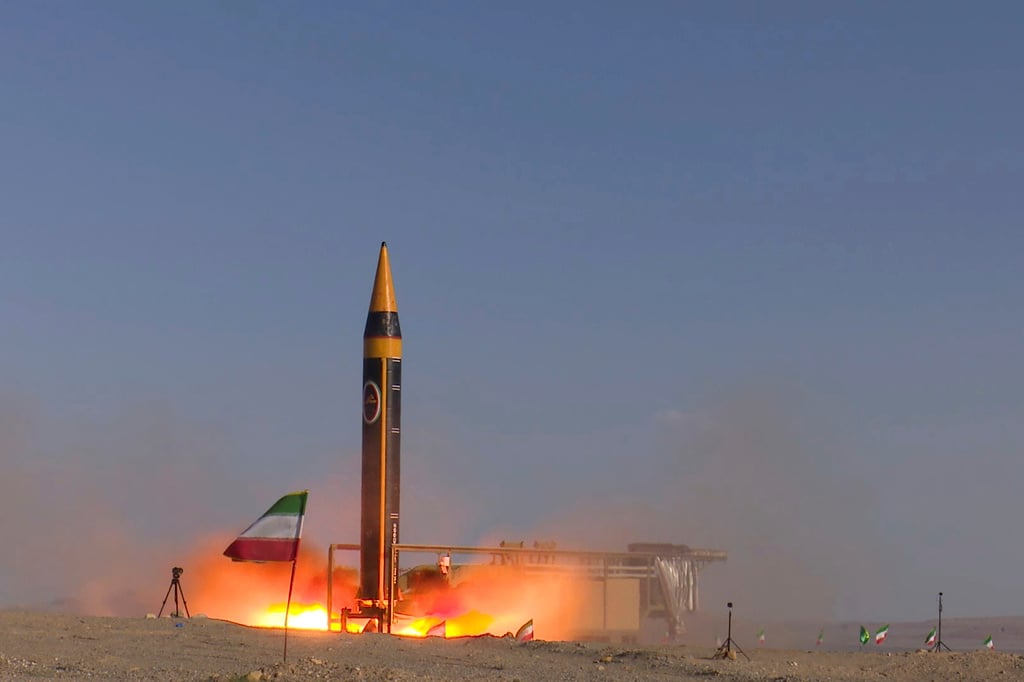
A premature agreement would give the regime exactly what it needs: time to rebuild, adapt, and double down.
By Majid Rafizadeh, Gatestone Institute
Only two countries, the United States and Israel, have finally confronted a regime, the Islamic Republic of Iran, which, for nearly half a century, has held the world hostage and destabilized an entire region, all while brutally tormenting its own people.
Iran’s ruling system has built its identity on ideology — an expansionist doctrine rooted in “exporting the revolution,” undermining and attacking sovereign states, and financing terrorist proxies.
From Hezbollah in Lebanon, to Hamas in Gaza, to the Houthis in Yemen, to the Popular Mobilization Forces in Iraq, to terrorist cells in Latin America, the regime has poured billions into non-state actors that perpetuate cycles of violence, weaken governments, and terrorize civilians.
At home, it has maintained power through repression, torture, censorship, and force.
In recent weeks, however, despite a media landscape that often appears critical—or at times echoing narratives favorable to Tehran—the reality on the ground suggests that actual progress has been made in degrading the regime’s military capabilities and its hold on power.
In addition to having buried Iran’s three major nuclear facilities last June in less than two weeks, significant blows now include eliminating Iran’s air force, navy, weapons manufacturing infrastructure, and many of its missile launchers.
For years, Iran invested heavily in asymmetric maritime warfare — fast attack craft, mines, and unconventional tactics designed to disrupt shipping lanes and threaten global oil and gas flows.
Reports and assessments indicate that key elements of this infrastructure have been permanently put out of operation—and will not be rebuilt overnight.
It was a capacity that took generations to construct.
This is precisely the moment when the greatest strategic mistake could be made: stopping halfway while leaving “moderate” extremists still in place.
The Iranian regime is, at its core, ideological and not a conventional actor that recalibrates and retreats when pressured. When wounded, it recalculates, regroups, and seeks continuance.
If left intact, the regime will almost certainly, at some point—after the Trump administration’s term ends—accelerate its most ambitious and dangerous projects, most notably its pursuit of nuclear weapons along with ballistic missiles to deliver them.
From Tehran’s perspective, the goal is clear. If conventional capabilities are degraded, then nuclear deterrence becomes not just desirable, but essential.
A premature agreement would give the regime exactly what it needs: time to rebuild, adapt, and double down.
Under the 2015 JCPOA “nuclear deal” negotiated by the Obama administration, Iran accepted delaying its nuclear weapons breakout until 2025 in exchange for sanctions relief.
Rather than fundamentally altering its behavior, the regime used the breathing room to expand its regional influence, enrich more uranium, build thousands of ballistic missiles, fund its proxies, murder Americans, attempt to assassinate then presidential candidate Donald J. Trump, and, on October 7, 2023, use its Hamas proxy to invade Israel.
In that part of the world, agreements with “infidels” can be considered tactical delays, not strategic transformations.
Now, faced with intensified pressure and internal fragility, the regime has, as usual, apparently signaled a willingness to negotiate.
It may even agree to sweeping terms—say “yes” to anything—not because of any positive transformation but as a tactic for survival.
Domestically, Iran’s regime faces deep unpopularity. Recent anti-regime protests, economic hardship, and political repression have eroded its legitimacy.
Israeli and US strikes have eliminated key personnel and capabilities. In such a position, it is likely to agree to almost anything if it ensures its own survival.
A ceasefire deal now would not resolve the underlying problem—it would freeze it in place temporarily while allowing the regime to recover. Once stabilized, it would resume its activities—with the same less-than-neighborly objectives.
Meanwhile, its network of allies—states such as Russia, North Korea, and China—will provide avenues for technological support, economic lifelines, and strategic coordination—as they already have been doing during the conflict.
There is also undoubtedly the calculation in Tehran that it can outlast President Trump’s strong leadership.
The regime may assume that political cycles will be less assertive, creating opportunities to reset the board on more favorable terms.
The events of October 7, 2023, carried out by Hamas with Iran’s planning and backing—and the Iranian regime’s slaughtering more than 30,000 of its own unarmed citizens in just two days in January—serve as a reminder of what is at stake.
These are the downstream consequences of a system that funds, trains, and arms groups that are committed to violence and terrorism. Without addressing the source, the cycle will continue.
If a ceasefire agreement is signed, Iran’s regime will recover. When it does, it is likely to come back more determined than ever to advance its nuclear weapons program, especially when Trump is no longer in office.
While extraordinary progress has been made in weakening key components of Iran’s regime, the temptation to shift toward accommodation needs to be avoided at all costs.
Any agreement with this regime, or what is left of it, will almost certainly end up undoing the very gains that the US and Israel have achieved.
The choice, therefore, is between finishing what has been started or once again facing the same reality just around the bend.
The post Finish the job: Leaving Iran’s regime in place guarantees endless regional instability – opinion appeared first on World Israel News.