The launch marks another setback for anti-Israel activists who had explicitly demanded that Columbia abandon the Tel Aviv center.
By Dion J. Pierre, The Algemeiner
It has been a rough 48 hours for proponents of the Boycott, Divestment, and Sanctions (BDS) movement against Israel.
Columbia University confirmed Friday that it will begin programming at its Tel Aviv Global Center this summer, three years after first announcing the project, moving ahead with an academic hub intended to expand research, teaching, and partnerships with Israel despite pressure from anti-Zionist activists to cancel it.
“Columbia Global is pleased to roll out programming for the Tel Aviv Global Center,” the university told the Columbia Daily Spectator on Thursday, saying the facility would create opportunities through research, teaching, partnerships, and public events.
The center will become the 11th site in Columbia’s international network.
It is not a branch campus, but a hub designed to connect Columbia faculty, students, alumni, and programs with Israeli institutions and researchers.
Its initial priorities include climate change, technology and entrepreneurship, science, public health, and medicine.
Israeli journalist and Columbia School of International and Public Affairs adjunct professor Nadav Eyal first disclosed the imminent opening Monday on the “Call Me Back” podcast, which he recorded from the new Tel Aviv facility.
“As far as I know, there isn’t any other Ivy League that has this global center,” Eyal said, describing the launch as “history in the making.”
He added that the opening was especially meaningful after the turmoil surrounding Columbia’s handling of antisemitism and anti-Israel activism.
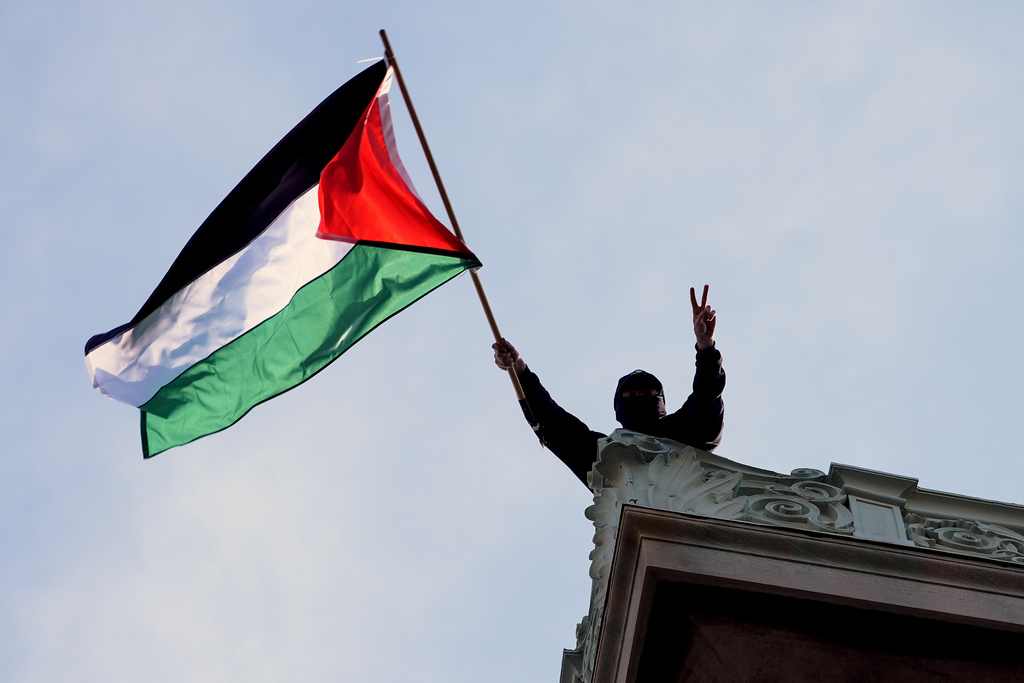
The launch marks another setback for anti-Israel activists who had explicitly demanded that Columbia abandon the Tel Aviv center.
Columbia University Apartheid Divest, the coalition behind the 2024 encampment movement, made cancellation of the project one of its principal demands, while Columbia College students voted that year to oppose its opening.
The development came just days after Student Workers of Columbia–United Auto Workers Local 2710 withdrew a bargaining proposal that would have required the university to divest from and stop contracting with entities deemed complicit in violations of international law.
Columbia described the proposal as an attempt to secure mandatory institutional support for the boycott, divestment, and sanctions movement.
The union said withdrawing the proposal was a strategic concession necessary to advance negotiations over wages, benefits, and workplace protections.
The retreat does not necessarily end its broader anti-Israel campaign: Columbia previously said SWC-UAW had separately sought to prevent the Tel Aviv center from opening, and neither side announced that that demand had been withdrawn.
The developments follow nearly three years of upheaval at Columbia. After the Hamas-led massacre in Israel on Oct. 7, 2023, the university became a center of the nationwide campus protest movement and experienced repeated antisemitism controversies.
Student organizer Khymani James was barred from campus after video emerged of James saying that “Zionists don’t deserve to live.”
Columbia also permanently removed three administrators from their Columbia College positions after text messages that university officials said touched on antisemitic tropes and dismissed Jewish students’ concerns.
In May 2025, masked protesters occupied Butler Library’s main reading room. Two public-safety officers were injured during a crowd surge, and dozens of demonstrators were arrested.
The incident followed the 2024 encampment and occupation of Hamilton Hall. President Minouche Shafik resigned in August 2024, citing the toll of intense turmoil.
Columbia subsequently reached agreements resolving federal investigations into alleged discrimination.
Under a July 2025 settlement, the university agreed to pay the federal government $200 million over three years and another $21 million to resolve Equal Employment Opportunity Commission claims.
Columbia did not admit legal wrongdoing, and the agreement restored access to billions of dollars in federal research funding.
The university has since strengthened disciplinary and security procedures, tightened identification requirements for masked demonstrators, incorporated the International Holocaust Remembrance Alliance definition of antisemitism into the work of its Office of Institutional Equity, appointed coordinators to oversee Title VI and Title VII complaints, and expanded antisemitism education.
It also announced that it would neither recognize nor meet with the group calling itself Columbia University Apartheid Divest.
Columbia’s investment advisory committee has repeatedly rejected Israel-divestment proposals.
After rejecting a CUAD proposal in 2024 for lacking broad community consensus, the committee rejected three more in November 2025, citing substantial opposition among students, faculty, and alumni and finding some proposed categories “vague and excessively broad.”
Against that backdrop, the Tel Aviv center’s opening signals that Columbia intends to deepen—rather than sever—its academic relationship with Israel.
The post Columbia University announces new Tel Aviv global center in Israel, further setting back BDS efforts across higher ed appeared first on World Israel News.