Timing is everything in wartime. It’s also everything in politics. Right now, President Donald Trump and Israeli Prime Minister Benjamin Netanyahu are wrestling with both. According to new reporting from Axios’ Barak Ravid and Marc Caputo, the two leaders discussed launching a major new operation against Iran before Israelis go to the polls on October 27 and Americans vote in the midterms a week later.
Two U.S. officials, an Israeli official, and a fourth source with knowledge of the matter backed up the account.
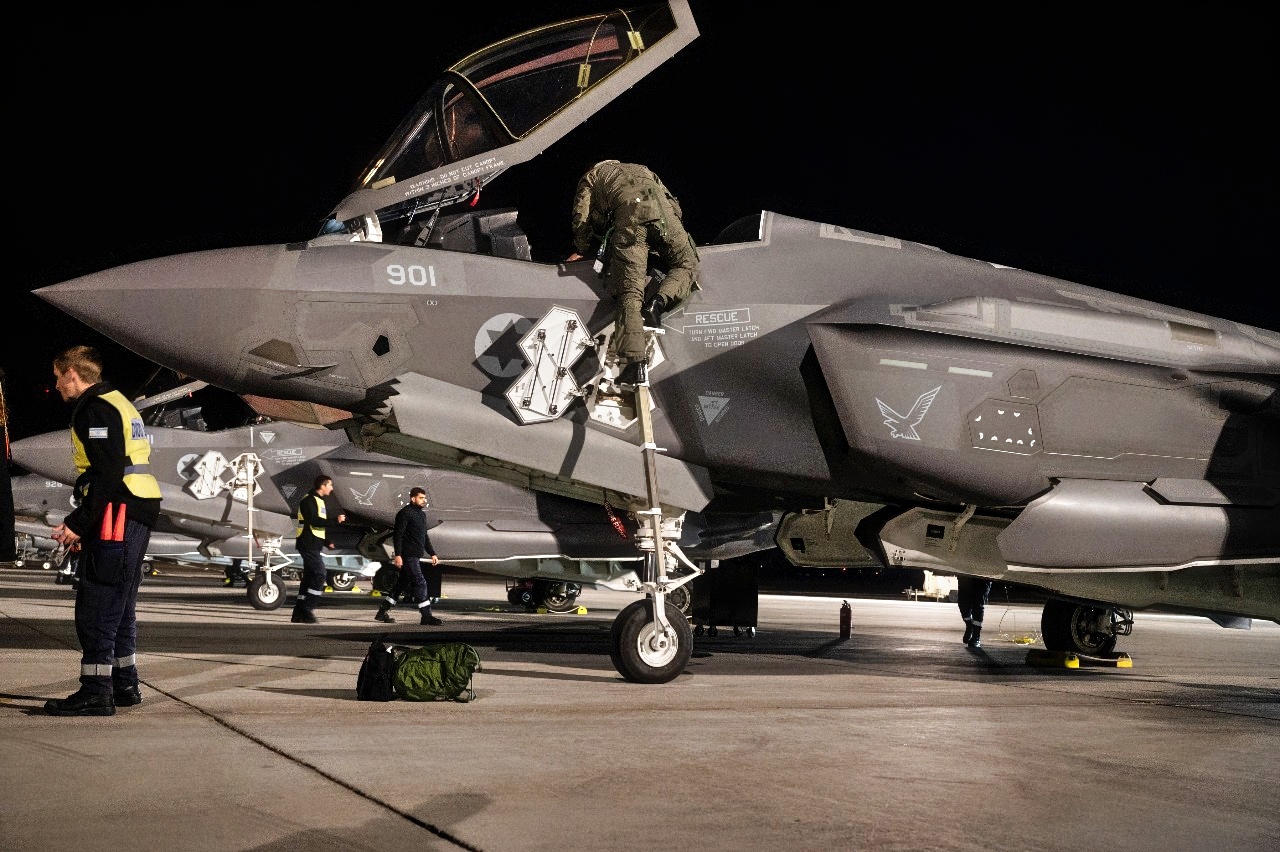
An Israeli Air Force pilot climbs into an F-35I Adir prior to a Red Flag-Nellis 23-2 mission at Nellis Air Force Base, Nevada, March 16, 2023. Red Flag is an opportunity to build on the success of JUNIPER OAK 23-2, JUNIPER FALCON, and additional combined exercises to enhance interoperability with Israel, strengthen bilateral cooperation, and improve capabilities in ways that enhance and promote regional stability and reinforce the United States’ enduring commitment to Israel’s security. (U.S. Air Force photo by Airman 1st Class Trevor Bell)
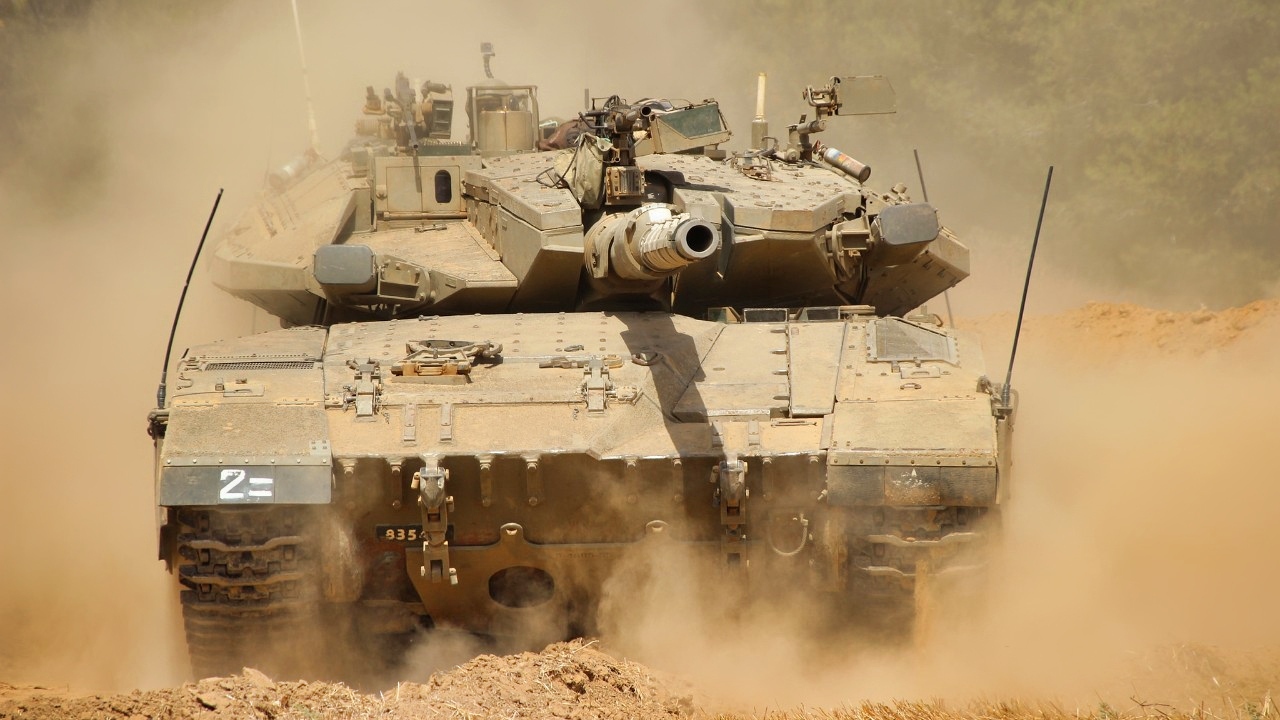
Merkava Tank Israel. Image Credit: Creative Commons.
The White House called the report false and points back to the president’s public pledge to hold off.
Netanyahu’s office, as usual, won’t comment on what the two men discussed on the phone.
The denials don’t mean much right now; however, neither military is waiting for politicians to make up their minds.
The Military Is Already Leaning Forward
Last week, Axios reported that the Pentagon ordered U.S. Central Command to finish preparing to resume major combat operations.
If the order comes, the target list reportedly includes Iranian energy facilities, infrastructure, and nuclear sites.
The Atlantic separately reported that the White House asked the Pentagon for strike options it could execute before Election Day.
A day later, Trump went on Truth Social and declared that the U.S. “will not be attacking Iran at any time before the Midterm Elections.”
However, his track record on telegraphing intentions toward Iran is spotty at best.
In June 2025, the White House said he’d decide on joining Israel’s air campaign “within two weeks,” when he had already green-lit Operation Midnight Hammer.
On February 27 of this year, less than 24 hours before the current conflict kicked off, he said he hadn’t decided. Obviously, the bombing campaign that began a day later had already been green-lit.
Tehran has noticed. U.S. and Israeli officials say Iranian leaders were caught by surprise twice and are determined not to get burned a third time.
That is the most important detail in the entire story.
Surprise is a combat multiplier, and both sides know they’ve already played that card twice.
Netanyahu’s Calculus Centers On Pickaxe Mountain
Netanyahu’s stated reason is intelligence indicating Iran is moving to reconstitute its nuclear program.
Israel is particularly worried about Pickaxe Mountain, the deeply buried site near Natanz, coming online as an enrichment facility.
That’s a legitimate concern.
Nobody who has studied Iran’s program would wave it off. And Tehran is insisting on its right to “peaceful nuclear power.” But that is a lie. Enriched uranium at 60 percent points to only one goal.
And that is a nuclear weapon. And Israel would be targeted first if such a weapon were ever to come online.
However, nobody in Washington is pretending this is purely about centrifuges.
One U.S. official told Axios that the White House understands Netanyahu’s domestic math, and that Netanyahu sees his strength as being a wartime prime minister.
The numbers back that up.
Summer polls showed a majority of Israelis want him out of office, with former IDF chief Gadi Eisenkot emerging as his main rival.
Israelis also soured on the ceasefire that halted the spring fighting, which many viewed as a bad deal for Israel.
Then there’s the blame game over who started the conversation.
Netanyahu has reportedly told his own security chiefs that Trump raised the idea of a pre-election strike and asked whether Israel would join.
Meanwhile, the Israeli newspaper Maariv reported that Washington pressed Israel to go it alone so Israel, rather than Trump, would carry the political risk ahead of the midterms.
Two U.S. officials and an Israeli official later denied that.
Zamir Must Balance Renewing An Air Campaign And Elections
The most uncomfortable seat in this whole drama belongs to IDF Chief of Staff Lt. Gen. Eyal Zamir.
He told Joint Chiefs Chairman Gen. Dan Caine that restarting full-scale fighting within three weeks could force Israel to postpone its elections, since Iran would likely answer with hundreds of ballistic missiles.
There is precedent.
Israel pushed its 1973 elections back to the end of December after the Yom Kippur War. However, that war was forced on Israel.
This one would be seen as chosen, on a timeline that happens to sit right on top of the vote.
Zamir understands that a strike that looks timed to the ballot box would erode the IDF’s standing as an apolitical institution.
And whether it is necessary or not, that perception would linger.
Trump’s Side Of The Ledger
Trump’s political risk cuts the other way.
Restarting the fighting weeks before November 3 would remind voters of an unpopular conflict and could send gas prices climbing further.
That’s poison for Republicans trying to hold Congress.
Inside the administration, Defense Secretary Pete Hegseth and CENTCOM leadership are the loudest voices pushing to resume strikes.
Most of Trump’s other advisers would rather keep tightening the economic screws, and they argue the squeeze is working. His cabinet spent hours at Camp David on October 2 hashing out next steps.
The diplomatic track is on life support.
Qatari mediators are still waiting on Iran’s response to the latest U.S. counterproposal, which includes nuclear concessions.
Iran won’t budge an inch before November 3.
One U.S. official described the talks as somewhere between dead and alive.
And the president’s own position? A U.S. official summed it up perfectly. When Netanyahu pushes, Trump tells him to get ready, but “‘go ahead and get ready’ is maybe now, maybe later, maybe never.”
So Which Way Do They Go? An Attack Looks Very Likely
An Israeli official told Axios last week that the odds of a strike before the elections are not high, and that they rise significantly once the midterms are behind us.
Which will probably happen on Nov. 4. Trump has put his word on the record, and breaking it a week before the vote is a gift to the Democrats.
However, waiting has a cost too. Every week that passes gives Iran more time to dig deeper, disperse its material, and rebuild what was destroyed.
The enemy gets a vote, and Tehran is working its own angle on the election calendar.
The forces are staged.
The target packages are built.
Only the date remains.
Timing is everything.
About the Author: Steve Balestrieri
Steve Balestrieri is a National Security Columnist. He served as a US Army Special Forces NCO and Warrant Officer. In addition to writing on defense, he covers the NFL for PatsFans.com and is a member of the Pro Football Writers of America (PFWA). His work was regularly featured in many military publications.