California is putting teenagers as old as 15 through a state-mandated seat-belt fit test—and those who fail it will have to remain in a child restraint such as a booster seat.
The new rule takes effect January 1, 2027. It applies to children ages 8 through 15, meaning it reaches right up to a teenager’s 16th birthday.
The law stops short of ordering every 15-year-old into a booster. Teenagers who pass all five steps may use an adult belt, while those who miss even one step will need a child restraint.
The story exploded across social media Saturday as Californians compared Sacramento’s latest mandate with the state’s much larger public crises.
These are the laws they pass while people overdose in the streets https://t.co/kFhRKmVMXZ
— Adam Carolla (@adamcarolla) September 26, 2026
That is the real political problem for Sacramento. Even Californians who support car-seat safety can see why a near-driving-age teenager in a booster seat sounds like government micromanagement run wild.
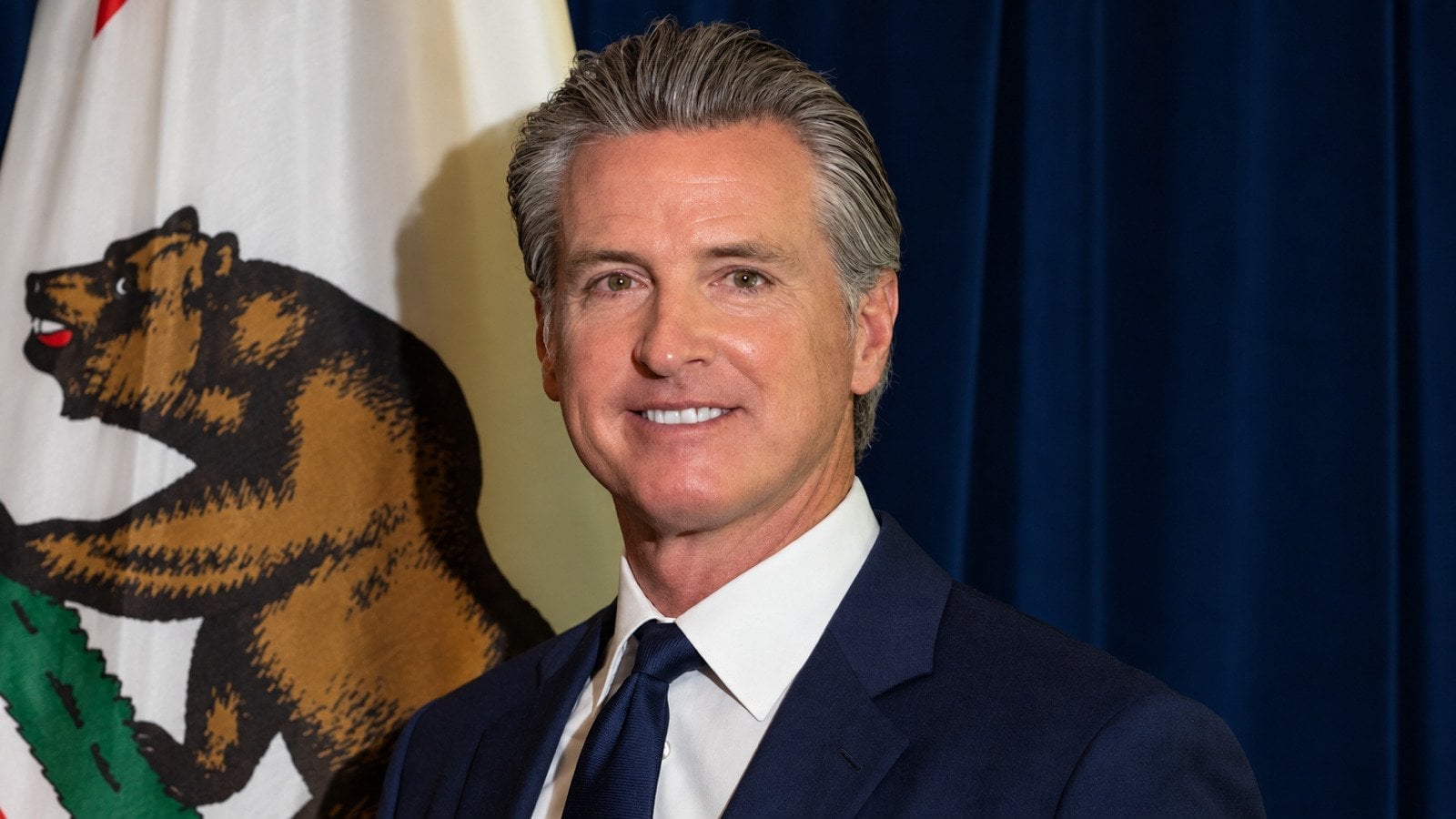
California’s official legislative record shows that Democratic Gov. Gavin Newsom approved Assembly Bill 435 on October 7, 2025. The measure was filed as Chapter 434 and becomes operative on January 1, 2027.
The law rewrites what California considers “properly restrained by a safety belt.” For children who are at least 8 but younger than 16, buckling the belt will not be enough unless the child also passes every part of the five-step test.
If the child does not pass, the statute requires an “appropriate child passenger restraint system” meeting federal standards. In practice, for an older child who has outgrown a harnessed car seat, that generally means a belt-positioning booster.
Here is the test lawmakers put into the Vehicle Code:
- The child must sit all the way back against the vehicle seat.
- The child’s knees must bend over the edge of the seat.
- The shoulder belt must cross the center of the chest and shoulder, not the neck.
- The lap belt must sit as low as possible and touch the thighs.
- The child must remain seated that way for the entire trip.
Fail any one of those steps, and the seat belt alone does not count under the 2027 rule.
The viral post that drew Carolla’s response described the practical consequence bluntly: a 15-year-old who fails the test goes back into a booster.
CALIFORNIA WANTS 16-YEAR-OLDS IN BOOSTER SEATS
This is INSANE
Starting January 1, 2027, kids ages 8 to 16 have to pass a “Five-Step Test” before they can ride without a booster.
Fail any step and your 15-year-old — the one who can legally drive in some states — is back in a… pic.twitter.com/ke2DLQi6mb
— TaraBull (@TaraBull) September 26, 2026
The wording “16-year-olds” has caused some confusion. The child-restraint section covers children younger than 16, so the oldest people directly affected are 15-year-olds—not teenagers who have already turned 16.
A post circulating alongside the viral claim pointed readers back to a fuller account of what the final version actually does.
What it really does:
“But enough of the Democrats who control the Legislature balked at ending the time-honored tradition of teens calling ‘shotgun’ to ride in the front seat.
Instead, they settled on changing the standards police officers use to determine if a child is tall…
— JDS (@_MARGARITAVILL_) September 26, 2026
The distinction matters, but it does not make the policy insignificant. California is still converting a safety recommendation into a legal standard that can keep some high-school-age teenagers in booster seats.
The California Department of Public Health says boosters raise a child so the shoulder belt crosses the chest correctly, the lap belt stays low over the hips and the knees bend at the seat edge. Its updated materials tell parents that older children should leave a booster only after passing the same five-step test.
The department’s current public guidance still describes the rule in force today: children under 8 generally belong in a car seat or booster, while children who are 8 or at least 4 feet 9 inches may use a properly fitted seat belt. AB 435 creates a much more detailed legal test for the 8-to-15 age group in 2027.
The department also warns parents never to route a shoulder belt under a child’s arm or behind the back. Its safety case is straightforward: adult belts can sit across a smaller passenger’s neck or abdomen unless a booster raises the body into the correct position.
Safety experts have recommended belt-fit tests for years because vehicle seats and seat belts are built around adult bodies. A properly fitted belt is safer; the controversy is over turning that recommendation into an enforceable rule for high-school-age teenagers.
The question is whether Sacramento needed to turn that guidance into another enforceable rule reaching into the teenage years.
A September 25 notice from the Los Angeles Police Department confirms that AB 435 will require children ages 8 through 15 to pass all five steps before using a seat belt without a booster. The notice also makes clear that families have until January 1, 2027, before the new standard takes effect.
California’s current rule requires children under 8 to ride in a car seat or booster in the back seat, while older children can use an adult belt. AB 435 replaces that simple age cutoff for 8-to-15-year-olds with an officer-enforceable body-position test.
Carolla’s larger point lands because California voters have watched Sacramento struggle with homelessness, addiction, crime and the cost of living while lawmakers keep finding new ways to regulate ordinary families.
Protecting children in cars is a serious responsibility. So is knowing when government advice should remain advice.
This is a Guest Post from our friends over at WLTReport. View the original article here.
The post California Passes New Law Requiring Booster Seat For Children Up To Age 16 appeared first on 100PercentFedUp.com.