
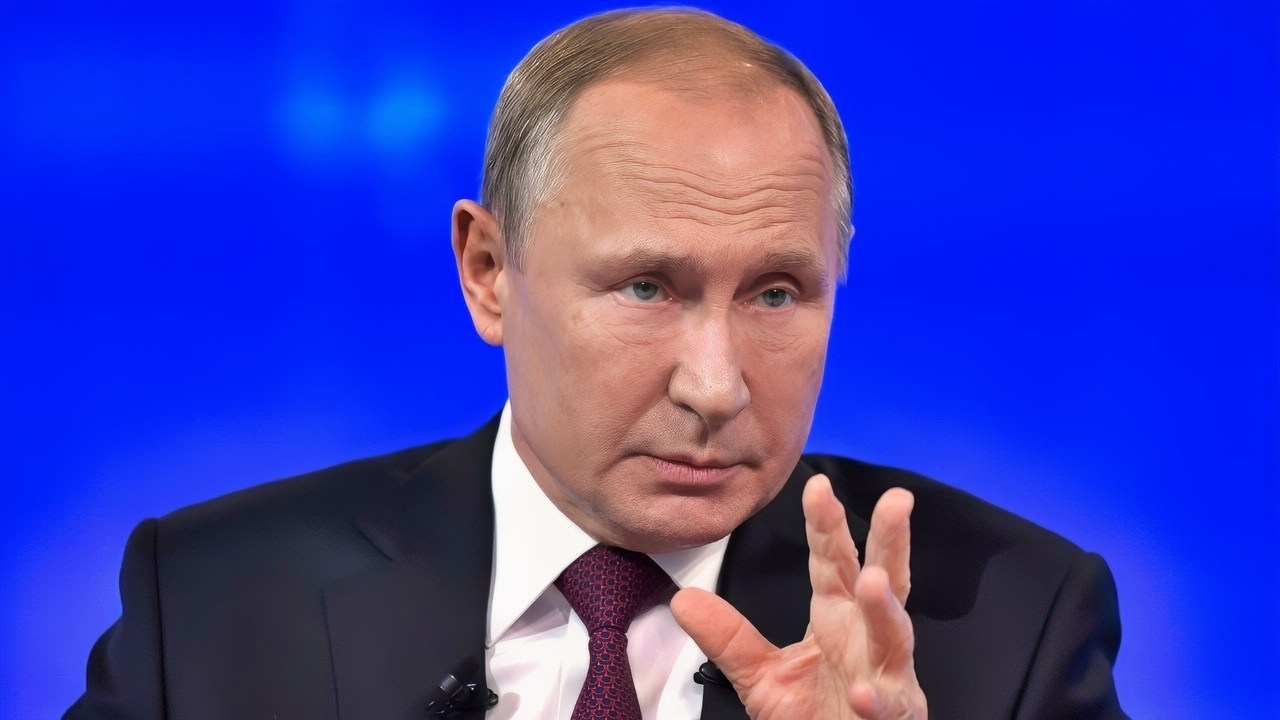
Key Points and Summary – Reuben F. Johnson examines what Russia will look like when—and if—the war in Ukraine ever ends.
-Drawing on Stephen Kotkin’s work and years of Kremlin observation, he argues that Putin’s personalist system has produced a corrupt, militarized, neo-totalitarian state with no clear path to reform.
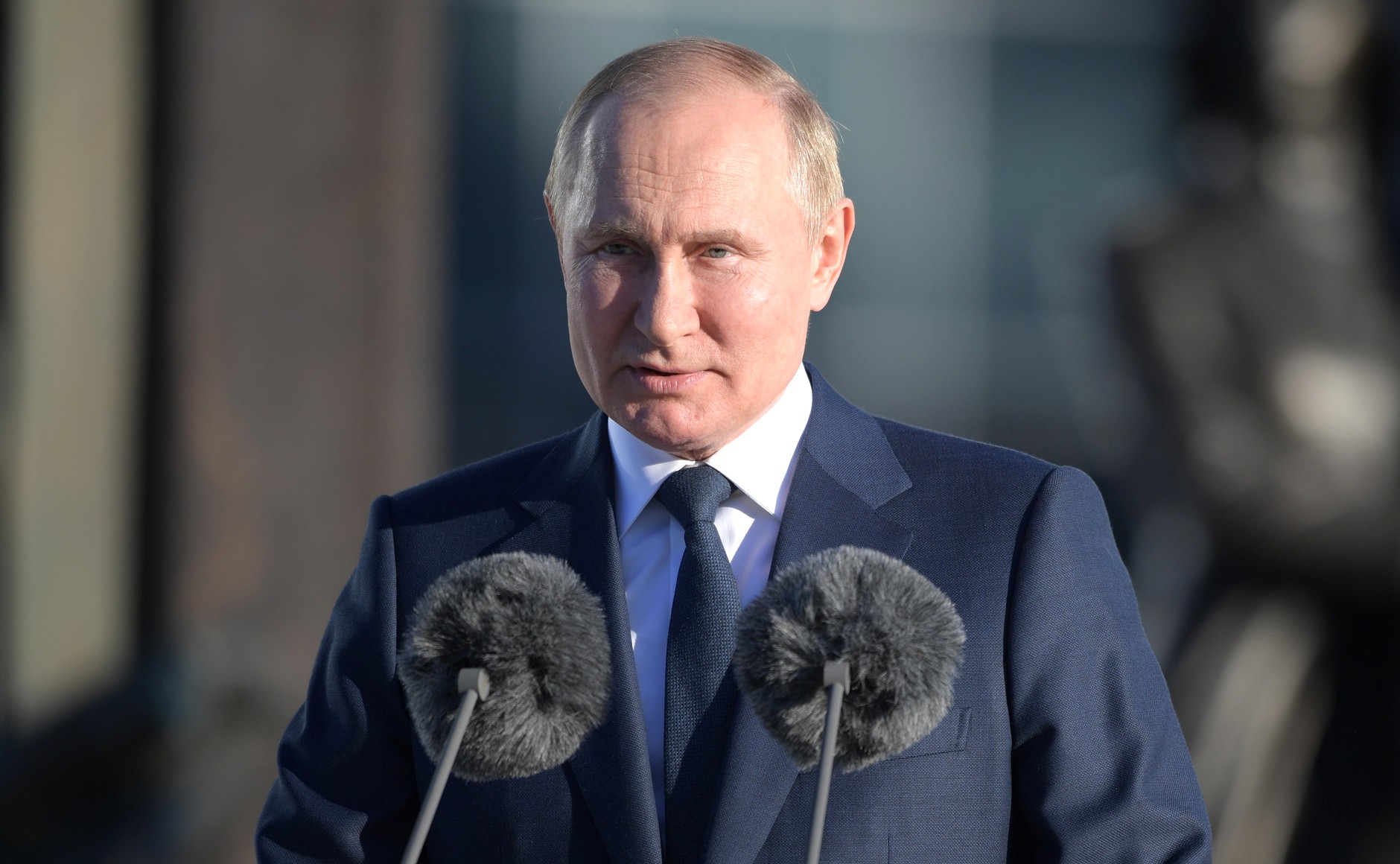
Putin in 2022. Image Credit: Creative Commons.
-Even after the fighting stops, Russia is likely to remain economically backward, repressed by propaganda and a tightening “digital iron curtain,” and locked into a war-driven economy.
-Meanwhile, Moscow’s dependence on China will deepen, leaving Russia a junior partner overshadowed by Beijing. The result is a Russia trapped in permanent stagnation, isolation, and decline.
Russia’s Future After Ukraine: Isolated, Weaker, and Dependent on China
Earlier this year, Brookings published an assessment of how the war in Ukraine has changed Russia’s global standing. The author looks back more than four years, to November 2021, when US CIA Director Bill Burns travelled to Moscow. He presented some of Russian President Vladimir Putin’s senior aides with satellite photographs and other evidence that Washington had a bird’s eye view of how and where the former KGB Lt. Col. was preparing and positioning his military to attack in an attempt to occupy Ukraine.
At the time, Putin was operating almost in total isolation—psychologically, ideologically, and physically—due to his obsessive paranoia about contracting the COVID-19 pathogen from any outside visitor. Burns was thus not permitted to see Putin in person but could only speak to him over an internal Kremlin secure telephone line.
Burns laid out for Putin what the US and EU response would be in the event of a full-scale invasion of Ukraine. Recalling the conversation, he described Putin as “stewing in a combustible combination of grievance and ambition for many years … He’s created a system in which his own circle of advisers is narrower and narrower … And it’s a system in which it’s not proven career enhancing for people to question or challenge his judgment.”
Given the environment and orientation of the Russian leadership, which are bound to remain in place for as long as Putin is alive – and possibly even after he is gone – there does not seem to be much of a future for Russia. The system Putin created has devastated those remaining aspects of the old Soviet Union that could have been nurtured and turned into the nucleus of a new Russian economic and political system.
The Future Moonscape
Writing a decade ago in Foreign Affairs, the pre-eminent American historian of Russia, Stephen Kotkin, described what Russia was becoming and has now become:
“The methods Putin used to fix the corrupt, dysfunctional post-Soviet state have produced yet another corrupt, dysfunctional state. Putin himself complains publicly that only about 20 percent of his decisions get implemented, with the rest being ignored or circumvented unless he intervenes forcefully with the interest groups and functionaries concerned.”
The consensus, therefore, is that after the war, Russia is an even more militarized, neo-totalitarian state domestically with a war-fuelled and increasingly high defense-spending economy. Internationally, the nation will become as globally isolated as today’s North Korean state.
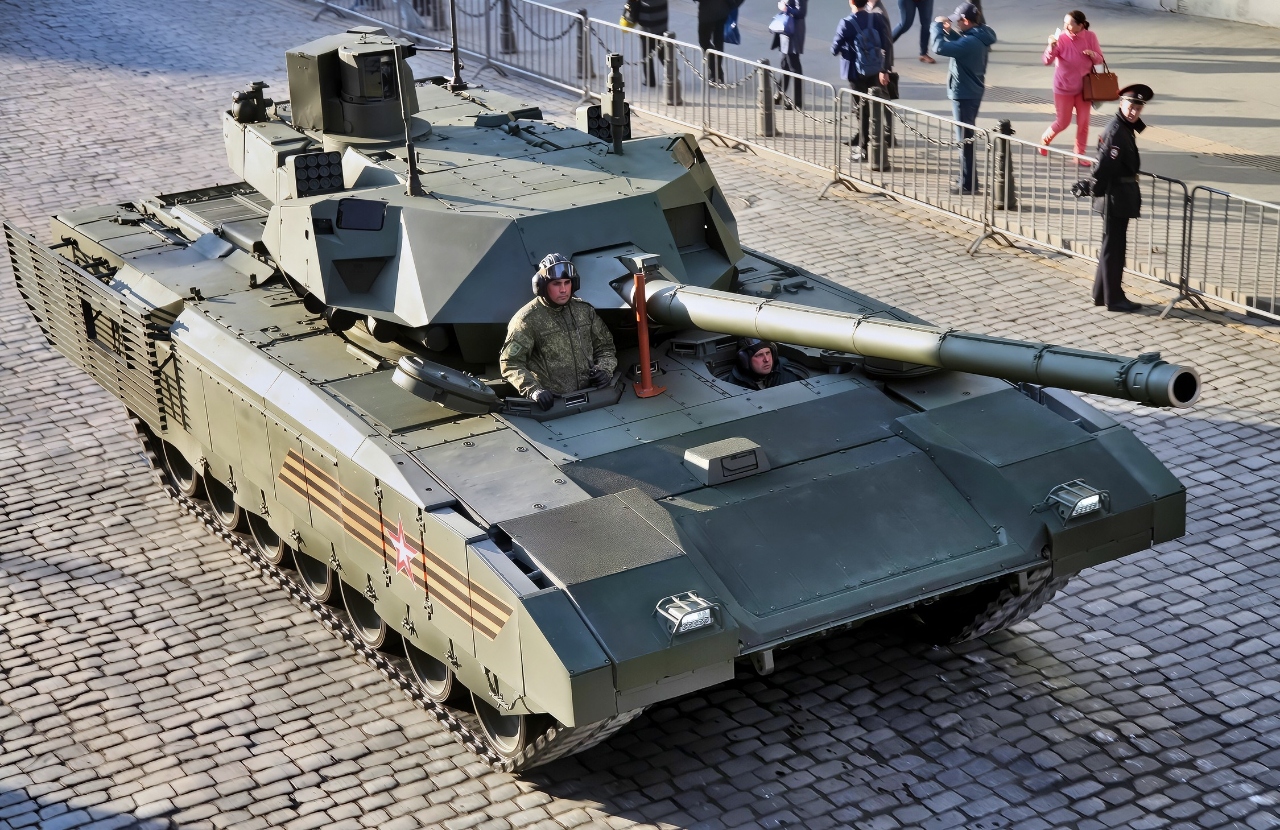
T-14 Armata Tank Russia. Image Credit: Creative Commons.
Last year, Kotkin published another essay on the future of Russia, examining near-term scenarios once Putin either exits or appears to be on a glide path to leaving power. Almost a decade later, the future of the state rests on what happens with its dictatorial leader. The person in power matters more in Russia than in most other nations because it is a system that has, to one degree or another, always relied on personalist rule.
“Putin styles himself as a new tsar. But a real tsar would not have to worry about a looming succession crisis and what it might do to his grip on power in the present,” he writes. “Putin does; that is partly why he must simulate elections.”
“He is now set in his office until 2030, when he will be in his 78th year. Male life expectancy in Russia does not even reach 67 years; those who live to 60 can expect to survive to around 80. Russia’s confirmed centenarians are few. Putin might one day join their ranks. But even Stalin died.”
Third World or First?
A system of personalist rule has also held Russia back for decades and given rise to derogatory nicknames for the nation—some of which date back to the Soviet era. During the latter part of the USSR, when the contradictions and regressive dysfunctionalities of the centrally planned economy became increasingly exposed, one of these was “Burkina Faso with missiles,” a phrase credited to former West German Chancellor Helmut Schmidt. It was intended to emphasize the increasing Third World characteristics of the USSR despite the fact that the nation had a sizeable space program and nuclear-tipped ICBMs that could destroy the world with the push of a button.
Corruption, while ever-present in the Soviet period, has become an increasingly debilitating and pervasive aspect of life in Russia. Thus, another nickname of “Nigeria with snow” became more commonly used from the early 2000s onward.
As the referenced article describes:
“In Vladimir Putin’s Russia, opaque financial flows and an equally murky network of ex-KGB officers, with its roots in the 1990s, come together in a distinctive system of corruption. This system serves dual purposes: Those at the top follow the imperative of self-enrichment, but they also find in corruption a highly effective tool for consolidating domestic political control and projecting power abroad.”
The odds are that Russia’s future is that of a distraught, economically backward state. The population will be kept under control through suffocating propaganda. Life in major cities will present a facade of normalcy due to the availability of consumer goods traditionally associated with a prosperous society.
But the same population will be under increasing state control and heavy-handed censorship. Russia’s “Digital Iron Curtain” is still not on par with the People’s Republic of China’s (PRC) “Great Firewall.” Most messaging and VOIP platforms are blocked, with the Russian security services using the justification that their internet restrictions prevent “terrorist acts” and “extremist content” from being widely distributed.
None of these tendencies will lead Russia out of its current isolation and economic stagnation, but what will exacerbate the situation and most likely condemn Russia to permanent backwardness is that whoever is still in charge in the Kremlin two years from now – that person will focus the nation’s resources on supporting the prolonged war with Ukraine rather than Russia’s multiplying internal ills.
The conflict will continue to drain Russia’s resources and personnel with little to no chance of the high casualty rates ending, and with the economic dependence on war production continuing ad infinitum.
A Dark Future for Russia
Russia’s longer-term dilemma is that it continues to be overshadowed by the PRC, with Beijing’s shadow growing ever longer. As a recent assessment of the disposition between the two nations points out, “China’s GDP is five and a half times larger than Russia’s. Cooperation is largely confined to Russian energy exports and Chinese exports of goods and equipment, both of which are essential to Russia due to Western sanctions. Yet Beijing avoids broadening its economic relationship with Russia to include investment and technology transfer, reinforcing one-sided dependence.”
This is the picture of Russia – when and if its disastrous war in Ukraine ever ends. There is no sign of peace in the offing, not for the Ukrainians, not for the Russian people themselves, and not for the rest of the world.
About the Author: Reuben F. Johnson
Reuben F. Johnson has thirty-six years of experience analyzing and reporting on foreign weapons systems, defense technologies, and international arms export policy. Johnson is the Director of Research at the Casimir Pulaski Foundation. He is also a survivor of the Russian invasion of Ukraine in February 2022. He worked for years in the American defense industry as a foreign technology analyst and later as a consultant for the U.S. Department of Defense, the Departments of the Navy and Air Force, and the governments of the United Kingdom and Australia. In 2022-2023, he won two awards in a row for his defense reporting. He holds a bachelor’s degree from DePauw University and a master’s degree from Miami University in Ohio, specializing in Soviet and Russian studies. He lives in Warsaw.