
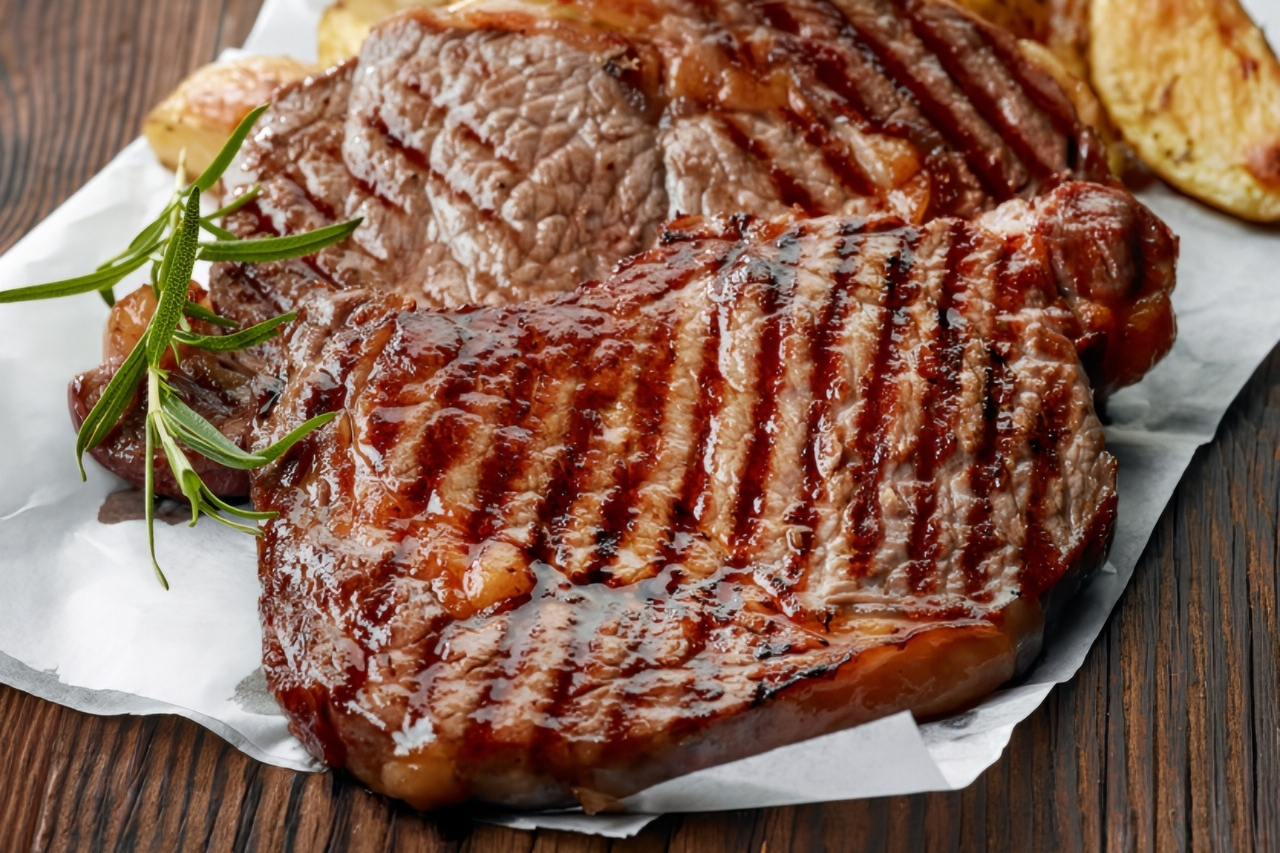
Key Points and Summary – Beef has become one of the most painful line items in Americans’ grocery bills.
-Stephen Silver explains why prices are up nearly 15 percent year over year, even as overall food inflation moderates.
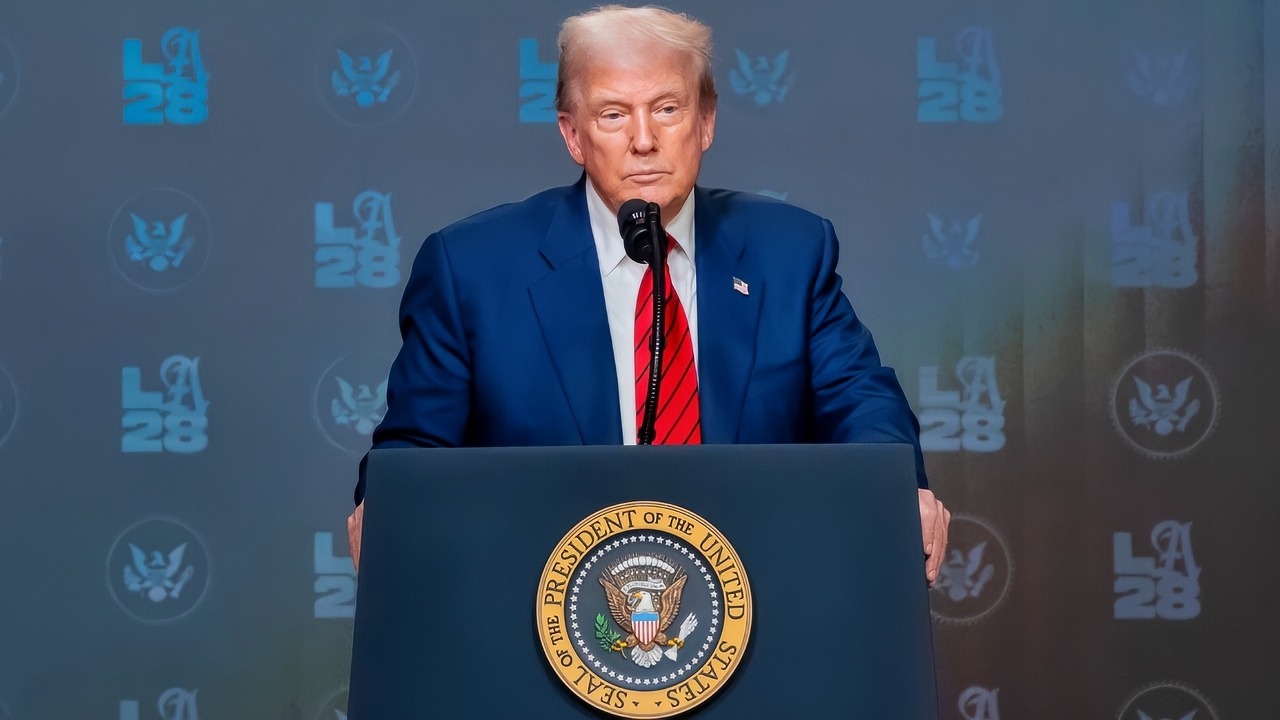
President Donald Trump signs an executive order creating a task force for the 2028 Los Angeles Olympics, Tuesday, August 5, 2025, in the South Court Auditorium of the Eisenhower Executive Office Building at the White House. Vice President JD Vance attends. (Official White House Photo by Emily J. Higgins.)
-U.S. cattle herds are at their smallest in decades, after years of drought, high feed costs, and producers cashing in rather than rebuilding.
-Analysts warn ground beef could hit $10 a pound by late 2026.
-Trump has scrapped some tariffs, launched an investigation into meat packers, and boosted beef imports from Argentina.
-At the same time, his team blames Biden-era climate policies and even migrants—claims economists largely dispute.
The Great Beef Price Jump: Whose to Blame?
One big economic story of the first year of the second Trump Administration is that, while President Donald Trump returned to office promising to lower prices, he’s had only partial success in doing so.
Yes, gas prices are going down. But prices of other goods have been rising. And that starts with beef.
According to a CNBC story this week, which cited the latest CPI data, while overall food prices have risen 3.1 percent year over year, the beef and veal category is up 14.7 percent.
There’s a reason for that: Lower numbers of cattle. In fact, cattle numbers as of earlier this year were at their lowest since 1951. And not only that, but ranchers are paying more for things.
“It’s hard as a beef producer to necessarily say that beef prices are too high. I mean, if people are paying $6 for a latte at Starbucks, but then they’re paying $6 for a pound of beef, they’re able to feed a family for a family of three with that pound of beef,” Taylon Lienemann, co-owner of Linetics Ranch in Princeton, Nebraska, told CNBC.
How It Works
CNBC explained how the cattle market typically works.
“When producers can get higher prices for their cattle, they will likely retain more females, called heifers, for breeding,” the outlet said. “When the cattle supply increases, prices eventually go down and the herds contract again.”
But things of late have gotten out of balance, and not only because of recent droughts.
“It’s the big question right now for our producers. You know, they have a 50/50 decision to make. Do we sell these cattle off into the supply system, or do we hold them back? And I think when the money is on the table, there’s an incentive to go ahead and sell those to the food supply system, especially when demand is so high from the consumer,” Adam Wegner, director of marketing for the Nebraska Beef Council, told CNBC.
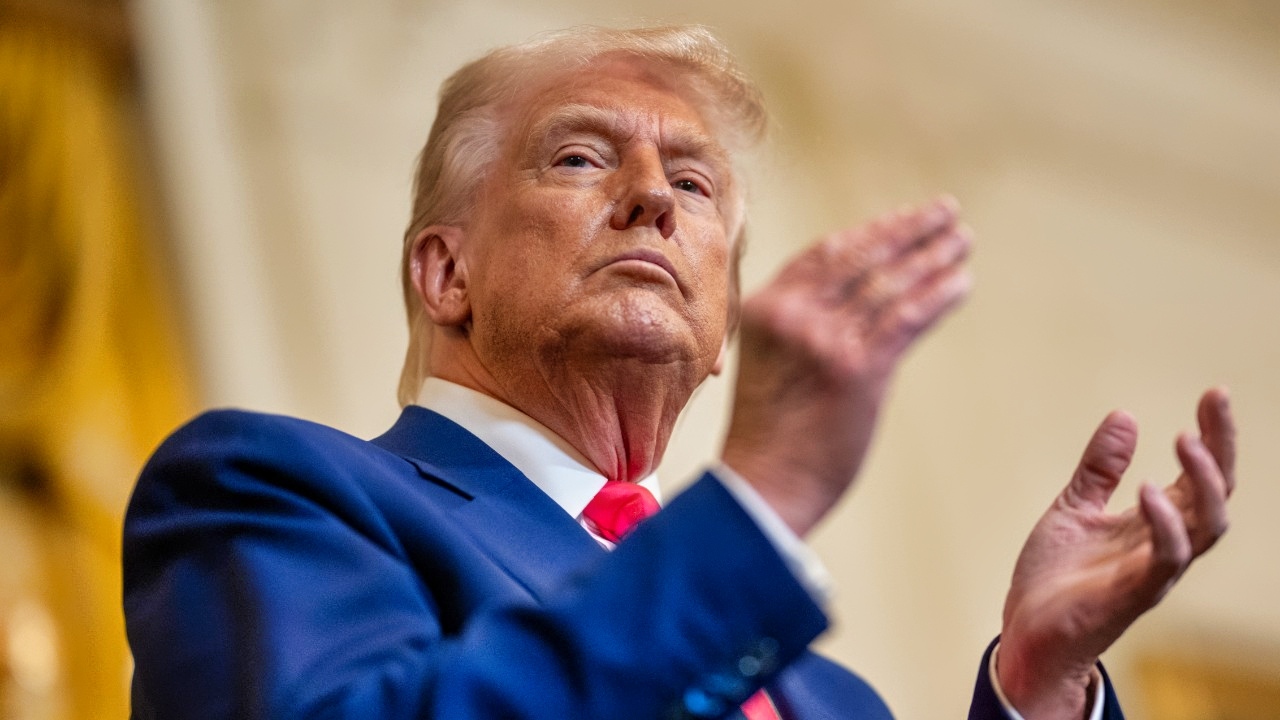
President Donald Trump signs executive actions to support the coal industry at an Unleashing American Energy Executive Order event, Tuesday, April 8, 2025, in the East Room of the White House. (Official White House Photo by Daniel Torok)
Other steak producers agree.
“What we’re experiencing now is a sort of a mashup of drought, high demand, and low heifer retention, sort of making up this herd size problem that we have today in America,” Omaha Steaks CEO Nate Rempe told CNBC. “We have got to build the herd, period.”
It Could Get Worse
Meanwhile, a Fortune analysis last month examined the possibility that beef prices could rise even higher in 2026.
Nate Rempe, of Omaha Steaks, spoke to Fox Business this week, which was part of the basis for the Fortune story.
“So we are headed for what I’m calling the $10-a-pound reality by the third quarter of ’26,” Rempe predicted. “Families are going to see $10-a-pound ground beef in the grocery store.”
Ground beef was at $6.323 a pound in September, Fortune said. That represents a 14 percent increase since January and a 26 percent jump since the start of 2024.
Trump, in mid-November, scrapped tariffs on beef, coffee, and other commodities.
But most of the surge in beef costs, Fortune said, is due to factors unrelated to tariffs.
What Trump is Doing
Earlier in November, the president announced an investigation into foreign-owned meat packers, whom he accused of driving up domestic beef prices.
“I have asked the DOJ to immediately begin an investigation into the Meat Packing Companies who are driving up the price of Beef through Illicit Collusion, Price Fixing, and Price Manipulation,” Trump said in a social media post on November 7.
“We will always protect our American Ranchers, and they are being blamed for what is being done by Majority Foreign Owned Meat Packers, who artificially inflate prices and jeopardize the security of our Nation’s food supply.” There’s been no word, since then, on the progress of that investigation.
In October, Trump announced that the US would quadruple its beef purchases from Argentina to lower prices. Politico reported at the time that the move would risk “alienating longtime farm-state allies” of the president.
“The Cattle Ranchers, who I love, don’t understand that the only reason they are doing so well, for the first time in decades, is because I put Tariffs on cattle coming into the United States, including a 50% Tariff on Brazil,” Trump said in an October Truth Social post.
“If it weren’t for me, they would be doing just as they’ve done for the past 20 years — Terrible!”
Sick Cows
Then, in November, when confronted with still-high beef prices, the Trump Administration blamed two of its favorite targets: Former President Joseph Biden and migrants.
Treasury Secretary Scott Bessent claimed that migrants were bringing “sick cows” across the border.
“Because of the mass immigration, a disease that we’d been rid of in North America made its way up from South America, as these migrants brought some of their cattle with them,” Bessent said in a November Fox News appearance.
There were reports in August that a parasite had been infecting cattle exports from Mexico, causing such exports to be halted. However, the connection between that and the immigration issue appears tenuous.
In a separate November interview, Secretary of Agriculture Brooke Rollins accused former President Biden of carrying out a “literal war on cattle” that has driven prices higher.
“They wanted to reduce the herd sizes because they believe that cattle caused climate change,” Rollins said in a Fox Business interview. “So, lots and lots of issues there as we rebuild the herd based on the devastation of the last administration’s policy.”
Per NPR, the Biden-era USDA had offered “voluntary, incentive-based approaches” to reduce methane emissions.
“But years-long drought conditions, shrinking herd sizes, and import tariffs have caused retail prices for beef to reach record highs this year. According to USDA data, the US had 94.2 million cattle and calves as of July 1, the smallest mid-year inventory since at least 1973,” NPR said of the reasons for the increased prices.
“The Trump administration is finally admitting publicly what we’ve all known from the start: Trump’s trade war is hiking costs on people,” Rep. Richard Neal (D-MA) said in a statement, per NPR.
About the Author: Stephen Silver
Stephen Silver is an award-winning journalist, essayist, and film critic, and contributor to the Philadelphia Inquirer, the Jewish Telegraphic Agency, Broad Street Review, and Splice Today. The co-founder of the Philadelphia Film Critics Circle, Stephen lives in suburban Philadelphia with his wife and two sons. For over a decade, Stephen has authored thousands of articles that focus on politics, national security, technology, and the economy. Follow him on X (formerly Twitter) at @StephenSilver, and subscribe to his Substack newsletter.